
Main Points :
- Analysts suggest that aggressive selling pressure in Bitcoin may be nearing exhaustion.
- However, weak liquidity and extreme bearish sentiment could result in several months of sideways price action.
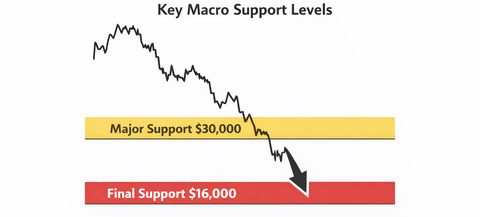
- Key price levels include $60,000–$70,000 as the current trading range, with $30,000 as major macro support in a worst-case scenario.
- Spot ETF inflows are improving, but a rapid V-shaped recovery is considered unlikely.
- A broader macroeconomic downturn could significantly impact Bitcoin’s long-term bullish structure.
1. Signs That Selling Pressure May Be Easing
Bitcoin appears to be reaching a critical inflection point. After three weeks of trading within the $60,000 to $70,000 range, the market briefly dipped below $67,000 before recovering. According to on-chain analyst Willy Woo, the aggressive bearish selling that has weighed on the market may finally be nearing exhaustion.
Woo noted that “bearish investor selling appears to be mostly spent,” suggesting that Bitcoin could now have room to move sideways for approximately one month. He even allowed for the possibility of a rebound toward the mid-$70,000 region, though he cautioned that such levels would likely encounter renewed selling pressure.
From a flow-model perspective, on-chain metrics indicate that long-term holders have reduced their distribution. Historically, such phases often precede stabilization rather than immediate rallies. This dynamic suggests that the market may have transitioned from forced liquidation to patient accumulation.
The relative strength index (RSI) on the weekly timeframe has also reached historically oversold territory. According to Andri Fauzan Azima of Bitrue, such conditions typically reflect peak selling exhaustion and often mark the early stages of price stabilization. However, stabilization does not automatically translate into immediate bullish momentum.
2. Liquidity Conditions Remain Fragile
Despite signs of selling fatigue, liquidity remains a critical concern. Woo emphasized that both spot and futures liquidity have deteriorated. Historically, Bitcoin has not sustained upward trends when liquidity conditions on both fronts are weak.
Low liquidity environments create two opposing risks:
- Downside volatility can accelerate if negative catalysts appear.
- Upside moves lack structural strength and are easily sold into.
This fragility is visible in derivatives markets, where open interest has declined and funding rates remain subdued. Institutional participation has cooled compared to previous bull phases. While spot ETF flows have improved modestly, analysts argue that inflows are not yet strong enough to drive a sustained breakout.
Jeff Ko, chief analyst at CoinEx, noted that although ETF flows show improvement, a sharp V-shaped recovery following a 50% decline is statistically unlikely. Instead, the market may require three to six months to repair investor psychology.
3. The Case for Prolonged Consolidation
Many analysts now expect a prolonged consolidation phase between $60,000 and $70,000. According to Azima, unless sustained ETF inflows or a recovery in macro risk appetite materialize, Bitcoin may repeatedly test support levels between $62,000 and $65,000 over the coming months.
This environment resembles the post-LUNA collapse consolidation phase in 2022, when Bitcoin traded sideways for extended periods before regaining upward momentum. Sideways markets can be psychologically exhausting, often shaking out weak hands while allowing long-term investors to accumulate quietly.
[Bitcoin Price Range Visualization]
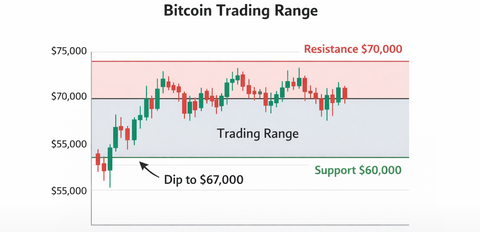
The following chart illustrates Bitcoin’s recent trading range between $60,000 and $70,000.
4. Macro Risks: The $30,000 Scenario
One of the more sobering observations from Woo concerns macroeconomic risk. Bitcoin has existed only during a long-term global macro bull market between 2009 and 2026. If that macro regime were to collapse, Bitcoin could face unprecedented structural stress.
In such a scenario:
- $30,000 could serve as the next major macro support level.
- $16,000 may represent the final defense line for maintaining long-term bullish structure.
This perspective is controversial but grounded in liquidity cycles. Bitcoin’s historical growth coincided with expanding global liquidity, accommodative central bank policies, and rising speculative capital flows. A structural reversal in global macro conditions could challenge Bitcoin’s narrative as digital gold.
However, some argue that Bitcoin’s emerging role as a strategic reserve asset and ETF-backed institutional product may cushion extreme downside volatility compared to previous cycles.
5. Why Investors Sold: Cycle Theory, AI, and Quantum Fears
According to Matt Hougan, Chief Investment Officer at Bitwise Asset Management, the recent decline is primarily due to long-position holders reducing exposure.
Several factors contributed:
- Belief in the four-year Bitcoin cycle topping out.
- Concerns about quantum computing threatening cryptographic security.
- Capital rotation into AI startups and high-growth tech sectors.
Hougan argues that most of this selling is now nearing completion. If so, Bitcoin may be in the bottoming process. He described the current period as a “typical crypto winter,” which historically precedes a renewed “crypto spring.”
This cyclical interpretation aligns with prior bear markets, where capitulation was followed by extended consolidation and eventual all-time highs.
6. ETF Flows and Institutional Positioning
Spot Bitcoin ETFs have become a structural pillar of the market. Recent improvements in ETF inflows suggest that institutional investors are cautiously re-entering.
However, ETF flows alone may not be sufficient to trigger immediate breakout momentum. Structural capital allocation decisions by pension funds, sovereign wealth funds, and asset managers typically occur gradually.
For readers seeking practical blockchain investment opportunities, this consolidation phase could offer strategic positioning windows:
- Dollar-cost averaging into Bitcoin during range-bound periods.
- Monitoring altcoin rotation triggered by capital returning to risk assets.
- Identifying infrastructure tokens benefiting from ETF ecosystem growth.
Sideways markets often create asymmetric opportunities in emerging sectors such as decentralized physical infrastructure (DePIN), real-world asset tokenization (RWA), and AI-integrated blockchain networks.
7. Psychological Repair and Market Structure
Markets operate not only on liquidity but also on psychology. A 50% correction inflicts deep emotional damage. Investor confidence does not recover overnight.
Historical data suggests that after major corrections:
- Volatility contracts.
- Trading volumes decline.
- Long-term holders quietly accumulate.
- Retail participation remains subdued.
This phase may last three to six months. During such periods, volatility compression often precedes significant directional breakouts.
[Macro Support Levels]
8. Strategic Implications for Investors
For investors searching for new revenue sources or practical blockchain applications, the current environment demands strategic patience rather than aggressive speculation.
Key approaches include:
- Monitoring liquidity indicators rather than price alone.
- Tracking ETF net inflows weekly.
- Watching macro signals such as interest rate trajectories and dollar strength.
- Evaluating blockchain infrastructure projects benefiting from institutional adoption.
If Bitcoin stabilizes within the $60,000–$70,000 range, capital may rotate into high-conviction altcoin ecosystems. Historically, altcoin cycles begin after Bitcoin establishes range stability.
However, if macro deterioration accelerates, capital preservation strategies may become paramount.
Conclusion
Bitcoin stands at a pivotal moment. Selling pressure appears to be waning, supported by on-chain data and oversold technical indicators. Yet liquidity conditions remain fragile, and macroeconomic uncertainty looms large.
Rather than anticipating an immediate V-shaped recovery, analysts widely expect a prolonged consolidation phase lasting several months. This period may resemble previous crypto winters — psychologically draining but structurally constructive.
For forward-looking investors, consolidation is not stagnation. It is preparation.
If history repeats, the exhaustion of selling pressure will eventually give way to renewed bullish momentum. But patience, liquidity awareness, and disciplined capital allocation will determine who benefits most when the next crypto spring arrives.