

Main Points :
- $750 million in net inflows into U.S. spot Bitcoin ETFs over two days
- BlackRock’s IBIT and Grayscale’s GBTC both record strong inflows
- Five-week outflow trend reverses sharply
- Bitcoin rebounds from below $63,000 to above $68,000
- Institutional demand signals renewed market confidence
- ETF flows may become the dominant price driver in 2026
1. A Dramatic Reversal: $750 Million in Two Days
According to on-chain analytics platforms such as SoSoValue, U.S. spot Bitcoin ETFs recorded more than $750 million in cumulative net inflows on February 24 and 25, 2026. This development represents one of the strongest two-day inflow streaks since the ETF products were first launched.
On February 25 alone, net inflows reached approximately $506.5 million. BlackRock’s iShares Bitcoin Trust (IBIT) led the surge, attracting roughly $297.4 million. Meanwhile, Grayscale’s GBTC — previously a major source of consistent outflows — registered net inflows of approximately $102.5 million.
This reversal is significant. For five consecutive weeks, Bitcoin ETFs had experienced steady outflows, creating persistent sell-side pressure. The sudden influx of capital suggests that institutional investors are now actively “buying the dip” rather than reducing exposure.
Spot Bitcoin ETF Net Inflows (USD Millions)
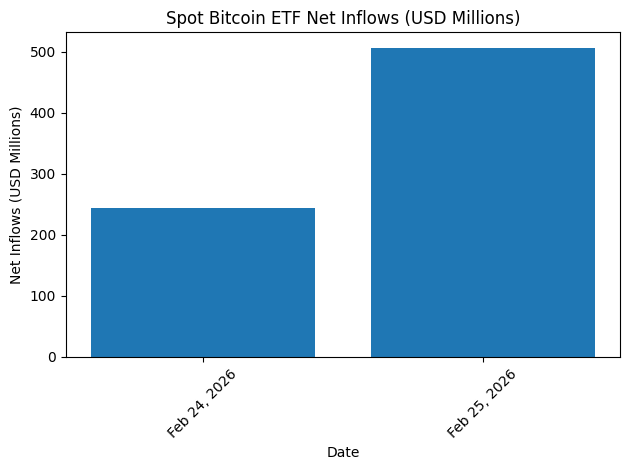
The inflow data suggests that institutional allocators viewed the recent price correction as a strategic entry opportunity rather than a signal of structural weakness.
2. Bitcoin’s Price Reaction: From Capitulation to Recovery
During the previous weeks of ETF outflows, Bitcoin’s price temporarily fell below $63,000. Market sentiment deteriorated as traders speculated that institutional enthusiasm was fading.
However, following the ETF inflow reversal, Bitcoin rapidly rebounded and recovered the $68,000 range. The move was not merely technical; it reflected renewed capital commitment from long-term allocators.
Bitcoin Price Rebound (USD)
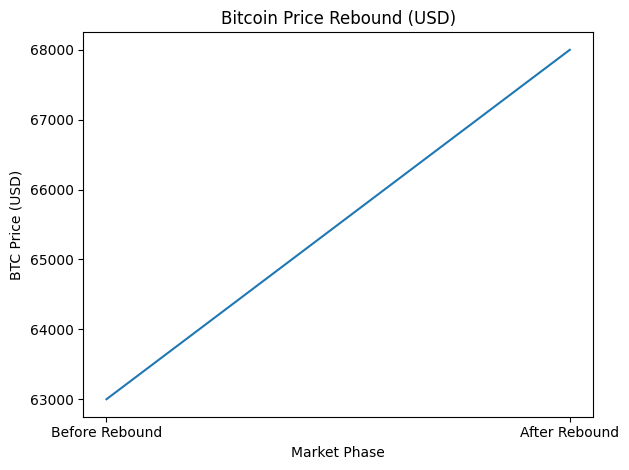
The speed of this recovery underscores a crucial point: in 2026, ETF flow data may be more influential than traditional technical indicators. Institutional capital now plays a decisive role in short-term price formation.
3. Why Grayscale’s Shift Matters
Analysts emphasize one particular factor: Grayscale turning from outflows to inflows.
Historically, GBTC redemptions were a major source of sell pressure after ETF conversion. Investors exiting GBTC forced underlying Bitcoin sales, weighing on market liquidity. Now, with GBTC seeing net additions instead of redemptions, one of the primary structural sellers appears to have stepped aside.
This shift alters supply-demand dynamics. If both BlackRock and Grayscale maintain positive net flows, aggregate ETF holdings could expand significantly in the coming quarters.
4. Institutional Money as the New Market Engine
The $750 million inflow episode illustrates a broader structural transition: Bitcoin is increasingly traded through regulated financial infrastructure rather than direct exchange purchases.
Institutional investors prefer ETF exposure because:
- No private key management
- Custody handled by regulated entities
- Portfolio allocation compatibility
- Compliance-friendly structure
- Integration with retirement and managed funds
For capital allocators managing billions, operational simplicity matters as much as return potential. ETFs reduce friction and allow Bitcoin to be treated as a “portfolio asset” rather than a speculative token.
This institutionalization fundamentally changes volatility dynamics. Price drawdowns now attract rebalancing capital instead of panic selling.
5. Is the Sell Pressure Fully Cleared?
The article suggests that sell pressure is “largely resolved.” This assessment appears supported by:
- Grayscale’s shift to inflows
- Stabilization of miner selling activity
- Reduced exchange reserves
- Stronger derivatives open interest without excessive leverage
However, sustained confirmation requires continued weekly inflows. Two strong days are impactful, but multi-week consistency will determine whether this is a tactical bounce or a structural reaccumulation phase.
6. Broader Market Context: 2026 Institutional Landscape
Beyond ETF flows, several macro factors reinforce bullish institutional positioning:
- Increasing sovereign fund exposure discussions
- Pension fund exploratory allocations
- Growing stablecoin integration into traditional banking
- Regulatory clarity in major jurisdictions
The maturation of custody infrastructure and tokenized treasury products also enhances capital efficiency. Bitcoin is increasingly used as collateral in institutional liquidity frameworks.
Moreover, derivatives markets are deeper and more sophisticated than in previous cycles. This allows institutions to hedge exposure dynamically, reducing systemic liquidation cascades.
7. Implications for Investors Seeking Yield and Opportunity
For readers seeking new crypto assets and revenue opportunities, this ETF reversal suggests several strategic considerations:
A. Bitcoin as Core Reserve
Institutional dip-buying behavior strengthens Bitcoin’s role as the foundational digital reserve asset.
B. ETF Flow Monitoring as a Trading Signal
Daily ETF net flows may now serve as a primary macro indicator.
C. Infrastructure Plays
Companies involved in custody, settlement, tokenization, and liquidity provision stand to benefit.
D. Layer-2 and Scaling Assets
As institutional capital enters Bitcoin, adjacent ecosystems may experience secondary inflows.
E. Stablecoin Yield Platforms
Institutional flows often increase stablecoin liquidity, opening structured yield opportunities.
8. The Psychological Shift: From Distribution to Accumulation
Markets are narrative-driven. For weeks, the dominant narrative was “institutional exit.” Now, the narrative has flipped to “institutional accumulation.”
This shift matters more than the $750 million figure itself. When large allocators buy into weakness, they implicitly validate long-term value propositions.
Retail traders often react emotionally. Institutions allocate methodically. The recent flows suggest methodical accumulation rather than speculative frenzy.
9. What to Watch Next
Key indicators over the coming weeks:
- Sustained ETF net inflows above $200M daily
- Continued GBTC stability
- Bitcoin holding above $65,000 support
- Absence of large miner liquidations
- Stable funding rates in derivatives markets
If these conditions hold, the market may enter a renewed expansion phase.
Conclusion: A Structural Inflection Point
The $750 million two-day inflow into U.S. spot Bitcoin ETFs marks more than a short-term market bounce. It signals a structural inflection in institutional positioning.
Five weeks of outflows have abruptly reversed. Grayscale has stopped being a structural seller. BlackRock continues to accumulate. Bitcoin’s price responded decisively.
For investors focused on practical blockchain applications and emerging revenue streams, this shift underscores a central reality of 2026: capital flows through regulated infrastructure now drive crypto markets.
ETF channels are not merely passive vehicles — they are becoming the dominant gateway for institutional exposure.
If sustained, this trend may define the next leg of the Bitcoin cycle.



