
Main Points :
- BNP Paribas Asset Management conducted a second experimental issuance of a tokenized Money Market Fund (MMF) on the public Ethereum blockchain using a permissioned access model.
- The issuance was executed via the group’s internal tokenization platform, AssetFoundry, connecting regulated fund infrastructure to public blockchain rails.
- Tokenization aims to replace traditional batch-based fund processing (subscriptions, redemptions, NAV calculation, settlement) with more flexible and potentially near–real-time workflows.
- The initiative reflects a broader institutional trend, including BlackRock’s BUIDL tokenized MMF, toward blockchain-based liquidity products for institutional treasury management.
- Tokenized MMFs are emerging as a bridge between traditional finance (TradFi) and decentralized finance (DeFi), potentially reshaping short-term liquidity markets globally.
1. BNP Paribas and the Second Tokenized MMF Experiment
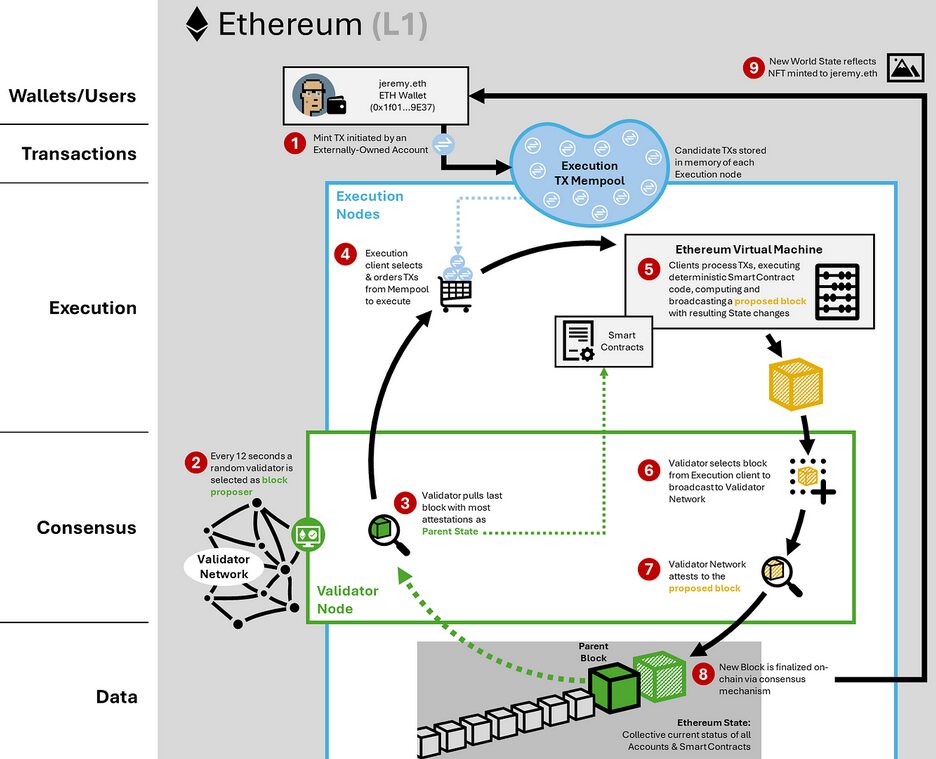
French financial giant BNP Paribas announced that its asset management division, BNP Paribas Asset Management, conducted a second experimental issuance of a tokenized Money Market Fund (MMF). The issuance was deployed on the Ethereum blockchain, leveraging a permissioned participation framework within a regulated environment.
This experiment was carried out internally within the BNP Paribas group. While limited in scope, it allowed the bank to test the entire lifecycle of a tokenized fund: issuance, transfer agent functions, on-chain token creation, and connectivity to a public blockchain network.
The tokenized MMF shares were issued via AssetFoundry, a proprietary tokenization infrastructure developed within BNP Paribas Corporate & Institutional Banking (CIB). AssetFoundry provides the technical bridge between regulated securities infrastructure and public blockchain environments.
This is BNP Paribas’ second major tokenized MMF proof-of-concept. The first experiment, conducted the previous year, involved tokenizing an existing Luxembourg-based MMF using a different technical stack and operational configuration. The second issuance demonstrates not only technological iteration but also institutional commitment.
2. What Is a Money Market Fund (MMF)?
A Money Market Fund (MMF) is a low-risk, highly liquid investment vehicle that typically invests in high-grade short-term debt instruments such as:
- Treasury bills
- Commercial paper
- Certificates of deposit
- High-quality short-term corporate bonds
Although MMFs do not guarantee principal, they are widely used as a cash-equivalent alternative to bank deposits. Institutional investors rely heavily on MMFs for liquidity management, short-term yield enhancement, and operational treasury allocation.
Globally, MMFs represent trillions of dollars in assets under management. In the United States alone, MMF assets exceeded $6 trillion in recent years, reflecting heightened demand for safe, yield-generating liquidity instruments in higher interest rate environments.
Tokenizing such a core liquidity product signals that blockchain technology is no longer limited to speculative crypto assets; it is increasingly embedded into the core plumbing of institutional finance.
3. From Batch-Based Processing to Programmable Liquidity
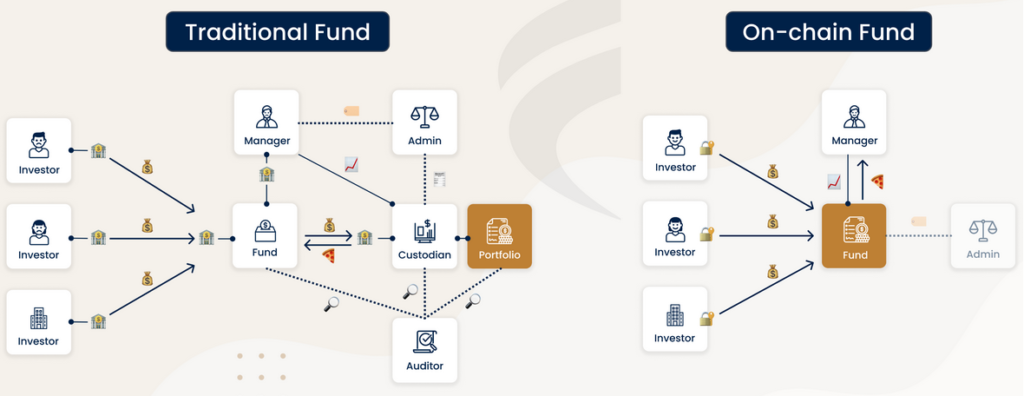
Traditional MMF operations rely on batch-based processes. Subscriptions and redemptions are processed at predefined cut-off times. Net Asset Value (NAV) calculations are executed daily. Settlement often follows standardized clearing cycles.
This model works, but it is operationally rigid.
Blockchain infrastructure introduces several transformative possibilities:
- Near real-time settlement
- Automated compliance through smart contracts
- 24/7 transaction capability
- Enhanced transparency and auditability
- Fractionalization and programmable distribution
By tokenizing MMF shares, BNP Paribas is exploring how distributed ledger technology can replace or augment legacy transfer agent and fund administration workflows.
Importantly, this issuance used a permissioned access model on a public blockchain. This hybrid design is critical. It preserves regulatory compliance—only approved participants may hold or transfer tokens—while benefiting from Ethereum’s security, decentralization, and global settlement infrastructure.
4. Institutional Trend: BlackRock’s BUIDL and the Rise of Tokenized Funds
The most prominent real-world example of a tokenized MMF is BlackRock’s USD-denominated tokenized fund, BUIDL, launched in 2024.
BUIDL operates across multiple blockchains, including Ethereum and Solana, and represents a significant milestone: the world’s largest asset manager placing a regulated money market product directly on-chain.
The implications are substantial:
- Institutional investors can hold tokenized MMF shares in blockchain-native wallets.
- Tokenized MMFs can serve as collateral in on-chain lending or structured finance arrangements.
- Treasury operations can integrate directly with blockchain settlement rails.
BNP Paribas’ experiment aligns with this broader institutional movement. Major banks and asset managers are no longer asking whether tokenization will happen; they are refining how it will be implemented.
5. Operational Efficiency and Security Improvements
According to BNP Paribas Asset Management’s Chief Digital and Data Officer, the experiment aims to assess how tokenization within a regulated framework can enhance both operational efficiency and security.
Operational Efficiency Gains May Include:
- Reduction in manual reconciliation
- Lower operational risk in settlement
- Automated record-keeping
- Streamlined transfer agent operations
- Faster fund distribution
Security Enhancements May Include:
- Immutable transaction records
- Reduced dependency on fragmented legacy systems
- Enhanced audit trails
- Programmable compliance controls
By leveraging public blockchain infrastructure rather than a purely private chain, BNP Paribas may also benefit from Ethereum’s robust validator network and mature developer ecosystem.
6. Strategic Implications for Institutional Liquidity Markets
Tokenized MMFs sit at the intersection of:
- Traditional asset management
- Blockchain infrastructure
- Institutional treasury management
- Digital asset custody
For institutional investors, tokenized MMFs could eventually offer:
- Intraday liquidity
- On-chain collateral mobility
- Seamless integration with digital asset trading platforms
- Improved cross-border liquidity flows
If tokenized MMFs become interoperable across financial institutions, they could serve as a foundational building block for next-generation capital markets infrastructure.
This development may also influence regulatory frameworks globally, as financial authorities evaluate how tokenized securities fit within existing fund regulation.
7. Market Opportunity: Beyond Experimentation
While BNP Paribas’ issuance remains experimental, the direction is clear. Tokenized real-world assets (RWAs) have become one of the fastest-growing segments in blockchain finance.
Recent industry analyses estimate that tokenized RWAs could grow into a multi-trillion-dollar market over the next decade. Money market funds represent one of the most practical and immediately adoptable categories due to their conservative risk profile and institutional familiarity.
For blockchain entrepreneurs and crypto-native builders, tokenized MMFs present multiple opportunities:
- Infrastructure services
- Compliance tooling
- Smart contract audit solutions
- Institutional wallet custody
- Cross-chain liquidity bridges
For investors seeking the next revenue streams in crypto, RWA tokenization may offer more sustainable growth than purely speculative token markets.
8. Conclusion: The Convergence of TradFi and Public Blockchains
BNP Paribas’ second tokenized MMF issuance on Ethereum signals a structural shift in global finance.
This is not about speculative crypto trading. It is about re-engineering core financial infrastructure.
As leading institutions like BNP Paribas and BlackRock continue to experiment and deploy tokenized funds, the boundaries between traditional securities markets and blockchain networks will blur.
Money Market Funds—once considered purely traditional cash-management vehicles—are now becoming programmable, transferable digital assets secured by public blockchain networks.
For readers exploring new crypto assets, income opportunities, and practical blockchain applications, the tokenization of MMFs represents a high-signal development.
The future of finance may not be fully decentralized nor purely traditional. It may be hybrid—regulated assets issued on public chains, permissioned participation layered on decentralized settlement rails.
BNP Paribas’ experiment is one more step toward that hybrid future.