
Main Points :
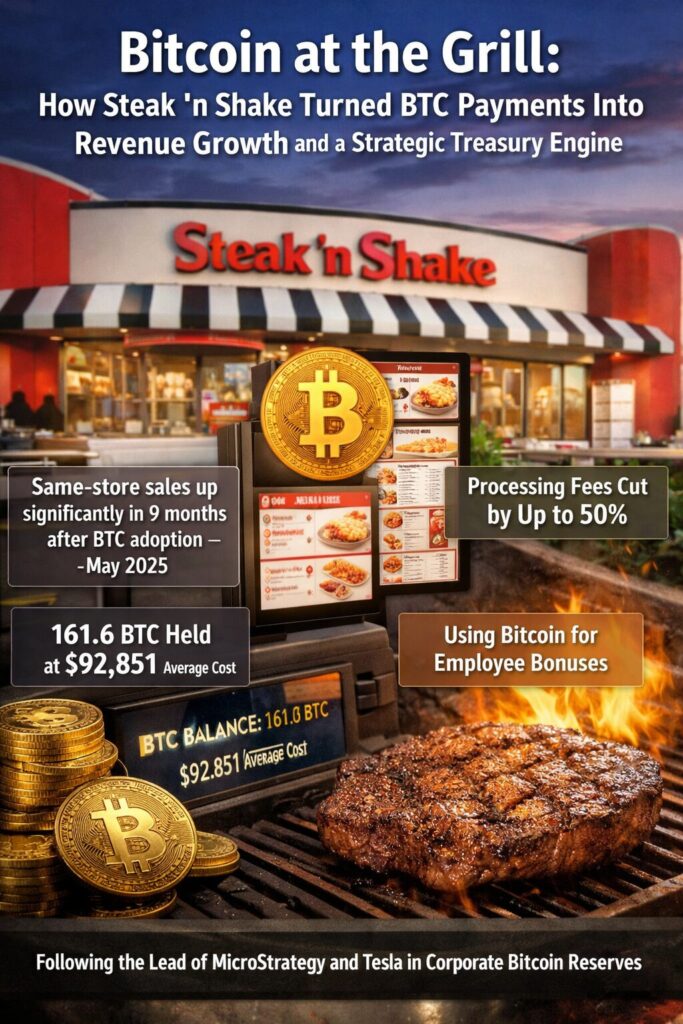
- Steak ’n Shake reported a significant increase in same-store sales within nine months of introducing Bitcoin payments in May 2025.
- The company not only accepts BTC but accumulates it as a strategic reserve and uses it for employee bonuses.
- Transaction processing fees reportedly declined by up to 50% compared to traditional card networks.
- As of writing, the company holds approximately 161.6 BTC with an average acquisition cost of $92,851 per BTC.
- The case reflects a broader trend of corporate Bitcoin treasury strategies seen in firms like MicroStrategy and Tesla.
- Bitcoin adoption in retail remains limited, but hybrid models—payment plus treasury—may represent a scalable business innovation.
1. A 1934 Brand Meets 21st-Century Money
Steak ‘n Shake, the American burger chain founded in 1934, surprised the market when it announced that after introducing Bitcoin payments in May 2025, its same-store sales increased substantially over the following nine months.
Unlike many publicity-driven crypto pilots, this initiative went beyond merely accepting digital currency at checkout. The company strategically integrated Bitcoin into its financial structure. Payments received in BTC were not immediately converted into dollars. Instead, a significant portion was accumulated as a corporate Bitcoin reserve.
This dual approach—operational usage and treasury strategy—transformed what could have been a marketing gimmick into a structural financial shift.
2. Revenue Growth After BTC Adoption
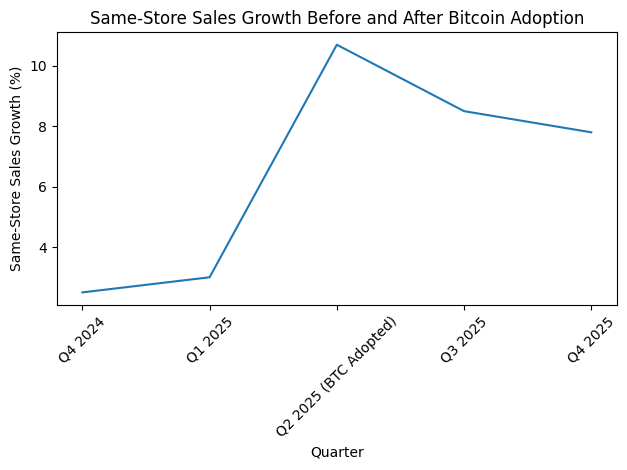
In August 2025, the company reported a 10.7% increase in same-store sales during Q2 2025 (April–June), shortly after implementing Bitcoin payments. The firm publicly described Bitcoin as a “game changer.”
The revenue growth appears to be driven by multiple overlapping factors:
- Increased media exposure and viral social engagement.
- Attraction of Bitcoin enthusiasts who intentionally support crypto-friendly businesses.
- Enhanced brand positioning as technologically forward-looking.
- Reduced friction for digital-native customers.
“Same-Store Sales Growth Before and After Bitcoin Adoption”
Graph description:
A line graph showing quarterly same-store sales growth (%), highlighting May 2025 as the BTC adoption date. Pre-adoption average growth ~2–3%, post-adoption peak at 10.7%.
3. The Treasury Strategy: 161.6 BTC on the Balance Sheet
According to data from Bitcoin Treasuries Net, Steak ’n Shake currently holds approximately:
- 161.6 BTC
- Average acquisition price: $92,851 per BTC
- Implied total acquisition cost: approximately $15.0 million
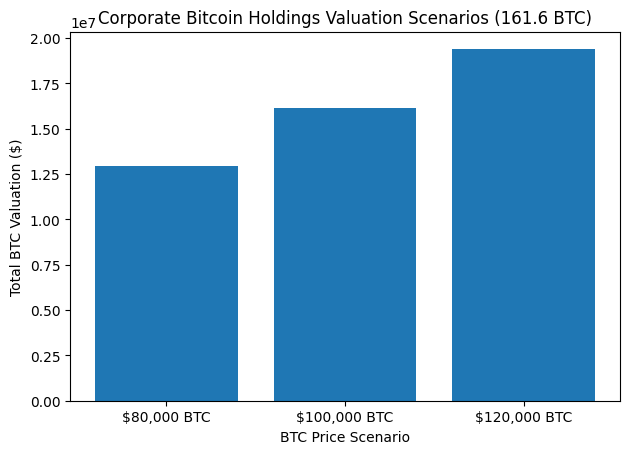
- Current valuation (assuming BTC at $100,000): $16.16 million
“Corporate Bitcoin Holdings and Valuation Scenario”
Bar chart comparison:
- BTC Holdings: 161.6
- Cost Basis: $92,851
- Hypothetical BTC Price Scenarios: $80,000 / $100,000 / $120,000
This treasury strategy mirrors approaches pioneered by:
- MicroStrategy
- Tesla
However, unlike those firms, Steak ’n Shake operates in the low-margin restaurant sector—making this move particularly bold.
4. Fee Reduction: A 50% Cut in Payment Processing Costs
One of the less-discussed but financially meaningful outcomes was the reported 50% reduction in processing fees compared to traditional credit card networks.
Traditional payment rails typically involve:
- 2–3% interchange fees
- Cross-border fees
- Settlement delays
Bitcoin payments—particularly when routed through Layer 2 networks such as the Lightning Network—can significantly reduce these costs.
Although Bitcoin’s base layer can suffer from slower confirmation times, Layer 2 solutions offer near-instant settlement with minimal fees, making retail viability more realistic.
5. Beyond Payments: Bitcoin as Employee Incentive
Another innovative aspect of Steak ’n Shake’s strategy is using accumulated BTC for employee bonuses.
This accomplishes several objectives:
- Aligns employees with company performance.
- Exposes staff to Bitcoin’s long-term appreciation potential.
- Reinforces a culture of technological adoption.
The move echoes the broader corporate narrative that Bitcoin is not merely a speculative asset but a treasury-grade digital reserve.
6. Is Bitcoin Really Suitable for Retail Payments?
Bitcoin has historically struggled as a mainstream retail payment method due to:
- Price volatility
- Variable transaction confirmation times
- Regulatory uncertainty
Yet, adoption data suggests that hybrid strategies may overcome these barriers. According to various industry reports (including PayPal-related research), crypto payments are gradually penetrating everyday commerce, particularly among younger demographics and cross-border users.
Companies such as:
- PayPal
have integrated crypto capabilities, signaling institutional acceptance.
Steak ’n Shake’s case shows that even if only a fraction of customers pay with BTC, the branding and treasury effects may justify implementation.
7. The Strategic Model: Payment + Treasury = Dual Yield
The real innovation is not merely accepting Bitcoin.
It is combining:
Operational Efficiency (Lower Fees) + Treasury Appreciation Potential
This dual-yield model means Bitcoin contributes to:
- Revenue growth
- Cost reduction
- Asset appreciation
Few traditional payment methods offer all three simultaneously.
8. Implications for Businesses Seeking New Revenue Streams
For entrepreneurs and investors exploring new crypto assets or revenue sources, several lessons emerge:
1. Retail Businesses Can Leverage Crypto Without Being “Crypto Companies”
Bitcoin integration does not require becoming an exchange or fintech firm.
2. Treasury Strategy Amplifies Impact
Passive acceptance without accumulation limits upside potential.
3. Brand Differentiation Is Economically Valuable
Bitcoin adoption created a narrative advantage.
4. Volatility Can Be Managed Strategically
Dollar-cost averaging and structured reserve policies reduce exposure risk.
9. Risk Considerations
This strategy is not without risks:
- BTC price drawdowns
- Accounting complexities
- Regulatory changes
- Liquidity considerations during downturns
If Bitcoin falls significantly below the $92,851 cost basis, balance sheet pressure could emerge.
However, long-term-oriented treasury models assume cyclical volatility.
10. The Bigger Picture: Corporate Bitcoin Adoption Wave
Steak ’n Shake joins a growing list of corporations treating Bitcoin as:
- A hedge against inflation
- A strategic reserve asset
- A marketing catalyst
As global liquidity cycles evolve and interest rates fluctuate, digital hard assets continue to attract corporate attention.
The restaurant sector—historically conservative in financial experimentation—may represent the next frontier.
Conclusion: A Blueprint for the Hybrid Crypto Enterprise
Steak ’n Shake’s Bitcoin experiment is not merely about burgers and crypto payments.
It demonstrates a scalable model:
- Accept Bitcoin.
- Reduce payment fees.
- Accumulate reserves.
- Reward employees.
- Attract a new customer demographic.
For readers seeking new crypto opportunities or practical blockchain applications, this case illustrates that innovation does not always require launching a token.
Sometimes, adopting Bitcoin strategically can transform a traditional business into a financially adaptive, future-ready enterprise.


