
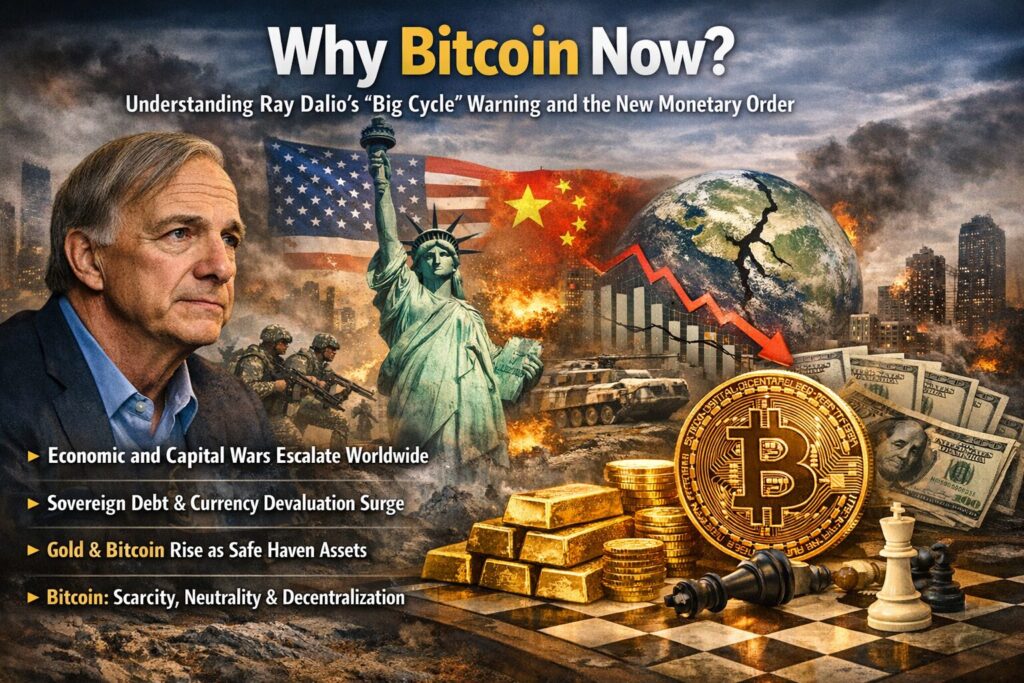
Main Points :
- Ray Dalio argues the world has entered Stage 6 of a historical “Big Cycle,” where global order weakens and power dynamics dominate.
- Economic and capital wars precede military conflict, reshaping trade, technology, finance, and geopolitical alliances.
- Massive sovereign debt and currency debasement historically accompany such transitions.
- Hard assets like gold — and increasingly Bitcoin — gain attention during systemic instability.
- Bitcoin’s neutrality, scarcity, and decentralization position it as a potential hedge against capital conflict and monetary dilution.
- Institutional adoption and structural shifts in global finance reinforce Bitcoin’s evolving role.
1. Ray Dalio and the “Big Cycle” Thesis
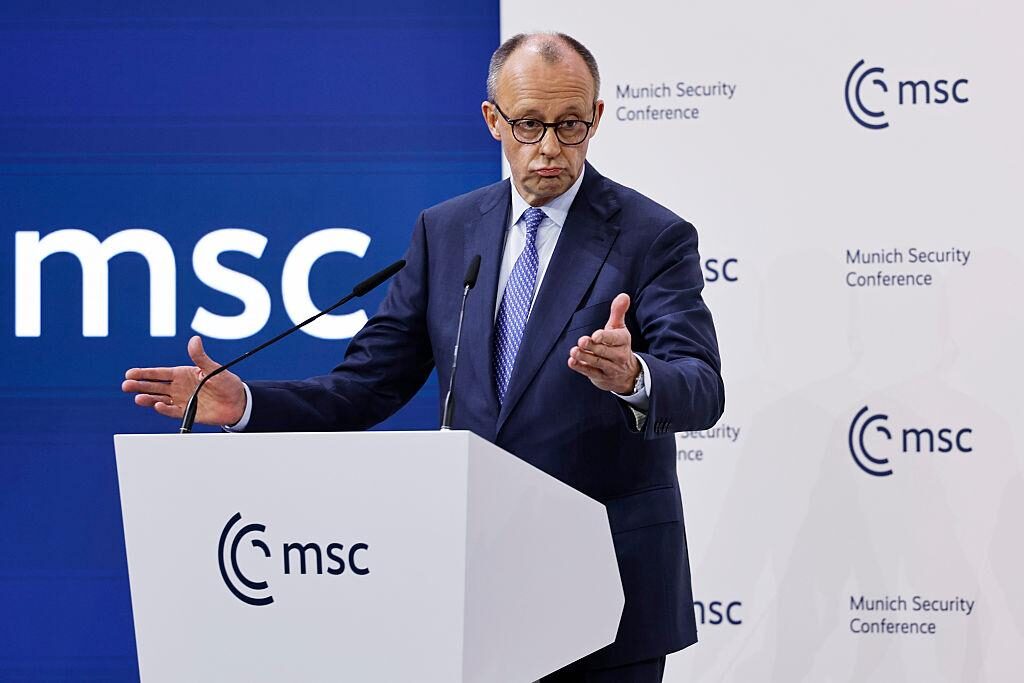
Renowned investor Ray Dalio, founder of Bridgewater Associates, recently reignited global debate with his remarks following the 2026 Munich Security Conference. According to Dalio, numerous leaders at the conference implicitly acknowledged that the post-1945 world order is eroding.
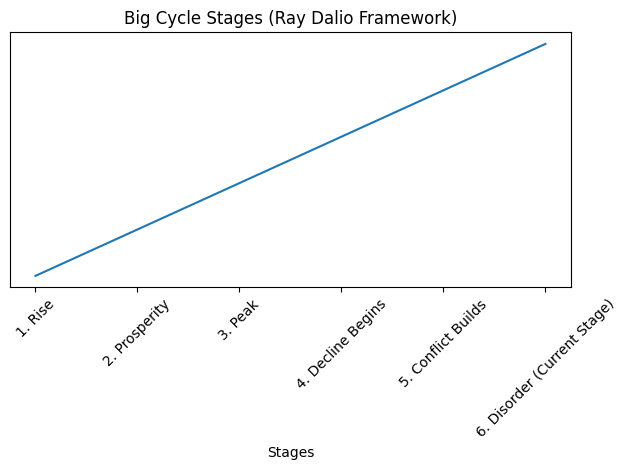
Dalio frames this moment within what he calls the “Big Cycle” — a recurring historical pattern that describes the rise and fall of empires, reserve currencies, and financial systems. He argues that we are currently in Stage 6 of this cycle — a phase characterized by internal polarization, external conflict, and the breakdown of established global rules.
Historically, Dalio observes, once trust in institutions erodes and fiscal discipline collapses, economic and capital conflicts escalate. Only later do these tensions evolve into military confrontation. The defining feature of Stage 6 is not immediate war, but instability: volatile capital flows, sanctions, asset freezes, and fragmentation of trade systems.
For crypto investors and blockchain entrepreneurs, this framing is more than academic. It suggests we may be entering a structural shift in global monetary architecture — the kind of environment where alternative financial rails gain strategic importance.
2. The Five Forms of Modern Conflict
Dalio identifies five arenas of conflict during the late stages of major cycles:
- Trade war
- Technology war
- Geopolitical war
- Capital war
- Military war
Today, he argues, we are firmly in the first four categories.
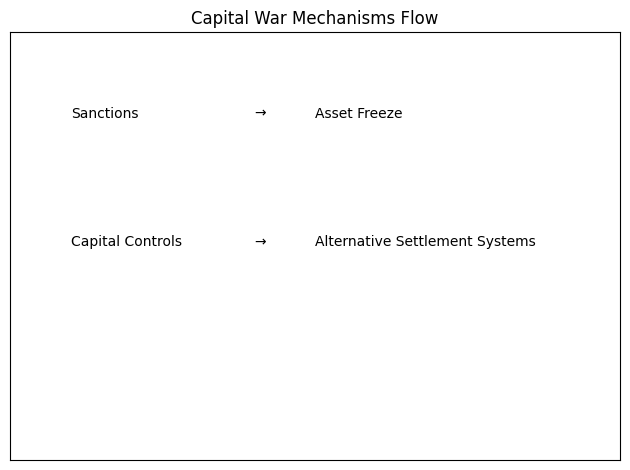
Capital war, in particular, has become a powerful weapon. Asset freezes, exclusion from global payment networks, restrictions on foreign reserves, and financial sanctions now function as geopolitical leverage. The weaponization of finance has changed how nations perceive monetary sovereignty.
In the 1930s, similar economic fragmentation preceded global military conflict. Following the Great Depression, populist leaders rose to power, protectionism intensified, and competitive currency devaluations destabilized trade. Economic suffering fueled political extremism.
While today’s world is not a direct replica of the 1930s, parallels exist: record sovereign debt, rising populism, geopolitical blocs, and technological rivalry.
For investors, the lesson is clear: during systemic fractures, capital seeks assets that sit outside political control.
3. Debt Expansion and Currency Debasement
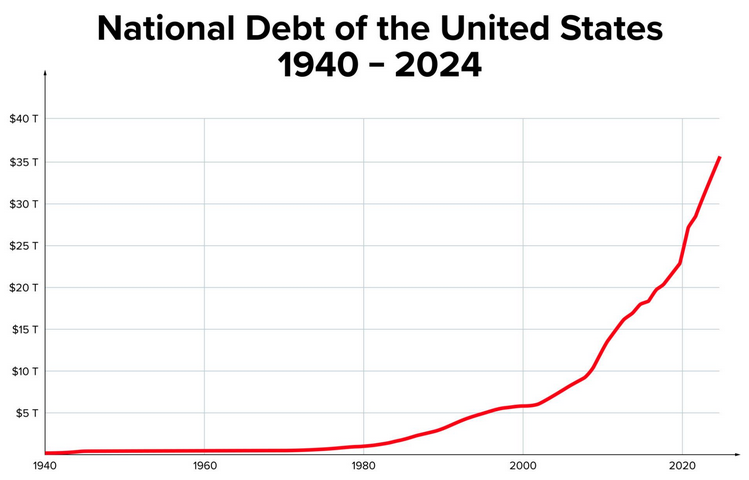
Historically, governments finance conflict and economic stimulus through debt expansion. When debt levels become unsustainable, central banks often monetize that debt — effectively increasing money supply.
The result is currency dilution.
Dalio has repeatedly emphasized that in the late stages of big cycles, holders of cash and nominal debt instruments suffer. Real assets — those not dependent on counterparty trust — tend to outperform.
Gold has traditionally served this role. It requires no issuer’s promise to function as value storage.
However, in the digital age, a new contender has emerged: Bitcoin.
Bitcoin shares gold’s scarcity characteristics, but with additional properties:
- Fixed supply cap of 21 million.
- Borderless transferability.
- Censorship resistance.
- Transparent issuance schedule.
- Self-custody capability.
In an era of capital controls and asset freezes, portability matters as much as scarcity.
4. Why Bitcoin’s Narrative Is Strengthening
Bitcoin was born after the 2008 financial crisis — a direct response to systemic fragility. For years, it was dismissed as speculative or niche.
But structural conditions are shifting:
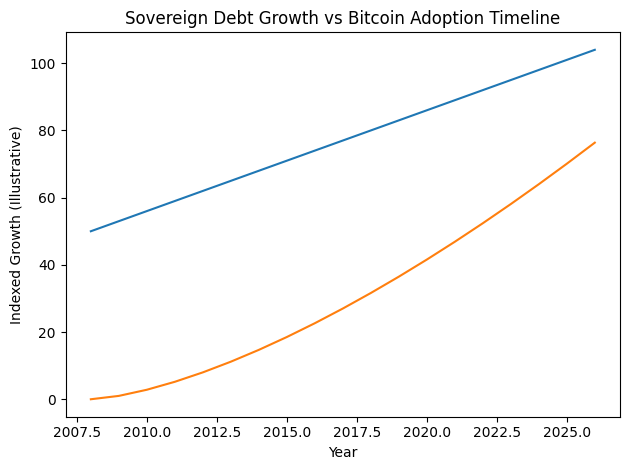
- Sovereign debt levels are historically high across major economies.
- Currency blocs are fragmenting.
- Sanctions regimes are expanding.
- Payment networks are politicized.
In such a world, a neutral, decentralized settlement layer gains appeal.
Bitcoin is not controlled by any government. It cannot be inflated beyond its programmed issuance. Its settlement layer operates independently of traditional banking infrastructure.
Institutional adoption has accelerated in recent years. Spot ETFs in the United States brought mainstream exposure. Pension funds, asset managers, and corporate treasuries now consider Bitcoin within diversified portfolios.
While volatility remains significant, Bitcoin’s long-term risk-adjusted performance has outpaced many traditional assets since inception.
5. Bitcoin vs Gold in the Big Cycle Context
Gold has thousands of years of monetary history. Bitcoin has just over a decade. Yet their macro narratives increasingly converge.
Gold offers stability and established trust. Bitcoin offers programmability and mobility.
Gold is difficult to transport across borders. Bitcoin can move globally in minutes.
Gold is heavy and requires custodianship infrastructure. Bitcoin allows sovereign self-custody.
From a portfolio construction perspective, they may not be competitors — but complementary hedges against monetary debasement.
In capital war scenarios, mobility and resistance to confiscation become decisive features. That is where Bitcoin’s design offers asymmetric advantages.
6. Practical Implications for Investors and Builders
For readers seeking new crypto assets or revenue opportunities, Dalio’s thesis provides macro context — but actionable strategy requires nuance.
Bitcoin is often the first beneficiary of systemic stress narratives. However, capital rotation historically follows a pattern:
- Bitcoin accumulation
- Large-cap altcoin expansion
- Infrastructure and utility token growth
- Speculative cycle peak
Investors should evaluate:
- On-chain metrics (long-term holder behavior, exchange reserves).
- Institutional inflows.
- Regulatory clarity.
- Liquidity conditions.
For blockchain entrepreneurs, the Big Cycle thesis implies something deeper:
Financial infrastructure that is:
- Censorship resistant
- Cross-border
- Non-custodial
- Transparent
…may become strategically essential rather than optional.
Layer-2 solutions, decentralized identity systems, stablecoin frameworks, and cross-chain liquidity protocols could see increasing relevance in fragmented global systems.
7. Risks and Counterarguments
Bitcoin is not immune to risk.
Governments can regulate exchanges. Tax regimes can tighten. Volatility can deter conservative capital.
Moreover, in severe crisis scenarios, liquidity crunches can cause all risk assets — including crypto — to fall temporarily.
The distinction lies in time horizon.
In short-term stress, Bitcoin may behave like a risk asset.
In long-term monetary restructuring, it may behave like a hard asset.
Understanding this duality is critical.
8. Visualizing the Big Cycle Transition
[Big Cycle Stage Diagram – showing stages 1 through 6 with current position highlighted]
[Sovereign Debt Growth vs Bitcoin Adoption Timeline]
[Capital War Mechanisms Flowchart (Sanctions → Asset Freeze → Capital Controls → Alternative Settlement Systems)]
(Images should be created as simplified, professional infographic-style charts in USD terms.)
9. Conclusion: Why Bitcoin Now?
Ray Dalio’s warning is not a prediction of imminent collapse — but an observation of structural transition.
When global rules weaken and debt burdens rise, monetary trust shifts.
During such transitions:
- Cash loses purchasing power.
- Bonds lose reliability.
- Hard assets gain relevance.
- Neutral settlement layers become strategic.
Bitcoin sits at the intersection of monetary scarcity and digital infrastructure.
For investors, it may represent asymmetric upside amid systemic uncertainty.
For builders, it signals demand for resilient financial architecture.
The Big Cycle is not a short-term trade. It is a generational shift.
If Dalio’s framework holds, Bitcoin is no longer just a speculative asset — it is a structural response to a changing world order.


