
Main Points :
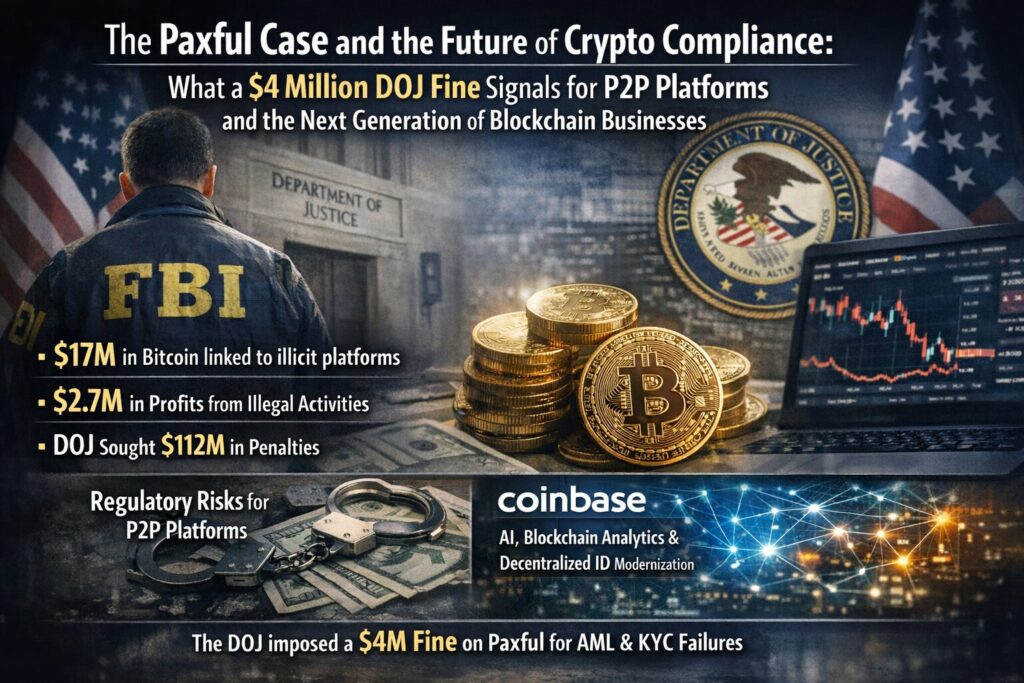
- The U.S. Department of Justice imposed a $4,000,000 criminal fine on Paxful for willfully failing to implement effective AML and KYC controls.
- Between 2015 and 2022, approximately $17,000,000 worth of Bitcoin was transferred from Paxful wallets to Backpage and similar illicit platforms.
- Paxful allegedly earned at least $2,700,000 in profit from transactions linked to illegal activities.
- DOJ originally sought over $112,000,000 in penalties but reduced the fine based on ability to pay.
- The case highlights regulatory risks facing P2P platforms and signals tightening global enforcement.
- At the same time, major players like Coinbase are advocating for modernization of AML frameworks using AI, blockchain analytics, and decentralized identity.
1. The DOJ’s $4 Million Fine: Accountability in the P2P Era
On February 11, 2026, the U.S. Department of Justice announced that it had imposed a $4,000,000 criminal fine on the cryptocurrency peer-to-peer (P2P) trading platform Paxful. The DOJ stated that Paxful failed to maintain an effective anti-money laundering (AML) compliance program and knowingly allowed the movement of funds connected to fraud, prostitution, and human trafficking.
Paxful pleaded guilty to charges including conspiracy to violate the Bank Secrecy Act and facilitating the transfer of criminal proceeds. Federal prosecutors emphasized that the company prioritized growth and profits over compliance safeguards.
According to court documents, from December 2015 to December 2022, approximately $17,000,000 worth of Bitcoin was sent from Paxful wallets to accounts associated with Backpage and other illicit websites. Paxful allegedly earned at least $2,700,000 in profit from these flows.
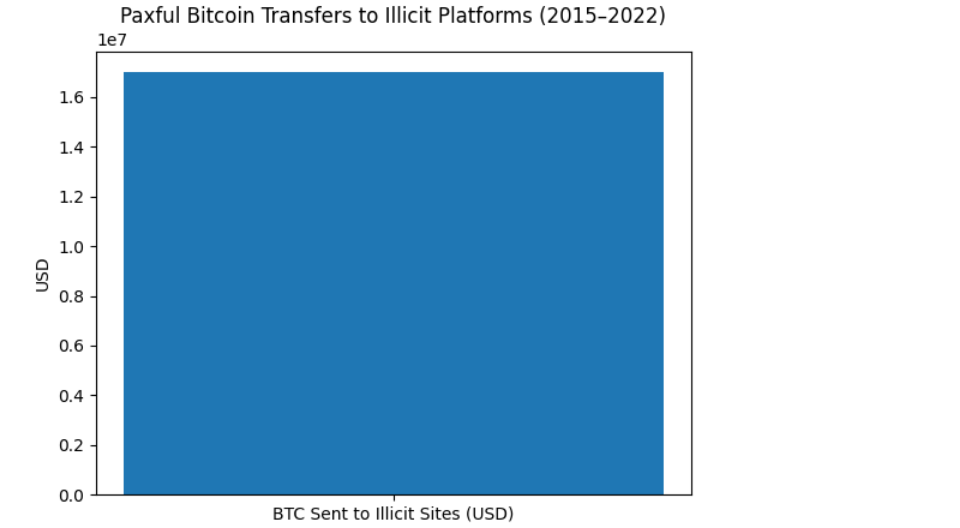
The chart above illustrates the scale of Bitcoin transferred to illicit platforms.
Although the DOJ initially sought over $112,000,000 in penalties, the final fine was reduced to $4,000,000 after determining that Paxful lacked the financial capacity to pay the larger amount.

This comparison shows profit earned versus the final imposed fine.
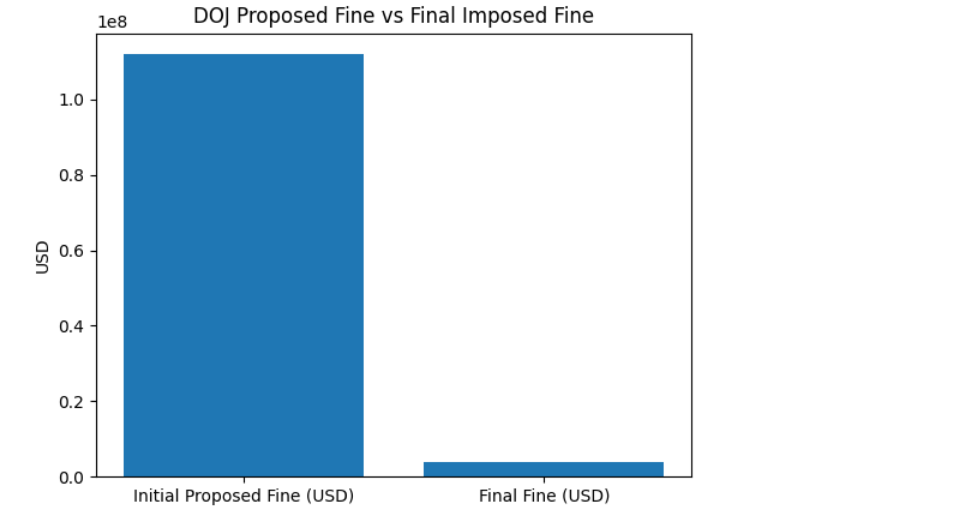
This illustrates the dramatic gap between the proposed and actual fine.
2. Understanding P2P Crypto Platforms and Their Risk Profile
P2P cryptocurrency platforms allow users to trade digital assets directly with one another, without a centralized intermediary acting as counterparty. Instead of an order book managed by an exchange, users negotiate trades directly, often using escrow mechanisms.
This model offers flexibility, privacy, and access for users in underbanked regions. Paxful allowed users to exchange cryptocurrency for cash, prepaid cards, and gift cards — a feature that contributed to its global adoption.
However, this same flexibility creates AML vulnerabilities:
- Difficult transaction traceability
- Non-traditional payment instruments
- Global user base with varying regulatory standards
- Potential use of anonymity as a selling point
Between July 2015 and June 2019, Paxful reportedly marketed itself as a platform that did not require KYC for account creation. Accounts could be opened and used with minimal identity verification.
Internally, company founders allegedly referred to the growth derived from Backpage-related transactions as the “Backpage effect,” highlighting the tension between rapid expansion and regulatory compliance.
3. The Regulatory Climate Is Tightening
The Paxful case is not isolated. U.S. authorities have intensified enforcement actions against crypto-related financial crimes.
In January 2026, DOJ indicted a Venezuelan national accused of laundering approximately $1,000,000,000 using cryptocurrency and related mechanisms.
Globally, regulators are aligning under frameworks such as:
- FATF Travel Rule enforcement
- Expanded suspicious activity reporting obligations
- Stricter exchange licensing requirements
- Enhanced scrutiny of non-custodial and P2P services
This trend signals that regulators are no longer focusing only on centralized exchanges but also on P2P ecosystems, OTC desks, and wallet providers.
For entrepreneurs seeking the next revenue stream in crypto, compliance architecture is no longer optional — it is a strategic differentiator.
4. Compliance as Competitive Advantage
Interestingly, while DOJ is enforcing legacy AML frameworks under the 1970 Bank Secrecy Act, major exchanges such as Coinbase are advocating for modernization.
In October 2025, Coinbase submitted recommendations to the U.S. Treasury arguing that current AML reporting systems are outdated and inefficient. They proposed:
- AI-driven transaction monitoring
- API-based compliance automation
- Blockchain analytics integration
- Decentralized identity frameworks
- Zero-knowledge proof-based verification
This reflects a fundamental shift: compliance technology is becoming a product layer in itself.
For builders and investors, the opportunity lies not only in launching tokens or exchanges, but in developing RegTech infrastructure:
- AI transaction anomaly detection
- On-chain behavioral scoring
- Cross-platform risk aggregation
- Compliance-as-a-service APIs
In other words, the next generation of crypto profitability may come from compliance innovation rather than regulatory arbitrage.
5. Lessons for Founders and Operators
The Paxful case demonstrates several critical lessons:
5.1 Growth Without Controls Is Unsustainable
Short-term revenue derived from high-risk user segments can create existential long-term liabilities.
5.2 KYC Strategy Must Be Dynamic
Tiered verification models, risk-based onboarding, and behavioral monitoring are essential. Marketing “no KYC” is now a red flag globally.
5.3 Board-Level Oversight Is Necessary
Compliance failures are no longer operational oversights; they are governance failures.
5.4 Treasury and Risk Integration
Operators must integrate treasury monitoring with AML alerts. Real-time liquidity exposure combined with suspicious flow detection reduces systemic risk.
6. Where the Opportunity Lies Now
For readers searching for new crypto assets, revenue models, or practical blockchain applications, the regulatory tightening is not a death sentence — it is a filter.
Emerging opportunities include:
- Privacy-preserving compliance tools
- Decentralized identity tokens
- ZK-based KYC systems
- On-chain analytics platforms
- Risk scoring oracles
- Compliant P2P escrow protocols
As institutional adoption grows and stablecoins integrate into payment systems, regulatory-compliant infrastructure will command premium valuations.
The era of “compliance optional” platforms is ending. The era of “compliance engineered into protocol design” is beginning.
Conclusion: Enforcement Is a Signal, Not an Obstacle
The DOJ’s $4,000,000 fine against Paxful is more than a punishment — it is a signal.
It signals that:
- P2P platforms are within enforcement scope
- Profit cannot justify systemic AML negligence
- Legacy laws are being aggressively applied
- Compliance innovation is now a growth sector
For builders and investors, the question is no longer whether regulation will come. It has arrived.
The strategic advantage will belong to those who integrate blockchain efficiency with regulatory-grade compliance architecture.
The future of crypto profitability will likely belong not to the most anonymous platform, but to the most intelligently compliant one.


