
Main Points :
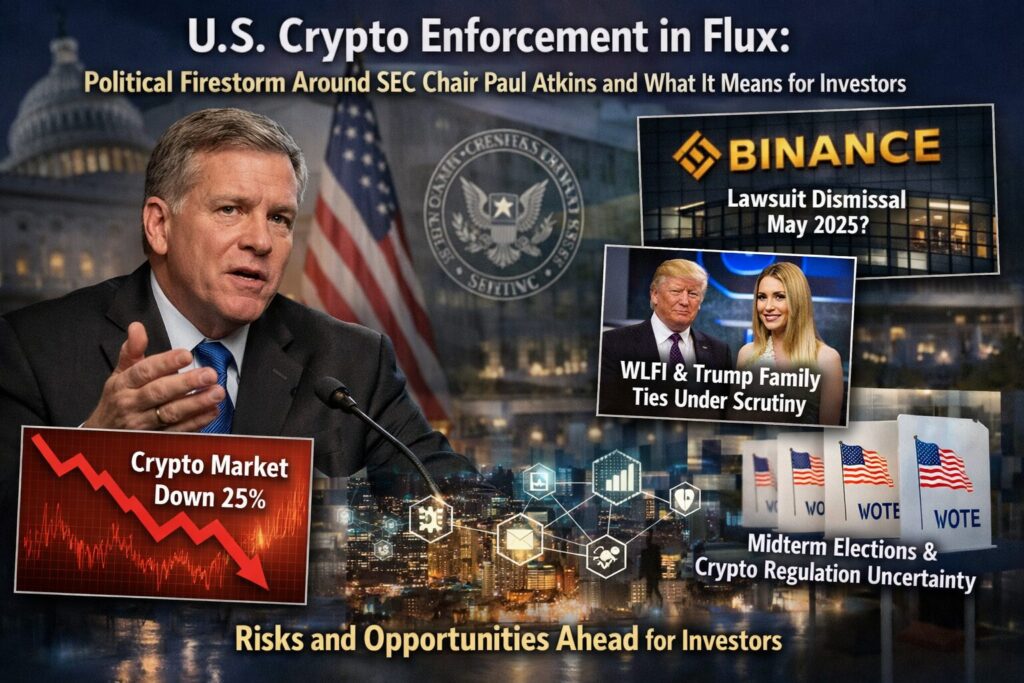
- Democratic lawmakers sharply criticized SEC Chair Paul Atkins over a reported 60% drop in enforcement actions against crypto firms.
- High-profile cases, including a motion to dismiss the Binance lawsuit in May 2025, have intensified political scrutiny.
- Allegations link foreign investment and political donations to projects associated with the Trump family, including World Liberty Financial (WLFI).
- Concerns are rising about market confidence after a reported 25% monthly decline in the crypto market.
- The outcome of U.S. midterm elections could significantly impact crypto market structure legislation.
- Regulatory uncertainty may create both risks and opportunities for investors seeking new crypto assets and blockchain use cases.
A Political Showdown Over Crypto Enforcement
In a heated U.S. House Financial Services Committee hearing, Democratic lawmakers confronted SEC Chair Paul Atkins over what they described as a dramatic retreat in enforcement actions against the cryptocurrency industry. According to Representative Stephen Lynch of Massachusetts, enforcement actions have fallen by approximately 60% since President Donald Trump appointed Atkins as SEC Chair.
Lynch highlighted the SEC’s May 2025 motion to dismiss its lawsuit against Binance as emblematic of what he sees as a regulatory pullback. Previously, the SEC had pursued aggressive litigation against exchanges and token issuers under prior leadership, framing many digital assets as unregistered securities.
Atkins, however, defended the agency’s posture, asserting that the SEC continues to maintain a “strong enforcement regime” and is still bringing cases where warranted. The dispute reflects a broader ideological divide: whether the SEC should prioritize aggressive enforcement to protect investors or shift toward clearer rulemaking and reduced litigation to foster innovation.
For crypto investors and builders, this debate is not merely political theater. It directly affects token listings, exchange operations, DeFi platforms, and the viability of new blockchain-based financial products.
Allegations of Political Influence and Foreign Capital
The controversy escalated further when Lynch and other Democrats raised concerns about foreign investment in a decentralized finance platform reportedly linked to the Trump family: World Liberty Financial (WLFI).
According to recent reporting, an Abu Dhabi investment vehicle known as Aryam Investment 1, reportedly backed by UAE National Security Advisor Sheikh Tahnoon bin Zayed Al Nahyan, acquired a 49% stake in WLFI’s operating company. Critics argue that such foreign participation could pose national security risks or create avenues for indirect political influence.
Representative Lynch warned that repeated scandals and perceived conflicts of interest are damaging public trust. He claimed that the crypto market had fallen approximately 25% over the past month, reflecting declining investor confidence.
Representative Maxine Waters of California went further, asserting that several dropped SEC cases had previously been legally strong. She argued that pardons and regulatory withdrawals benefited executives who allegedly donated millions of dollars to Trump and his family.
These claims—while politically charged—underscore a central issue: regulatory integrity. For serious crypto investors, the perception of political favoritism or uneven enforcement can significantly influence capital allocation decisions.
Market Confidence and the 25% Decline
A reported 25% market decline in a single month is not unusual in crypto’s historical volatility. However, when framed in the context of political controversy, it becomes symbolic of broader trust concerns.
Recent trends show that:
- Bitcoin (BTC) has remained relatively resilient compared to altcoins.
- Ethereum (ETH) has experienced volatility tied to ETF flows and staking narratives.
- Meme coins and politically themed tokens have shown sharp speculative swings.
- Institutional flows into spot Bitcoin ETFs have stabilized but remain sensitive to macroeconomic data.
From a dollar-denominated perspective:
- Bitcoin trading near $60,000–$70,000 has experienced double-digit percentage swings.
- Ethereum fluctuating between $3,000–$4,000 remains highly responsive to regulatory signals.
- Smaller-cap tokens often see 30–50% monthly moves in uncertain regulatory environments.
Political instability amplifies volatility. Yet for investors seeking asymmetric returns, volatility is also opportunity.
U.S. SEC Crypto Enforcement Actions (Estimated Trend Before and After Leadership Change)
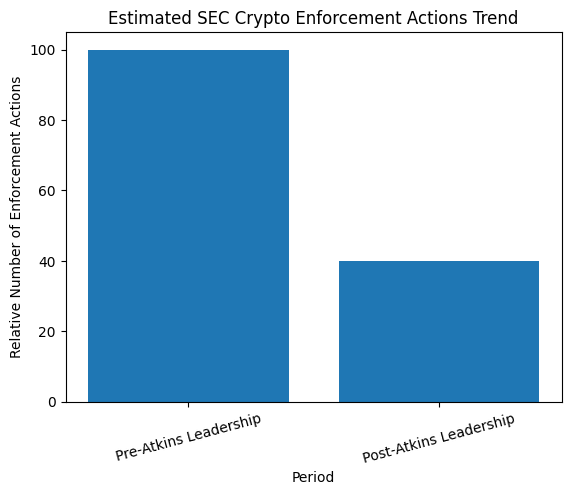
This chart should visualize estimated enforcement actions pre- and post-Atkins appointment, showing the reported 60% decline.
Crypto Market Monthly Decline (Dollar-Denominated Percentage Change)
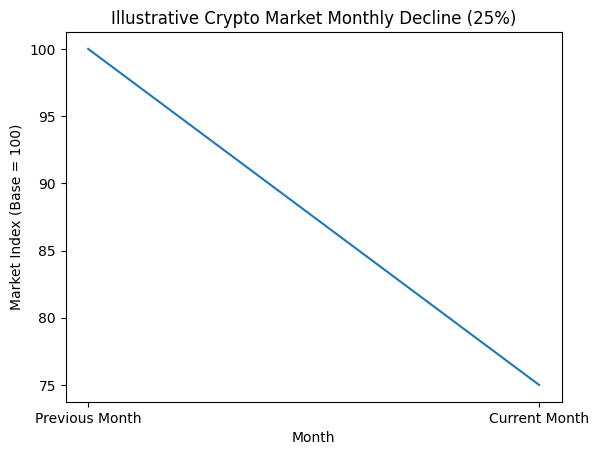
A bar graph illustrating a 25% market decline month-over-month.
Regulatory Uncertainty: Risk or Strategic Entry Point?
For readers searching for the next revenue stream or emerging crypto assets, regulatory flux presents a dual reality.
1. Risk Factors
- Policy reversals following elections.
- Delays in market structure legislation.
- Increased investigations if Democrats regain at least one chamber of Congress.
- Heightened scrutiny of politically affiliated tokens.
If Democrats regain control of one chamber in the midterm elections, crypto-related legislation—such as market structure reform or stablecoin frameworks—could stall. That would prolong uncertainty for exchanges and DeFi platforms operating in the U.S.
2. Opportunity Zones
However, regulatory relaxation periods often precede:
- Innovation cycles in DeFi.
- New token issuance waves.
- Venture capital re-entry into blockchain infrastructure.
- Growth in real-world asset (RWA) tokenization.
In 2024–2026, one of the strongest narratives globally has been the tokenization of traditional assets. Major institutions are experimenting with blockchain-based bonds, funds, and payment rails. Even amid political disputes, practical blockchain use cases continue expanding:
- Stablecoins for cross-border settlement.
- On-chain treasury management.
- Tokenized real estate and private credit.
- Decentralized identity verification.
For builders and investors, the key is to separate political noise from technological fundamentals.
The Trump Factor and “Political Tokens”
The rise of politically affiliated tokens and meme coins introduces a new speculative layer. Historically, politically themed tokens have experienced:
- Rapid pump cycles.
- Low fundamental backing.
- Regulatory unpredictability.
Investors must distinguish between:
- Infrastructure tokens with long-term utility.
- Speculative meme assets tied to political narratives.
In dollar terms, meme tokens can surge from $0.0001 to $0.01 within weeks—but can collapse equally fast. Sustainable wealth generation requires careful portfolio segmentation.
Institutionalization vs. Politicization
The broader question emerging from this hearing is whether crypto will become institutionalized within U.S. regulatory frameworks—or remain politicized.
Recent macro trends suggest:
- Increasing institutional adoption via ETFs.
- Growing corporate treasury allocations to Bitcoin.
- Expansion of regulated custody solutions.
- Global competition from jurisdictions such as the UAE, Singapore, and Hong Kong.
If U.S. regulation becomes unpredictable, capital may shift offshore. Conversely, a stable bipartisan framework could unlock significant institutional capital inflows.
What Should Investors and Builders Watch?
- SEC enforcement statistics over the next two quarters.
- Congressional control after midterm elections.
- Stablecoin legislation progress.
- ETF inflows in dollar terms.
- Cross-border capital flows into tokenized assets.
- Foreign sovereign wealth participation in crypto projects.
Strategically, portfolio allocation may include:
- Core holdings: Bitcoin ($60,000–$70,000 range), Ethereum ($3,000–$4,000 range).
- Infrastructure tokens tied to scaling and interoperability.
- Carefully sized exposure to emerging DeFi protocols.
- Minimal allocation to political meme coins.
Conclusion: Political Volatility, Structural Opportunity
The confrontation between Democratic lawmakers and SEC Chair Paul Atkins highlights a fundamental tension in the U.S. crypto landscape: enforcement versus innovation.
While accusations of political favoritism and foreign influence intensify partisan battles, the underlying trajectory of blockchain technology continues forward. Regulatory shifts can temporarily depress markets—such as a reported 25% monthly decline—but they also reset valuations and create entry points.
For investors seeking new crypto assets and revenue opportunities, the critical task is disciplined analysis. Focus on projects with:
- Transparent governance.
- Real-world utility.
- Strong treasury management.
- Sustainable token economics.
Political cycles may disrupt sentiment, but technological adoption compounds over time. In the long arc of blockchain development, clarity eventually replaces chaos.
The coming months—particularly surrounding U.S. elections—will shape the regulatory environment. Yet global blockchain expansion suggests that innovation will not wait for political consensus.
For strategic participants, this is less a moment of retreat—and more a moment of careful positioning.


