

Main Points :
- U.S. nonfarm payrolls significantly exceeded expectations, triggering sharp intraday volatility in Bitcoin around $69,000.
- The unemployment rate fell to 4.3%, reinforcing the view that the Federal Reserve will pause rate hikes, with market-implied probabilities near 95%.
- Risk assets diverged: equities showed mixed performance, gold reversed from new highs, and crypto struggled to maintain momentum.
- Traders warn of further Bitcoin downside, with Fibonacci levels pointing to potential retracements toward $64,569, $62,474, and $59,805.
- A growing narrative suggests a slow drift toward the low $50,000s before a structural rebound—echoing patterns seen in 2022.
- Upcoming inflation data (CPI) may determine whether Bitcoin resumes its bull cycle or enters a deeper consolidation phase.
A Strong U.S. Labor Market Jolts Bitcoin
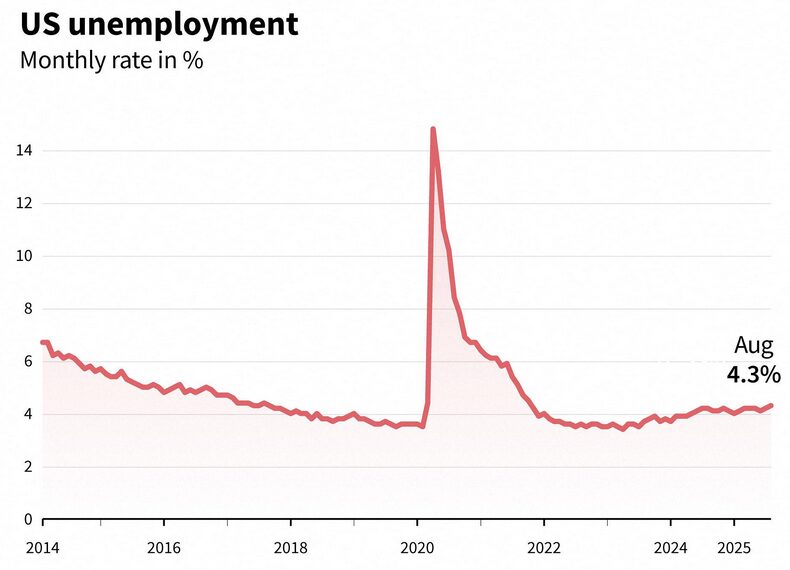
Bitcoin (BTC) experienced sharp price action around the opening of U.S. equity markets after the release of unexpectedly strong U.S. employment data. According to official figures, nonfarm payrolls increased by 130,000 compared to expectations of 55,000. This substantial upside surprise reshaped short-term market expectations across asset classes.
Initially, Bitcoin surged close to $69,000, attempting to reclaim earlier intraday losses. However, the rally quickly faded. At the time of writing, BTC was down more than 4% on the day, highlighting the fragile balance between macro optimism and monetary tightening risk.
A strong labor market typically implies reduced urgency for rate cuts. For risk assets—including cryptocurrencies—this can be interpreted as a headwind. However, a healthy labor market also reduces recession risk, creating a complex macro environment where “good news” can simultaneously be bullish and bearish.
This duality is increasingly evident in crypto markets, where macro sensitivity has grown alongside institutional participation and ETF-driven flows.
Fed Pause Likely to Continue: 95% Probability of No Rate Hike
The unemployment rate fell to 4.3%, below the expected 4.4%, reinforcing the perception that the Federal Reserve is comfortable maintaining its current policy stance.
Market-based tools, including CME’s FedWatch data, indicate that the probability of the Federal Reserve holding rates steady at its March meeting exceeds 90%, approaching 95% in some estimates.
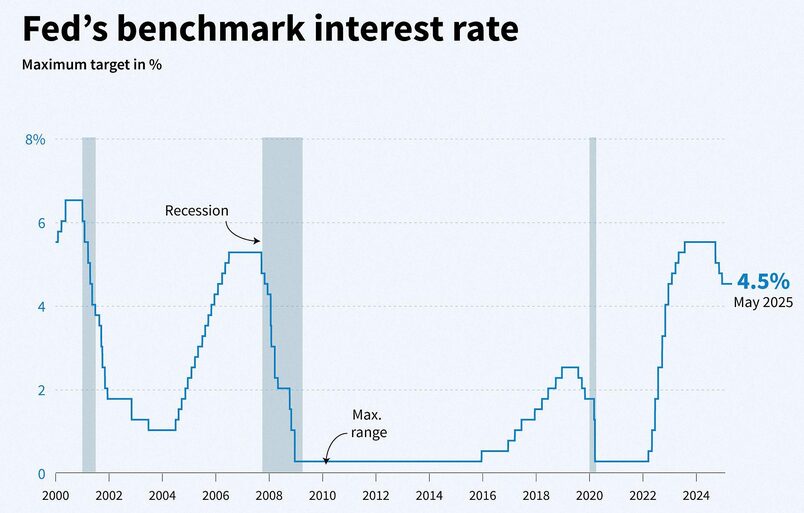
The Kobeissi Letter and other macro analysis services emphasized that the employment report was broadly stronger than expected. The implication is that the Fed’s pause remains intact—at least for now.
For crypto investors seeking new income streams or exposure to emerging digital assets, this environment is pivotal. A prolonged rate pause stabilizes liquidity conditions. While not equivalent to rate cuts, policy stability reduces volatility in funding markets, potentially allowing speculative capital to return.
However, attention now shifts to upcoming Consumer Price Index (CPI) data. If inflation reaccelerates, the pause narrative could weaken, putting pressure on risk assets—including Bitcoin.
Divergence Across Risk Assets
Market reactions were not uniform. The S&P 500 briefly rose 0.5%, while the Nasdaq Composite fell 0.6% before both indices reversed.
Gold also exhibited volatility. After reaching a fresh February high, it lost momentum and tested support near $5,000 per ounce (converted to U.S. dollar terms for consistency). Precious metals’ instability underscores investor uncertainty regarding inflation and real yields.
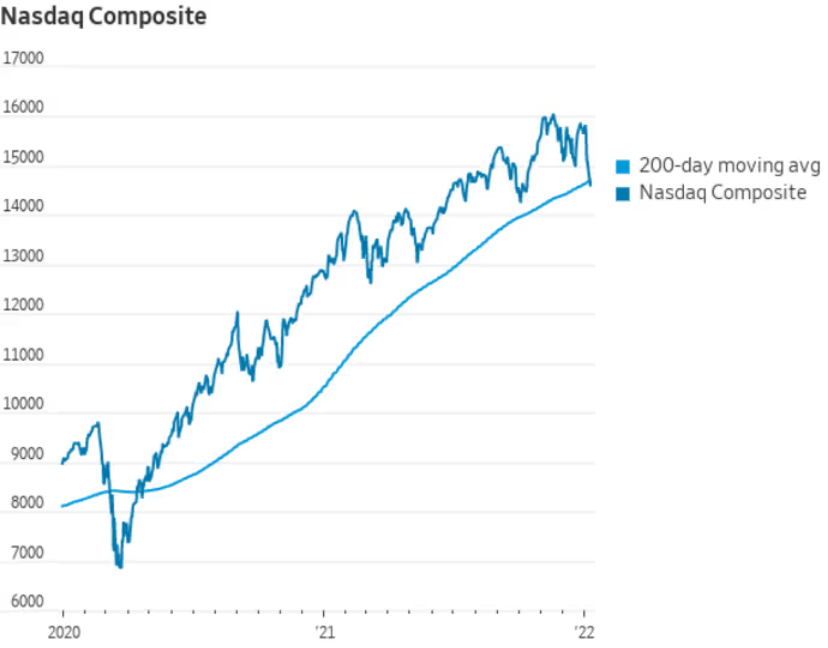
Crypto, traditionally viewed as a high-beta risk asset, mirrored this indecision. Institutional flows into Bitcoin ETFs have been strong in recent months, but macro-driven volatility remains a dominant force.
For readers searching for the next crypto opportunity, this divergence suggests selective positioning may outperform broad exposure. Layer-2 ecosystems, real-world asset tokenization, and stablecoin yield protocols could become more attractive if macro uncertainty persists.
Technical Signals: Fibonacci Levels and the Path Toward $50,000
Traders remain cautious. Daan Crypto Trades identified key Fibonacci retracement levels at $64,569, $62,474, and $59,805.
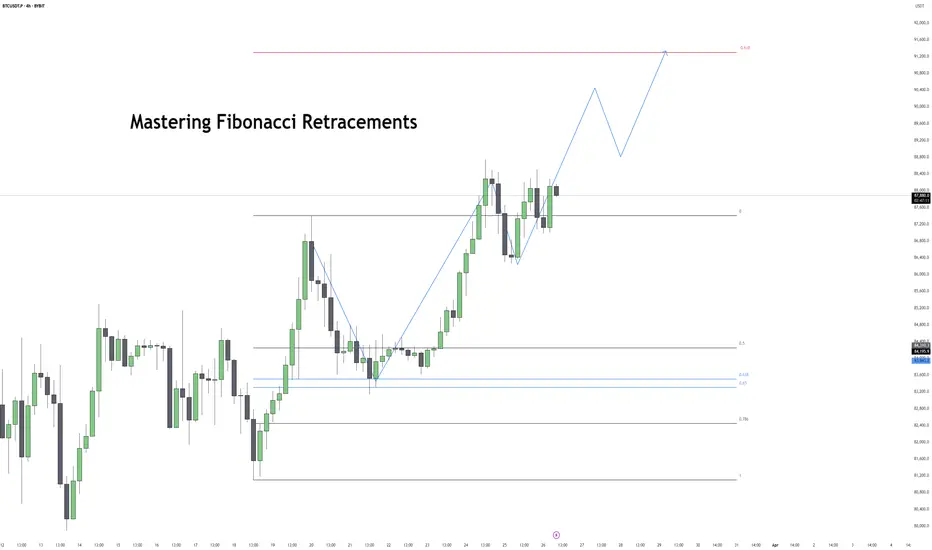
According to this technical framework, unless Bitcoin can decisively reclaim $68,000–$72,000, downside retracement remains likely. The $69,000 region is considered structurally important, with range-bound price action potentially extending for weeks or months.
Some analysts argue that Bitcoin is closely following the 2022 bear market fractal. Under this scenario, BTC could gradually drift toward the low $50,000s before staging a significant rebound.
This raises an important behavioral question: Will market participants truly buy if price reaches $50,000? Historically, investors express willingness to buy dips—but actual capital deployment often hesitates during fear-driven declines.
For yield-seeking crypto participants, such retracements could provide opportunities to accumulate high-quality assets, deploy capital into staking platforms, or rebalance portfolios into infrastructure tokens with strong cash flow narratives.
Macro Context: Structural Bull Market or Extended Consolidation?
Bitcoin’s long-term trajectory remains influenced by broader structural themes:
- Spot ETF inflows and institutional demand.
- Post-halving supply constraints.
- Increasing real-world adoption of stablecoins and blockchain settlement systems.
- Ongoing development in DeFi, tokenization, and on-chain treasury management.
At the same time, macro uncertainty—particularly regarding inflation and rate policy—may cap upside momentum.
If CPI data confirms disinflation, the market could interpret it as validation of a soft-landing scenario. That would likely support Bitcoin and other risk assets.
Conversely, renewed inflation pressure could push real yields higher, strengthening the dollar and pressuring crypto valuations.
For readers focused on practical blockchain applications, this environment favors projects generating real revenue rather than purely speculative narratives. Stablecoin infrastructure, payment rails, cross-border settlement systems, and compliance-friendly exchanges may benefit from policy stability even if Bitcoin consolidates.
Strategic Implications for Investors Seeking the Next Crypto Opportunity
The current setup suggests three possible paths:
1. Range Consolidation Between $60,000 and $70,000
This would allow altcoins with strong narratives—such as real-world asset tokenization or AI-integrated blockchains—to outperform.
2. Gradual Drift Toward $50,000
A controlled correction could flush leverage and reset funding rates, setting the stage for the next leg higher.
3. Unexpected Breakout Above $72,000
This scenario would invalidate short-term bearish structures and potentially trigger renewed momentum flows.
Investors seeking new revenue streams should consider combining spot accumulation strategies with yield-generating mechanisms such as staking, liquidity provisioning, or structured derivatives products—while carefully managing risk.
Conclusion: Volatility as Opportunity
The stronger-than-expected U.S. employment data has intensified Bitcoin’s short-term volatility while reinforcing expectations that the Federal Reserve will pause rate hikes, with probabilities near 95%.
Markets are navigating a delicate balance between resilient growth and persistent inflation risk. Bitcoin’s reaction—an initial spike toward $69,000 followed by a sharp reversal—reflects this tension.
Technical signals suggest caution, with downside targets near $50,000 still plausible. Yet structurally, the crypto ecosystem continues to mature through institutional integration, ETF flows, and real-world blockchain applications.
For those seeking the next high-conviction crypto investment or sustainable on-chain revenue model, macro-driven pullbacks may represent strategic entry points rather than existential threats.
Volatility is not merely noise—it is the mechanism through which long-term capital repositions.


