
Main Points :
- The European Union is proposing a full prohibition on transactions with all Russia-based crypto service providers, shifting from entity-based sanctions to a blanket ban.
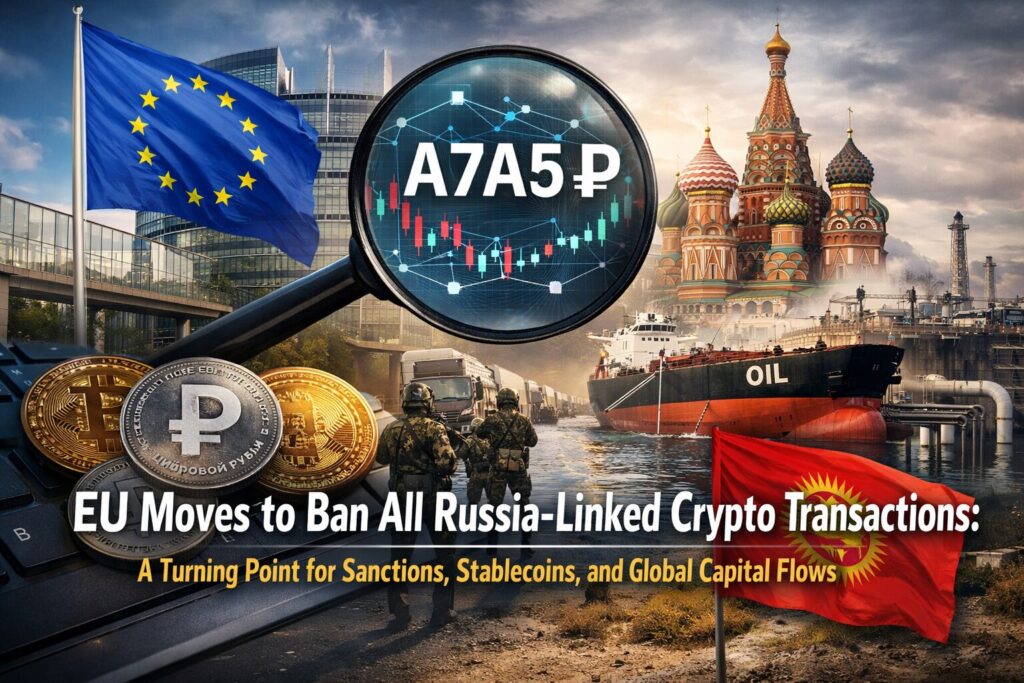
- The proposal aims to close sanction loopholes exploited by successor exchanges such as Garantex and platforms like A7 and its ruble-pegged stablecoin A7A5.
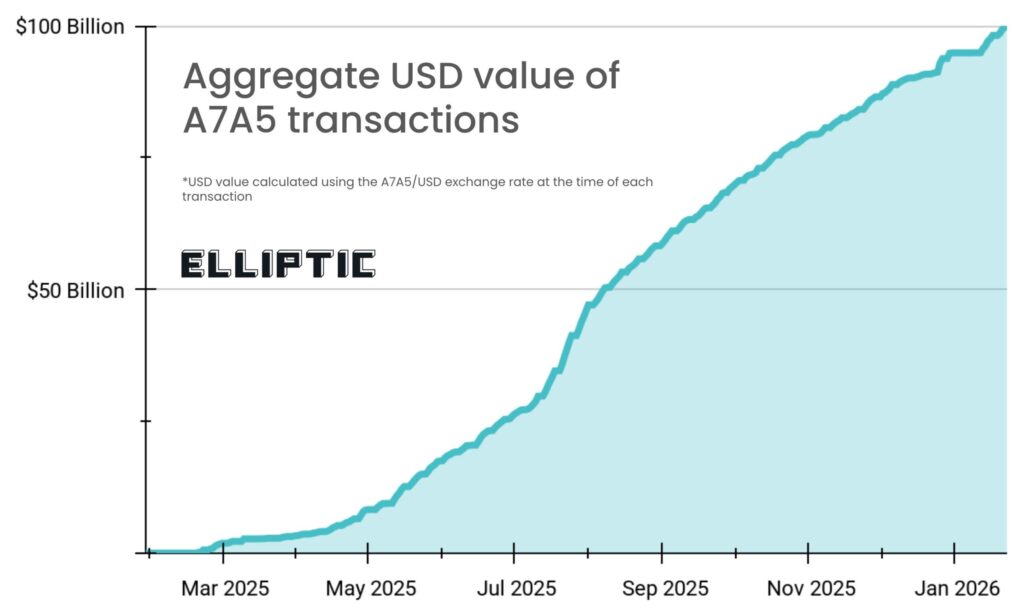
- Blockchain analytics show A7A5 transaction volumes exceeding $100 billion in January, highlighting how crypto is being used to bypass sanctions.
- The ban would also include Russia’s digital ruble (CBDC) transactions.
- The EU is increasing pressure on third countries such as Kyrgyzstan, where trade patterns suggest sanction circumvention.
- New measures would tighten restrictions on Russian oil transport services, effectively replacing the G7 price cap model with stricter controls.
- The decision could reshape global crypto liquidity, stablecoin usage, and cross-border settlement strategies.
1. From Targeted Sanctions to Blanket Crypto Prohibition
The European Union is preparing what may become the most comprehensive crypto-related sanction framework since the Russia-Ukraine conflict began. According to internal documents reported by the Financial Times, the European Commission is proposing a complete ban on transactions with all cryptocurrency service providers established in Russia.
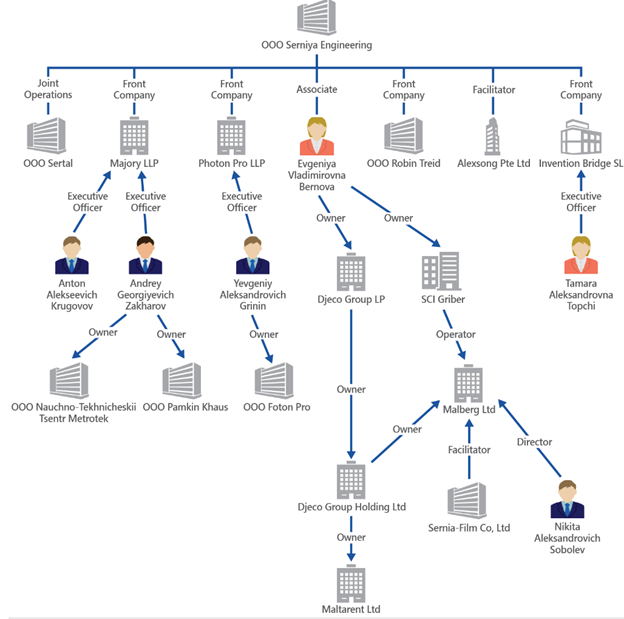
Previously, EU sanctions targeted specific exchanges or entities. However, authorities determined that sanctioned companies quickly created successor organizations, continuing operations under new legal identities. This regulatory “cat-and-mouse game” rendered targeted sanctions ineffective.
Under the new proposal:
- Any transaction with Russia-based crypto service providers would be prohibited.
- EU individuals and firms would be banned from using platforms enabling crypto transfers or exchanges connected to Russia.
- The prohibition would extend to digital ruble (CBDC) transactions.
This shift represents a structural evolution in financial warfare: instead of blocking individual actors, the EU seeks to exclude an entire national crypto ecosystem from European participation.
2. The Garantex Precedent and the Rise of A7 / A7A5
A key driver of the proposal is the case of Garantex, a Russia-linked crypto exchange sanctioned by the United States in 2022 for facilitating cybercrime-related transactions.
Despite sanctions, successor platforms reportedly emerged, allowing continued activity. The EU now seeks to prevent such reconstitution.
Particular focus is being placed on:
- A7, a Russian payment platform.
- A7A5, a ruble-pegged stablecoin issued via A7.
According to blockchain analytics firm Elliptic, A7A5’s transaction volume surpassed $100 billion in January alone. Such scale suggests that existing sanctions are being systematically circumvented through crypto rails.
For investors and operators, this development highlights a key reality: stablecoins are no longer neutral instruments—they are geopolitical infrastructure.
3. Russia’s Strategic Pivot Toward Crypto Settlements
In August 2024, Russia legalized the use of cryptocurrency for international settlements. President Vladimir Putin positioned crypto as a strategic alternative to Western financial infrastructure.
This move aligned with broader trends:
- Increased use of stablecoins for cross-border trade.
- Development of the digital ruble (CBDC).
- Efforts to build payment corridors with non-Western partners.
By legalizing crypto settlements, Russia sought to:
- Reduce reliance on SWIFT.
- Circumvent banking restrictions.
- Facilitate trade with sanctioned or neutral partners.
The EU proposal now directly targets this strategy by banning digital ruble transactions and crypto settlement platforms.
For blockchain entrepreneurs, this demonstrates how crypto infrastructure can become embedded in sovereign monetary policy.
4. The 20th EU Sanctions Package: Targeting “Russian Weaknesses”
On February 6, the EU announced its 20th sanctions package. The stated objective: strike at “Russia’s weaknesses.”
Measures include:
- Adding 20 regional Russian banks to the sanctions list.
- Expanding sanctions to crypto exchanges and platforms.
- Targeting third-country banks facilitating sanction evasion.
- Limiting alternative payment mechanisms.
The package also escalates enforcement against circumvention via third countries.
5. Pressure on Kyrgyzstan: The Sanctions Evasion Corridor
The EU identified Kyrgyzstan as a potential hub for sanction evasion. Data indicates:
- Exports of “common high-priority goods” from the EU to Kyrgyzstan increased approximately 800% since the Ukraine war began.
- Exports from Kyrgyzstan to Russia increased roughly 1,200%.
This pattern suggests rerouting of restricted goods.
The EU is proposing export bans on specific dual-use goods to Kyrgyz entities. This would be the first application of newly expanded anti-circumvention powers.
For crypto professionals, this underscores how sanctions compliance now extends beyond wallets and into supply-chain analytics.
6. Oil Transport Restrictions: Replacing the G7 Price Cap
The sanctions proposal also includes a total ban on services for vessels transporting Russian crude oil.
Under the current G7 framework, transactions exceeding a price cap were restricted. The new proposal would:
- Ban insurance underwriting.
- Ban maintenance services.
- Ban logistical support.
This effectively replaces the price cap model with stricter prohibitions.
The oil market and crypto markets are indirectly linked: energy trade drives dollar liquidity, and dollar liquidity shapes stablecoin dominance. A tightening of Russian oil revenues could alter capital flows that eventually surface in digital asset markets.
7. Implications for Crypto Markets and Investors
For readers seeking new revenue opportunities and blockchain applications, several implications stand out:
7.1 Stablecoin Geopolitics
Stablecoins are becoming parallel settlement networks. Projects offering cross-border liquidity may face:
- Increased compliance requirements.
- Geographical transaction screening.
- Enhanced blockchain analytics monitoring.
7.2 Fragmented Liquidity
If EU capital cannot interact with Russian-linked liquidity pools, markets may fragment into:
- Western-compliant liquidity.
- Sanctioned or parallel liquidity ecosystems.
This fragmentation could create arbitrage opportunities—but also regulatory risk.
7.3 CBDC Competition
The inclusion of the digital ruble in the ban signals that CBDCs are now viewed as strategic instruments.
Future investors should monitor:
- Cross-border CBDC bridges.
- Stablecoin-CBDC interoperability.
- Decentralized settlement protocols that are jurisdiction-neutral.
8. The Unanimity Challenge
EU sanctions require unanimous approval by all 27 member states. Reports indicate that three countries have expressed reservations.
If adopted by February 24 (the anniversary of the invasion), the package would mark a significant escalation.
If delayed, it may signal internal political divisions within Europe regarding economic cost versus geopolitical resolve.
9. Strategic Outlook for Blockchain Builders
For crypto entrepreneurs and investors, the takeaway is not simply “sanctions risk.” It is structural:
- Crypto is now core financial infrastructure.
- Stablecoins are geopolitical tools.
- Compliance architecture is a competitive advantage.
- Jurisdictional resilience will define next-generation platforms.
Projects positioned for growth in this environment will likely:
- Embed advanced AML analytics.
- Maintain flexible multi-jurisdiction compliance.
- Design settlement layers adaptable to fragmented liquidity.
- Diversify beyond single-region dependence.
Conclusion
The EU’s proposed blanket ban on Russia-linked crypto transactions marks a turning point in financial sanctions strategy. It signals recognition that digital assets are no longer peripheral—they are central to sovereign economic maneuvering.
By targeting successor exchanges, stablecoins like A7A5, the digital ruble, third-country trade corridors, and oil transport infrastructure, the EU is attempting to close systemic loopholes rather than chase individual violators.
For investors seeking the next wave of crypto opportunity, the message is clear:
The future of blockchain is not just about technology—it is about geopolitical positioning, regulatory architecture, and resilient cross-border settlement networks.
The winners of the next cycle will not simply offer yield or speculation. They will build infrastructure that survives—and thrives—within a world of fragmented financial blocs.


