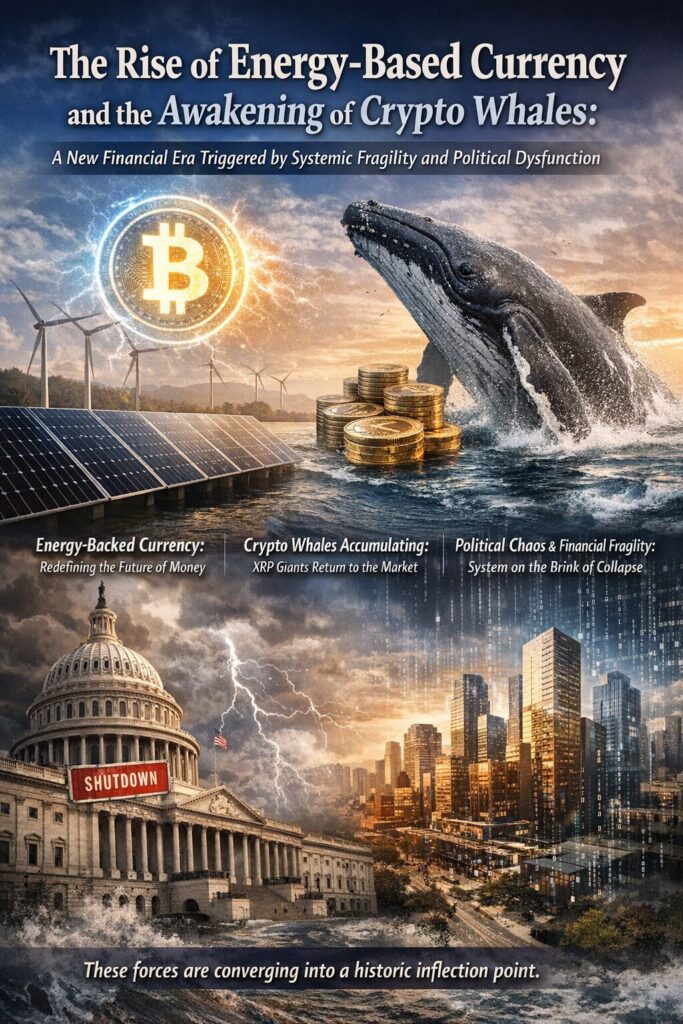
Main Points :
- The concept of energy-based currency represents a fundamental redefinition of value, shifting monetary trust from state authority to physical law.
- Large XRP holders, dormant since September of last year, have resumed accumulation, signaling a potential long-term structural bottom rather than a short-term rebound.
- The growing risk of government shutdowns exposes deep vulnerabilities in centralized financial systems, accelerating capital migration toward mathematically verifiable, decentralized assets.
- These three dynamics—energy-backed value, whale accumulation, and political dysfunction—are converging into a single historical inflection point.
1. Energy-Based Currency: Converting Physical Power into Immutable Value
For centuries, money has been built upon a fragile foundation: trust in the issuing authority. Fiat currencies derive their value not from physical constraints, but from political credibility and institutional continuity. As long as governments function smoothly, this abstraction appears stable. Yet once dysfunction emerges, the illusion begins to crack.
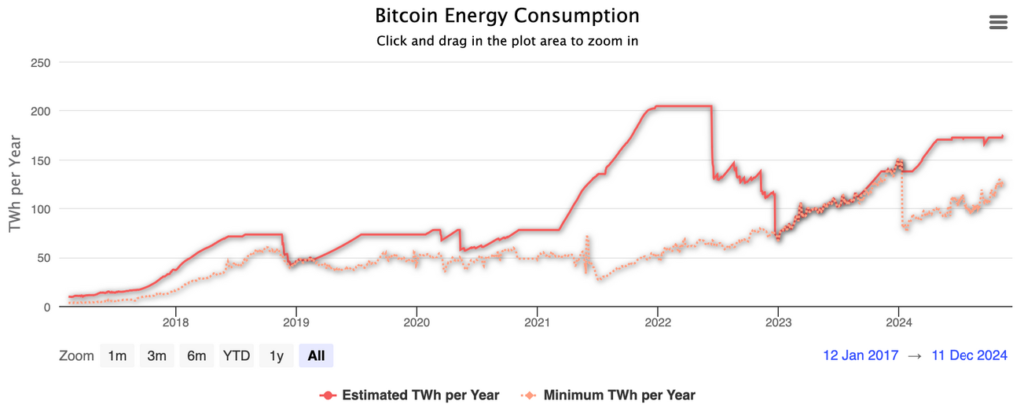
The rise of energy-based currency introduces a radically different paradigm. Instead of anchoring value to national credit, it ties monetary worth directly to physical energy expenditure. Electricity converted into computational work and permanently recorded on tamper-resistant ledgers is, in essence, frozen energy—stored not in batteries, but in mathematics.
This process transforms raw physical power into an immortal digital asset. Unlike fiat money, which can be diluted through discretionary issuance, energy-backed value requires a real, measurable cost. Every unit represents electricity consumed, hardware deployed, and entropy increased. This embeds thermodynamic honesty into the monetary system.
Traditional economic theories of inflation and money supply struggle to account for this model. When viewed through the lens of thermodynamics, arbitrary monetary expansion becomes an anomaly rather than a norm. Energy-based currency reframes value as a conserved quantity, not a political instrument.
In this system, surplus electricity is no longer wasted. Instead, it is preserved as economic value, aligning financial incentives with energy efficiency and infrastructure investment. The convergence of the energy sector and digital finance marks a historic turning point, comparable in magnitude to the abandonment of the gold standard.
What emerges is not merely a new asset class, but an entirely new economic domain—one in which humanity begins trading the very limits of its productive capacity. Ownership of assets becomes synonymous with ownership of a fragment of universal physical law, independent of borders or regimes.
As global instability intensifies in 2026, this energy-anchored model is increasingly perceived as a financial anchor—stronger than gold, more portable than commodities, and immune to political debasement. The source of value is shifting decisively from printing presses to power generators.
Those who recognize this transition early are not merely speculating; they are repositioning themselves within a new civilizational framework where physics, not policy, defines wealth.
**[“Comparison of Fiat Currency Expansion vs. Energy-Constrained Digital Assets (Conceptual Diagram)”]**
2. The Awakening of XRP Whales and the Signal of a Structural Bottom
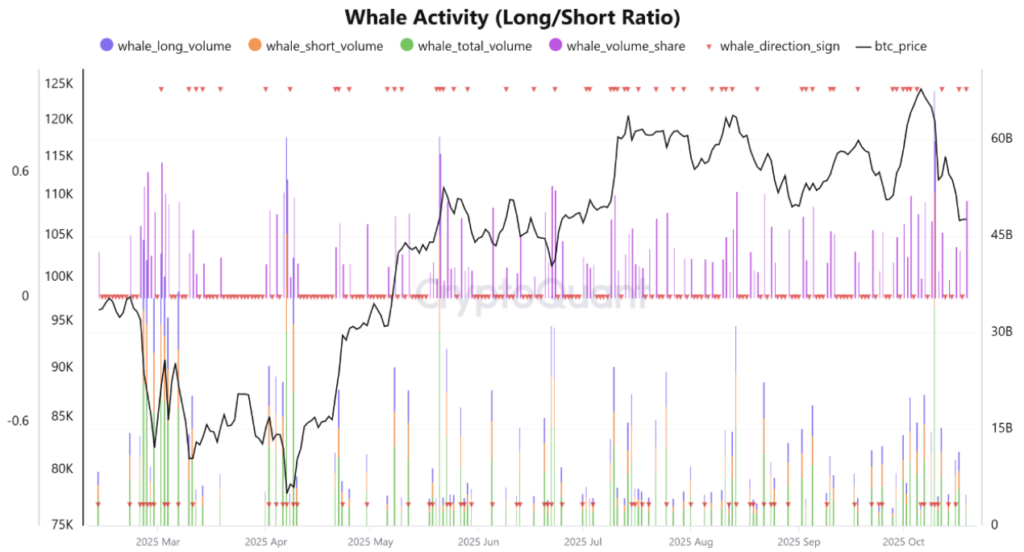
After months of silence, large XRP holders—commonly referred to as whales—have resumed aggressive accumulation for the first time since September of last year. This behavior is not random. In markets, size confers not just capital, but information.
While retail participants capitulated amid regulatory uncertainty and prolonged price stagnation, these large entities remained patient. Their renewed activity suggests that something fundamental has shifted beneath the surface.
Whales do not act on emotion. They act on data, regulatory foresight, and infrastructure-level developments. Their accumulation during periods of widespread pessimism is a textbook signal of long-term positioning rather than speculative momentum trading.
This pattern is familiar throughout financial history. Strategic accumulation occurs when narratives are bleak, liquidity is thin, and public attention has moved elsewhere. Supply consolidates quietly into stronger hands, setting the stage for future volatility expansions.
Behind the visible charts, XRP supply is becoming increasingly concentrated. This concentration represents stored potential energy. When demand returns—or when infrastructure catalysts emerge—price movements can become abrupt and nonlinear.
XRP’s positioning as a cross-border settlement protocol further amplifies the significance of these movements. As global payment systems face fragmentation, assets designed for interoperability gain strategic relevance beyond mere price action.
For large capital, uncertainty is not a threat—it is opportunity. Regulatory ambiguity, political tension, and macro instability create conditions where asymmetrical bets can be placed quietly and patiently.
Retail investors often interpret sideways markets as failure. In reality, they are often periods of redistribution. The current phase bears all the hallmarks of a structural bottom, not because prices have surged, but because informed capital has stopped selling and started absorbing.
Ignoring these signals is equivalent to forfeiting participation in the next regime shift. History consistently rewards those who track capital flows rather than headlines.
**[“Whale Accumulation Phases vs. Market Sentiment (Illustrative Cycle Chart)”]**
3. Government Shutdown Risk and the Mechanics of Systemic Fragility
The renewed threat of government shutdowns is not merely a political inconvenience. It is a stress test for the entire architecture of centralized finance. Markets are not confronting a single risk, but a cascade of interdependent failures.
Fiat currencies rely on uninterrupted governance, credible fiscal policy, and functional institutions. When these pillars wobble, confidence erodes rapidly. Liquidity dries up, correlations converge, and diversification fails precisely when it is most needed.
This fragility exposes the structural weakness of centralized systems: a single malfunction can propagate globally. In 2026, this interconnected vulnerability has reached unprecedented scale due to accumulated debt, political polarization, and financial leverage.
Simultaneous shocks drain liquidity almost instantly. Capital, unable to find refuge, begins cannibalizing itself. What appears as chaos is, in fact, a deterministic outcome of excessive centralization.
Yet within destruction lies opportunity. Collapse clears space for reorganization. As public indicators lose credibility, mathematically verifiable, decentralized protocols emerge as the only remaining anchors of rationality.
This moment marks a reversal in the historical relationship between currency and state. Money begins to outgrow its sovereign container. Assets anchored in code, energy, and cryptography function regardless of political theater.
Clinging to structurally flawed systems is equivalent to remaining aboard a sinking vessel out of habit. True resilience lies in assets whose validity does not depend on legislative consensus or emergency funding bills.
The current crisis should not be viewed as a temporary downturn, but as a transition phase. A new economic order is forming—one that prioritizes autonomy, verifiability, and physical cost over promises.
Those who understand this are not fleeing risk; they are reallocating toward a different definition of safety.
Conclusion: A Converging Signal for a New Financial Epoch
Energy-based value, whale accumulation, and political dysfunction are not isolated phenomena. Together, they form a coherent narrative of transition.
The world is moving away from trust-based abstractions toward systems grounded in physical law and mathematical proof. Capital is consolidating in anticipation. And political systems are inadvertently accelerating the shift through dysfunction.
This is not the end of finance—it is its evolution. Those who adapt early will not merely survive the transition; they will define its contours.
The question is no longer whether the system will change, but whether one chooses to change with it.