
Main Points :
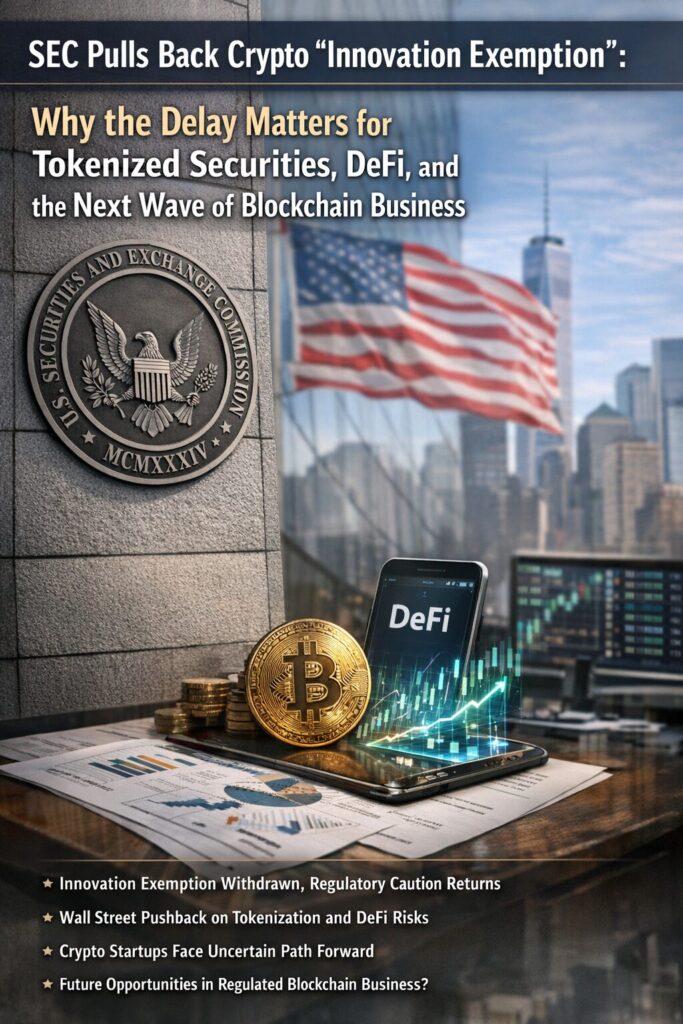
- The SEC has effectively withdrawn its plan to introduce a crypto “Innovation Exemption” in January, signaling a return to regulatory caution.
- The exemption was designed as a regulatory sandbox allowing crypto firms to test tokenized securities and DeFi products without full SEC registration.
- Wall Street institutions strongly opposed broad exemptions, citing investor protection and market fragmentation risks.
- The delay reshapes short-term strategies for crypto startups, institutional investors, and builders exploring new revenue models.
- Despite the setback, the policy debate reveals where future opportunities in compliant tokenization and regulated DeFi may emerge.
Introduction: A Sudden Pause in Crypto Regulatory Momentum
In late January 2026, expectations across the crypto and blockchain industry shifted abruptly. U.S. Securities and Exchange Commission (SEC) Chair Paul Atkins announced that the long-anticipated “Innovation Exemption” for crypto companies would not be introduced in January as previously suggested.
Speaking at a joint event hosted at the headquarters of the Commodity Futures Trading Commission (CFTC) in Washington, Atkins emphasized that the proposal remains under review and must proceed carefully, especially in light of congressional direction and market stability concerns.
This announcement marked a clear retreat from his December comments, where he indicated the framework could be published within “about a month.” For an industry hungry for regulatory clarity, the reversal underscores the persistent tension between innovation and traditional financial oversight in the United States.
What Was the “Innovation Exemption”?
The proposed Innovation Exemption was, in essence, a regulatory sandbox. It would have allowed crypto firms to launch experimental products—such as tokenized securities, on-chain funds, and DeFi protocols with securities-like characteristics—without going through the full and costly SEC registration process.
Intended Goals of the Exemption
- Reduce legal and compliance costs for early-stage blockchain experimentation
- Encourage U.S.-based development instead of offshore structuring
- Allow regulators to observe real-world use cases before finalizing rules
For crypto entrepreneurs and protocol designers, this framework promised faster iteration cycles and clearer feedback loops between innovators and regulators.
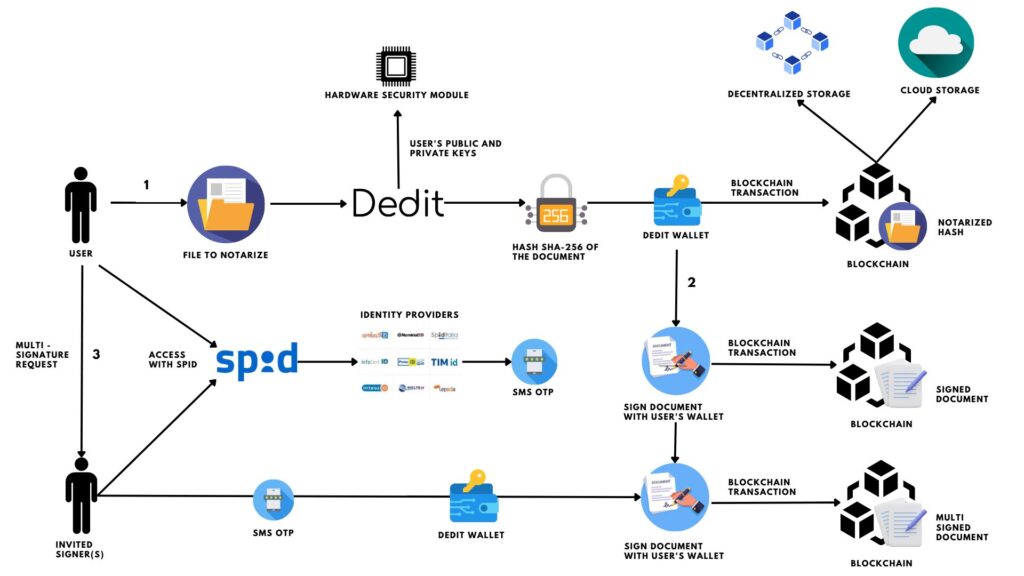
[Conceptual diagram of a crypto regulatory sandbox and product lifecycle]
Why the Industry Was Betting on It
For years, U.S. crypto firms have argued that regulatory ambiguity—not technology—has been the main bottleneck to innovation. Compared with jurisdictions such as Singapore, the UAE, or parts of the EU, American projects often face higher upfront legal costs and enforcement-driven uncertainty.
Under the previous SEC leadership, enforcement actions were frequently used as de facto rulemaking. Atkins signaled a philosophical shift: away from “regulation by enforcement” and toward clear, rule-based frameworks that could repatriate innovation lost to overseas markets.
Had the exemption launched on schedule, it might have accelerated:
- Tokenization of real-world assets (RWAs) such as bonds, funds, and commodities
- Regulated DeFi experiments integrating KYC/AML layers
- New revenue models for exchanges, custodians, and infrastructure providers
Wall Street Pushback: The Missing Piece
Just one day before Atkins’ announcement, major financial institutions met with the SEC’s crypto task force. Participants reportedly included JPMorgan Chase, Citadel, and the Securities Industry and Financial Markets Association (SIFMA).
According to briefing materials, SIFMA warned that broad exemptions could weaken investor protection and introduce systemic risks. Traditional institutions argued that securities should not receive lighter regulation simply because they are issued or traded on a blockchain.
Key Concerns Raised
- Fragmentation of liquidity away from regulated exchanges
- Creation of parallel markets inaccessible to pension funds and mutual funds
- Uneven regulatory treatment between tokenized and traditional securities
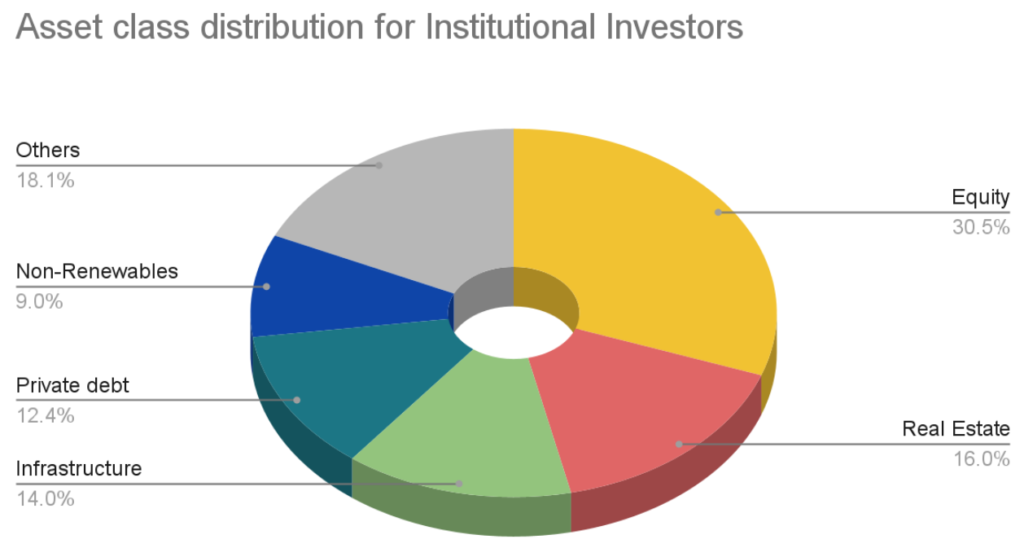
[Comparison of traditional securities markets vs tokenized markets]
The timing strongly suggests that Wall Street pressure influenced the SEC’s sudden caution.
Strategic Implications for Crypto Builders
The delay does not eliminate opportunity—but it changes the playbook.
Short-Term Impact
- Higher compliance costs remain unavoidable for U.S.-based launches
- Pilot projects may continue to migrate offshore
- Venture funding may favor infrastructure over consumer-facing products
Medium-Term Opportunities
Ironically, the debate clarifies where regulators draw the line. Builders who can design products aligned with investor protection, disclosure, and custody standards may gain a first-mover advantage once rules solidify.
This is particularly relevant for:
- Permissioned DeFi models
- Tokenized funds with transfer restrictions
- Blockchain-based settlement layers for existing financial institutions
Tokenization and DeFi: Still Inevitable?
Despite regulatory hesitation, the structural drivers behind tokenization remain strong. On-chain settlement can reduce reconciliation costs, enable 24/7 markets, and unlock programmable compliance.
Major asset managers globally continue to explore tokenized funds and bonds, often starting with internal or permissioned pilots. Even critics of broad exemptions acknowledge that blockchain infrastructure itself is not going away.
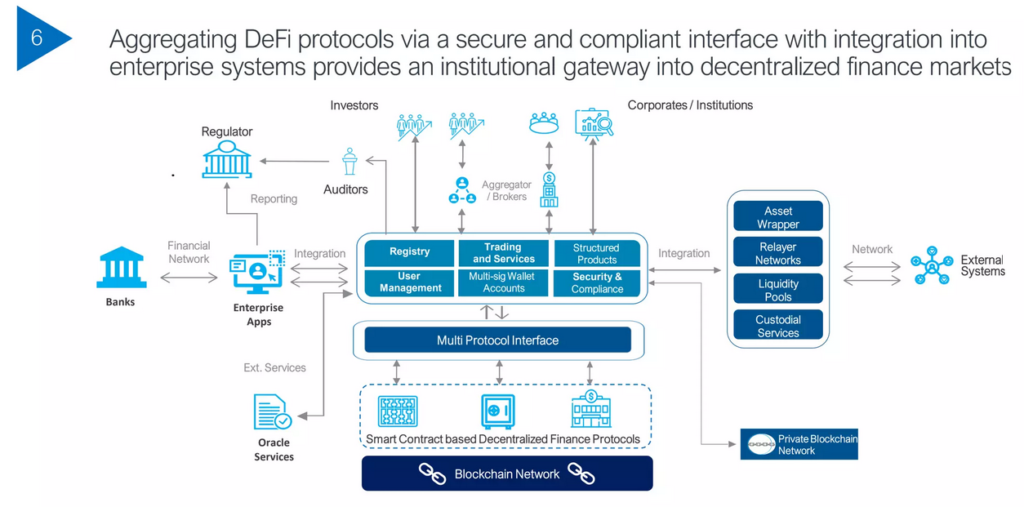
[Tokenized asset issuance and settlement architecture]
What This Means for Investors Seeking New Crypto Opportunities
For readers searching for the “next crypto asset” or “next revenue source,” the message is nuanced:
- Pure regulatory arbitrage plays face increasing scrutiny
- Infrastructure, compliance tooling, and hybrid models look more durable
- U.S. policy uncertainty may create valuation gaps between regions
Investors should watch projects that anticipate regulation rather than fight it, especially those bridging traditional finance and blockchain rails.
Conclusion: A Delay, Not a Dead End
The SEC’s retreat from a January launch of the Innovation Exemption is undeniably a setback for short-term crypto experimentation in the United States. However, it also signals that the next phase of blockchain adoption will be shaped by negotiation, not confrontation, between innovators and incumbents.
For builders, this is a call to mature. For investors, it is a reminder that sustainable crypto value often emerges not from regulatory shortcuts, but from infrastructure that survives regulatory reality.
The sandbox may be delayed—but the direction of travel is still clear.


