
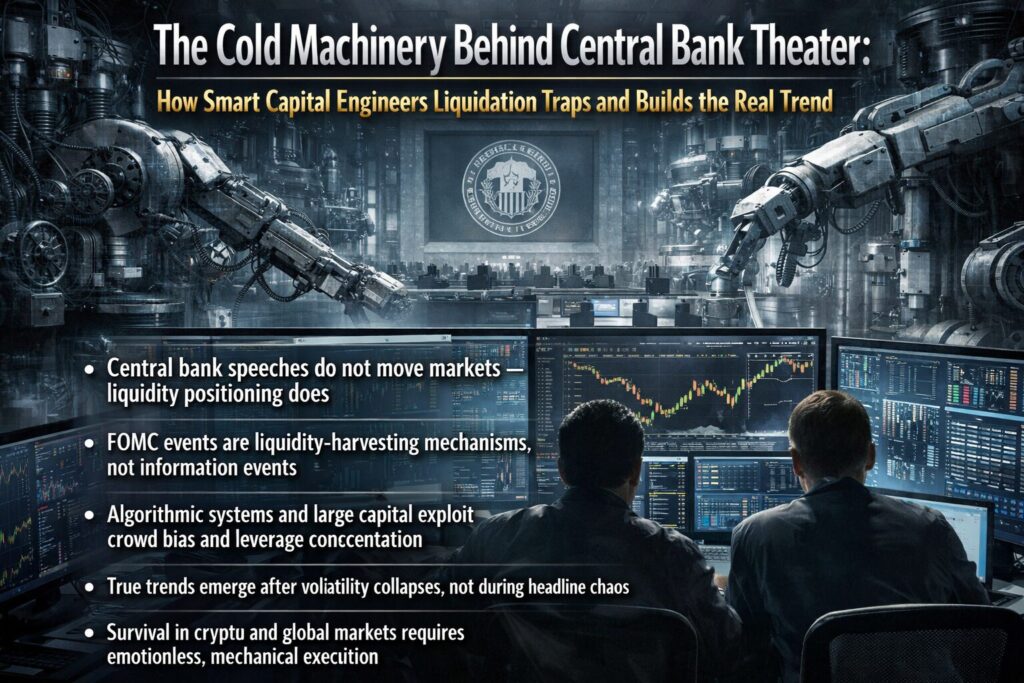
Main Points :
- Central bank speeches do not move markets — liquidity positioning does
- FOMC events are liquidity-harvesting mechanisms, not information events
- Algorithmic systems and large capital exploit crowd bias and leverage concentration
- True trends emerge after volatility collapses, not during headline chaos
- Survival in crypto and global markets requires emotionless, mechanical execution
1. The Illusion of Central Bank Authority and the Algorithmic Engineering of Price
Many retail investors continue to treat central bank announcements — particularly FOMC statements — as if they were sacred texts capable of dictating market direction. Entire trading strategies are constructed around parsing every word spoken by the Federal Reserve Chair, attempting to divine whether interest rates will rise, pause, or fall.
This behavior is fundamentally misguided.
In modern financial markets, prices do not move because of information. They move because positions must be unwound.
The true function of central bank communication is not to inform the market, but to synchronize expectations. Once expectations align too strongly in one direction, they create a fragile structure of leverage that can be systematically dismantled.
High-frequency trading systems and AI-driven execution engines operate at millisecond precision, scanning not headlines, but order book imbalances, stop-loss clustering, and liquidation thresholds. To these systems, an FOMC announcement is merely a trigger — a convenient narrative that mobilizes retail participation and provides exit liquidity.
The sharp spikes and collapses immediately following policy announcements are not spontaneous reactions. They are pre-scripted opening acts, designed to lure emotional participants into predictable behavior.
What truly matters is not what the Fed says, but where traders believe the market should go, and how aggressively they have positioned themselves there.
Markets are not moved by truth, but by misunderstanding multiplied by leverage.
In 2026, AI-enhanced sentiment analysis has made this exploitation even more efficient. Social media feeds, derivatives positioning, and on-chain leverage data are continuously ingested to anticipate crowd behavior before it fully manifests.
The structure itself, however, remains unchanged from decades past.
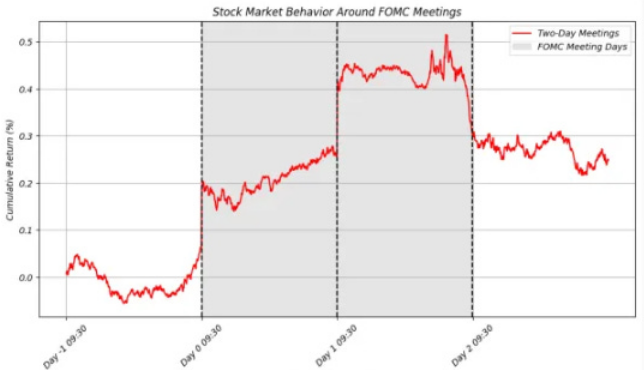
Conceptual Diagram: FOMC Event vs Liquidity Sweep
- X-axis: Time
- Y-axis: Price
- Highlight: Stop-loss clusters before and after announcement
2. Liquidity Droughts, Whale Psychology, and Manufactured Imbalance
Predicting whether price will go up or down is a meaningless exercise in an algorithm-dominated market. The real question is where liquidity is thin, and where leverage is most fragile.
Large players — often referred to as “whales” — do not chase price. They wait.
They wait for moments when retail traders, convinced that “direction has been decided,” commit capital aggressively after an event-driven move. This is precisely when liquidity on one side of the order book evaporates.
At that moment, a relatively small injection of capital can cause outsized price movement — not because of fundamentals, but because there is no resistance left.
FOMC-induced volatility is therefore not a reaction to macroeconomic data. It is a harvest ritual, designed to flush out overleveraged positions.
Retail traders who enter after the initial move are unknowingly providing the liquidity that whales require to exit or reverse their own positions.
The result is brutal but consistent: accounts are liquidated, stop-losses cascade, and what appears as “unexpected reversal” is in fact the intended outcome.
Charts should not be read as aesthetic patterns, but as maps of pain — records of where participants were forced to surrender.
Understanding this structure is not optional. It is the only defense against emotional decision-making in an environment designed to exploit it.
In 2026, despite more advanced tools and data availability, wealth continues to flow from the uninformed to the disciplined, from those who react to those who prepare.
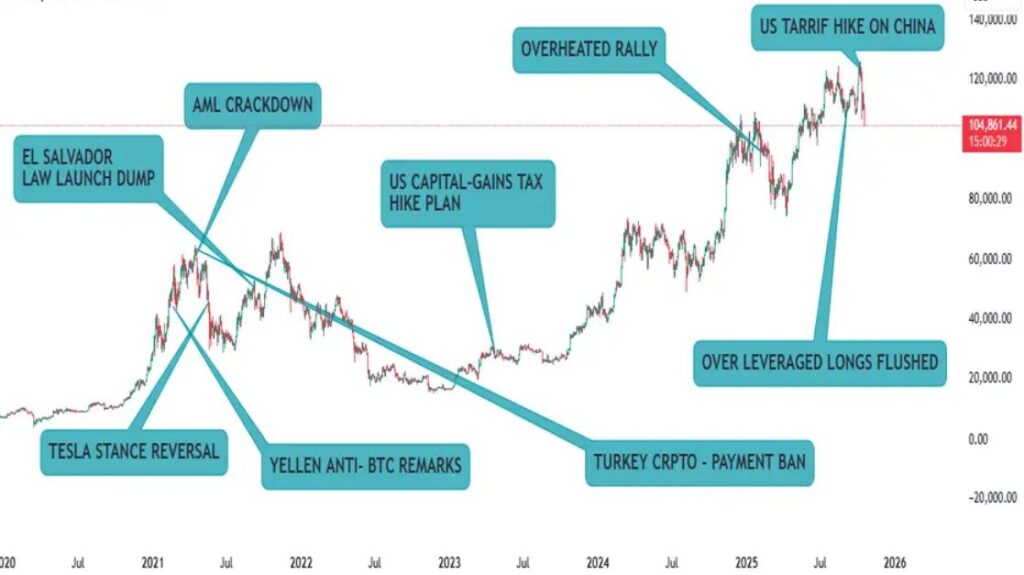
Order Book Imbalance and Forced Liquidation Flow
3. Post-Event Silence and the Birth of the Real Trend
The most important phase of any market event is not the explosion of volatility, but the silence that follows.
When headlines fade and emotional participants are exhausted, price begins to move again — slowly, methodically, and with purpose. This is where true trends are born.
Professional operators do not wait for announcements. They construct multiple scenarios in advance, defining mechanical responses for each possible outcome. When the event occurs, there is no surprise — only execution.
Emotion has no place here.
In crypto markets especially, where leverage is cheap and narratives spread instantly, emotional decision-making is lethal. Fear and greed peak precisely when risk is highest.
The discipline required to disconnect from social media noise, ignore authoritative narratives, and operate in isolation is immense — but non-negotiable.
The market does not reward intelligence, morality, or conviction. It rewards consistency under pressure.
To survive — and eventually thrive — one must build internal logic systems as robust as the mathematical fortresses built by algorithmic traders. Only then does the market transform from a hostile environment into a navigable system.
When that fortress is complete, central bank theater loses its power. The market becomes not a source of fear, but a landscape of structured opportunity.
Conclusion: The Law of Cold Markets
The global financial system is not chaotic — it is deliberately engineered.
Central bank events provide narrative cover. Algorithms provide execution. Human emotion provides fuel.
Those who continue to treat markets as moral or informational systems will remain trapped in cycles of hope and despair.
Those who understand market structure, liquidity mechanics, and behavioral exploitation can step outside the illusion.
The path is lonely, mechanical, and unforgiving — but it is the only path that leads to durable wealth in the age of AI-driven finance.


