
Main Points :
- The U.S. Senate Agriculture Committee approved a landmark crypto market structure bill, pushing the broader CLARITY framework closer to becoming law.
- The bill would grant the Commodity Futures Trading Commission (CFTC) primary oversight of spot crypto markets, reshaping the balance of power between U.S. regulators.
- Sharp partisan divisions remain, particularly around decentralized finance (DeFi), ethics rules, and conflicts of interest.
- Under the Trump administration, U.S. crypto policy has pivoted from enforcement-led regulation toward legislative clarity and industry engagement.
- For investors, builders, and institutions, regulatory clarity could unlock new crypto assets, revenue models, and real-world blockchain adoption in the U.S. and beyond.
1. Senate Agriculture Committee Approval: A Turning Point for U.S. Crypto Regulation
On January 30, 2026, the U.S. Senate Agriculture Committee narrowly approved a sweeping crypto market structure bill by a vote of 12–11. While the margin was tight and the vote split strictly along party lines, the decision represents one of the most consequential steps toward comprehensive federal regulation of digital asset markets in U.S. history.
At its core, the bill establishes a regulatory framework for spot (cash) cryptocurrency markets, an area that has long existed in a gray zone. Under the proposed law, primary oversight authority would be assigned to the Commodity Futures Trading Commission (CFTC), rather than the Securities and Exchange Commission (SEC), for digital assets classified as commodities.
This distinction matters profoundly. For years, crypto exchanges, brokers, and developers have operated amid regulatory uncertainty, unsure whether tokens would later be deemed securities, commodities, or something else entirely. By explicitly defining regulatory jurisdiction, the Senate Agriculture Committee’s approval signals a move toward predictable rules—a prerequisite for large-scale capital deployment and institutional adoption.
[“U.S. Crypto Market Oversight Before vs. After CLARITY” – a comparative diagram showing fragmented oversight vs. CFTC-led spot market regulation.]

2. From Fragmentation to Structure: What the Bill Actually Does
Formally introduced as the Digital Commodity Intermediaries Act, the bill is heavily modeled on the broader CLARITY Act, which passed the U.S. House of Representatives in July 2025. Together, these proposals aim to define what digital assets are, who regulates them, and how intermediaries must operate.
Under the Agriculture Committee bill:
- Crypto exchanges, brokers, and custodians dealing in non-security digital assets would be required to register with the CFTC.
- Comprehensive rules would be imposed on market integrity, customer asset segregation, disclosure, and risk management.
- The framework explicitly targets spot trading, an area previously overseen only indirectly through enforcement actions.
Committee Chairman John Boozman described the vote as “the first step toward clear federal rules that protect consumers while allowing innovation to flourish.” Supporters argue that the bill finally aligns crypto regulation with the economic reality that many digital assets function more like commodities than securities.
For market participants, this shift could reduce compliance ambiguity, lower legal risk, and encourage U.S.-based innovation that has increasingly migrated offshore.
3. Democratic Opposition: Ethics, Consumer Protection, and DeFi Concerns
Despite broad acknowledgment that crypto markets need regulation, Democratic senators on the committee unanimously opposed the bill. Their objections were not centered on the idea of regulation itself, but rather on what the bill omits.
Senator Cory Booker, the committee’s ranking Democrat, highlighted potential conflicts of interest involving President Trump and individuals close to his administration who have business ties to the crypto sector. According to Booker, advancing a market structure bill without explicit ethics and transparency provisions risks undermining public trust.
Democrats also pushed for amendments to address:
- Regulatory gaps in decentralized finance (DeFi)
- Disclosure requirements for crypto trading by public officials
- Stronger consumer protection standards
These proposed amendments were defeated by Republican votes, leaving unresolved questions about how DeFi protocols—often autonomous and borderless—would fit into the new regulatory framework.
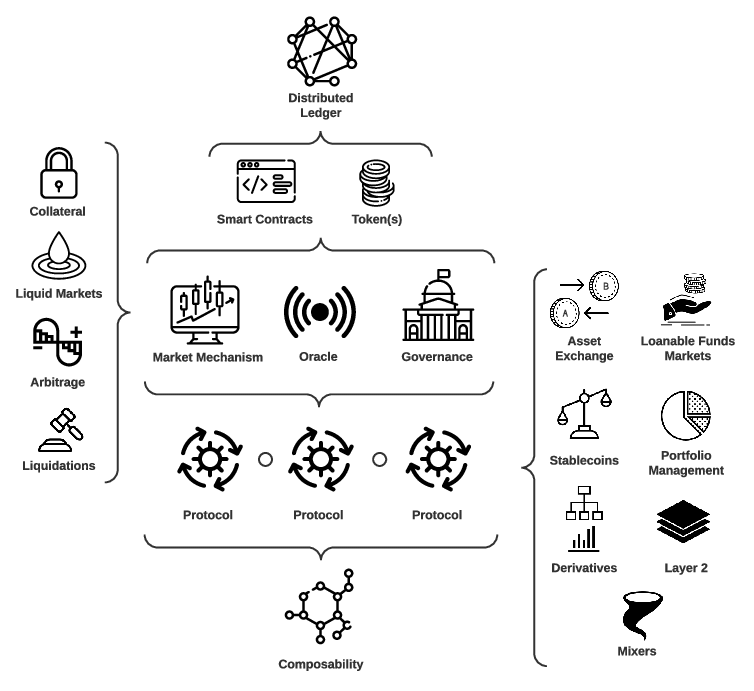
[“Centralized Finance vs. DeFi Under Proposed U.S. Regulation” – a flowchart comparing regulated intermediaries and decentralized protocols.]
4. The Road Ahead: Banking Committee, SEC Authority, and Legislative Hurdles
Approval by the Senate Agriculture Committee is only one step in a complex legislative journey. The bill must next pass through the Senate Banking Committee, where debates are expected to intensify.
Key unresolved issues include:
- The boundary between CFTC and SEC authority, particularly for tokens with mixed characteristics
- The treatment of yield-bearing stablecoins
- Whether certain DeFi activities should be classified as regulated intermediaries
Industry groups and financial institutions have expressed concern that overlapping or conflicting rules could reintroduce uncertainty. At the same time, crypto-native firms warn that excessive regulation of DeFi could stifle one of the sector’s most innovative areas.
Recognizing these tensions, the White House scheduled a high-level policy dialogue on February 2, 2026, bringing together leaders from the banking and crypto industries. The outcome of these discussions may shape compromise language before the bill reaches the Senate floor.
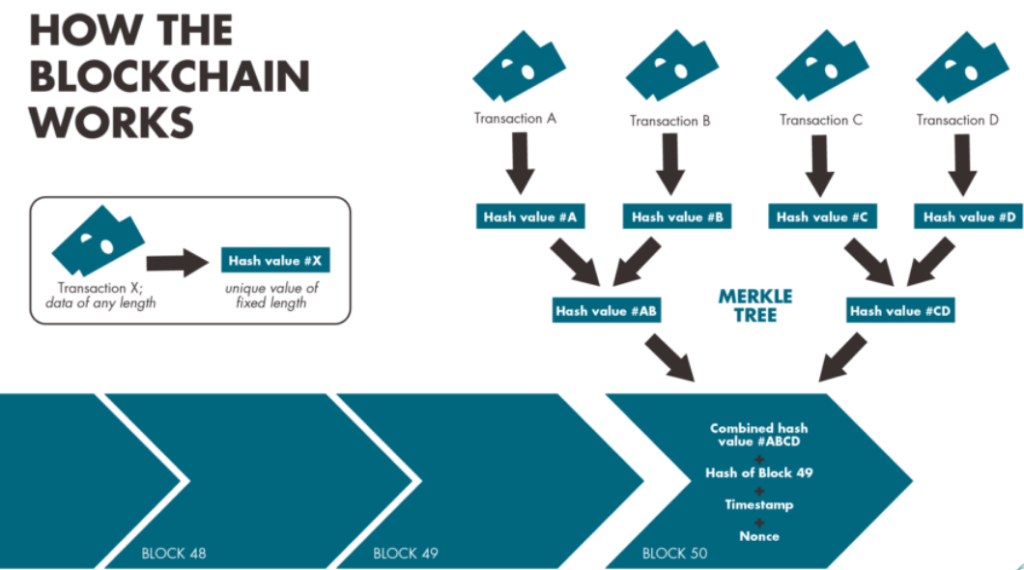
[“Legislative Path to Law: From Committee Vote to Presidential Signature” – a step-by-step process diagram.]
5. A Broader Policy Shift Under the Trump Administration
The CLARITY bill cannot be understood in isolation. It is part of a broader transformation in U.S. crypto policy following the inauguration of the Trump administration in 2025.
One of the most striking developments has been the SEC’s decision to withdraw or settle major lawsuits against crypto firms such as Ripple, Coinbase, Binance, and Kraken. Rather than regulating through enforcement, regulators have increasingly emphasized rulemaking and legislative clarity.
In parallel, the SEC and CFTC revived a joint initiative informally known as “Project Crypto,” aimed at harmonizing oversight and reducing regulatory duplication. This collaboration reflects growing recognition that fragmented enforcement discourages innovation without meaningfully improving consumer protection.
The administration’s approach suggests that crypto is no longer viewed solely as a risk to be contained, but as an emerging financial infrastructure requiring structured governance.
6. Political Capital and Industry Influence: The Role of Fairshake
Crypto’s rising political influence is another defining feature of the current landscape. The industry-backed super PAC network Fairshake reportedly amassed more than $193 million to support pro-crypto candidates ahead of the 2026 midterm elections.
These funds are being deployed through campaign contributions, advertising, and grassroots mobilization, signaling that crypto policy has become a significant electoral issue. For lawmakers, ignoring the sector now carries political costs.
This growing influence helps explain why, despite partisan divisions, there is increasing bipartisan acknowledgment that the absence of clear rules harms U.S. competitiveness. Capital, talent, and innovation gravitate toward jurisdictions with predictable regulation.
7. What This Means for Investors, Builders, and New Revenue Models
For readers seeking new crypto assets, yield opportunities, or practical blockchain applications, the implications of CLARITY are substantial.
Regulatory certainty could:
- Enable U.S.-listed crypto exchanges to expand product offerings
- Encourage tokenization of real-world assets under clear legal standards
- Support compliant DeFi hybrids that integrate with regulated finance
- Attract institutional capital previously sidelined by legal uncertainty
Historically, major regulatory milestones have preceded waves of innovation. Just as clear derivatives regulation fueled growth in traditional financial markets, a coherent crypto framework could unlock new business models spanning payments, settlement, identity, and asset management.
8. Conclusion: Clarity as a Catalyst, Not a Constraint
The Senate Agriculture Committee’s approval of the crypto market structure bill marks a decisive moment in the evolution of U.S. digital asset policy. While significant hurdles remain—particularly around DeFi and inter-agency authority—the direction of travel is clear.
For the first time, the U.S. appears poised to replace regulatory ambiguity with a comprehensive framework that acknowledges crypto as a permanent component of the financial system. For innovators and investors alike, clarity is not the enemy of opportunity—it is its foundation.
If enacted, CLARITY could reshape not only U.S. crypto markets, but also global standards, reinforcing America’s role in the next phase of blockchain-driven finance.