
Main Points :
- Bitcoin’s decline below $84,000 has intensified downward pressure on crypto-related equities that were already weakening in January.
- Global spot crypto trading volume has nearly halved year-on-year, signaling a sharp shift in investor sentiment amid macroeconomic uncertainty.
- While speculative activity cools, Bitcoin miners pivoting toward AI infrastructure and high-performance computing are emerging as relative outperformers.
- The current market contraction may be setting the stage for a new phase focused on infrastructure, real-world utility, and sustainable revenue models.
1. Bitcoin’s Price Breakdown and the Ripple Effect on Crypto-Related Stocks
On January 29, Bitcoin briefly fell below the psychologically significant $84,000 level, reinforcing a bearish tone that had already dominated much of January. Although prices recovered slightly to trade above $84,300 by early January 30 (Japan time), the broader impact on crypto-related equities was unmistakable.
Stocks closely tied to the crypto ecosystem—such as exchanges, custodians, mining companies, and infrastructure providers—extended their losses. This decline was not merely a reaction to Bitcoin’s spot price, but rather the culmination of several weeks of persistent selling pressure driven by risk-off sentiment across global markets.
For investors, this phase highlights a familiar pattern: crypto-related equities often amplify Bitcoin’s directional moves. When prices rise, equity valuations can surge on expectations of higher volumes and profitability. Conversely, during downturns, these stocks tend to suffer disproportionately as revenue assumptions are quickly revised downward.
2. Trading Volume Collapse: A Clear Signal of Market Cooling
Chart showing global spot crypto trading volume decline from $1.7T to $0.9T
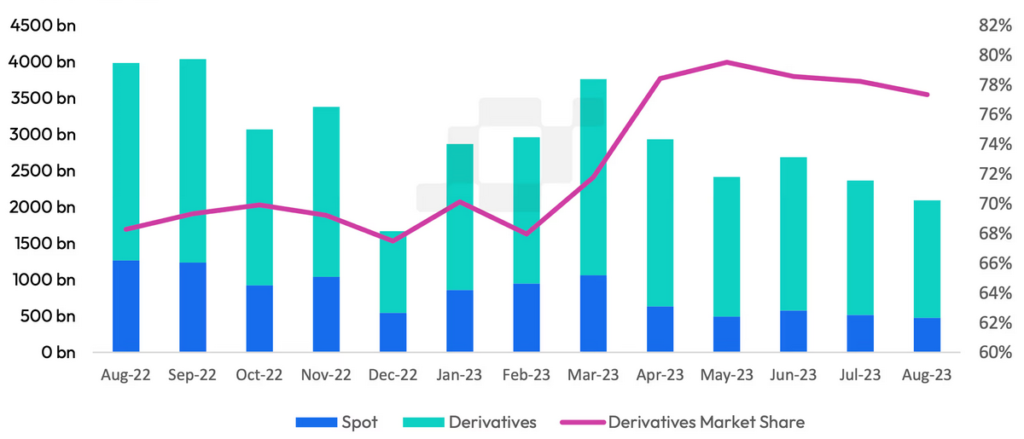
One of the most striking indicators of the current slowdown is the sharp contraction in global spot trading volume. According to market data, spot crypto trading volume fell from approximately $1.7 trillion in the same period last year to around $900 billion—almost a 50% decline.
This reduction reflects more than just lower speculative interest. It points to a broader recalibration of investor behavior in response to macroeconomic uncertainty, including:
- Persistent inflationary pressures in major economies
- Unclear trajectories for interest rate cuts
- Heightened geopolitical risks affecting global capital flows
Lower trading volumes directly affect the revenue models of exchanges and brokerage platforms, many of which rely heavily on transaction fees. As a result, even firms with strong balance sheets are seeing valuation multiples compress.
3. Investor Psychology: From Aggressive Speculation to Strategic Caution
The halving of trading volume also reveals a shift in investor psychology. During bull markets, crypto often attracts short-term traders seeking volatility-driven gains. In contrast, the current environment favors capital preservation, selective exposure, and longer-term theses.
This does not imply that interest in crypto has disappeared. Rather, it suggests that market participants are becoming more discerning. Projects without clear utility, sustainable token economics, or regulatory viability are being filtered out, while infrastructure-focused plays continue to attract attention.
For readers seeking the “next revenue source,” this transition is critical. Historically, periods of reduced speculation have preceded the emergence of more mature business models within the blockchain sector.
4. Miners as Infrastructure Providers: The AI and HPC Pivot
Diagram comparing traditional Bitcoin mining vs AI/HPC infrastructure reuse
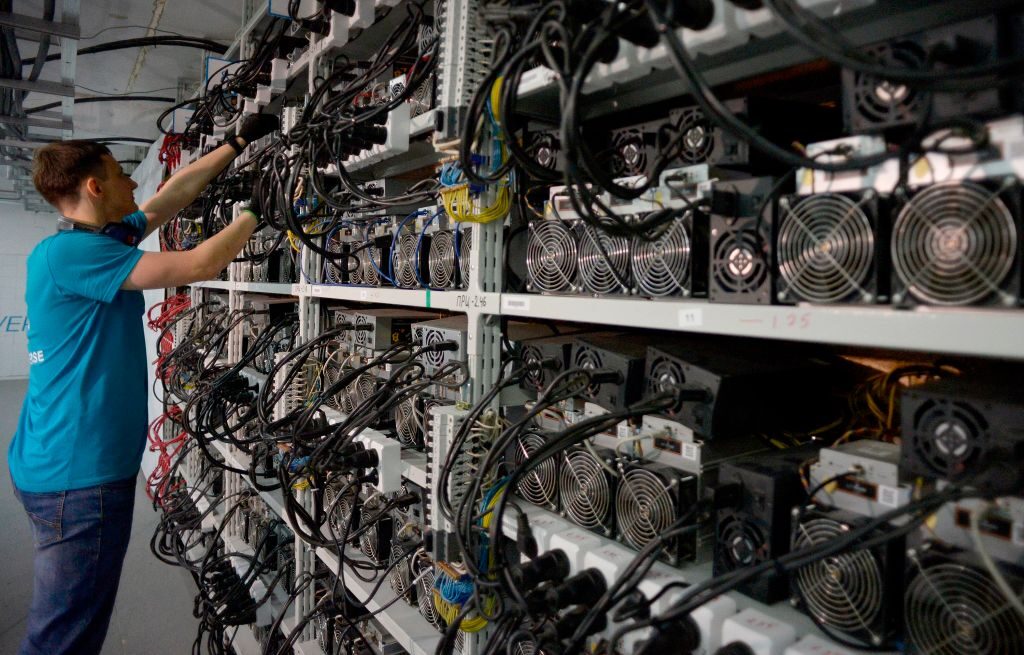
Interestingly, Bitcoin miners have shown relative resilience compared to other crypto-related stocks. The reason lies in strategic diversification. Facing thinner mining margins and volatile hash prices, several large miners are repurposing their energy-intensive data centers for AI infrastructure and high-performance computing (HPC).
This pivot leverages existing strengths:
- Access to low-cost power
- Expertise in operating large-scale data centers
- Established relationships with energy providers
By hosting AI workloads or leasing compute capacity, miners can generate stable, non-crypto-denominated revenue streams. This hybrid model positions them less as pure crypto plays and more as digital infrastructure companies.
For investors, this evolution blurs the line between “crypto stocks” and broader technology infrastructure equities, potentially reducing volatility and improving long-term valuation stability.
5. Implications for New Crypto Assets and Practical Blockchain Use
The current downturn may be discouraging for short-term traders, but it creates fertile ground for builders and strategic investors. Historically, many of today’s most impactful blockchain use cases—such as stablecoin settlements, on-chain payments, and enterprise blockchain integrations—were developed during quieter market phases.
Key areas to watch include:
- Tokenized real-world assets (RWA) enabling on-chain representation of financial and physical assets
- Payment and settlement infrastructure focused on cross-border efficiency and compliance
- Blockchain-based treasury and liquidity management tools for enterprises
For those searching for new crypto assets, the emphasis should shift from price momentum to functional relevance and adoption potential.
6. Market Cycles and the Opportunity Hidden in Contraction
Crypto markets are cyclical by nature. Each contraction phase removes excess leverage and speculative froth, while strengthening the foundations for the next expansion. The decline below $84,000 and the collapse in trading volume may ultimately be remembered not as a failure, but as a reset.
Long-term participants—particularly those interested in blockchain’s practical deployment—can use this period to:
- Accumulate assets with strong fundamentals
- Evaluate infrastructure plays over hype-driven tokens
- Engage in partnerships and development at lower costs
7. Conclusion: From Price Action to Purpose
The recent downturn in Bitcoin prices and crypto-related stocks marks a turning point rather than an endpoint. As speculative heat dissipates, the industry’s focus is shifting toward infrastructure, utility, and sustainable revenue generation.
For investors and practitioners alike, the message is clear: the next phase of crypto growth is likely to be quieter, more technical, and more deeply integrated into real-world systems. Those who adapt to this shift may find that today’s cooling market is tomorrow’s foundation for durable opportunity.