
Key Takeaways :
- Bitcoin is struggling to reclaim the psychologically critical $90,000 level, facing strong resistance from key exponential moving averages.
- Short-term momentum remains weak, while medium-term technical structures favor cautious or defensive positioning.
- Failure to break above resistance increases the probability of a retest of the $87,000–$88,000 support zone.
- Broader market factors—ETF flows, institutional positioning, and liquidity conditions—are reinforcing short-term hesitation.
- For investors and builders, this phase highlights the importance of risk management, timing, and infrastructure readiness rather than pure price speculation.
Market Overview: Bitcoin Pauses at a Critical Psychological Level
As of January 24, 2026, Bitcoin (BTC) is trading near $89,674 against the U.S. dollar, once again failing to decisively reclaim the $90,000 level. This price zone has become a major psychological and technical battlefield, where bullish expectations repeatedly collide with persistent selling pressure.
While Bitcoin remains structurally strong compared to previous market cycles, the current price action suggests hesitation rather than conviction. On the 4-hour chart, multiple technical indicators indicate that upward attempts are being capped by overhead resistance, reinforcing a market environment dominated by “sell-the-rally” behavior.
This type of consolidation is not uncommon after major upward moves, but its resolution—either continuation or reversal—has significant implications for traders, long-term investors, and businesses building on blockchain infrastructure.
Technical Structure: EMA Resistance Defines the Battlefield
From a technical analysis perspective, the most critical indicators at present are the exponential moving averages (EMAs), which serve as dynamic support and resistance levels.
Short-Term EMA: Directionless Momentum
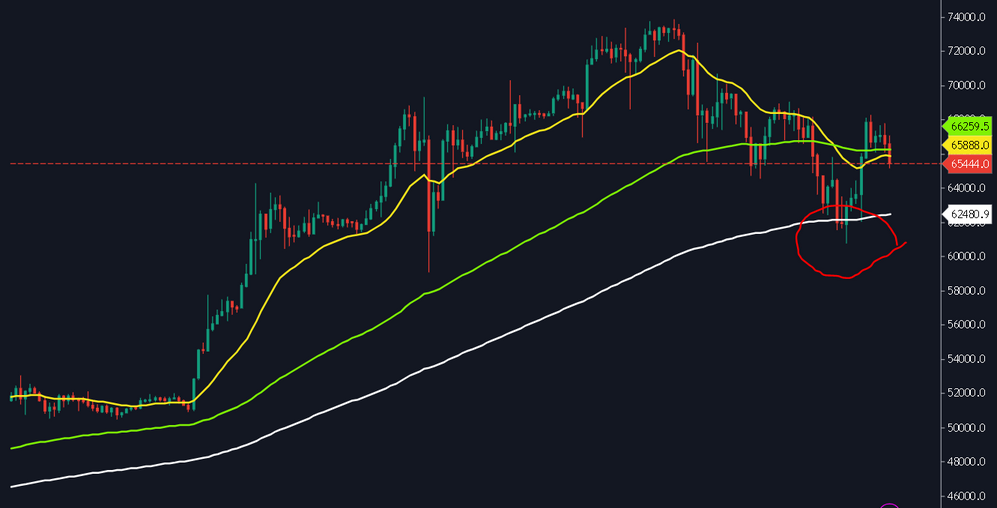
The 7-period EMA, currently around $89,628, is nearly aligned with the spot price. This alignment reflects a lack of short-term directional bias. In practical terms, it means that short-term traders are undecided, and momentum-based strategies are yielding limited clarity.
Such conditions often precede either a sharp breakout or a renewed rejection, depending on whether external catalysts emerge.
Medium-Term EMA: The $90,500 Wall
The 28-period EMA, positioned near $90,495, is acting as a clear and persistent resistance level. Each attempt by Bitcoin to push higher has been rejected near this zone, confirming that sellers remain active and well-capitalized.
As long as price action remains below this EMA, the market narrative favors caution. Traders interpret this structure as confirmation that upside attempts lack sufficient volume and conviction.
[BTC/USD 4-hour chart highlighting 7 EMA and 28 EMA resistance]
Market Psychology: Why $90,000 Matters More Than It Seems
Round numbers play an outsized role in financial markets, and $90,000 is no exception. Beyond technical indicators, this level represents a psychological threshold where expectations, fear, and profit-taking converge.
For many participants:
- Long-term holders see $90,000 as a logical area to reduce exposure after substantial gains.
- Short-term traders view repeated failures as an opportunity to short or exit positions.
- New entrants hesitate to buy aggressively until a clear breakout is confirmed.
This collective behavior creates a self-reinforcing resistance zone, where price struggles not because of fundamentals alone, but because of shared expectations.
Downside Risk Scenario: Retesting the $87,000–$88,000 Support Zone
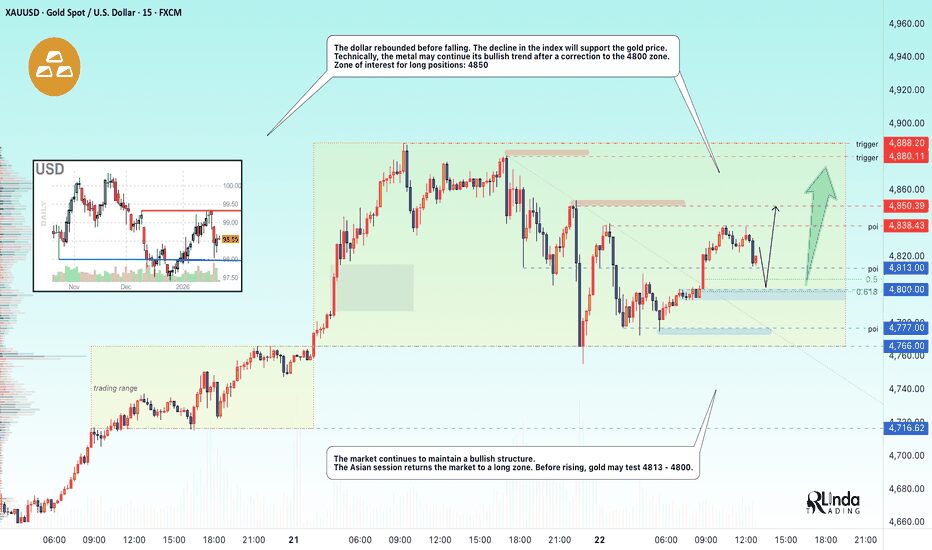
If Bitcoin fails once again to break above the 28 EMA and loses short-term support, attention will quickly shift to the $87,000–$88,000 range. This zone represents the most recent consolidation area and serves as a key technical support.
A controlled pullback into this range would not necessarily invalidate the broader bullish structure. However, a decisive breakdown below $87,000 could trigger:
- Stop-loss cascades from leveraged traders
- Increased volatility driven by derivatives liquidations
- A short-term acceleration of bearish sentiment
In such scenarios, liquidity conditions become critical, as thin order books can amplify price movements beyond what fundamentals would suggest.
[BTC key support and resistance zones]
Bullish Recovery Requirements: What Needs to Change
For Bitcoin to regain bullish momentum, a clear sequence of events is required. First and foremost, price must close decisively above the $90,500 level, turning the 28 EMA from resistance into support.
Such a move would signal:
- Renewed buyer confidence
- Increased probability of trend continuation
- A shift in market structure from corrective to impulsive
If confirmed, the next upside targets would likely lie in the $92,000–$93,000 range. However, current momentum indicators suggest that this scenario requires an external catalyst, such as renewed ETF inflows, macroeconomic easing, or a significant regulatory development.
Broader Market Context: Institutional Flows and Liquidity Conditions
Beyond charts, Bitcoin’s recent stagnation reflects broader market dynamics. Institutional participation, while still strong, has become more selective. Spot Bitcoin ETF flows have shown intermittent inflows rather than sustained accumulation, indicating cautious positioning rather than aggressive risk-taking.
At the same time, global liquidity conditions remain tight. Elevated interest rates and cautious central bank policies limit the availability of cheap leverage, reducing speculative excess but also slowing upside acceleration.
For blockchain-based businesses and infrastructure providers, this environment underscores the importance of sustainability over hype. Projects that rely solely on price appreciation face greater risk than those focused on real-world utility, payments, settlement, and asset tokenization.
Implications for Crypto Investors and Builders
For readers seeking new crypto assets, revenue opportunities, or practical blockchain applications, this phase of the Bitcoin market offers important lessons.
First, price consolidation is not a failure—it is a filtering process. Strong projects continue to build, integrate, and onboard users regardless of short-term price action.
Second, risk management becomes paramount. Whether deploying capital into tokens, yield strategies, or infrastructure investments, timing and capital efficiency matter more than directional conviction.
Finally, periods of uncertainty often precede the next wave of innovation. As speculative noise fades, attention shifts toward compliance-ready platforms, institutional-grade custody, and real-world financial integration.
Conclusion: A Market at a Crossroads
Bitcoin’s struggle below $90,000 is not merely a technical event—it reflects a broader pause in market psychology, liquidity, and institutional appetite. While the long-term narrative of Bitcoin as a global digital asset remains intact, the short-term path forward depends on whether buyers can reclaim key resistance levels with conviction.
Until then, caution, preparation, and strategic positioning remain the most rational approaches. For investors and builders alike, the current market environment rewards discipline, clarity, and a focus on fundamentals over speculation.