
Main Points :
- The failure of the CLARITY Act to advance prevents premature regulatory restrictions on tokenized securities, DeFi, and yield-bearing stablecoins.
- Industry leaders argue that the bill, in its latest form, risked freezing innovation rather than enabling responsible growth.
- The U.S. regulatory debate increasingly resembles the long and iterative process that led to the EU’s MiCA framework.
- For investors and builders, regulatory delay may create short- to mid-term opportunities in decentralized finance, tokenization, and stablecoin design.
- A better-designed market structure law could ultimately strengthen on-chain finance rather than constrain it.
Section 1: What Happened to the CLARITY Act?
The recent stalling of the CLARITY Act — a proposed U.S. legislative framework intended to define the structure of cryptocurrency markets — has sparked mixed reactions across the digital asset ecosystem. While some observers initially viewed the delay as another sign of regulatory uncertainty in the United States, a growing number of analysts now argue that the pause may actually be beneficial.
One of the most vocal proponents of this view is market analyst Michaël van de Poppe, who publicly stated that the bill’s failure to advance likely prevented significant harm to the broader crypto market. His comments followed a notable development: the decision by Coinbase to withdraw its support for the bill.
According to Van de Poppe, the version of the CLARITY Act under discussion introduced several structural risks that could have reshaped the industry in deeply restrictive ways. Rather than providing clarity, it threatened to lock in outdated assumptions about decentralized systems, financial intermediaries, and user autonomy.
Section 2: Why Coinbase Withdrew Its Support
The withdrawal of support by Coinbase marked a critical turning point in the debate. CEO Brian Armstrong outlined multiple concerns regarding the bill’s latest draft.
Among the most controversial provisions were:
- A de facto ban on tokenized equities, potentially preventing blockchain-based representations of stocks and other securities.
- Expanded government access to user records on DeFi platforms, undermining the non-custodial design of decentralized protocols.
- A prohibition on yield-bearing stablecoins, removing interest-generating mechanisms that many see as essential to competing with traditional financial products.
Armstrong argued that these elements would not merely regulate crypto markets but actively suppress innovation. Yield-bearing stablecoins, for example, are often positioned as blockchain-native alternatives to bank deposits or money-market funds, many of which offer yields in the $4–$5% annualized range in traditional finance.
By banning such mechanisms outright, the CLARITY Act risked pushing capital and innovation offshore rather than protecting U.S. consumers.
Section 3: Lessons from Europe’s MiCA Framework
Before continuing, it is instructive to examine Europe’s experience.
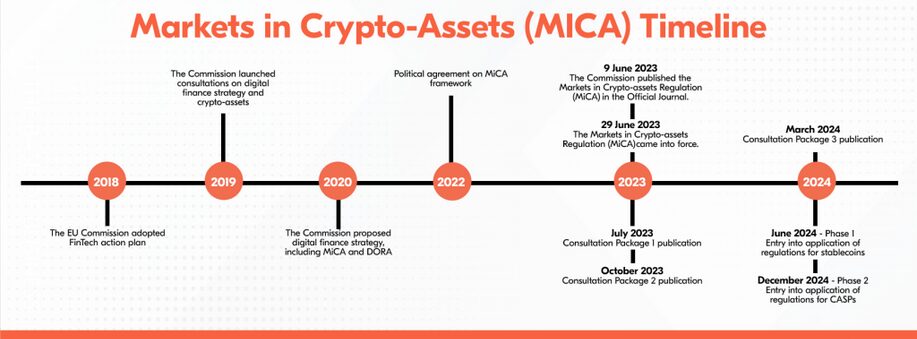
The European Union’s Markets in Crypto-Assets Regulation (MiCA) provides a useful parallel. Often cited as the world’s most comprehensive crypto regulatory framework, MiCA did not emerge fully formed. Instead, it underwent years of negotiation, redrafting, and political compromise before final adoption.
Van de Poppe emphasized that MiCA’s eventual success lay in its iterative nature. Early drafts faced strong industry resistance, particularly around stablecoins, custody rules, and capital requirements. Only through sustained dialogue between regulators, financial institutions, and crypto-native firms did a workable framework emerge.
The stalled CLARITY Act, by contrast, appeared poised to crystallize contested ideas too early — before the industry and policymakers had reached a genuine consensus on how decentralized finance should coexist with existing banking systems.
Section 4: Why Delay Can Be Constructive
In financial regulation, timing matters as much as content. A poorly timed law can freeze innovation just as effectively as an outright ban.
From an investor and builder perspective, regulatory delay in the U.S. preserves optionality:
- DeFi protocols retain the ability to experiment with governance, compliance tooling, and hybrid KYC models.
- Stablecoin issuers can continue developing yield-linked designs that mirror short-term Treasury or money-market exposure.
- Tokenization projects remain free to explore on-chain representations of real-world assets without immediate legislative prohibition.
In dollar terms, this flexibility matters. Tokenized real-world assets are frequently projected to reach multi-trillion-dollar market sizes globally over the next decade. Locking out U.S. participation prematurely could shift that growth entirely to Europe, Asia, or the Middle East.
Section 5: Political Negotiations Are Still Ongoing
Reports suggesting that the White House had withdrawn support for the CLARITY Act were later disputed. Armstrong clarified that negotiations remain active and described the White House’s role as “constructive.”
Independent journalist Eleanor Terrett reported that the bill’s future remains uncertain but far from abandoned. Rather than signaling hostility toward crypto, the current impasse may reflect deeper disagreements over how to balance innovation, banking stability, and consumer protection.
This uncertainty mirrors earlier regulatory battles over internet commerce, digital payments, and online securities trading — all of which initially faced heavy resistance before becoming mainstream.
Section 6: Industry Pushback on Stablecoin Yield Bans
One of the strongest reactions to the CLARITY Act focused on yield-bearing stablecoins. Venture capitalist Nick Carter argued that banning yield would effectively push stablecoins “back a generation.”
From a practical standpoint, stablecoins without yield struggle to compete with:
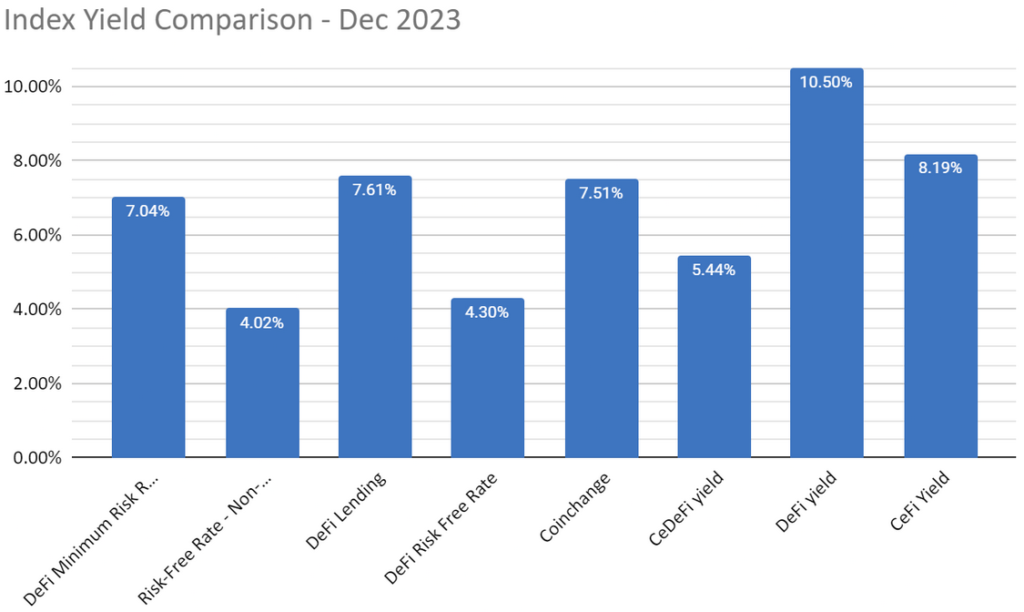
- U.S. Treasury bills yielding roughly $4–$5% annually.
- High-yield savings accounts offered by fintech banks.
- Money-market funds with near-instant liquidity.
For crypto users seeking practical, on-chain cash management tools, yield is not a speculative bonus but a baseline expectation. Removing it risks relegating stablecoins to simple payment rails rather than full-fledged financial instruments.
Section 7: Strategic Implications for Investors and Builders
For readers seeking new revenue sources and emerging crypto assets, the CLARITY Act’s delay carries several implications:
- Regulatory arbitrage opportunities may persist, with capital flowing toward jurisdictions offering clearer or more flexible frameworks.
- Infrastructure projects focused on compliance-friendly DeFi, on-chain reporting, and modular identity layers may gain traction.
- Hybrid models — combining decentralized settlement with regulated front-ends — are likely to dominate the next growth cycle.
Rather than signaling weakness, the current pause may represent a recalibration toward more sustainable regulation.
Conclusion: A Necessary Pause, Not a Failure
The stalling of the CLARITY Act should not be read as a rejection of crypto regulation in the United States. Instead, it highlights the difficulty of legislating a rapidly evolving financial system.
As Europe’s MiCA experience demonstrates, durable frameworks require time, iteration, and compromise. For now, the delay preserves innovation space, protects emerging business models, and keeps the U.S. competitive in the global race for on-chain finance leadership.
For builders, investors, and institutions alike, this moment offers a reminder: clarity achieved too quickly can be more dangerous than uncertainty endured thoughtfully.