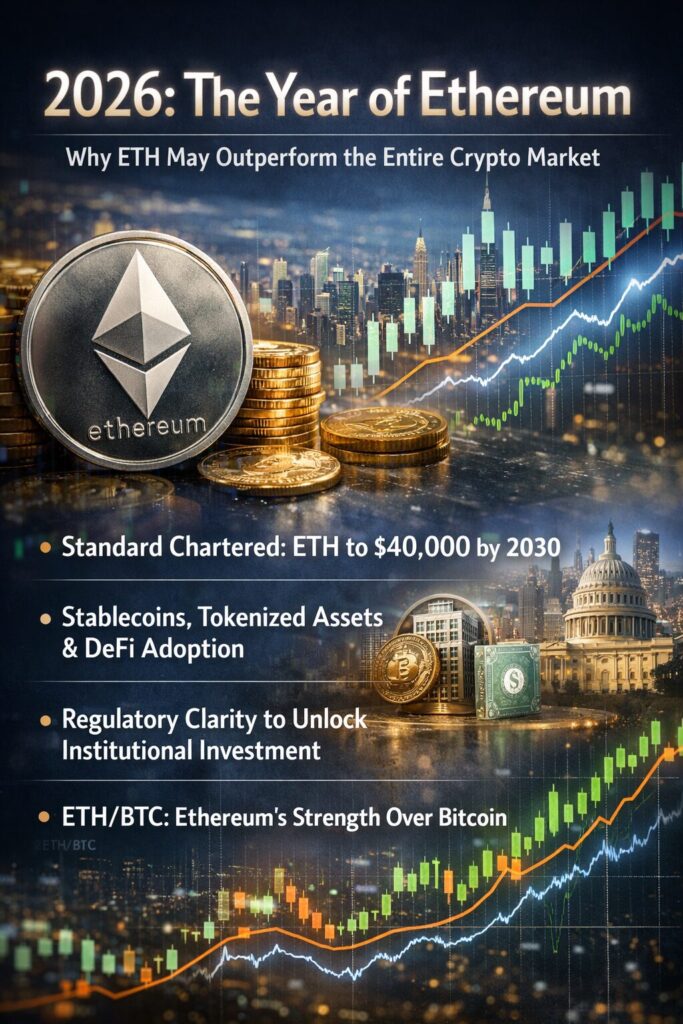
Main Takeaways :
- Standard Chartered forecasts 2026 as a decisive breakout year for Ethereum (ETH), similar to the historic rally of 2021.
- Short- to mid-term price targets have been revised downward, but long-term projections have been raised, reaching $40,000 by 2030.
- Structural adoption of stablecoins, tokenized real-world assets (RWA), and DeFi is positioning Ethereum as the settlement layer of global finance.
- Regulatory clarity in the United States may remove institutional barriers and accelerate capital inflows.
- ETH/BTC is expected to rise significantly, signaling Ethereum’s relative strength versus Bitcoin.
1. Why 2026 Could Become “The Year of Ethereum”
In a recent digital assets research report, Standard Chartered delivered a bold thesis: 2026 will be Ethereum’s year. According to Geoffrey Kendrick, Global Head of Digital Assets Research at the bank, Ethereum is positioned to outperform the broader crypto market over the next cycle.
This claim is not made lightly. In 2021, Ethereum benefited from explosive growth in decentralized finance (DeFi) and non-fungible tokens (NFTs), driving ETH to then-all-time highs. Kendrick argues that 2026 mirrors 2021 structurally, but with one critical difference: this time, adoption is coming not only from retail speculation, but from institutions, governments, and real-world financial infrastructure.
While near-term volatility and macroeconomic uncertainty have forced the bank to lower some intermediate price targets, the long-term conviction has strengthened, reflecting Ethereum’s expanding role as a foundational blockchain for programmable finance.
2. Revised Price Forecasts: Short-Term Caution, Long-Term Conviction
Standard Chartered adjusted its Ethereum price targets downward for the next few years, acknowledging a slower recovery in the broader crypto market. However, the bank simultaneously raised its long-term expectations.
Ethereum Price Targets (USD):
- End of 2026: $7,500
- End of 2027: $15,000
- End of 2028: $22,000
- End of 2029: $30,000
- End of 2030: $40,000
This trajectory reflects a transition from speculative growth to structural value accrual. Ethereum’s valuation is increasingly tied to real economic activity occurring on-chain rather than purely narrative-driven cycles.
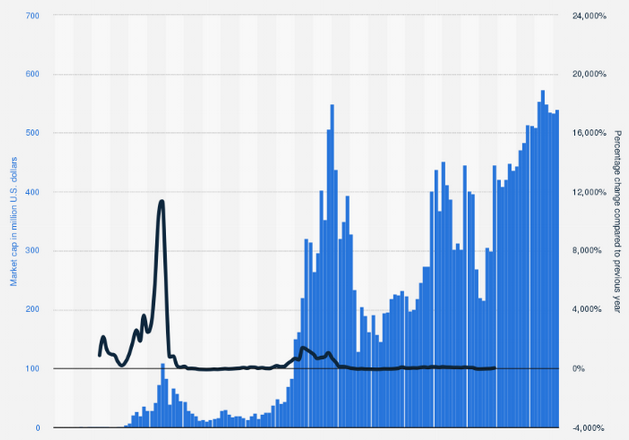
【“Ethereum Price Targets (2026–2030)”】
A line chart showing ETH price projections from $7,500 in 2026 to $40,000 in 2030.
3. ETH vs Bitcoin: The Strategic Rise of ETH/BTC
At the time of writing, Ethereum is trading at approximately 0.034 BTC. Standard Chartered expects this ratio to rise gradually toward 0.08 BTC, a level last seen during Ethereum’s 2021 peak.
This forecast does not imply Bitcoin weakness. Instead, it reflects Ethereum’s superior exposure to on-chain economic activity. While Bitcoin remains a dominant store of value, Ethereum increasingly functions as financial infrastructure—processing payments, issuing assets, and settling smart contracts.
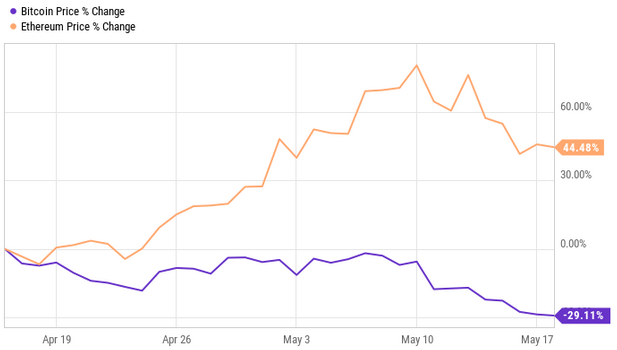
【“ETH/BTC Ratio: Historical vs Projected”】
A comparative chart showing ETH/BTC rising from 0.034 toward 0.08.
4. The Core Growth Drivers Behind Ethereum
4.1 Stablecoins: The Dollar’s Blockchain Backbone
Over 80% of global stablecoin transaction volume settles on Ethereum and its Layer 2 networks. US-dollar-pegged stablecoins are increasingly used for cross-border payments, remittances, treasury management, and on-chain liquidity.
For emerging markets and fintech firms, Ethereum-based stablecoins function as a real-time global payment rail, bypassing traditional correspondent banking delays.
4.2 Tokenized Real-World Assets (RWA)
Tokenization of real-world assets—such as bonds, real estate, commodities, and funds—is rapidly expanding. Major asset managers and banks are experimenting with on-chain issuance and settlement, with Ethereum as the default platform.
RWA tokenization brings:
- Faster settlement (T+0 vs T+2)
- Fractional ownership
- Programmable compliance
- Global liquidity access
Ethereum’s security and developer ecosystem make it the preferred settlement layer for these initiatives.
4.3 DeFi: From Experiment to Financial Primitive
DeFi has matured beyond yield farming. Lending, derivatives, and liquidity protocols are increasingly used as building blocks for financial products rather than end-user destinations.
Ethereum’s composability allows institutions to integrate DeFi rails while maintaining regulatory and risk controls, accelerating adoption.
5. Network Upgrades and Scalability Progress
Ethereum continues to execute a multi-year roadmap focused on scalability and efficiency. Layer 2 rollups have dramatically reduced transaction costs, enabling high-volume use cases without compromising decentralization.
Rather than competing with Layer 2 solutions, Ethereum absorbs their success, as all economic activity ultimately settles back to the main chain—reinforcing ETH’s value capture.
6. Regulation as a Catalyst, Not a Constraint
One of the most underappreciated catalysts is regulatory clarity. Standard Chartered expects the U.S. crypto market structure legislation to be approved as early as Q1 2026.
Clear regulatory frameworks:
- Enable institutional custody and trading
- Reduce compliance uncertainty
- Unlock pension funds, banks, and asset managers
Ethereum stands to benefit disproportionately, as it already aligns closely with existing financial market structures.
7. Ethereum’s Role in the Next Financial System
Ethereum is no longer competing solely within crypto. It is positioning itself as neutral financial infrastructure—a programmable settlement layer used by multiple industries.
In this sense, Ethereum’s future resembles that of TCP/IP for the internet: invisible, indispensable, and deeply embedded.
Conclusion: Ethereum as the Backbone of Digital Finance
Standard Chartered’s thesis frames Ethereum not as a speculative asset, but as critical infrastructure for digital finance. While price volatility remains inevitable, Ethereum’s long-term trajectory is increasingly anchored in real-world adoption.
If 2021 was Ethereum’s coming-out party, 2026 may be the year it becomes unavoidable.