
Main Points :
- Large institutional capital is aggressively absorbing Ethereum supply, creating a structural supply shock.
- Prominent analysts, including Tom Lee, project a new all-time high by the end of January.
- Real capital deployment—most notably BitMine’s ~$110 million Ethereum acquisition—confirms that this is not speculative hype but physical supply removal.
- Once liquidity dries up, price formation shifts from valuation models to brute scarcity.
- The end of January represents a critical inflection point for 2026 portfolio positioning.
1. Tom Lee’s End-of-January Prophecy and BitMine’s $110 Million Ethereum Bet
While renowned market analyst Tom Lee has publicly stated his conviction that Ethereum will reach a new all-time high by the end of January, the more telling signal lies beneath the surface of the market.
Behind the headlines, BitMine has deployed approximately $110 million worth of capital to acquire additional Ethereum in the spot market. This move is not symbolic. It is mechanical. It directly removes liquid ETH from circulation.
The synchronization between Lee’s time-based forecast and BitMine’s real capital execution demonstrates a critical truth:
this market is no longer driven by narratives alone, but by physical supply absorption.
In a supply-constrained environment, price no longer responds linearly to demand. Instead, it behaves explosively once available inventory reaches a critical minimum. BitMine’s relentless accumulation suggests that Ethereum is approaching this threshold faster than most retail participants realize.
Unlike short-term traders, BitMine is not pursuing marginal gains. Its objective is strategic dominance in the next generation of decentralized infrastructure—staking power, validation influence, and long-term network rent extraction.
As circulating ETH disappears into institutional vaults, the time window for reacquisition narrows rapidly. Tom Lee’s accuracy does not stem solely from historical charts, but from an understanding of how capital moves before price reacts.
The end of January is not merely a date—it is a judgment point for market participants deciding whether they will hold assets or chase them later at exponentially higher prices.
【Institutional Ethereum Accumulation vs Circulating Supply (2024–2026)】
<A visual chart showing declining circulating ETH alongside rising institutional holdings.>

2. The Vanishing Float: Whale Wallets and the Final Test for Retail Investors
Ethereum circulating supply is being consolidated at an unprecedented speed. This is no longer theoretical—it is observable on-chain.
BitMine’s $110 million acquisition functions not as an “investment,” but as a structural assault on market liquidity. When entities of this scale buy, they are not price-sensitive. They are supply-sensitive.
Historically, retail investors pushed prices up, and whales distributed into strength. That model has broken.
Today’s whales do not sell into rallies. They accumulate relentlessly, guided by algorithmic execution strategies designed to minimize market impact while maximizing long-term control.
For retail investors, passivity now carries a clear cost. Waiting on the sidelines means accepting the future role of a price taker—forced to buy back assets at multiples of today’s levels.
Tom Lee’s end-of-January timeline reflects the lag between supply disappearance and visible price eruption. Once assets enter institutional treasuries, the probability of them returning to the market approaches zero.
This is not a temporary squeeze. It is the beginning of a permanent scarcity regime.
Capitalism, at its most ruthless, expresses itself through scarcity maximization. Ethereum is entering that phase.
Those who act now align themselves with the predators rather than the prey. Those who hesitate risk being priced out indefinitely.
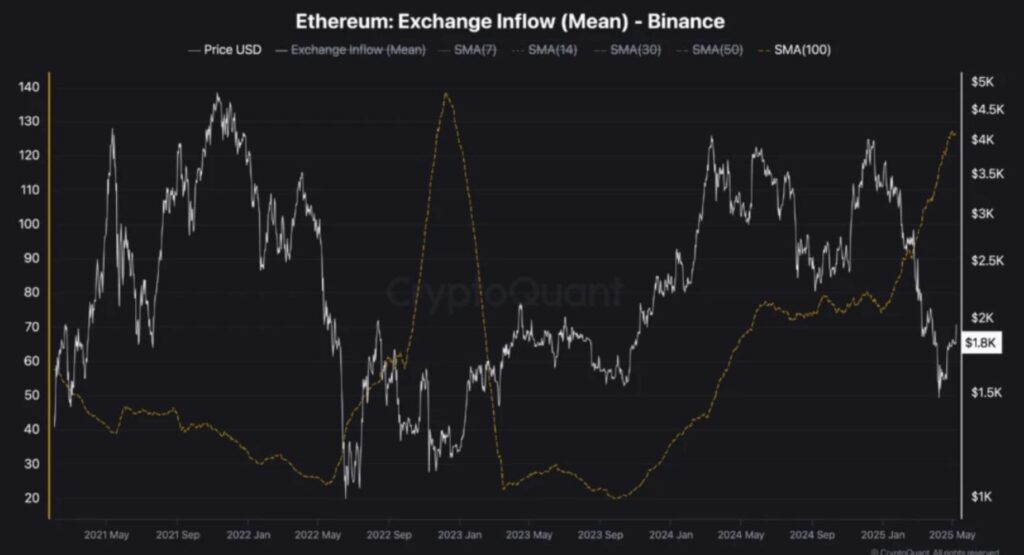
【Ethereum Supply Flow: Exchanges vs Institutional Wallets】
<Sankey diagram showing ETH flowing from exchanges into large wallets>
3. Beyond Theoretical Valuation: The Price Singularity and Absolute Control
Once Ethereum surpasses its previous all-time high, the market will not simply “correct.”
It will reprice the entire network.
In a market where supply is functionally locked, valuation metrics become secondary. The only question that matters is: Who holds the asset?
BitMine and similar early movers are not speculating on price—they are competing for future economic sovereignty within the smart-contract economy.
By 2026, digital asset holdings have begun to resemble strategic resources on the scale of oil or gold—arguably more powerful due to their programmable nature.
If Tom Lee’s forecast materializes and Ethereum breaks its all-time high by the end of January, panic buying will follow. But by then, the exits will be closed.
Late entrants will fight over remnants, while early accumulators control the rails of decentralized finance, staking yield, and protocol governance.
We are witnessing a silent but irreversible redistribution of wealth.
Those who synchronize their strategies with mega-capital flows will emerge as winners in the next era. Those who rely on hindsight will remain spectators.
The quiet before the breakout is the only sanctuary left. Once price explodes, strategy gives way to emotion.
January’s end is not the end of the cycle—it is the beginning of a new price formation regime defined by near-zero supply elasticity.
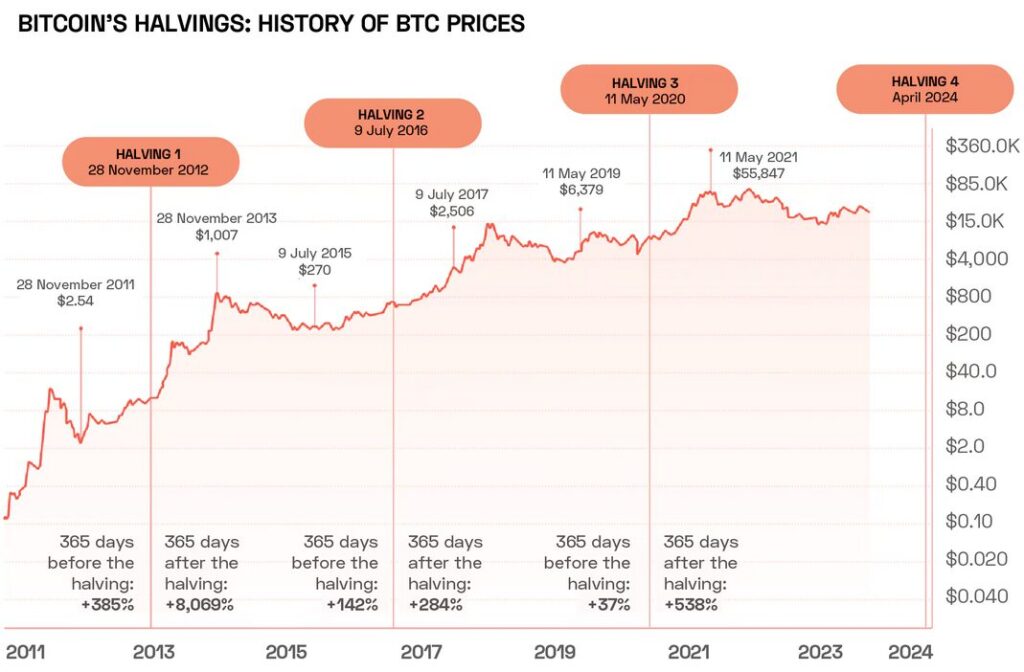
【Ethereum Price Behavior Under Supply-Shock Conditions】
<Historical comparison between normal demand cycles and supply-shock cycles>
Conclusion: The End of January Is Not a Prediction — It Is a Deadline
Mega capital has already made its move.
The supply shock is underway. Ethereum liquidity is vanishing into institutional vaults. Analysts like Tom Lee are not predicting hope—they are reading capital flows.
The question is no longer whether prices will rise, but who will own the asset when they do.
The end of January marks the point at which hesitation becomes irreversible regret.
History offers rare moments where prophecy and capital align.
This is one of them.
Those who act now prepare to greet January’s climax not as observers—but as beneficiaries of one of the most asymmetric opportunities of this decade.