Main Points :
- A growing camp of crypto executives believes that renewed monetary easing could inject massive liquidity into global markets, potentially lifting Bitcoin prices in 2026.
- Signals of early quantitative easing (QE), declining interest rates, and regulatory clarity in the United States are seen as strong tailwinds for Bitcoin and other risk assets.
- However, derivatives data and veteran investors warn that rate cuts may come later than expected, and Bitcoin could still face a prolonged consolidation or drawdown.
- The 2026 US midterm elections introduce a significant political and regulatory uncertainty that could either amplify or negate macroeconomic tailwinds.
- For investors and builders, 2026 may represent not just a price cycle, but a decisive phase for Bitcoin’s role as a macro asset and financial infrastructure.
1. Liquidity Returns to the Market: The Bullish Case for Bitcoin in 2026
The debate over Bitcoin’s trajectory in 2026 is increasingly framed around one central variable: global liquidity. According to Bill Barhydt, CEO of the crypto exchange and wallet company Abra, the market may be on the verge of another liquidity-driven expansion phase.
In an interview with Schwab Network, Barhydt argued that ongoing and future interest rate cuts by the US Federal Reserve could unleash “massive” liquidity into financial markets. This environment, he suggests, would naturally favor risk assets such as Bitcoin.
Barhydt points to early signs of quantitative easing already emerging. The Federal Reserve has begun purchasing US Treasuries again, a move often interpreted as a precursor to broader monetary accommodation. As interest rates decline, demand for government debt may weaken, pushing excess liquidity into alternative assets—including cryptocurrencies.
From this perspective, Bitcoin benefits not because it is risky, but because it is scarce, liquid, and globally accessible. In a world of declining real yields, Bitcoin increasingly competes with gold, equities, and even long-duration bonds as a store of value.
2. Regulatory Clarity and Institutional Capital as Multipliers
Beyond monetary policy, Barhydt emphasizes that regulatory clarity in the United States could significantly amplify Bitcoin’s upside. Over the past few years, institutional investors have largely remained cautious due to unclear compliance frameworks and enforcement-heavy regulation.
By 2026, however, clearer rules around custody, ETFs, accounting treatment, and market structure could unlock substantial institutional inflows. Pension funds, endowments, family offices, and corporate treasuries tend to move slowly—but once regulatory uncertainty is reduced, capital deployment can be both large and persistent.
Combined with a low-interest-rate environment, this could set the stage for what Barhydt describes as “a fantastic few years” not only for Bitcoin, but for the broader digital asset ecosystem.
3. Market Reality Check: Rate Cuts Are Not Guaranteed
While the bullish narrative is compelling, market-based indicators paint a more cautious picture. Data from CME Group suggests that investors are far from certain about near-term monetary easing.
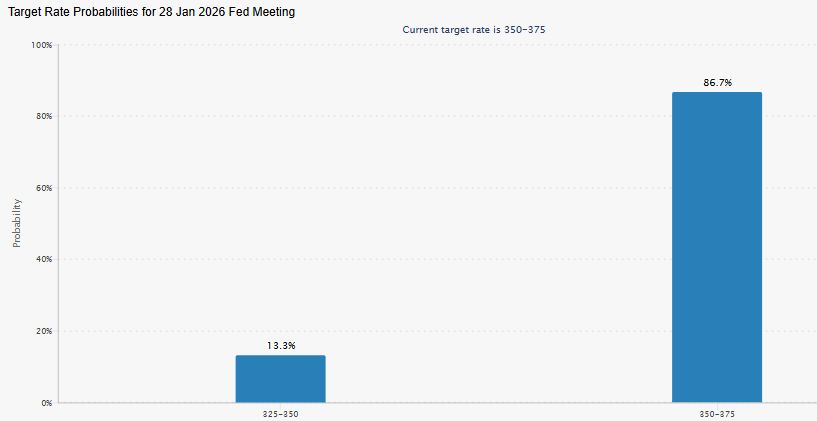
According to CME’s FedWatch data, only 14.9% of market participants currently expect a rate cut at the January FOMC meeting, down from 23% in November. This decline indicates growing skepticism that the Federal Reserve will pivot as quickly as some crypto optimists anticipate.
For Bitcoin, timing matters. Liquidity-driven rallies tend to occur after monetary easing becomes both visible and sustained. If rate cuts are delayed, Bitcoin could remain range-bound or even face further downside before macro conditions improve.
(Market-Implied Interest Rate Expectations)
4. A Veteran Warning: 2026 Could Still Be a Bottoming Year
Adding further nuance, long-time Bitcoin investor Michael Terpin offers a far more conservative outlook. Terpin argues that 2026 could remain a challenging year for Bitcoin, with the possibility of prices bottoming around $60,000 in the fourth quarter.
His thesis is rooted in historical market cycles. Bitcoin has repeatedly experienced multi-year bear or consolidation phases following euphoric highs. Even with improving macro conditions, it often takes time for capital to return at scale.
Terpin acknowledges that a new Federal Reserve chair and eventual rate cuts could improve sentiment. However, he stresses that macroeconomic tailwinds alone are not enough—political and regulatory factors may ultimately determine whether Bitcoin can fully capitalize on monetary easing.
5. The Political Variable: US Midterm Elections as a Crypto Risk
One of the most underappreciated risks for 2026 is political uncertainty, particularly surrounding the US midterm elections. Regulation, taxation, and enforcement priorities can shift dramatically depending on which party controls Congress.
Terpin warns that unless the Republican Party gains control of both the House and the Senate, the current momentum toward regulatory relaxation could stall. A divided Congress may slow or dilute pro-crypto legislation, prolonging uncertainty for institutional investors.
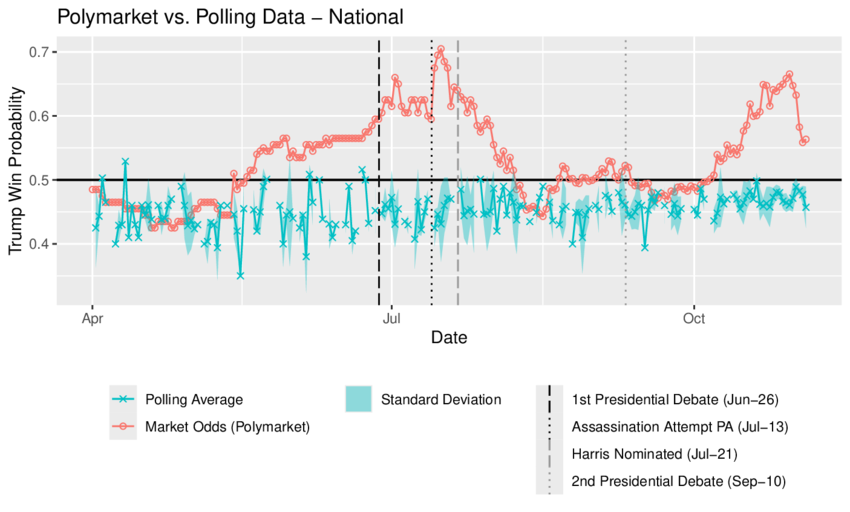
Prediction markets such as Polymarket currently assign only a 19% probability to Republicans controlling both chambers. The most likely outcome, with 47% probability, is a split Congress—an outcome that historically leads to policy gridlock rather than decisive reform.
(US Midterm Election Outcome Probabilities)
6. Bitcoin’s Structural Role Beyond Price Cycles
For builders, operators, and long-term investors, the significance of 2026 extends beyond price appreciation. Bitcoin is increasingly embedded in financial infrastructure: custody solutions, payment rails, ETFs, derivatives, and even balance-sheet strategies.
Even in a sideways or bearish market, adoption can continue quietly. Hash rate growth, Lightning Network usage, and institutional-grade custody development often accelerate during periods of lower speculative activity.
In this sense, 2026 may resemble past transition years—less about headlines, more about foundation-building.
7. Strategic Implications for Investors and Operators
For those seeking new crypto assets, revenue opportunities, or practical blockchain use cases, the message is clear:
- Macro liquidity matters, but patience is required.
- Political outcomes are not noise; they directly affect capital flows.
- Bitcoin’s downside risk may be limited, but upside may require clear confirmation of easing and regulatory alignment.
- Infrastructure and compliance readiness will separate survivors from speculators.
Rather than betting solely on price, sophisticated participants may focus on yield strategies, custody services, payment integration, and institutional onboarding—areas that benefit regardless of short-term volatility.
Conclusion: A Crossroads Year for Bitcoin
Bitcoin in 2026 sits at a crossroads between macro optimism and political caution. Monetary easing could provide the fuel for a powerful rally, but timing, regulation, and elections will determine whether that fuel ignites—or evaporates.
For investors, the year may reward discipline over hype. For builders, it offers an opportunity to prepare for the next cycle before it fully arrives. Either way, 2026 is shaping up to be less about speculation, and more about Bitcoin’s long-term role in the global financial system.