
Main Points :
- Pakistani authorities dismantled a $60 million international crypto and FX fraud network, arresting more than 34 suspects linked to unregulated online investment schemes.
- The crackdown was led by the National Cyber Crime Investigation Agency (NCCIA) and targeted scams promoted through social media with promises of high, guaranteed returns.
- Funds were funneled through local bank accounts, converted into cryptocurrencies, and moved across borders, highlighting persistent AML and cross-border enforcement risks.
- The enforcement action coincides with Pakistan’s rollout of a new virtual asset licensing regime under the Pakistan Virtual Assets Regulatory Authority (PVARA).
- Major global exchanges such as Binance and HTX have already received No Objection Certificates (NOCs), signaling a clear “carrot and stick” regulatory strategy.
- Pakistan is positioning itself as a high-growth but compliance-driven crypto market, where future opportunities depend as much on regulation as on user demand.
1. Overview: A Major Crypto Fraud Network Exposed
Pakistani authorities have announced the successful dismantling of a large-scale international cryptocurrency and foreign exchange fraud network, with total damages estimated at $60 million. The operation resulted in the arrest of more than 34 individuals allegedly involved in running unlicensed investment platforms that targeted both domestic and overseas victims.
The investigation was spearheaded by the National Cyber Crime Investigation Agency (NCCIA), which identified a sophisticated web of fraudulent crypto and FX schemes operating primarily through online channels. These platforms masqueraded as legitimate investment services, exploiting the growing popularity of digital assets in Pakistan and neighboring regions.
This case stands out not only for its scale, but also for its timing. It arrives at a moment when Pakistan is actively reshaping its regulatory stance on cryptocurrencies, moving from a long-standing gray zone toward a structured and enforceable framework.
2. How the Scam Operated: Social Media, Fake Profits, and Frozen Accounts
According to investigators, the fraud network relied heavily on social media marketing to recruit victims. Advertisements and direct messages promised unusually high and consistent profits from crypto and FX trading, often framed as “low-risk” or “guaranteed” opportunities.
The scam followed a familiar but effective pattern:
- Initial Trust-Building Phase
Victims were shown fabricated profit dashboards and early “returns” to create confidence in the platform. - Escalation Through Fees and Deposits
Once trust was established, users were asked to pay additional fees—such as “liquidity charges,” “taxes,” or “account upgrade costs”—to unlock larger profits. - Account Freezing and Disappearance
When victims attempted to withdraw significant amounts, their accounts were suddenly frozen, customer support vanished, and funds became inaccessible.
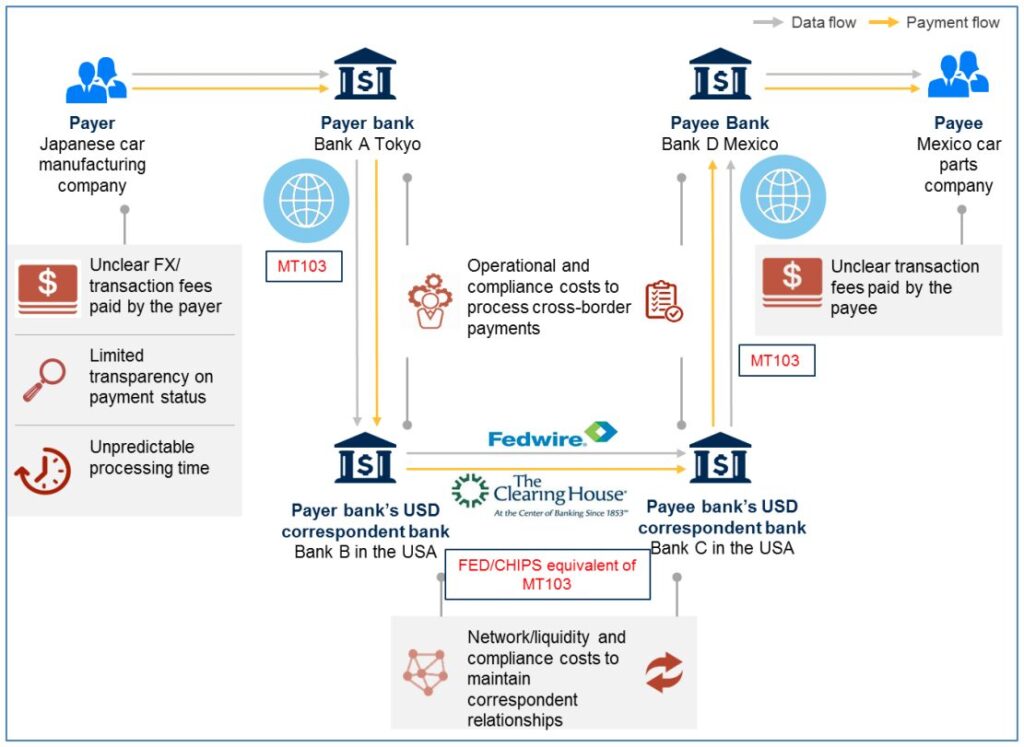
Financially, the operation demonstrated a high level of sophistication. Illicit proceeds were routed through Pakistani bank accounts, converted into cryptocurrencies, and then transferred across borders, complicating recovery efforts and emphasizing the transnational nature of modern crypto crime.
3. Enforcement as a Turning Point, Not an Isolated Event
While the arrests represent a decisive law-enforcement action, Pakistani officials have emphasized that this case should be understood as part of a broader structural shift, not a one-off crackdown.
For years, Pakistan’s crypto ecosystem has existed in a regulatory gray area. This environment enabled innovation and rapid retail adoption but also allowed fraudulent schemes to flourish with minimal oversight. The current operation signals a clear intention to remove unregulated and predatory actors as the country transitions toward formal supervision.
The message is increasingly unambiguous: unlicensed, opaque, and deceptive crypto operations will face escalating pressure, while compliant businesses are being given a legitimate path forward.
4. The Role of PVARA and the New Licensing Framework
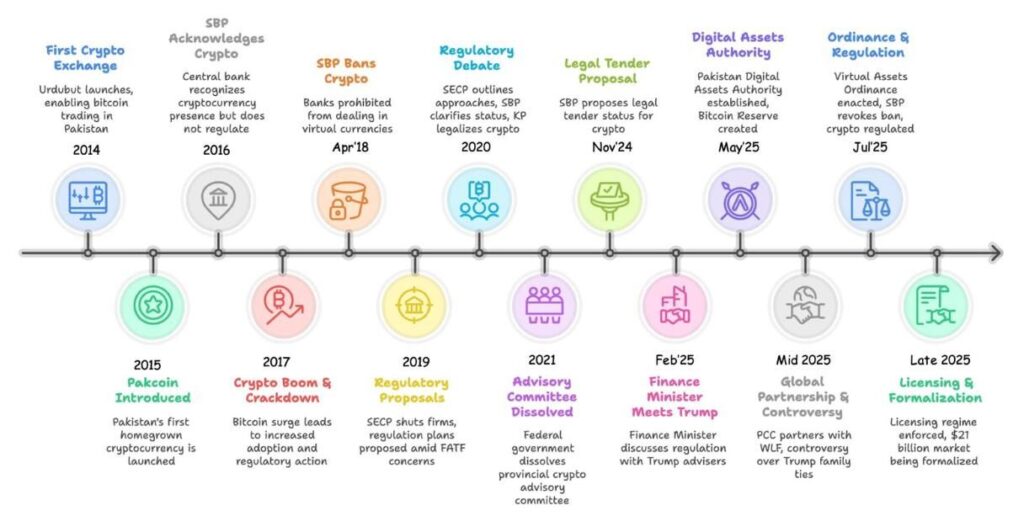
A critical backdrop to the crackdown is the establishment of the Pakistan Virtual Assets Regulatory Authority (PVARA). This newly formed authority is tasked with overseeing licensing, compliance, and supervision of virtual asset activities across the country.
Under this framework:
- Crypto exchanges and service providers must register with local AML systems.
- Firms are expected to establish local subsidiaries or operational presence.
- Licensing processes are designed to align Pakistan with international standards on anti-money laundering and counter-terrorism financing.
As an early signal of intent, PVARA has already issued No Objection Certificates (NOCs) to Binance and HTX. While these NOCs are not full operating licenses, they allow the exchanges to begin formal integration into Pakistan’s regulatory system and accelerate the licensing process.
5. Government Perspective: “Responsible Innovation and Financial Discipline”
Pakistan’s Finance Minister, Muhammad Aurangzeb, has framed the new regulatory framework as a commitment to “responsible innovation and financial discipline.” This language reflects a balancing act familiar to many emerging markets: embracing the economic potential of crypto while mitigating systemic and consumer risks.
From the government’s standpoint, enforcement actions like the $60 million scam bust are necessary to restore trust, protect retail users, and prepare the market for sustainable growth under formal oversight.
6. A Clear Carrot-and-Stick Strategy Emerges
When viewed together, Pakistan’s enforcement actions and regulatory reforms reveal a deliberate carrot-and-stick strategy:
- The Stick:
Aggressive crackdowns on unlicensed operators, fraudulent schemes, and cross-border financial crimes. - The Carrot:
A defined, legal route for compliant global players to enter one of the world’s most active crypto retail markets.
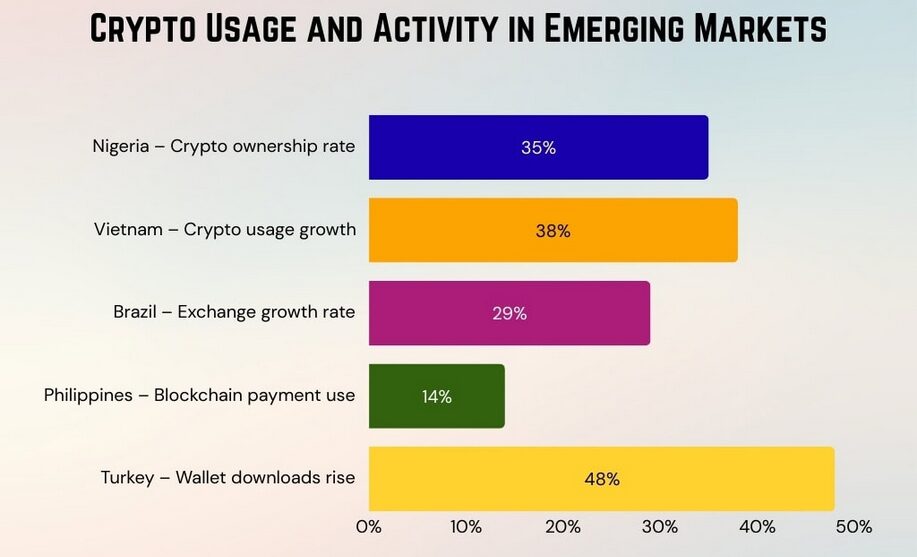
Pakistan consistently ranks among the top countries globally in terms of grassroots crypto usage. This high demand has historically attracted both legitimate platforms and scams operating beyond regulatory reach. The new approach aims to preserve market dynamism while systematically eliminating its most dangerous elements.
7. Market Implications for Investors and Crypto Businesses
For investors, this development carries mixed but ultimately constructive implications. In the short term, enforcement actions may heighten caution and temporarily reduce participation in informal platforms. Over the longer term, however, clearer rules are likely to improve market integrity, reduce fraud risk, and encourage institutional participation.
For exchanges, brokers, and infrastructure providers, the direction is unmistakable. Pakistan is no longer a regulatory blind spot. Growth opportunities remain substantial, but success will increasingly depend on compliance readiness, AML integration, and cooperation with local authorities.
8. Conclusion: Compliance as the New Growth Engine
Pakistan’s dismantling of a $60 million crypto fraud network marks a decisive moment in the country’s digital asset journey. It underscores both the risks inherent in unregulated markets and the government’s determination to transition toward a structured, rules-based ecosystem.
As regulatory infrastructure takes shape, pressure on unauthorized schemes will intensify, while compliant global and regional players are being actively welcomed. For anyone watching Pakistan’s crypto market—whether investors, exchanges, or service providers—the message is now clear: future growth will be driven not only by demand, but by compliance.