Main Takeaways :
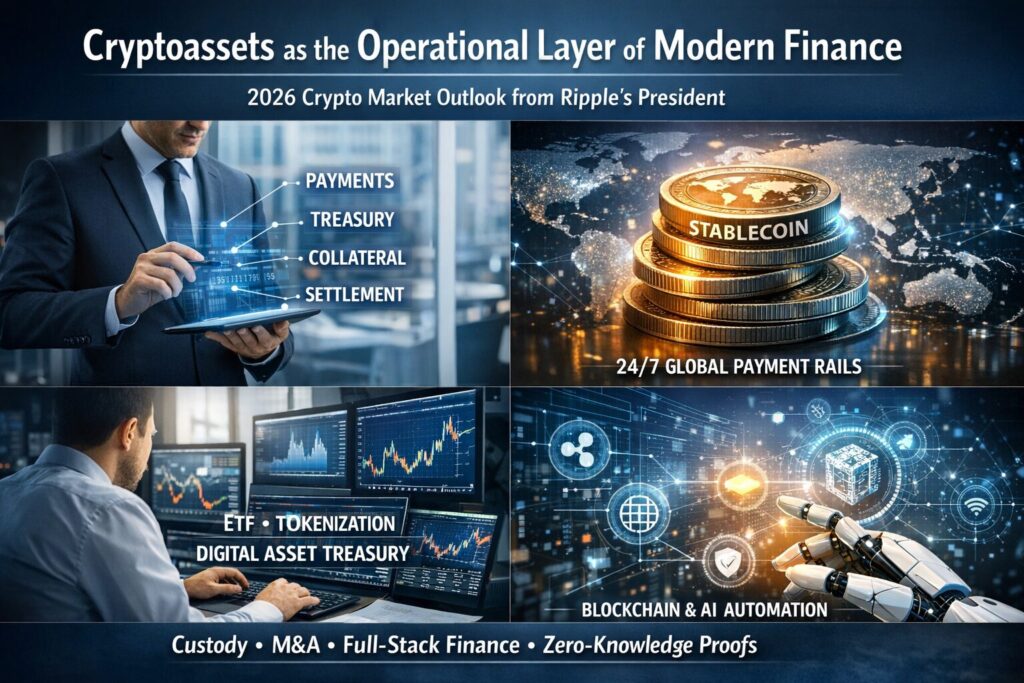
- Cryptoassets are transitioning from speculative instruments to an operational layer of modern finance, supporting payments, treasury management, collateral, and settlement.
- Stablecoins are becoming programmable, 24/7 global payment rails and collateral assets, reshaping corporate cash management.
- Institutional adoption—through ETFs, tokenized assets, and Digital Asset Treasury (DAT) strategies—is accelerating toward 2026.
- Custody, M&A, and tokenization are converging into full-stack financial operating systems.
- The convergence of blockchain and AI, including zero-knowledge proofs, is automating finance while preserving privacy.
Introduction: From Speculation to Infrastructure
On December 23, Ripple, a provider of digital asset infrastructure for financial institutions, released its 2026 crypto market outlook through its president, Monica Long. The message was clear: cryptoassets are no longer best understood as speculative alternatives. They are evolving into the operational layer that underpins modern finance—handling payments, liquidity, collateralization, and settlement at internet speed.
According to Long, institutional holdings of tokenized digital assets are on track to exceed $1 trillion by the end of 2026, marking a structural shift in how financial infrastructure is built and operated. This transition is not theoretical; it is already visible in enterprise payment flows, capital markets experimentation, and the integration of blockchain into day-to-day treasury operations.
1. Stablecoins Go Mainstream: Transforming Corporate Treasury
Over the next five years, stablecoins are expected to integrate deeply with existing payment and remittance infrastructures, effectively becoming core global settlement rails. What began as crypto-native instruments are now being embedded into corporate workflows.
Major payment platforms such as Visa and Stripe have enabled stablecoin settlements, particularly with USD Coin (USDC). While early adoption has focused on B2B use cases, the scope is expanding rapidly.
U.S. dollar-denominated, regulation-compliant stablecoins are emerging as the de facto digital dollar standard, operating 24/7/365 and enabling programmable payments that traditional banking systems cannot match. Beyond payments, stablecoins are increasingly used as high-quality collateral in modern financial markets.
Stablecoins do more than speed up payments. By unlocking idle capital, they structurally improve cash flow. As corporate cash balances rise globally, stablecoins offer flexibility, real-time international settlement, and a solution to underutilized liquidity.
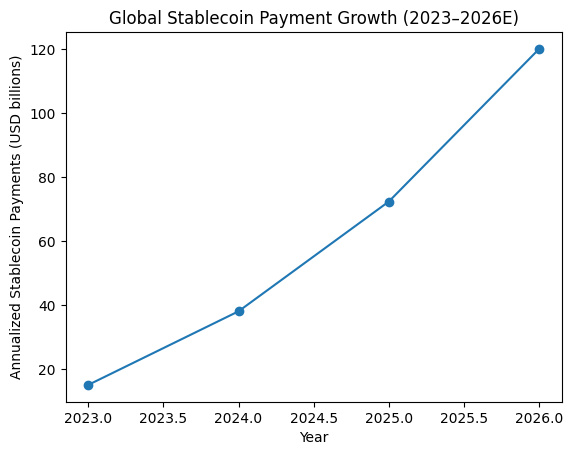
As of February 2025, the annualized run rate of stablecoin payments reached approximately $72.3 billion, with around $36.0 billion attributable to B2B transactions. These figures underscore a shift from experimentation to production-grade usage.
[“Global Stablecoin Payment Growth (2023–2026E)” – line chart showing rising annualized volumes in USD]
2. Institutional Adoption and the Rise of Digital Asset Treasuries
The next phase of crypto market growth will be driven by financial products such as crypto ETFs and by direct corporate adoption. Long projects that by 2026, nearly half of Fortune 500 companies will either hold cryptoassets on their balance sheets or operate under a formal Digital Asset Treasury (DAT) strategy that incorporates tokenized assets and stablecoins.
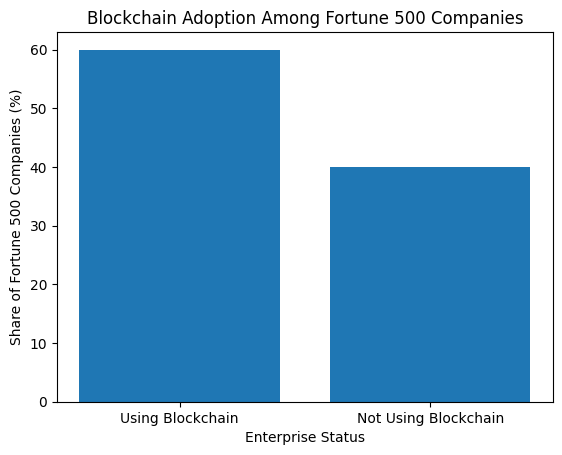
A 2025 survey by Coinbase found that 60% of Fortune 500 companies were already engaged in blockchain-related initiatives. More than 200 enterprises now classify digital asset acquisition as a strategic priority, with around 100 new companies joining in 2025 alone.
Corporations are not adopting crypto for speculation. Instead, they seek diversification of reserves, operational efficiency, and strategic exposure to next-generation financial infrastructure. This shift reframes cryptoassets as tools for risk management and operational optimization rather than price bets.
[“Enterprise Blockchain Adoption Among Fortune 500 Companies” – bar chart in USD context showing adoption percentages]
3. Custody, M&A, and Tokenization Accelerate
Custody has emerged as the primary catalyst for M&A in the digital asset sector. Banks, financial services firms, and crypto-native companies are actively acquiring or partnering with custodians to accelerate blockchain strategies.
Looking ahead, tokenization within major custodian banks and clearing houses is expected to scale rapidly. By 2026, collateral mobility—the ability to move and reuse collateral seamlessly—could become the most impactful enterprise use case in digital assets.
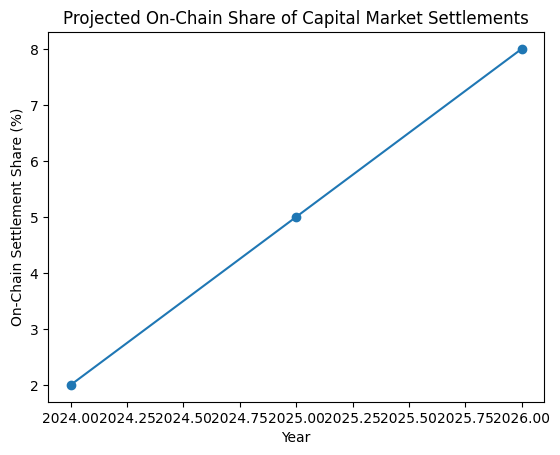
As regulatory clarity improves and custodial banks adopt stablecoins, 5–10% of capital market settlements could migrate on-chain. Custody platforms are evolving from simple safekeeping services into full-stack financial operating systems, encompassing issuance, settlement, and collateral management.
[“On-Chain Settlement Share of Capital Markets (Projected)” – stacked area chart with USD values]
4. Blockchain and AI: Automating Finance with Privacy
The convergence of blockchain and AI is poised to automate large portions of financial operations. As treasury management moves on-chain, stablecoins will enable real-time liquidity optimization, automated margining, and yield optimization in on-chain repo markets.
Zero-knowledge proofs (ZKPs) will allow AI models to assess creditworthiness without exposing sensitive data, dramatically reducing friction in credit markets. This combination of privacy-preserving cryptography and intelligent automation represents a fundamental upgrade to financial infrastructure.
Rather than replacing institutions, these technologies augment existing financial systems, making them faster, more transparent, and more resilient.
Conclusion: Crypto as Financial Infrastructure
By 2026, cryptoassets will no longer sit at the margins of finance. They will function as the operational substrate of global markets, enabling programmable money, real-time settlement, and automated risk management.
For investors, enterprises, and builders, the opportunity lies not in chasing short-term price movements, but in identifying assets, platforms, and protocols that enable this infrastructure shift. Stablecoins, tokenization frameworks, custody platforms, and AI-integrated blockchains are emerging as the true drivers of long-term value.
Crypto’s future, as outlined by Ripple’s president, is not speculative—it is infrastructural.