
Main Points :
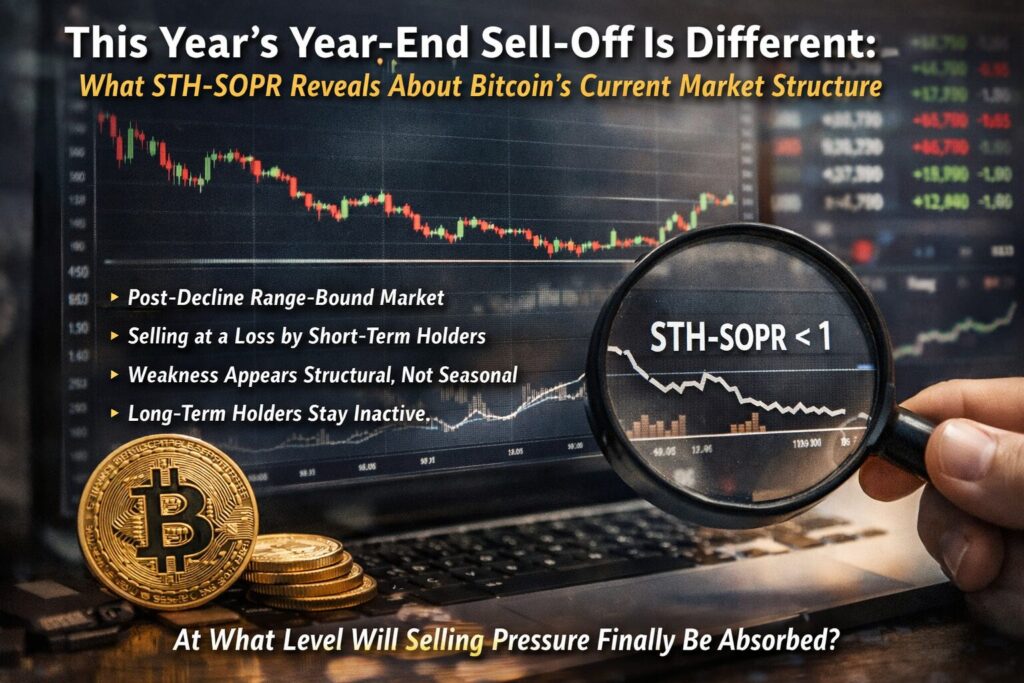
- Bitcoin is currently in a post-decline range-bound market, where rebounds are capped by persistent selling pressure from short-term holders.
- STH-SOPR remains below 1, indicating that selling is driven primarily by realized losses, not profit-taking.
- Unlike typical year-end adjustments seen from 2022–2024, the current weakness appears structural rather than seasonal.
- Long-term holders remain largely inactive, suggesting the market is not yet in a full distribution phase.
- The critical question is not whether prices will fall again immediately, but at what level sell-side pressure will finally be absorbed.
1. Bitcoin at Year-End: A Familiar Pattern That Isn’t Quite the Same
Year-end selling in Bitcoin markets is nothing new. Historically, December often brings portfolio rebalancing, tax-related selling, and temporary reductions in risk exposure. In prior years, these flows created short-lived dips that resolved quickly once the calendar turned.
However, the current market environment tells a different story.
Bitcoin prices have already experienced a notable decline earlier in the cycle, and instead of staging a strong rebound, the market has entered a tight trading range. Each attempt to recover higher levels has been met with renewed selling. The result is a market that feels heavy, cautious, and structurally constrained.
To understand why this year feels different, we must look beyond price charts and focus on on-chain behavior, particularly the actions of short-term holders.
2. Understanding STH-SOPR: A Window Into Investor Psychology
What Is STH-SOPR?
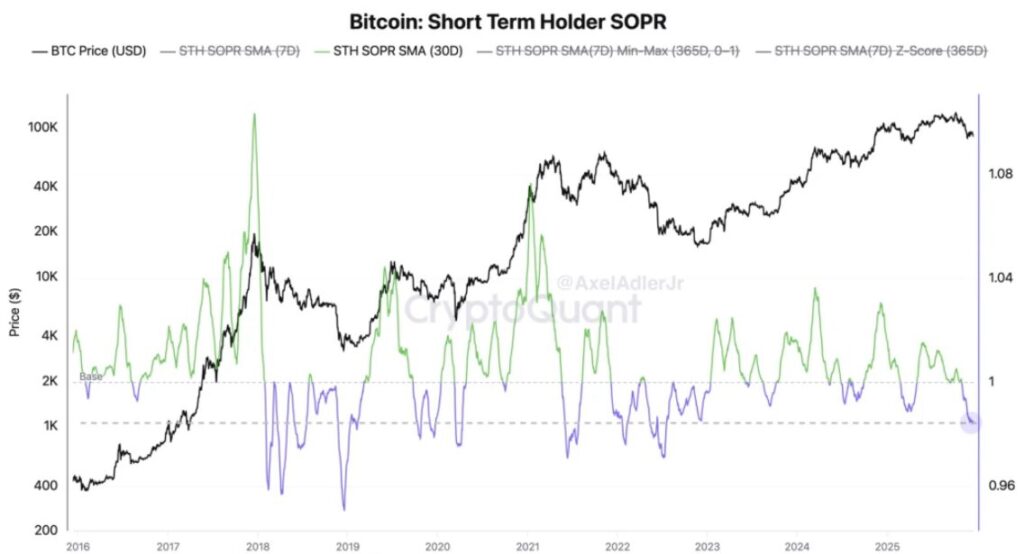
Short-Term Holder Spent Output Profit Ratio (STH-SOPR) measures whether Bitcoin held for a short period (typically under 155 days) is being sold at a profit or a loss.
- STH-SOPR > 1 → Coins are sold at a profit
- STH-SOPR < 1 → Coins are sold at a loss
This indicator is especially powerful because short-term holders tend to be more reactive, emotionally sensitive, and price-driven. Their behavior often defines market momentum during corrections.
Why STH-SOPR Matters Now
Currently, STH-SOPR has remained consistently below 1. This tells us that:
- Selling pressure is dominated by loss realization
- Market participants are not distributing profits, but capitulating incrementally
- Each price rebound creates an opportunity for underwater holders to exit, capping upside
This is fundamentally different from a healthy consolidation where sellers are confident profit-takers.
3. Comparing 2022–2024: Seasonal Selling vs Structural Pressure
Typical December Behavior (2022–2024)
From 2022 through 2024, December showed a relatively stable pattern:
- Monthly average STH-SOPR hovered slightly above 1
- Brief dips below 1 appeared toward month-end
- These dips aligned with tax planning, balance-sheet adjustments, and risk reduction
- Importantly, market structure remained intact
In those years, selling was intentional and controlled, not emotionally forced.
Why 2025 Is Different
This year, STH-SOPR has not merely dipped below 1 temporarily—it has stayed there. That persistence signals something deeper:
- Loss realization is ongoing, not episodic
- The market is still digesting earlier declines
- Short-term holders lack confidence to hold through volatility
This suggests that current weakness cannot be explained by the calendar alone.
4. Range-Bound Markets and the Mechanics of Absorption
Why Prices Are Stuck
In a range-bound environment driven by loss-selling:
- Price rises trigger supply from trapped holders
- Demand exists, but is absorbed slowly
- Volatility compresses as neither side dominates
This creates a frustrating environment for traders, but it is also where market healing often occurs.
The Real Question
The key issue is not:
“Will Bitcoin fall again immediately?”
But rather:
“At what price level will sellers finally run out?”
Once realized losses decline and STH-SOPR begins to stabilize near or above 1, the market can transition from distribution of pain to re-accumulation.
5. Long-Term Holders: The Silent Variable
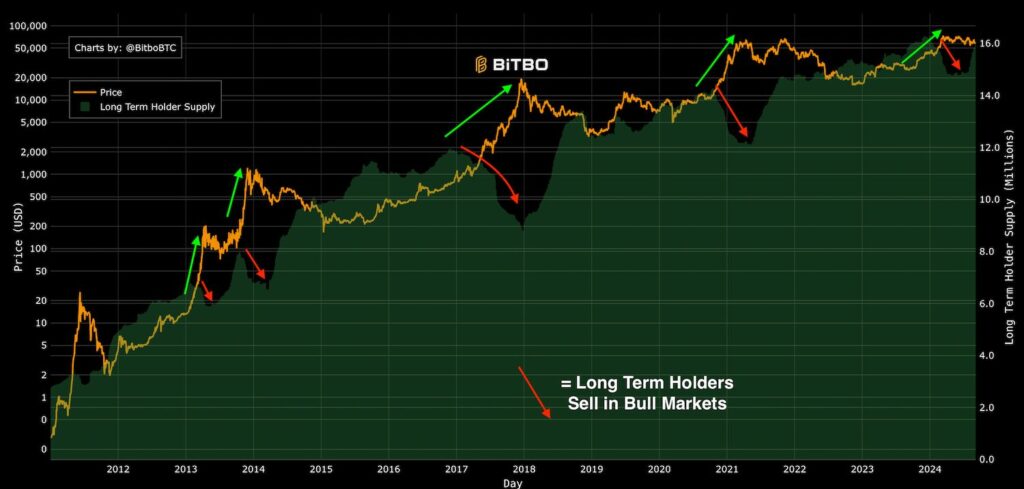
One of the most important confirmations comes from what is not happening.
Long-term holders—those who historically sell near macro tops—remain largely inactive:
- No surge in long-term distribution
- No widespread transfer of old coins to exchanges
- No evidence of panic at the structural level
This tells us that the market is likely still within a mid-cycle adjustment, not a terminal decline.
6. Broader Market Context: Institutions, ETFs, and Liquidity
Beyond on-chain data, macro factors continue to shape Bitcoin’s environment:
- Institutional participation remains structurally supportive
- Spot ETF inflows, while volatile, continue to anchor demand
- Liquidity conditions remain tight, reinforcing range behavior
For investors seeking new crypto assets or yield opportunities, this phase is less about momentum trades and more about positioning and patience.
7. Practical Implications for Investors and Builders
For Investors
- Avoid confusing slow absorption with bearish collapse
- Monitor STH-SOPR trend reversals rather than price alone
- Focus on accumulation strategies aligned with structural support
For Blockchain Practitioners
- Market consolidation phases historically coincide with infrastructure building
- On-chain activity remains robust beneath price stagnation
- Real-world utility and payment use cases continue developing regardless of price cycles
Conclusion: A Market Digesting, Not Breaking
This year’s year-end selling is different because it reflects unfinished structural adjustment, not simple seasonal behavior. STH-SOPR below 1 confirms that short-term holders are still realizing losses, capping upside and extending consolidation.
Yet the absence of long-term holder distribution suggests resilience beneath the surface.
Bitcoin is not signaling imminent collapse—but it is demanding patience. The market’s next decisive move will not come from panic, but from the moment when selling pressure is finally exhausted and absorption completes.




