Main Points :
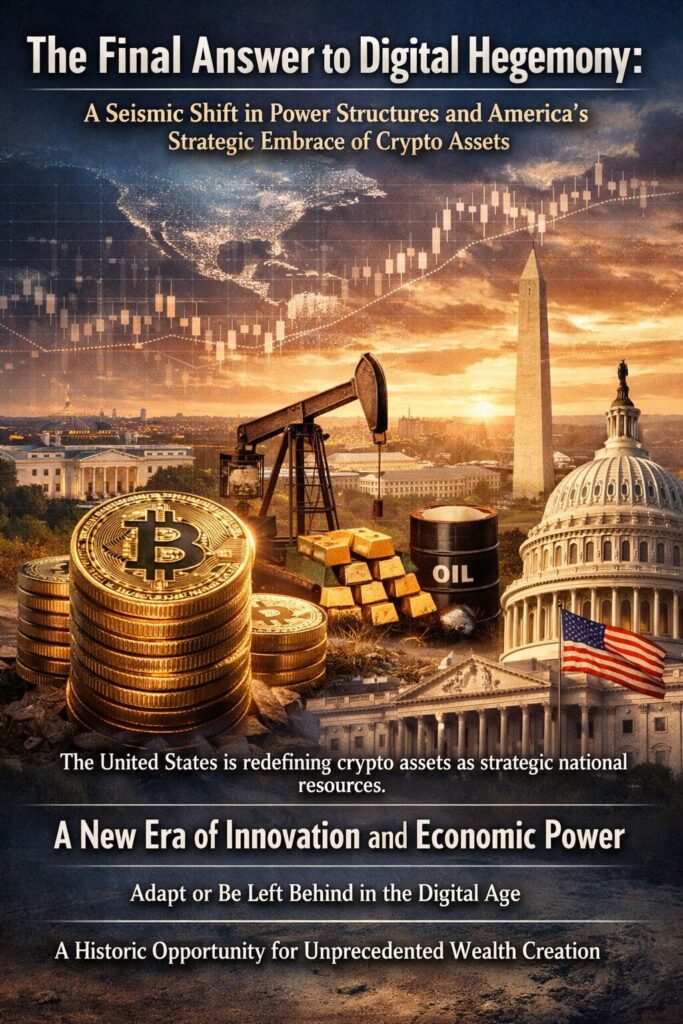
- The United States is undergoing a historic regulatory transformation that redefines crypto assets from legal targets into strategic national resources.
- A post-bureaucratic regulatory philosophy is emerging, prioritizing innovation, capital attraction, and protocol-based governance.
- Crypto assets—especially Bitcoin—are increasingly framed as strategic reserves, comparable to gold or oil in earlier eras.
- Countries that fail to adapt risk permanent exclusion from the new digital capital order.
- Investors face a once-in-a-generation inflection point where regulatory realignment may trigger massive wealth redistribution.
1. The Death of Bureaucracy and a New Dimension of Regulatory Reform
[Transformation of U.S. Regulatory Architecture]

What is unfolding at the core of American political power is not a routine personnel reshuffle. It represents a paradigm shift in how financial authority, technological innovation, and national strategy intersect. For over a decade, U.S. crypto policy was defined by ambiguity—rules enforced retroactively, innovation stifled by enforcement actions, and a regulatory climate shaped more by fear than foresight.
That era is ending.
The appointment of David Sacks as a special policy architect under the Trump administration symbolizes the collapse of legacy bureaucratic logic. Sacks embodies the rationalism of Silicon Valley combined with a deep belief in market freedom and protocol-driven governance.
Under this new philosophy, agencies such as the Securities and Exchange Commission and the Commodity Futures Trading Commission are no longer viewed as enforcers of vague moral authority. Instead, they are candidates for structural redefinition—possibly fragmentation, consolidation, or outright replacement by clearer, innovation-first frameworks.
The implications are profound. Regulation is being reframed not as a wall against risk, but as a magnet for global capital. Where enforcement once drove entrepreneurs offshore, regulatory clarity now aims to pull talent, liquidity, and infrastructure directly into U.S. jurisdiction.
History offers parallels. Just as oil reserves once determined geopolitical power, digital asset reserves and blockchain infrastructure are rapidly becoming symbols of national strength. In this emerging order, the state does not fear decentralized technology—it weaponizes it strategically.
This is not deregulation. It is re-regulation with intent.
2. Strategic Asset Reserves and the Risk of Japan Being Left Behind
[Digital Assets as National Strategic Reserves]
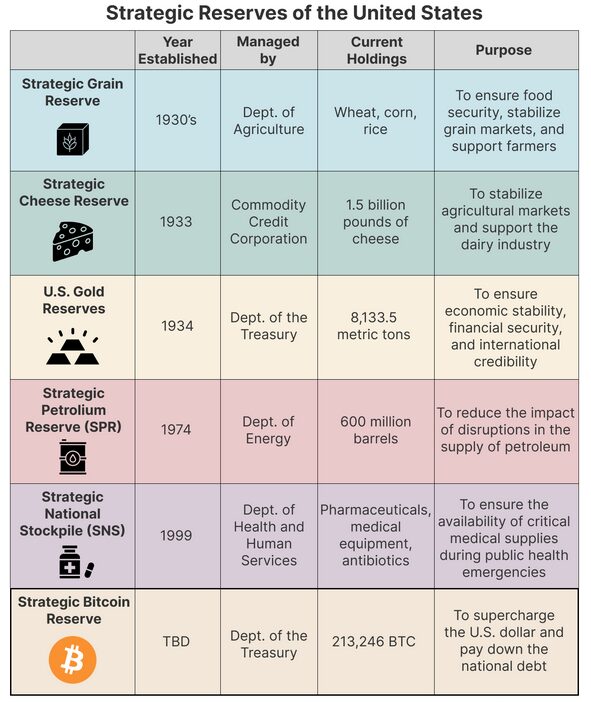
As the United States moves toward recognizing crypto assets—particularly Bitcoin—as strategic reserves, many countries remain trapped in outdated regulatory mindsets. The contrast is stark.
Japan, long praised for consumer protection, now faces an uncomfortable reality: excessive regulatory conservatism has become an innovation choke point. Strict exchange licensing, capital requirements, and limited openness to foreign platforms have created an environment where domestic innovation struggles to scale globally.
Meanwhile, the U.S. is positioning itself as the gravitational center of digital capital.
If Bitcoin is increasingly treated as “digital gold,” the logic of sovereign accumulation becomes unavoidable. A nation that legally protects, accumulates, and integrates crypto assets into its financial infrastructure gains asymmetric advantage. Those that refuse participation risk becoming liquidity donors—exporting talent, capital, and protocol ownership abroad.
This divergence accelerates quickly. Once regulatory clarity exists, the migration of engineers and capital behaves like a black hole. It is not incremental; it is exponential.
From an economic standpoint, wealth is no longer primarily generated by land, factories, or even corporations. It is generated by protocols—open systems that reward early adoption and network effects. Closing the door to such systems is functionally equivalent to choosing long-term impoverishment.
The Trump administration’s strategy is brutally pragmatic. By acting decisively before global consensus forms, the U.S. may lock in first-mover advantage so large that latecomers cannot catch up. When other nations realize what has happened, the game may already be over.
3. From Law Enforcement to National Prosperity: A New Order and the Investor’s Final Choice
[Capital Flow Shift in the Post-Regulatory Era]
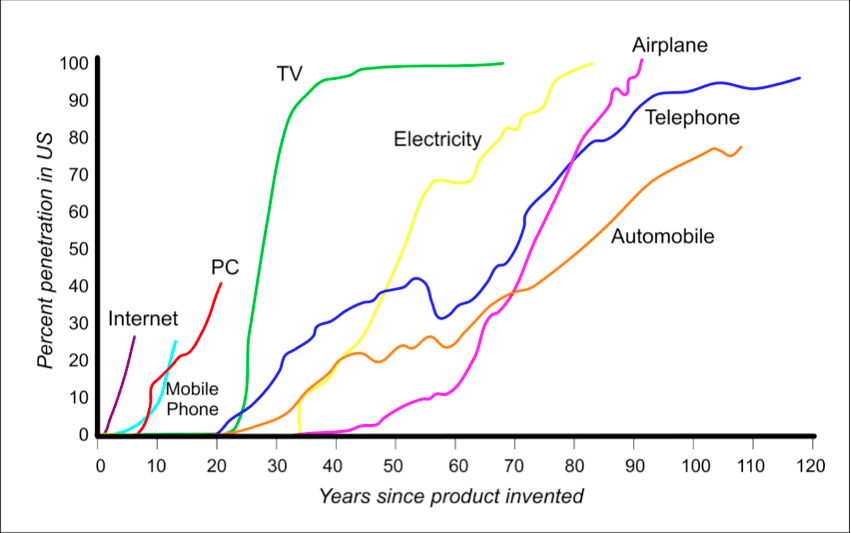
The dismantling of enforcement-driven regulation acts as a powerful accelerant. Once removed, liquidity flows into the market at a scale traditional finance cannot easily model. Volatility increases—but so does opportunity.
For investors, the critical task is no longer predicting prices alone. It is identifying who writes the rules of the next financial system.
In the order envisioned by Sacks and like-minded architects, centralized surveillance gives way to transparent, protocol-based markets. Trust is no longer institutional—it is cryptographic. Scarcity is not decreed by central banks; it is programmed into code.
This inversion carries staggering implications. The historical assumption that states monopolize currency issuance is collapsing. Instead, algorithmic scarcity begins to underpin national credibility.
The restructuring of regulation thus becomes a dual event: a death sentence for legacy banking models and a liberation movement for individual financial sovereignty.
Periods of structural collapse are always moments of wealth redistribution. Investors who recognize this transition not as chaos but as re-alignment can position themselves at the source of new value creation.
The challenge issued by the United States is explicit: remain attached to a decaying system, or align with the emerging architecture of power.
Crypto assets, in this framing, are no longer speculative risks. They become hedges against systemic failure and engines of asymmetric growth. Those who hesitate may survive—but those who act decisively may redefine their financial future.
Conclusion: Hearing the Sound of History Moving
We are witnessing a once-in-a-century transformation. Wealth is shifting from paper promises to executable code. Power is migrating from opaque institutions to transparent protocols. And regulation itself is being repurposed—from restraint to strategy.
The path opened by David Sacks represents more than policy reform. It is a declaration that financial freedom, technological sovereignty, and national strength are now inseparable.
History does not wait for consensus. It rewards those who move when the direction becomes clear.
The final answer to digital hegemony has been given.
The only remaining question is whether we choose to step forward—or remain behind.