
Main Points :
- Bitcoin’s struggle around $90,000 has reignited fears of miner capitulation, but objective cost and supply data suggest the downside risk is structurally limited.
- The key metric to understand miner behavior is AISC (All-In Sustaining Cost), which currently clusters around the $90,000 level under today’s difficulty and financing conditions.
- Even under an extreme stress scenario, potential miner selling pressure is small compared to daily ETF flows and is often absorbed via OTC markets.
- Rather than signaling collapse, miner stress historically marks medium-term bottoms and consolidation phases.
- For investors and builders, this period highlights Bitcoin’s evolution into a capital-intensive, infrastructure-driven asset class, not a fragile speculative market.
1. Why the $90,000 Level Matters More Than a Psychological Number
Bitcoin’s recent price action around the $90,000 mark has become a focal point for market participants. Headlines frame it as a battle between bulls and bears, but for miners, this level has a more concrete meaning: economic viability.
Unlike short-term traders, miners operate physical infrastructure. Their decisions are governed not by sentiment, but by whether the Bitcoin they produce can cover the full cost of staying in business. This is why the current debate around miner capitulation deserves a deeper, data-driven examination.
In past cycles, fears of miner selling often preceded panic. Yet those fears were frequently exaggerated because they ignored how mining economics, market liquidity, and institutional demand have evolved.
2. Understanding AISC: The True Cost of Mining Bitcoin
To assess whether miners are truly at risk, we must focus on AISC (All-In Sustaining Cost).
AISC goes beyond simple electricity expenses. It includes:
- Power and cooling costs
- Hardware depreciation and maintenance
- Hosting and infrastructure fees
- Personnel and operational overhead
- Interest expenses and capital financing costs
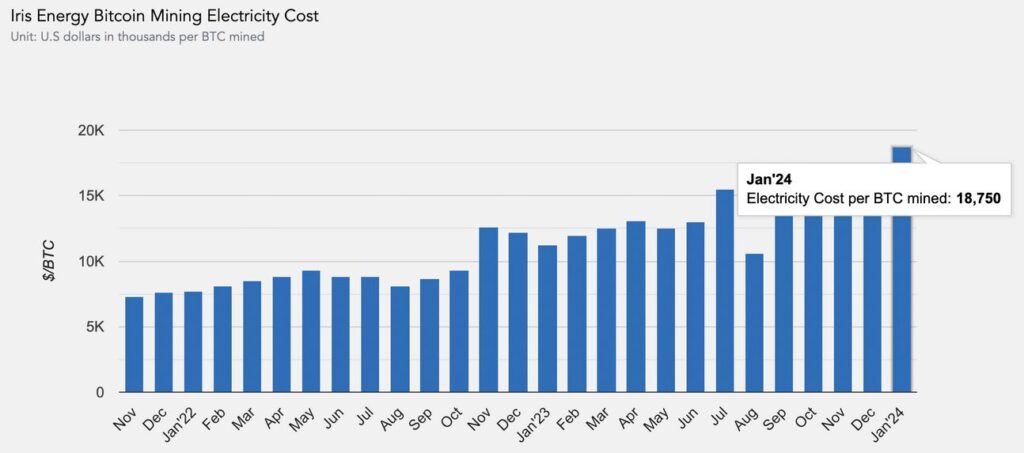
Based on current network difficulty and public disclosures from large mining firms, Bitcoin’s AISC is estimated near $90,000 per BTC.
This does not mean that every miner instantly sells below that price. Instead, it marks a zone where margins compress and weaker operators begin to feel pressure.
[Estimated Bitcoin AISC vs. Market Price]
3. What Miner Capitulation Actually Looks Like (and What It Doesn’t)
“Miner capitulation” is often misunderstood as a sudden, uncontrolled flood of Bitcoin hitting exchanges. In reality, it is a gradual, uneven process.
Historically, miner stress unfolds in three stages:
- Margin Compression – Profits shrink, but operations continue.
- Operational Optimization – Less efficient rigs are shut down, costs are cut.
- Selective Liquidation – Some BTC reserves are sold to fund operations or repay debt.
Importantly, this process does not imply indiscriminate selling. Large miners today behave like treasury managers, not desperate sellers.
4. Quantifying the Worst-Case Selling Pressure
Let us examine a deliberately severe scenario to test market resilience.
- Total miner holdings: ~50,000 BTC
- Daily new issuance: ~450 BTC
- Assumption:
- 100% of newly mined BTC sold
- 30% of existing holdings liquidated over 90 days
Under these conditions, daily sell pressure equals:
- New issuance: 450 BTC
- Inventory liquidation: ~167 BTC
- Total: ~617 BTC per day
At a price of $90,000, this represents about $55 million per day.
5. ETF Flows Put Miner Selling into Perspective
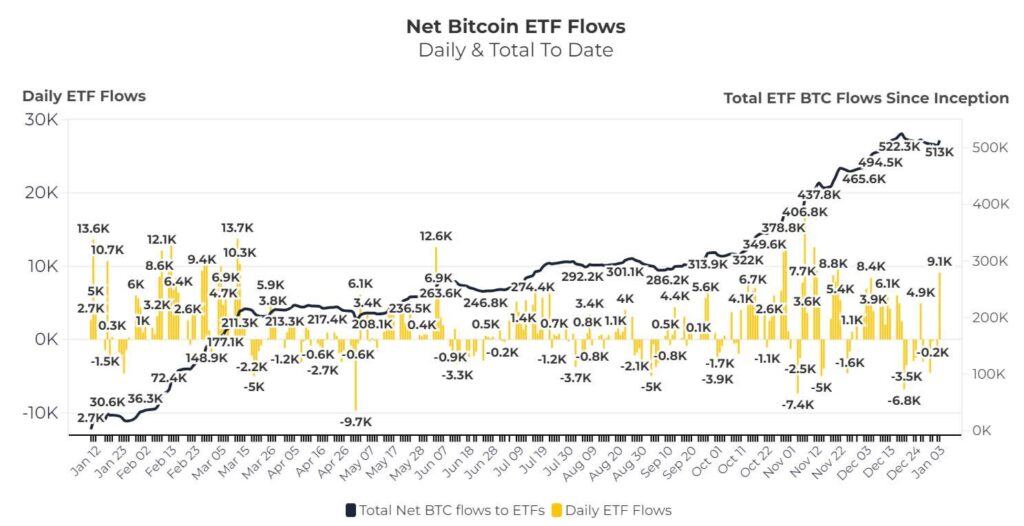
Now compare this with Bitcoin ETF flows.
A $100 million ETF inflow or outflow at $90,000 corresponds to roughly 1,111 BTC.
Such flows are increasingly common in U.S. spot Bitcoin ETFs.
This means that even extreme miner selling represents barely half of normal ETF-driven demand or supply swings.
[Miner Selling vs. ETF Flow Comparison]
6. Why OTC Markets Matter More Than Exchange Order Books
Another critical misconception is that miners dump coins directly onto exchanges.
In reality:
- Large miners prefer OTC (over-the-counter) desks
- OTC trades minimize market impact
- Buyers include funds, family offices, and corporate treasuries
As a result, miner selling often never appears in public order books, reducing its visible effect on spot prices.
This structural shift alone makes comparisons with earlier cycles misleading.
7. Miner Capitulation as a Bottoming Signal
Historically, periods of miner stress have coincided with:
- Hashrate stabilization
- Reduced selling pressure after weaker miners exit
- Improved profitability for remaining operators
In previous cycles, such conditions often preceded medium- to long-term price recoveries, not collapses.
What changes today is the presence of institutional capital ready to absorb supply.
8. Broader Implications for Investors and Builders
For investors searching for new crypto assets or income opportunities, this analysis offers two key lessons:
- Bitcoin is no longer a retail-only market
Its price dynamics increasingly resemble those of capital-intensive commodities like energy or data infrastructure. - Downside risk is increasingly structural, not emotional
Cost floors, ETF demand, and OTC liquidity act as stabilizers.
For builders, miners’ economics reinforce Bitcoin’s role as the base settlement layer upon which higher-yield, application-driven blockchains can be developed.
9. Conclusion: Fear vs. Fundamentals at $90,000
The battle around $90,000 is not merely psychological. It reflects the intersection of:
- Mining cost structures
- Institutional demand via ETFs
- Mature liquidity channels such as OTC markets
While short-term volatility remains inevitable, the data suggests that miner capitulation alone is unlikely to trigger a catastrophic price collapse.
Instead, this phase may represent a transitional equilibrium, where Bitcoin continues its transformation into a globally recognized digital infrastructure asset.
For those seeking long-term opportunity rather than short-term noise, understanding these mechanics is no longer optional—it is essential.