
Main Points :
- Bitcoin is trading around $86,000, while the broader crypto market shows early signs of structural consolidation rather than panic.
- Technical indicators such as the 14-day RSI falling below 30 historically signal capitulation phases that often precede strong rallies.
- Some analysts forecast Bitcoin reaching $180,000 within 90 days, driven by supply constraints, institutional positioning, and macro liquidity cycles.
- Contrary to common fears, quantum computing may strengthen Bitcoin, according to Michael Saylor, rather than threaten it.
- Meanwhile, HYPE token hitting a 7-month low highlights selective risk-off behavior and capital rotation within altcoins.
- For investors and builders, this phase may represent accumulation and infrastructure positioning, not speculative excess.
1. Current Market Snapshot: Calm Before the Expansion
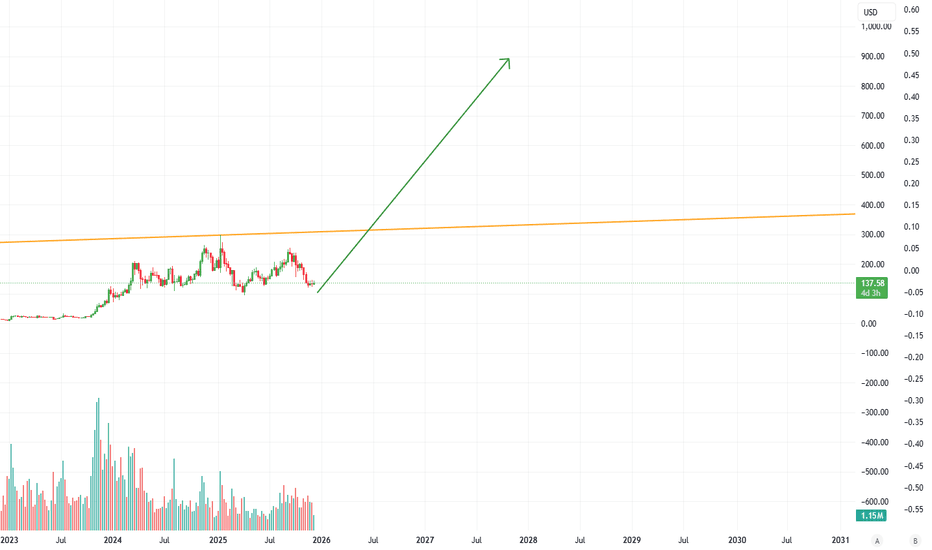
As of December 18, Bitcoin (BTC) is trading at approximately $86,470, Ethereum (ETH) around $2,830, and Solana (SOL) near $123. The total global cryptocurrency market capitalization stands at $3.01 trillion, with Bitcoin dominance hovering around 59.8%.
This dominance level is particularly important. Historically, when Bitcoin dominance rises during a period of price stabilization rather than rapid decline, it often indicates capital concentration rather than capital flight. In simpler terms, investors are not leaving crypto—they are reallocating toward what they perceive as the strongest monetary asset in the sector.
[BTC, ETH, and SOL price overview chart]
2. Is Bitcoin Undervalued at $86,000? Reading the RSI Signal
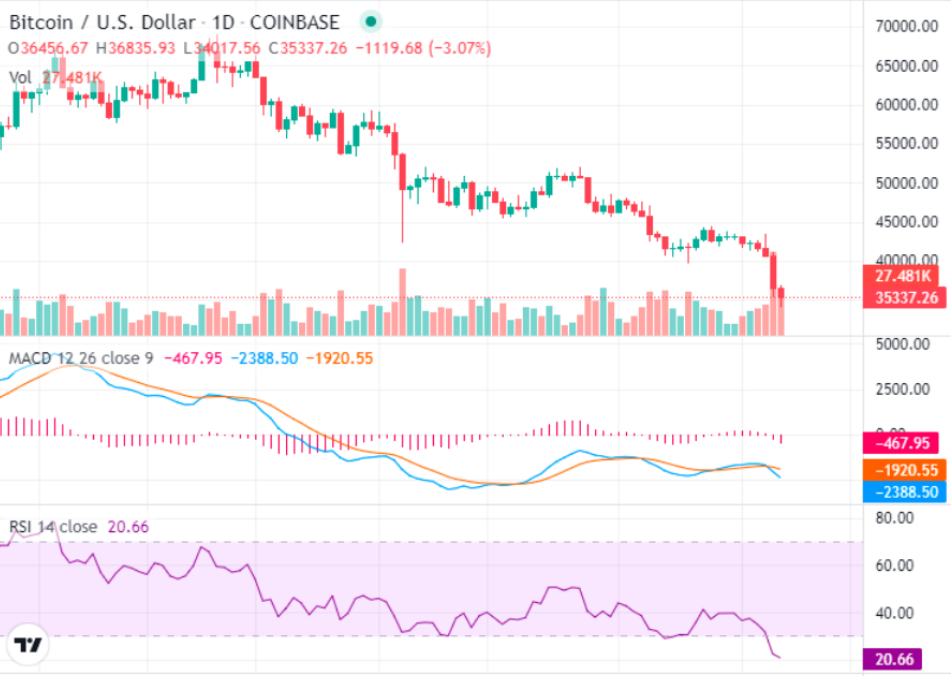
One of the most discussed technical indicators this cycle is the 14-day Relative Strength Index (RSI). In mid-November, Bitcoin’s RSI briefly dropped below 30, a threshold traditionally associated with oversold conditions.
Historically, RSI dips below 30 on higher-timeframe charts have often occurred near macro bottoms or mid-cycle shakeouts, rather than at the end of bull markets. Examples include:
- March 2020 (COVID liquidity shock)
- July 2021 (China mining ban aftermath)
- Late 2022 (post-FTX collapse)
In each case, Bitcoin did not collapse structurally—it reset sentiment, flushed leverage, and prepared for a renewed trend.
[Bitcoin 14-day RSI oversold signal]
3. $180,000 in 90 Days? Understanding the Bullish Thesis
The bold prediction that Bitcoin could reach $180,000 within 90 days may sound extreme at first glance. However, proponents of this view are not relying on hype alone. Their thesis typically rests on three pillars:
a) Supply Compression
Post-halving issuance has dropped sharply. At the same time, long-term holders continue to accumulate, reducing liquid supply on exchanges.
b) Institutional Positioning
Spot Bitcoin ETFs and structured products have changed market dynamics. Large institutions no longer need to speculate—they can systematically allocate, absorbing supply during drawdowns.
c) Liquidity Cycles
Macro liquidity expansion, particularly from expectations of future rate cuts, tends to reach risk assets with a lag. Bitcoin historically reacts faster and more violently than traditional markets.
While $180,000 is not guaranteed, the logic suggests that parabolic moves are mathematically plausible in compressed supply environments.
4. Bitcoin Dominance and What It Signals for Altcoins
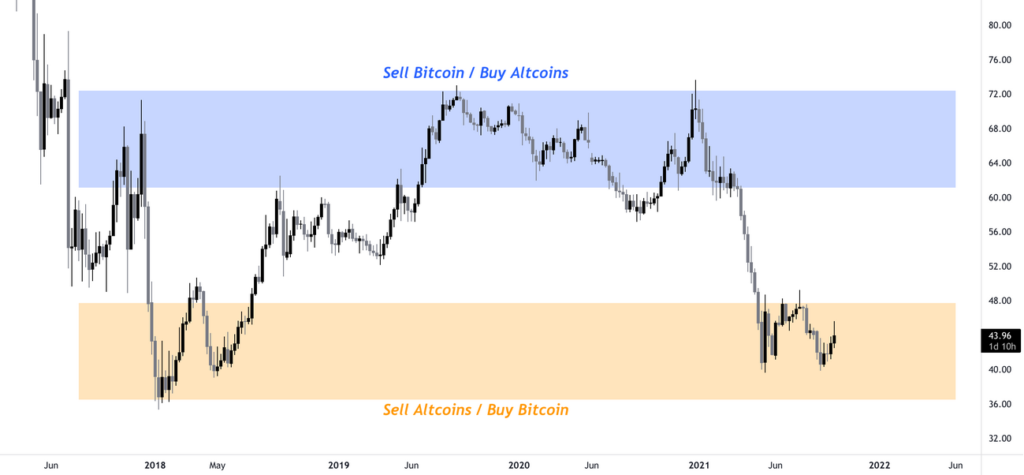
Bitcoin dominance at nearly 60% tells a nuanced story. Rather than signaling the death of altcoins, it suggests temporary capital rotation.
In early bull phases, capital tends to:
- Flow into Bitcoin
- Then rotate into large-cap altcoins (ETH, SOL)
- Finally reach mid- and small-cap tokens
Currently, the market appears to be in Stage 1.5—Bitcoin strength with selective altcoin weakness.
[Bitcoin dominance trend chart]
5. Quantum Computing: A Threat or a Catalyst?
Michael Saylor, chairman of Strategy (formerly MicroStrategy), recently challenged a common fear: that quantum computing could break Bitcoin’s cryptography.
His argument is counterintuitive but compelling:
- If quantum computers advance, all digital security systems will face challenges—not just Bitcoin.
- Bitcoin’s open-source nature allows for protocol upgrades, whereas closed financial systems lag behind.
- The threat of quantum attacks may accelerate post-quantum cryptography adoption, strengthening Bitcoin’s resilience.
In this view, quantum technology becomes a stress test that Bitcoin can adapt to, rather than an existential risk.
6. HYPE Token at a 7-Month Low: Warning or Opportunity?
While Bitcoin consolidates, HYPE token has fallen to its lowest level in seven months. This divergence highlights an important market reality: not all tokens rise together.
Key factors behind the decline include:
- Reduced speculative appetite for high-beta tokens
- Liquidity concentration in BTC and ETH
- Heightened scrutiny of project fundamentals
For experienced investors, such drawdowns can represent selective entry points, but only when paired with rigorous due diligence.
7. Security Risks and Centralized Infrastructure Weakness
Coinbase recently disclosed that cybercriminals bribed overseas support agents to gain unauthorized access to customer data. While funds were reportedly protected, the incident underscores a critical issue:
Centralized human infrastructure remains the weakest link in crypto security.
This strengthens the long-term case for:
- Non-custodial wallets
- On-chain transparency
- Reduced reliance on centralized support processes
8. Strategic Implications for Investors and Builders
For investors:
- Volatility near $86,000 does not imply weakness—it suggests absorption
- Risk management matters more than directional certainty
For builders:
- Periods of consolidation are ideal for infrastructure development
- Compliance-ready, security-focused products will dominate the next cycle
Conclusion: Volatility as a Feature, Not a Bug
Bitcoin’s current phase is not one of exhaustion—it is one of repositioning. Whether or not the market reaches $180,000 within 90 days, the underlying signals point toward structural maturation, not speculative decay.
For those seeking the next wave of opportunity—be it investment, product development, or blockchain-based financial infrastructure—this moment deserves attention, patience, and strategic clarity.