Main Points :
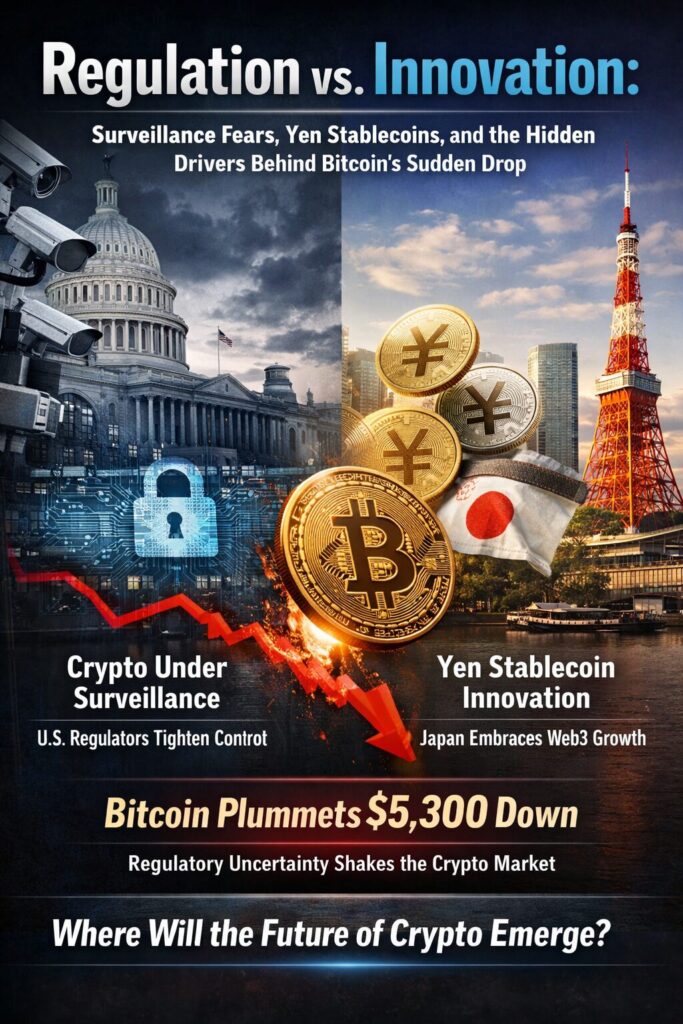
- U.S. regulators are increasingly warning that crypto’s transparency could transform it into the most powerful financial surveillance system ever created.
- Japan is moving in the opposite direction, with SBI Holdings and Startale aiming to launch a yen-pegged stablecoin by Q1 FY2026, signaling institutional confidence in compliant Web3 infrastructure.
- Bitcoin’s sharp drop—equivalent to roughly $5,300 at its peak decline—highlights how regulatory uncertainty and macroeconomic signals still dominate crypto market behavior.
- These developments reveal a global divergence: crypto as a tool of control versus crypto as regulated financial innovation.
- For investors and builders, the next growth opportunities will likely emerge in jurisdictions that balance compliance with technological freedom.
1. The SEC’s Warning: Crypto as the Ultimate Financial Surveillance System
The Chair of the U.S. Securities and Exchange Commission (SEC) recently issued a striking warning: cryptocurrencies, by virtue of their design, could evolve into the most powerful financial surveillance system in history. This statement reframes the long-standing debate around crypto regulation, adding a new layer of urgency and philosophical tension.
At the core of this warning lies a paradox. Blockchain technology is often praised for its transparency, immutability, and traceability—features that help prevent fraud and improve accountability. However, when combined with strict regulatory frameworks and advanced analytics, these same features could allow governments to monitor financial behavior with unprecedented granularity.
Unlike traditional banking systems, where data is siloed across institutions, public blockchains create a permanent and unified ledger. Once identities are linked to wallet addresses through KYC and AML requirements, every transaction becomes part of an endlessly analyzable dataset. From a regulator’s perspective, this is a dream scenario. From a civil liberties standpoint, it raises profound concerns.
The SEC Chair’s remarks highlight a growing realization within regulatory circles: crypto is not merely a speculative asset class but a foundational financial infrastructure. If shaped incorrectly, it could tilt the balance from consumer protection toward systemic surveillance and control.
This warning also exposes the ideological conflict at the heart of crypto. Early adopters envisioned decentralized networks as tools for financial freedom and privacy. Regulators, on the other hand, prioritize stability, compliance, and oversight. The question now is not whether crypto will be regulated, but how far that regulation will go.
In the United States, this tension is likely to intensify. Policy debates are increasingly framed not just around investor protection, but around national security, tax enforcement, and financial transparency. The SEC’s language suggests that future regulations may embed surveillance deeply into the crypto ecosystem, potentially redefining its original purpose.
2. Japan’s Counterpoint: SBI and Startale’s Yen Stablecoin Initiative
While U.S. regulators emphasize risk and control, Japan is charting a more pragmatic and innovation-friendly path. SBI Holdings and Startale Labs have announced a joint initiative to develop a yen-pegged stablecoin, targeting issuance in Q1 of fiscal year 2026.
This move reflects a fundamental difference in regulatory philosophy. Japan has spent the past several years building a clear legal framework for stablecoins, focusing on consumer protection while enabling institutional participation. As a result, major financial groups now see Web3 not as a threat, but as an extension of existing financial infrastructure.
A yen-backed stablecoin carries significant implications. Domestically, it could streamline digital payments, corporate settlements, and cross-platform interoperability. Internationally, it could enhance the global presence of the Japanese yen in decentralized finance (DeFi) and blockchain-based trade finance.
The collaboration between SBI—a traditional financial powerhouse—and Startale—a Web3-native technology firm—symbolizes the convergence of legacy trust and decentralized efficiency. Rather than resisting regulation, this model embraces compliance as a foundation for scalability and adoption.
Importantly, the timeline itself is telling. By setting a concrete target for Q1 FY2026, the partners signal confidence that Japan’s regulatory environment is mature enough to support real-world deployment. This stands in contrast to jurisdictions where regulatory uncertainty continues to delay institutional entry.
If successful, this initiative could position Japan as a hub for regulated stablecoin innovation, attracting developers, enterprises, and investors seeking clarity and long-term viability.
3. Bitcoin’s Sharp Drop: Regulation Delays and Macroeconomic Anxiety
Against this backdrop of regulatory divergence, the crypto market delivered a stark reminder of its sensitivity to external forces. Bitcoin experienced a sudden decline equivalent to approximately $5,300, driven by two overlapping factors: the postponement of U.S. regulatory decisions and heightened caution ahead of U.S. employment data.

Such movements are not anomalies. They reflect the crypto market’s deep entanglement with macroeconomic expectations and policy signals. When regulatory clarity is delayed, institutional investors often pause capital allocation, reducing liquidity and amplifying volatility.
At the same time, U.S. employment data plays a critical role in shaping expectations around Federal Reserve policy. Strong labor numbers can reinforce higher interest rate expectations, dampening risk appetite across speculative assets—including cryptocurrencies.
The combination of regulatory ambiguity and macroeconomic anticipation creates a classic risk-off environment. Traders reduce exposure, leverage unwinds, and prices adjust rapidly. Bitcoin’s drop, while dramatic in absolute terms, fits this well-established pattern.
What matters more than the price movement itself is what it reveals: despite narratives of decoupling, crypto remains closely linked to traditional financial dynamics. Regulatory signals and macro data continue to act as primary catalysts.
4. Diverging Global Paths: Control vs. Regulated Innovation
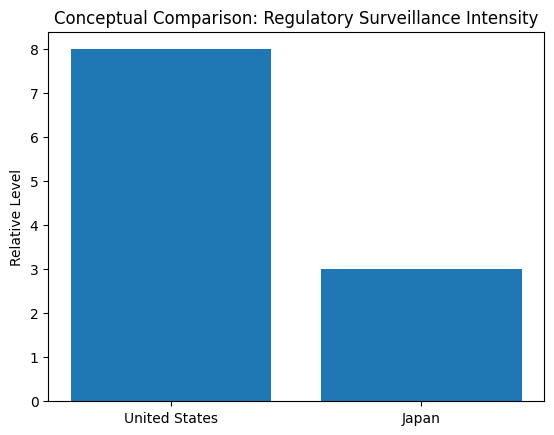
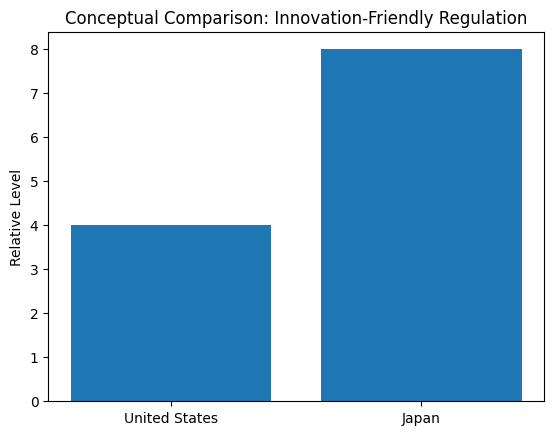
Taken together, these developments illustrate a widening global divide. In some jurisdictions, crypto is increasingly framed as a potential instrument of surveillance and control. In others, it is treated as a regulated but essential component of future financial systems.
This divergence creates both risk and opportunity. For investors, it means that jurisdictional analysis is as important as technical fundamentals. For builders, it underscores the need to design products that can operate within clear regulatory boundaries without sacrificing usability or innovation.
Stablecoins, in particular, sit at the center of this shift. They are becoming the preferred interface between traditional finance and blockchain networks. Jurisdictions that successfully integrate stablecoins into their financial systems may gain a competitive advantage in the global digital economy.
5. Implications for Investors and Builders
For those seeking new crypto assets, revenue streams, or practical blockchain applications, the message is clear: the next phase of growth will favor compliance-aligned innovation.
Projects that can navigate regulation while delivering real-world utility—payments, settlements, identity, and infrastructure—are more likely to attract institutional capital and achieve longevity. Conversely, environments dominated by uncertainty or excessive control may see innovation migrate elsewhere.
Bitcoin’s volatility serves as a reminder that macro and regulatory awareness is no longer optional. Strategic positioning requires understanding not only technology, but also policy trajectories.
Conclusion: A Defining Moment for Crypto’s Future
The warning from the SEC Chair, the proactive stance of Japan’s financial institutions, and Bitcoin’s sudden market reaction together mark a defining moment for the crypto industry. The battle between regulation and innovation is no longer theoretical—it is unfolding in real time, shaping markets, technologies, and opportunities.
Whether crypto becomes an instrument of surveillance or a foundation for open, regulated financial systems will depend on choices made today. For investors and practitioners, staying informed and adaptable is not just prudent—it is essential.Suggested Figures & Insertion Points