Main Points :
- South Korea is moving to impose “no-fault liability” on cryptocurrency exchanges in response to the recent massive hack at Upbit.
- The breach reportedly drained around US$30–37 million worth of Solana-network tokens, raising serious questions about exchange security.
- Under the proposed rules, exchanges may face fines up to 3% of their annual revenue for failures — a major increase from the current cap.
- Exchanges will also be required to adopt bank-grade security standards and infrastructure governance, similar to traditional financial institutions.
- The regulatory shift reflects a broader effort to restore trust in crypto markets, protect users, and attract institutional capital — though it may also increase compliance costs and prompt consolidation in the exchange industry.
1. The Upbit Hack: What Happened
On November 27, 2025, Upbit — South Korea’s largest cryptocurrency exchange — suffered a dramatic security breach. According to reports, hackers drained approximately 54 billion KRW (about US$30–37 million) in various Solana-based tokens — including SOL, USDC, BONK, JUP, RAY, RENDER, ORCA, and PYTH — from Upbit’s hot wallets in just 54 minutes.
Analysts believe the breach exploited administrative credentials rather than a flaw in blockchain itself. The stolen assets were rapidly consolidated into wrapped SOL (WSOL) and moved through decentralized exchanges (DEXs) on Solana and Ethereum bridges — a classic laundering technique intended to obscure asset flow before cashing out.
The incident is especially notable because Upbit — operated by Dunamu — had just completed a landmark merger with Naver Financial on the same day, raising concerns about timing and internal security oversight.
In the immediate aftermath, Upbit reportedly froze some assets and began cooperation with law enforcement. The suspected perpetrator: Lazarus Group, a North Korea–linked cyberattacker known for prior high-profile crypto heists.
2. From Liability Loophole to “No-Fault” Compensation
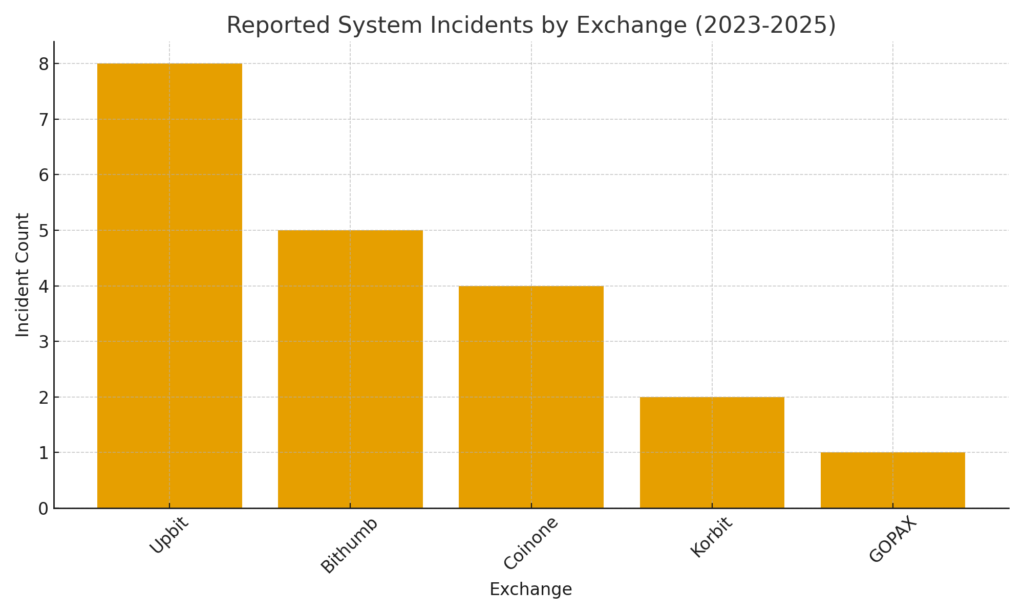
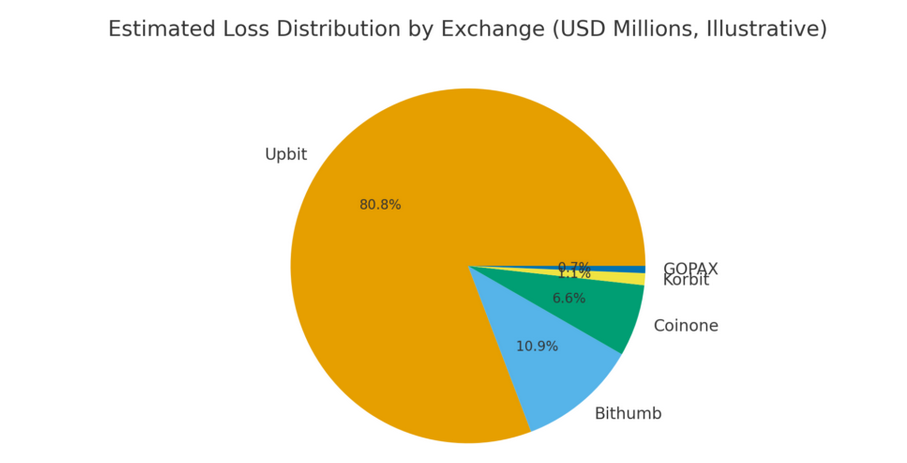
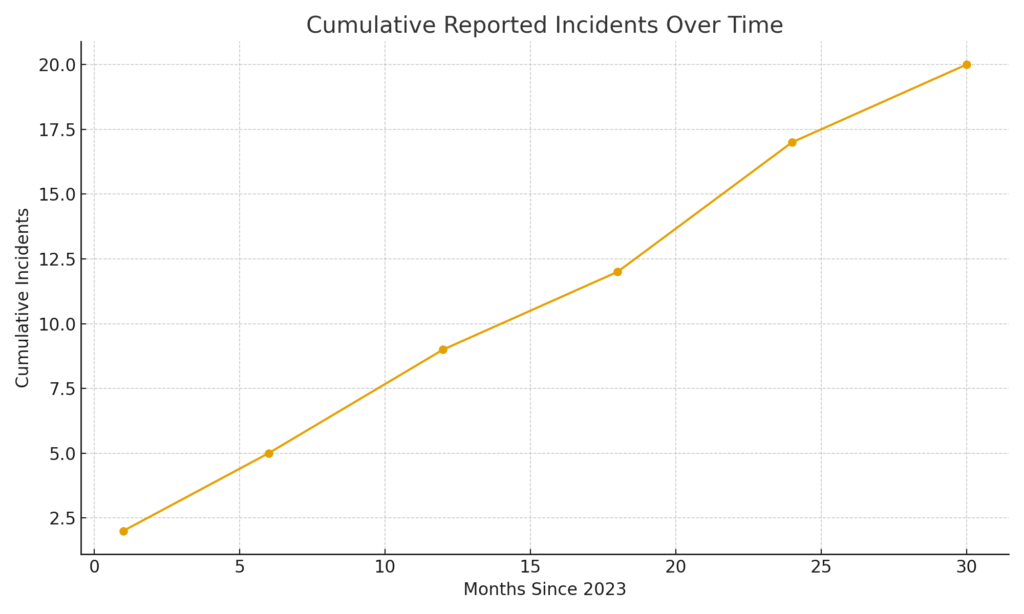
Under South Korea’s current regulatory framework, crypto exchanges are subject to relatively light obligations compared to banks or traditional financial firms. Despite recurrent security incidents (between 2023 and September 2025 alone, five major exchanges — Upbit, Bithumb, Coinone, Korbit, and GOPAX — reported around 20 system failures, affecting over 900 users, with cumulative losses exceeding US$2.9 million) the law lacked robust provisions to force full compensation.
In response to the Upbit hack, regulators — led by Financial Supervisory Service (FSS) — are advancing a so-called “Phase-2” Virtual Asset bill that would require exchanges to adopt a “no-fault liability” standard. Under this, users would be entitled to compensation even if the exchange had no proven negligence, unless the user bore intentional misconduct or gross negligence.
This logic — long applied to banks and electronic payment providers — marks a paradigm shift: treating centralized crypto exchanges as essential financial infrastructure, rather than speculative platforms.
3. What the New Rules Would Demand: Bank-Level Responsibilities
If enacted, the regulations would require exchanges to meet stringent, finance-grade standards in multiple dimensions: personnel, facilities, IT infrastructure, security governance, and compliance procedures. Each exchange would need to prepare an annual IT security plan to be reviewed by the regulators.
Moreover, penalty mechanisms would be greatly reinforced. Under the current framework, fines for failures hover around 5 billion KRW (about US$3.4 million). The proposed changes would allow fines up to 3% of the exchange’s annual revenue. For large exchanges such as Upbit — whose estimated revenue reportedly exceeds 10 trillion KRW — the potential fine could go as high as 300 billion KRW (c. US$200 million) under severe circumstances.
These measures are designed not just as deterrence, but as a structural guarantee. Exchanges would be expected to operate with risk management, transparency, and accountability equivalent to traditional financial institutions.
4. Market Implications: For Users, Investors, and Exchanges
User Protection and Restored Confidence
For individual investors and users, the shift promises stronger protection. No longer will losses from hacks or system failures be dismissed as “user risk.” Instead, users may expect guaranteed compensation, which could significantly improve trust in exchanges — especially important in a region like South Korea where retail crypto adoption is high.
For institutional investors, regulatory clarity and financial-grade oversight make the Korean crypto market more appealing. If exchanges are held to bank-like standards, the risk of catastrophic losses may be considered manageable, improving the case for institutional capital flow into Korean crypto projects or platforms.
Increased Costs, Barriers — Potential Consolidation
On the exchange side, compliance will become more demanding — potentially raising operational costs significantly. Smaller firms may struggle to meet the new requirements, leading either to consolidation, exit, or migration abroad.
Large incumbents — such as Upbit — may be the ones to survive and even thrive, gaining competitive advantage under a regulated environment. This could reshape the exchange landscape, reducing fragmentation and raising overall security standards.
Setting a Global Precedent
South Korea’s move may influence regulators elsewhere. Amid rising frequency of crypto hacks — often linked to adversarial state actors such as Lazarus Group — the demand for regulation that treats exchanges like banks is growing. The Korean legislation may serve as a template for other jurisdictions aiming to strike a balance between innovation and investor protection.
5. Why This Matters for New Crypto Investors, Developers, and Blockchain Professionals
If you are exploring new cryptocurrencies, DeFi, or blockchain-based ventures, this regulatory shift signals a cleaner, more stable backdrop for institutional adoption. Exchanges under strict liability regimes might become safer entry points.
For token issuers or blockchain projects targeting compliance-conscious markets, this change increases confidence among potential backers. Institutional players — private equity, hedge funds, even traditional financial institutions — may be more willing to allocate capital to projects listed on or interacting with well-regulated exchanges.
Moreover, the emphasis on security and governance may encourage growth in supporting infrastructure: better wallet design, more robust auditing services, compliance middleware, KYC/AML tooling, on-chain analytics, and forensic tracing — especially relevant considering the sophisticated laundering techniques observed in the Upbit breach.
Finally, this may drive a wave of consolidation — meaning fewer but larger, more stable exchanges — which can lead to deeper liquidity, tighter spreads, and more mature markets. For professionals seeking to build or plug into the crypto ecosystem, this could be an inflection point.
6. A Broader Context: Rising Cyber Threats from State-Sponsored Actors
The suspected culprit behind the Upbit hack — Lazarus Group — is a well-known North Korea–linked cybercrime organization that has previously been implicated in major crypto thefts.
Their modus operandi often involves spear-phishing, credential compromise, spear-phishing-based administrator account hijacking, or exploiting software vulnerabilities — not flaws in blockchain itself.
This underscores a critical truth: even if blockchain technology is secure, centralized exchanges remain the weakest link. Without institutional-grade security governance, hot wallets, custodial infrastructure, and privileged account management will continue to be attacked.
Therefore, regulatory pressure to adopt bank-grade security reflects not just compliance concerns — but an acknowledgment that crypto ecosystems must be hardened to survive in a hostile cybersecurity environment.
7. Challenges and Risks Ahead
While the regulatory proposals are ambitious, there are substantial challenges. For one, enforcing “no-fault liability” may impose huge financial burdens on exchanges — enough to dissuade smaller or nascent players. This could reduce competition and innovation, potentially centralizing power in a few large exchanges.
Also, raising compliance costs could drive some businesses into the gray market or offshore jurisdictions with lighter regulation, reducing transparency. That could actually push illicit activity underground rather than eliminate it.
Finally, legal and technical details — what counts as acceptable security, what triggers liability, how rapidly exchanges must reimburse users — remain to be hashed out. Implementation will matter. If poorly executed, the new rules may create legal ambiguities or even stifle innovation.
Conclusion: A Turning Point for Crypto in South Korea — and Possibly the World
The 2025 Upbit hack has exposed not only vulnerabilities in a major exchange, but structural weaknesses in how the crypto ecosystem handles risk, responsibility, and investor protection. South Korea’s move to impose bank-level, no-fault liability on crypto exchanges marks a watershed moment: bridging the gap between traditional finance and digital assets.
For investors exploring new coins or decentralized projects, the shift may bring a more stable and secure trading environment. For builders and professionals, it signals growing institutional acceptance and the potential for infrastructure growth. For the industry at large, it represents a maturation — a move away from “wild west” crypto culture toward regulated, accountable finance.
If enacted and implemented effectively, Korea’s reforms may become a global template — demonstrating how to reconcile blockchain innovation with risk management, user protection, and sustainable growth.