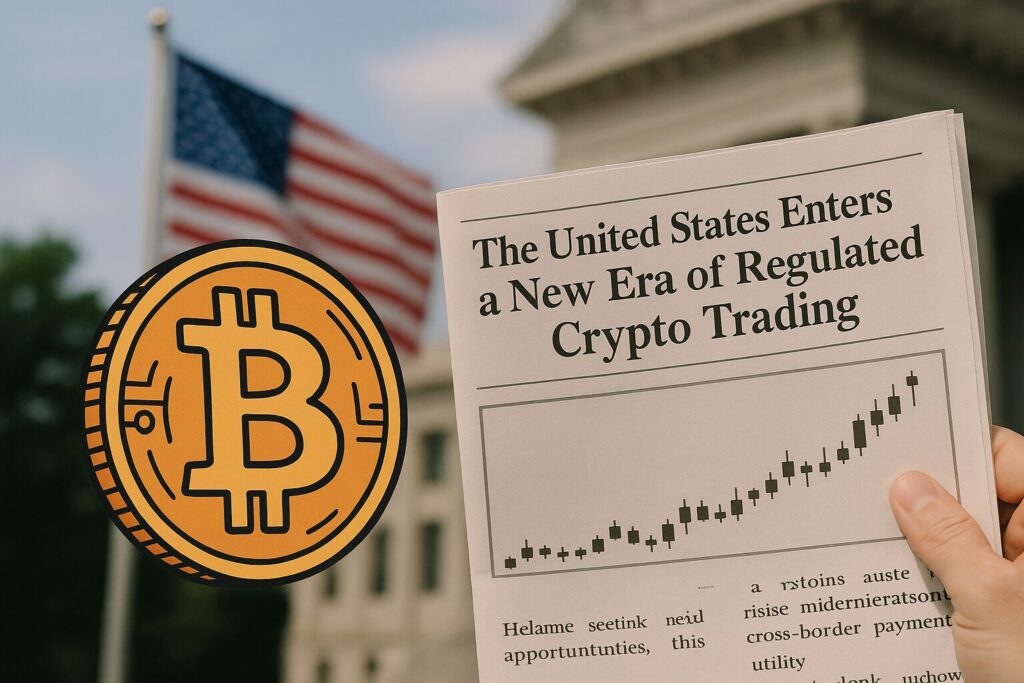
Main Points :
- The U.S. Commodity Futures Trading Commission (CFTC) approved the first-ever federally regulated spot Bitcoin trading market.
- This enables U.S. retail and institutional investors to trade spot crypto assets within a fully supervised infrastructure.
- The move aligns the U.S. closer to regulatory models such as MiCA while shifting away from an enforcement-only regime.
- Tokenized collateral, stablecoin settlement, and modernization of clearing systems are part of the broader reform roadmap.
- The approval may unlock new capital inflows, increase institutional confidence, and accelerate blockchain-based modernization in financial markets.
- Bitcoin and several altcoins showed increased market volatility following the announcement.
- For investors seeking new opportunities, this regulatory milestone could open doors to tokenized assets, compliant yield products, and new cross-border payment utilities.
Introduction: A Regulatory Breakthrough That Redefines the U.S. Crypto Landscape
The approval of the first CFTC-registered spot Bitcoin market marks one of the most significant milestones in the history of U.S. crypto regulation. For the first time, American investors will be able to trade spot Bitcoin within a fully supervised, federally regulated environment—a development many stakeholders have sought for over a decade.
Caroline Pham, the CFTC Commissioner spearheading the initiative, emphasized that the move supports the administration’s goal to position the United States as a central hub for digital asset innovation. By enabling regulated spot access, the U.S. is signaling a shift away from ambiguous enforcement practices and toward a clearer framework for digital asset markets.
This article provides a full analysis of the regulatory breakthrough, its background, global implications, and what it means for investors looking for new crypto assets and blockchain-based revenue opportunities.
1. Historical Context: Why This Approval Matters
For nearly 100 years, the CFTC has maintained oversight over commodity futures and derivatives markets. However, the rise of digital assets introduced substantial ambiguity into the U.S. regulatory environment. While Bitcoin and Ether were repeatedly acknowledged as commodities by the CFTC, no regulated infrastructure existed for spot trading.
Meanwhile, major overseas exchanges—many operating with limited oversight—captured the bulk of global crypto liquidity. Repeated scandals, failures, and mismanagement (including the collapse of FTX) elevated pressure on U.S. authorities to provide a safer domestic alternative.
By permitting regulated spot trading, the CFTC has effectively filled a long-standing regulatory vacuum. This marks the first time that digital asset spot trading is placed under the same robust market integrity framework that has governed traditional commodities for decades.
2. The Regulatory Shift: From Enforcement to Clear Market Rules
The U.S. has long been criticized for relying on “regulation by enforcement,” particularly through the SEC.
Pham, however, emphasized that the purpose of this approval is not to punish the industry, but to provide the safe trading environment investors deserve.
This single action indicates:
- A transition from fragmented enforcement to structured rule-making.
- A recognition that crypto is not a temporary trend but a long-term asset class.
- A shift toward international regulatory convergence—closer to the EU’s MiCA and Singapore’s MAS frameworks.
- Establishment of a legally compliant on-ramp for tokenized finance innovations.
By clarifying the supervisory structure, the CFTC gives developers, investors, and institutions confidence to build within the United States rather than offshore.
3. What the New CFTC-Registered Spot Market Offers Investors
3.1 Safety and Transparency
Investors will be trading on infrastructure that adheres to CFTC-grade requirements on:
- custody
- reporting
- clearing
- order book transparency
- anti-manipulation measures
- recordkeeping
This makes it fundamentally different from offshore platforms that previously dominated global crypto markets.
3.2 Institutional Capital Inflows
Traditional financial institutions—including banks, asset managers, hedge funds, and pension funds—require regulated venues to allocate capital.
This decision opens the door for:
- compliant crypto spot ETFs based on CFTC-regulated markets
- institutional liquidity pools
- tokenized collateral lending
3.3 A Foundation for Tokenized Financial Services
The CFTC also signaled ongoing reforms to modernize clearing and settlement systems using blockchain-based tools such as:
- tokenized collateral
- stablecoin-based settlement
- real-time clearing networks
- immutable on-chain audit trails
These upgrades bring crypto into the mainstream of U.S. capital markets infrastructure.
4. Global Regulatory Alignment and Competitive Implications
The U.S. has lagged behind jurisdictions such as:
- the European Union (MiCA)
- Hong Kong (SFC licensing regime)
- Singapore (Payment Services Act)
- Japan (FSA-regulated exchanges and custodians)
This new CFTC initiative helps the U.S. regain competitive footing by offering a secure and rule-based environment for digital asset trading.
If the SEC follows with clearer token classification rules, the U.S. could rapidly establish itself as the world’s most influential crypto marketplace.
5. Market Impact: Bitcoin and Altcoins React to the News
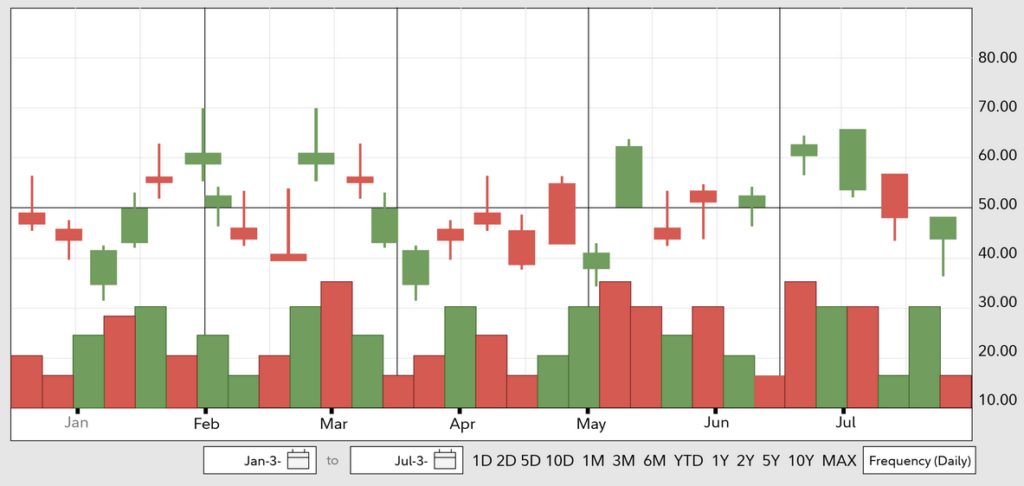
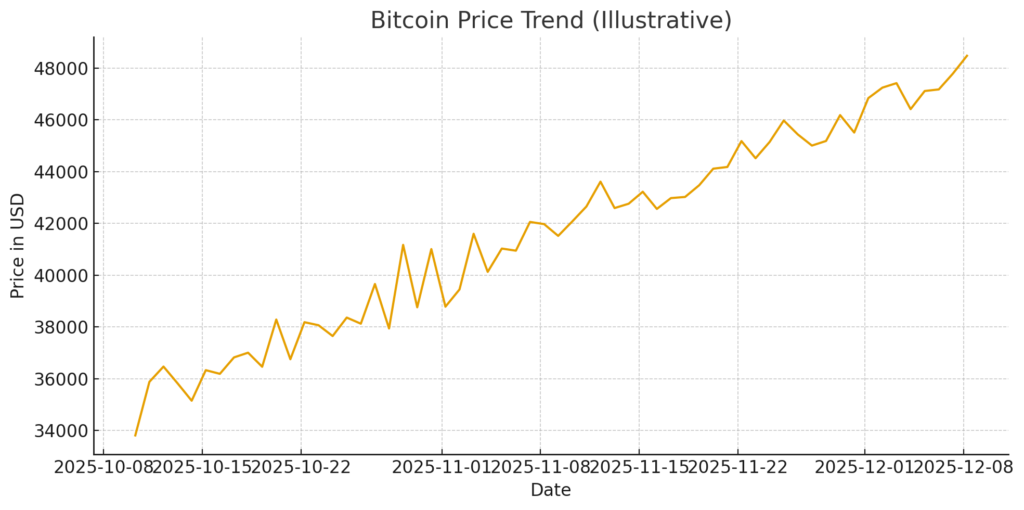
Following the CFTC announcement, market volatility increased, with Bitcoin showing a bullish upward trend over the 48–72 hours surrounding the news.
Institutional traders interpreted the move as an indicator of long-term legitimacy, potentially fueling:
- higher demand for regulated spot instruments
- greater liquidity inflows
- reduced dependence on offshore exchanges
At the same time, altcoins with strong institutional narratives—such as ETH, SOL, AVAX, LINK, and tokenization-linked assets—also saw increased speculative activity.
6. Opportunities for Investors Seeking New Crypto Assets and Income Streams
For investors focused on discovering new revenue-generating crypto opportunities, this regulatory shift is especially important.
6.1 Expansion of Tokenized Markets
Expect rapid growth in:
- tokenized U.S. Treasuries
- tokenized commodities
- real-world asset (RWA) yield instruments
- regulated on-chain money market products
Yield-bearing products under U.S. regulation could attract massive inflows, particularly from Asia and the Middle East.
6.2 Compliant Infrastructure for Exchange-Based Trading
New exchanges entering the market may offer:
- secure USD spot-trading pairs
- FDIC-insured fiat accounts
- regulated staking or reward programs
- compliance-approved liquidity pools
6.3 Growth in Blockchain Payment Solutions
With stablecoins and tokenized collateral under review, new opportunities include:
- cross-border settlement networks
- regulated blockchain remittance services
- enterprise-level on-chain accounting systems
This expands beyond speculation and into real economic utility.
7. The Next Phase: Tokenization, Clearing Reform, and SEC–CFTC Coordination
The CFTC’s spot approval is only the beginning. Upcoming reform areas include:
7.1 Tokenized Collateral
Banks may use tokenized dollars or Treasuries as margin.
This reduces settlement risk and increases liquidity efficiency.
7.2 Stablecoin Integration
Legal clarity on stablecoin issuance and redemption will support:
- faster payments
- corporate treasury management
- programmable financial contracts
7.3 Real-Time Clearing Networks
Clearinghouses may adopt blockchain or hybrid models to reduce:
- counterparty risk
- operational delays
- collateral requirements
7.4 Alignment with the SEC
The agencies are working to integrate rules for:
- digital asset classification
- custodial obligations
- customer protection requirements
A unified framework would be the most important structural development in U.S. crypto history.
Conclusion: A New Regulatory Era with Global Implications
The CFTC’s approval of the first regulated spot Bitcoin market signifies a turning point in U.S. crypto policy.
It represents a shift from ambiguity to structured regulation, from fragmented enforcement to collaboration, and from speculative offshore trading to institutional-grade markets.
For investors, builders, exchanges, and policymakers, this is not just a milestone—it is the beginning of a redesigned financial ecosystem where digital assets operate under the same trusted rules that govern traditional markets.
As tokenization accelerates and clearing systems modernize, the United States may reemerge as a global leader in digital asset innovation. What happens next—especially regarding stablecoins, tokenized collateral, and SEC alignment—will determine the trajectory of the next decade in crypto and financial technology.