
Main Points :
- Japan is finalizing a reform to apply a flat 20% tax on cryptocurrency gains through separate taxation, aligning it with stocks and investment trusts.
- The Financial Services Agency (FSA) plans to integrate crypto into the Financial Instruments and Exchange Act (FIEA), adding obligations such as insider trading prohibitions and issuer disclosures.
- Lower taxation and regulatory clarity are expected to attract domestic investors and institutions, potentially boosting Japan’s crypto trading volume beyond the current $10B+ monthly level.
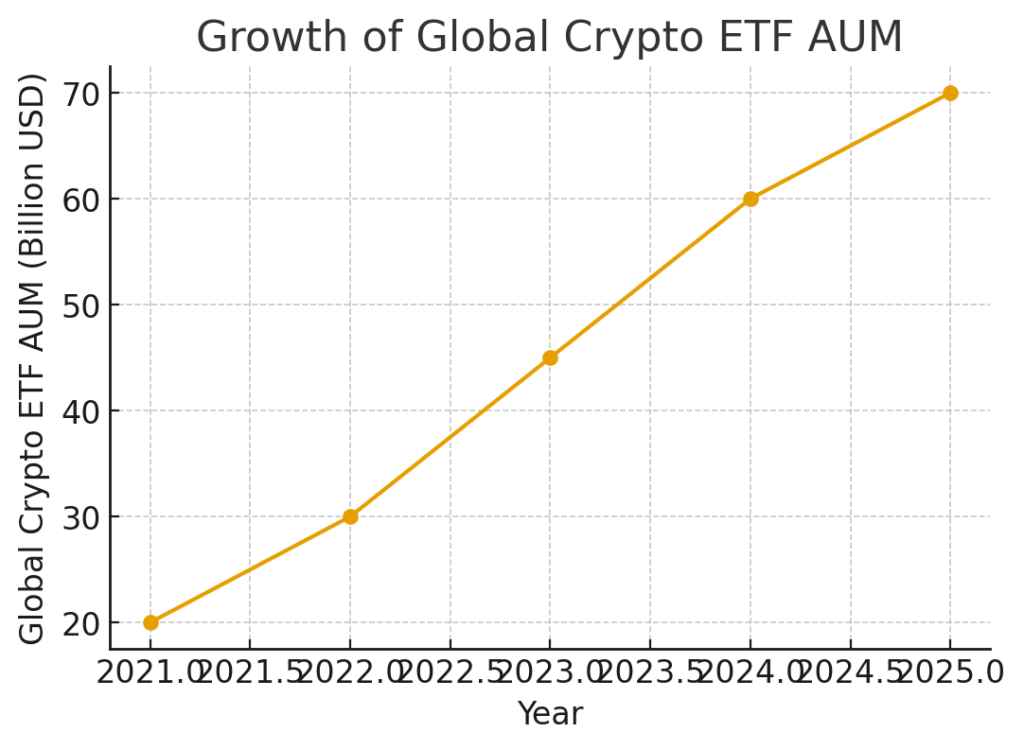
- Japan is preparing to allow crypto-integrated investment trusts and potentially ETFs, following the global surge in Bitcoin ETFs led by BlackRock (AUM over $70B).
- The 2026 tax and regulatory overhaul is expected to accelerate Japan’s reintegration into global crypto finance, potentially restoring Tokyo as an innovation hub.
1. Introduction — Japan Enters a New Phase for Digital Assets
Japan’s government and ruling party announced on December 1, 2025, that they are entering the final stage of shifting crypto taxation to a flat 20% separate tax, the same system used for equities. This marks the largest update to Japan’s crypto framework since 2017 and directly responds to continuous demand from investors, exchanges, and industry associations.
Currently, cryptocurrency gains are taxed as comprehensive income, with a progressive rate up to 55%. The new rule—scheduled for inclusion in the 2026 tax reform outline—would dramatically change investment incentives by leveling the playing field with traditional financial products.
The FSA will also propose updates to the Financial Instruments and Exchange Act (FIEA) in early 2026, targeting investor protection through transparency and anti-manipulation rules. Together, the tax reform and the legal shift represent a comprehensive re-architecture of Japan’s digital asset market.
2. Japan Moves Toward a 20% Flat Tax — A Structural Turning Point
The new tax structure will apply:
- 15% Income tax (flat)
- 5% Local inhabitant tax
- = 20% Total
Under current rules, investors face unpredictable tax burdens, often triggering forced selling or discouraging long-term holding. With the new separate taxation, crypto will be treated the same as:
- Listed stocks
- Investment trusts
- ETFs
- FX trading
This change brings three immediate impacts:
(1) Lower Tax Risk → Higher Trading Activity
Japanese crypto trading volume is already rising, reaching roughly $10B equivalent in September 2025. Lower taxation typically increases market liquidity—similar patterns were seen in the stock market when separate taxation was introduced.
(2) Improved Price Discovery
With reduced tax friction, arbitrage, long-term position building, and DeFi integration become more viable for Japanese investors.
(3) Reduced Capital Flight to Overseas Exchanges
Japanese users have been moving funds to U.S. platforms due to lower taxes and broader product availability. A unified 20% tax could prevent unnecessary outflows.
3. How FIEA Reform Will Reshape Crypto as a Financial Product
In parallel with tax reform, the FSA is preparing a large-scale modernization of crypto oversight. The FIEA update aims to consolidate regulations that are currently fragmented between the Payment Services Act and self-regulatory bodies.
Expected major changes:
3.1 Insider Trading Rules for Tokens
For the first time, trading on undisclosed material information would be explicitly prohibited. This aligns with frameworks in the U.S. and EU.
3.2 Issuer Disclosure Obligations
Token issuers may need to publish:
- Circulating supply transparency
- Governance structure
- Smart contract risks
- Security audits
- Incident response policies
3.3 Unified Exchange Licensing and Security Standards
After the $3.1B (¥482B) DMM Bitcoin hack in 2024, Japan has tightened cold-wallet requirements, operational risk controls, and segregated asset rules.
The FIEA revision aims to raise the overall baseline to align with global “institution-grade” standards.
4. Market Impact — Why Japan’s 20% Tax Could Trigger a New Crypto Wave
Japan already has 8 million active crypto accounts, according to JVCEA. With the shift to separate taxation, analysts expect:
• New Retail Participation
Millions of retail investors who currently avoid the sector due to high tax risk may enter the market.
• Revival of Domestic Web3 Startups
Many Japanese founders who previously incorporated in Singapore or Dubai may re-establish presence domestically.
• Significant Institutional Entry
Banks, securities companies, and trust banks—historically restrained—could begin offering structured crypto products.
Japan’s reforms may also create a “halo effect” in Asia. Korea is scheduled to impose a 20% crypto capital gains tax in 2025, and Hong Kong is expanding its ETF offerings and tokenization programs. A competitive East Asian digital asset cluster is beginning to emerge.
5. Crypto Investment Trusts and ETFs — Japan Preparing to Join the Global Market
Nikkei reports that with tax reforms, Japan is preparing to allow investment trusts that include digital assets. This is a major shift because Japan historically prohibited crypto in publicly offered funds.
Global Context
- BlackRock’s Bitcoin ETF: Over $70B AUM.
- Fidelity & Ark ETFs: Significant inflows since 2024.
- Hong Kong ETFs: Offering BTC/ETH spot ETFs since 2024.
- Europe (MiCA): Clear frameworks boosting institutional adoption.
Japan’s entry into ETF and mutual fund markets would open access for millions of risk-conservative Japanese investors who traditionally rely on:
- NISA
- Trust banks
- Domestic securities brokers
6. 2026 Outlook — A New Era for Japan’s Digital Asset Landscape
The upcoming 2026 reforms carry several implications:
6.1 Japan Will Have One of the Most Attractive Crypto Tax Regimes Among Developed Nations
Compared to others:
| Country / Region | Capital Gains Tax on Crypto |
|---|---|
| Japan (2026) | 20% flat |
| U.S. | 0–37% (short-term), 0–20% (long-term) |
| South Korea | 20% (scheduled) |
| Germany | 0% after 1-year holding |
| UK | 20% |
| Australia | 0–45% |
Japan becomes competitive without adopting tax havens’ approaches.
6.2 Institutional Market Will Rapidly Expand
SBI, Nomura, Daiwa, Rakuten—major players are already exploring crypto-integrated trusts.
6.3 Domestic Exchanges Will Strengthen Their Role
Lower taxes and ETF pathways may attract both retail and corporate customers, raising monthly spot volume beyond $15–20B.
7. Conclusion — Japan Positions Itself for a Digital Asset Renaissance
Japan’s decision to implement a 20% flat tax, combined with FIEA modernization, signals a decisive commitment to making crypto a legitimate component of national financial markets.
This reform arrives as:
- Global ETF markets mature
- Institutional participation accelerates
- Tokenized securities and stablecoins expand
- Asia becomes a global digital asset hub
If executed effectively in 2026, Japan could re-establish itself not merely as a regulatory pioneer but as a major economic center for Web3 innovation, attracting capital, talent, and global partnerships.