
Main Points :
- BTC briefly broke below $84,000, driven by Asian macro shocks and renewed U.S. selling.
- Japan’s interest-rate policy shift, lower liquidity, and fears of Strategic Company–related BTC selling pressured markets.
- Despite the Federal Reserve announcing the formal end of quantitative tightening (QT), Bitcoin failed to react positively.
- Traders remain cautious, noting that BTC must reclaim $85,200–$87,000 to avoid deeper downside.
- Analysts argue that BTC below $90,000 represents a long-term accumulation opportunity, with Ethereum expected to outperform during recovery.
1. Introduction: A Volatile Start to the Week
Bitcoin began the week under heavy downward pressure, falling below $84,000 during early Wall Street trading on Monday. The decline of over 7% intraday revived debates about whether risk assets—including cryptocurrencies—are now entering a period of heightened macro uncertainty.
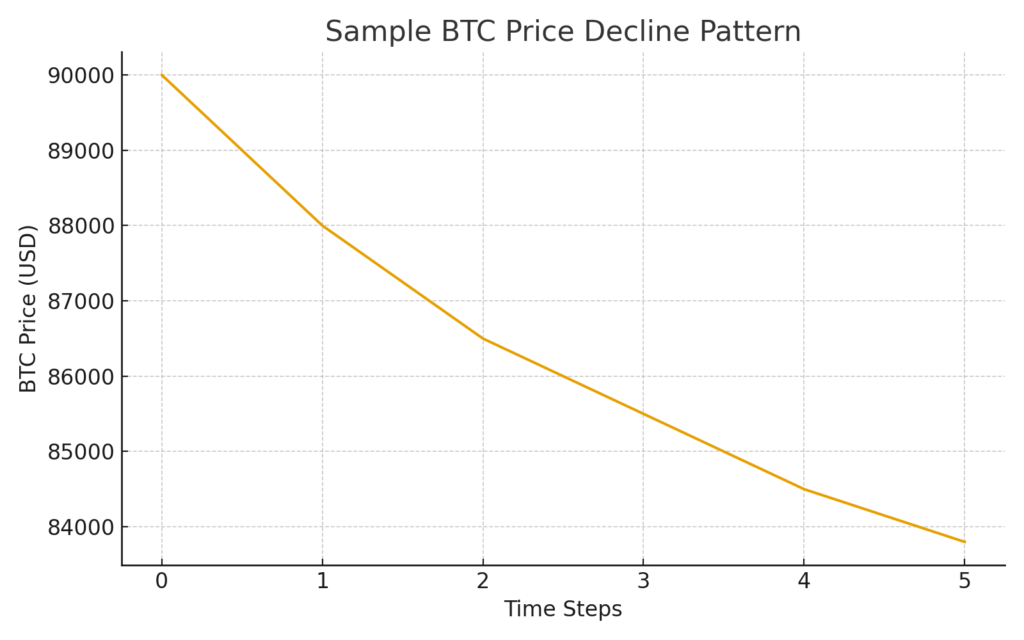
While U.S. markets reopened after Thanksgiving, selling pressure remained steady across both institutions and retail traders. Analysts describe the environment as characterized by “macro headwinds,” especially originating from Asia, overshadowing otherwise supportive developments in the U.S. financial system.
2. Asian Macro Headwinds Trigger the Initial Decline
2.1 Japan’s Interest-Rate Shift Creates Ripple Effects
QCP Capital, a major digital-asset trading firm, pointed out that several negative catalysts emerged in Asian markets before U.S. trading opened.
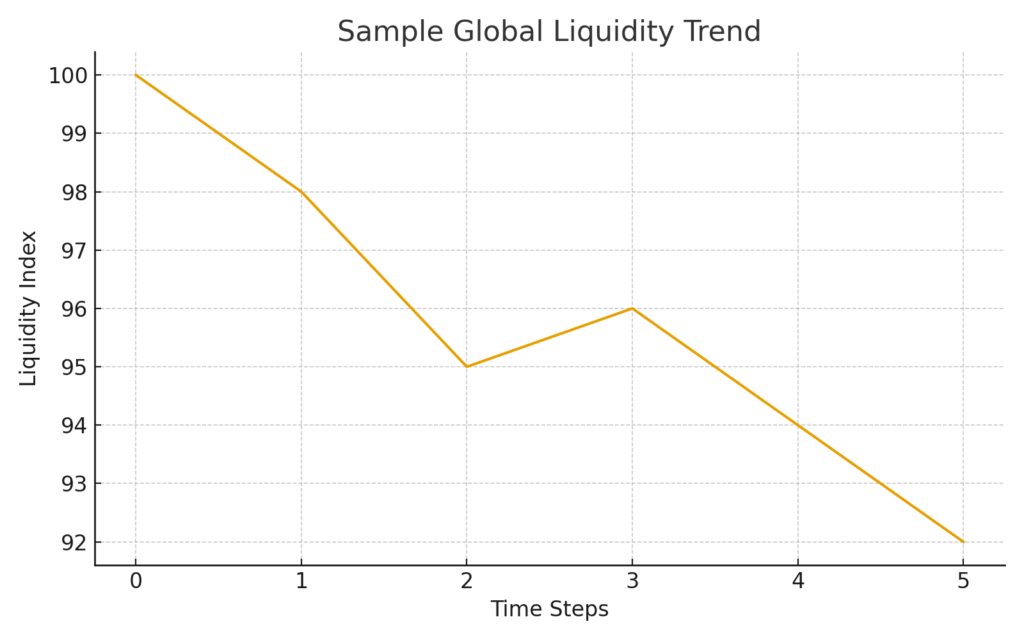
Japan’s continued transition away from ultra-loose monetary policy has tightened regional liquidity, encouraging risk-off behavior among funds exposed to BTC and ETH. Even modest rate increases in Japan—the world’s third-largest economy—tend to drain liquidity from crypto-friendly carry trades.
2.2 Liquidity Drain Across Asian Markets
Cryptocurrency markets remain extremely sensitive to global liquidity flows.
QCP Capital emphasized that liquidity conditions in Asia are deteriorating faster than in the U.S., creating uneven pressure between the world’s two largest financial regions.
BTC’s sharp reaction—dropping quickly to the $83,800 level—demonstrates that liquidity-driven flows remain one of the dominant forces shaping short-term price movements.
2.3 Concerns Over Strategic Company BTC Sales
Traders have also been monitoring potential BTC sales from Strategic Company, a major corporate holder of Bitcoin.
Although no confirmation of sales has been issued, even the risk of such movements can influence investor psychology, especially when combined with macro headwinds.
These three factors—Japan’s monetary tightening, falling liquidity, and large-holder risks—created the perfect environment for speculative selling.
3. U.S. Market Dynamics: Mixed Signals for Crypto
3.1 The End of QT Should Have Been Bullish—But Wasn’t
Monday marked the formal announcement that the U.S. Federal Reserve is concluding its multi-year quantitative tightening (QT) program.
In theory, a move away from QT increases liquidity available to markets, often benefiting risk assets like tech stocks and cryptocurrencies.
Yet Bitcoin did not respond positively.
This lack of reaction signals that global macro factors—particularly in Asia—were more influential than U.S. monetary conditions during the session.
3.2 Wall Street Selling Adds Momentum to the Decline
As U.S. markets opened, selling accelerated.
BTC failed to maintain the $85,200 level—identified by traders as a critical support zone.
Traders observed that the Coinbase Premium Index slipped back into negative territory after only three days in the green.
This meant U.S. buying appetite was weaker than offshore markets, reinforcing the selling pressure that began in Asia.
3.3 Short-Term Outlook From QCP Capital
QCP summarized the environment as follows:
“The key issue is whether BTC can defend previous lows amid growing bearish sentiment.
BTC is extremely sensitive to liquidity changes, and today’s decline illustrates that sensitivity clearly.”
The firm also highlighted that BTC’s performance in the next few trading sessions may determine whether bitcoin finishes 2025 in positive territory.
4. Key Technical Levels and Trader Sentiment
4.1 Critical Technical Thresholds
Prominent trader Killa commented on X that BTC must hold $85,200 to avoid drifting deeper into a bearish structure.
He further noted that regaining $87,000 is necessary for any meaningful attempt to retest the weekly open at $86,800.
Failure to hold the $85,200 region could bring more aggressive downside, especially if Asian liquidity remains weak.
4.2 Market Mood: Bearish but Not Panicked
Despite the decline, sentiment is more cautious than fearful.
Leverage across crypto derivatives did not spike significantly, indicating that the sell-off was driven more by macro factors than speculative liquidation events.
The lack of panic selling suggests that long-term holders remain confident.
5. Opportunities: BTC Below $90,000 as an Accumulation Zone
5.1 Michaël van de Poppe: “This Is a Long-Term Bottoming Process”
Analyst and trader Michaël van de Poppe argued on X that markets are entering a bottom-formation phase:
“Whatever caused the drop, the overall market sentiment has not changed.
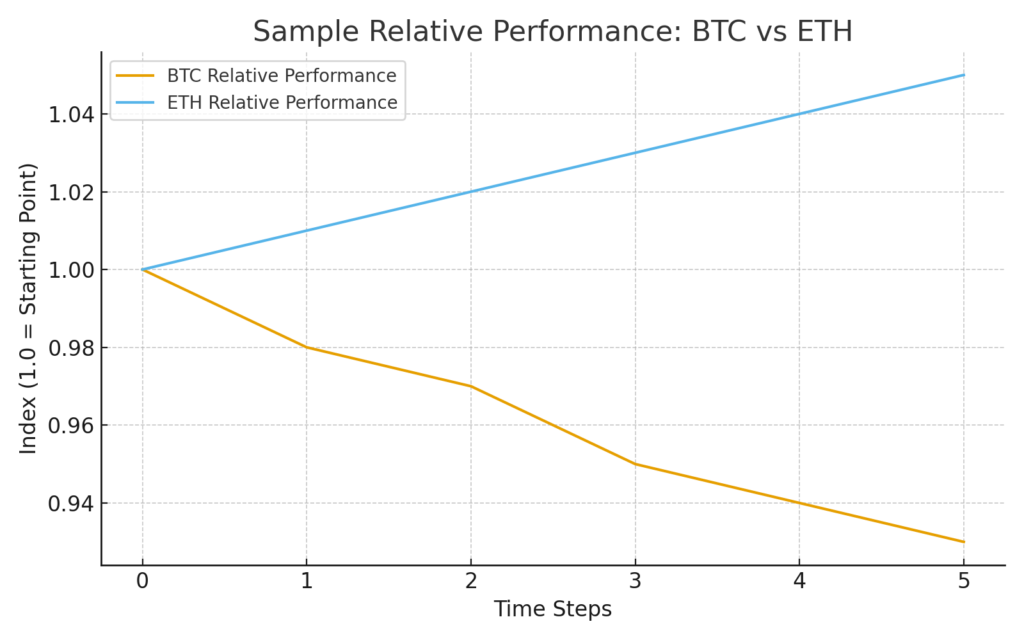
Bitcoin takes time to form a clear bottom. Once this is established, I expect Ethereum to outperform.”
His view is that BTC under $90,000 represents a “high-value accumulation opportunity.”
5.2 Ethereum Likely to Outperform in Recovery
Van de Poppe added that ETH tends to outperform BTC during post-bottom phases.
This is consistent with historical cycles, where Ethereum rallies more aggressively after Bitcoin stabilizes.
For investors seeking new opportunities or alternative yield sources, this represents a potentially compelling scenario:
- accumulate BTC during the bottoming range
- rotate into ETH as the recovery matures
5.3 Institutional Flows Still Favor Long-Term Appreciation
Despite short-term volatility, institutional demand remains intact.
Major U.S. funds continue to accumulate BTC through ETFs, and European banks have begun exploring tokenized-asset infrastructure that relies on Bitcoin as a settlement asset.
This contrasts with the short-term selling seen on Monday, reinforcing the idea that longer-horizon investors remain structurally bullish.
6. Broader Market Context: Recent Global Developments
To provide additional context beyond the article:
6.1 Stablecoin Expansion in Asia
While Japanese monetary tightening hurts liquidity, Asia is simultaneously experiencing rapid stablecoin adoption—especially in Singapore and Hong Kong.
This layered environment means liquidity challenges are macro-driven, not crypto-specific.
6.2 U.S. ETF Flows Remain Strong
Even during the recent downturn, U.S. Bitcoin ETFs posted net inflows.
This suggests traditional investors view dips as buying opportunities.
6.3 Middle East and EU Regulatory Momentum
The UAE continues expanding its licensing framework, drawing new market makers and liquidity providers.
Meanwhile, the EU’s MiCA rollout improves transparency, helping large institutions explore crypto more safely.
These global tailwinds provide long-term support for the crypto market despite temporary volatility.
7. Conclusion: BTC’s Path Forward
Bitcoin’s drop below $84,000 does not change the long-term trend, but it highlights how sensitive crypto markets remain to global liquidity conditions—especially in Asia.
While U.S. monetary policy is becoming more favorable with the end of QT, the short-term bearishness is driven by regional macro shocks and positioning flows.
However, analysts emphasize that BTC below $90,000 is historically attractive for long-term accumulation.
If BTC can reclaim $85,200–$87,000, sentiment may quickly improve.
Once a firm bottom is established, Ethereum is expected to lead the next leg of the market’s recovery.
For investors seeking new digital assets, revenue opportunities, or practical blockchain applications, this period—volatile as it is—may ultimately offer some of the best entry points before the next expansion cycle.