
Main Points :
- Bitcoin may be approaching a structural market bottom driven by corporate accumulation and futures deleveraging
- Ethereum is entering a pivotal phase, supported by zero-knowledge (ZK) technology, record staking, and institutional demand
- Regulatory clarity for XRP and Solana signals a gradual normalization of crypto within global financial systems
- Market behavior in early 2026 suggests a shift from speculative excess toward capital-efficient, yield-oriented crypto strategies
Introduction: A Market at an Inflection Point
The cryptocurrency market in early 2026 is showing signs of a fundamental transition. After years defined by extreme volatility, leverage-driven cycles, and regulatory uncertainty, the current environment suggests a gradual move toward structural maturity. Bitcoin (BTC), Ethereum (ETH), and other major digital assets are no longer reacting solely to retail sentiment or short-term macro headlines. Instead, capital flows, on-chain data, and institutional behavior increasingly shape market dynamics.
This article synthesizes recent market data reported by CoinPost and expands upon it using broader industry trends. It explores whether Bitcoin is forming a long-term market bottom, why Ethereum is increasingly positioned as a yield-bearing digital infrastructure asset, and how regulatory developments around XRP and Solana reflect a deeper integration of crypto into the global financial system.
Bitcoin at a Possible Market Bottom
Bitcoin closed the week at $95,586, up 5.0% week-on-week, trading within a notably tight range. Such price compression historically precedes major directional moves. Analysts are increasingly focused on the behavior of long-term holders (LTHs), whose activity often signals structural turning points rather than short-term speculation.
On-chain indicators suggest that selling pressure from long-term holders is diminishing. Instead of distributing into strength, many LTHs appear to be maintaining or even increasing their positions. This behavioral shift contrasts sharply with late-cycle market tops, where long-term holders typically offload assets into rising retail demand.
Corporate Bitcoin Accumulation vs. Mining Supply
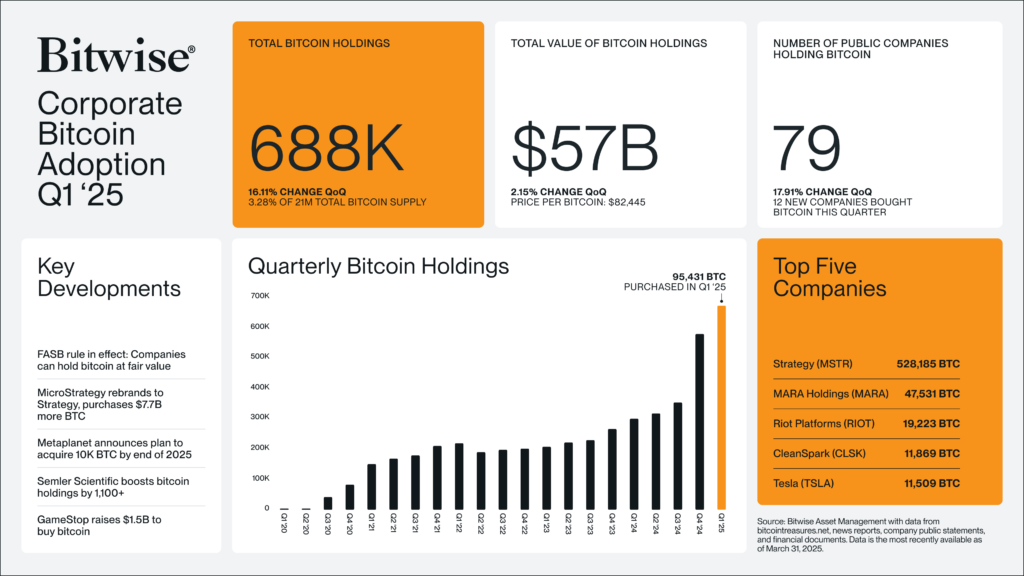
According to on-chain analytics firm Glassnode, corporate Bitcoin holdings have increased from approximately 854,000 BTC to 1.11 million BTC over the past six months. This represents a net accumulation of roughly 260,000 BTC.
During the same period, total new Bitcoin mined amounted to only 82,000 BTC. In other words, corporate demand absorbed more than three times the newly issued supply. This imbalance creates a structurally supportive environment for price stability and long-term appreciation.
Unlike previous cycles dominated by retail-driven inflows, this phase is characterized by balance-sheet allocation, treasury diversification, and long-duration holding strategies. Corporations acquiring Bitcoin today are often less sensitive to short-term volatility and more focused on multi-year purchasing power preservation.
Futures Deleveraging as a Historical Bottom Signal
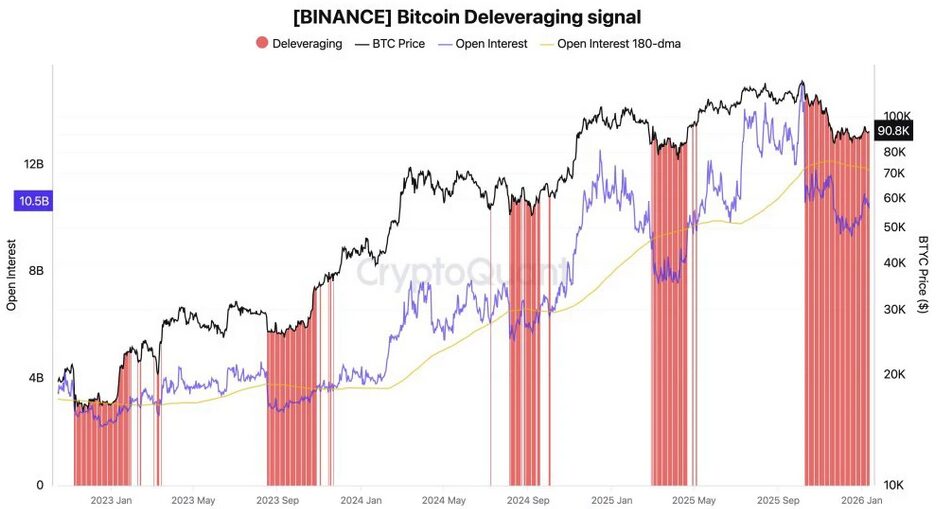
Another compelling indicator comes from derivatives markets. Crypto analytics firm CryptoQuant reported a 31% decline in Bitcoin futures open interest from its October peak. This process of deleveraging flushes out excessive speculative positions and historically coincides with the formation of durable market bottoms.
Analyst Darkfost notes that major Bitcoin bull markets often begin after leverage has been significantly reduced. A market built on spot demand and organic accumulation tends to be more resilient and capable of sustaining long-term upward trends.
Taken together, reduced futures exposure and sustained spot accumulation suggest that Bitcoin’s current price zone may represent a consolidation base rather than a distribution phase.
Ethereum’s Strategic Evolution Beyond Price
Ethereum ended the week at $3,314, gaining 6.8%, outperforming Bitcoin on a relative basis. However, Ethereum’s significance in 2026 extends beyond price appreciation. It is increasingly viewed as programmable financial infrastructure rather than a speculative asset.
Zero-Knowledge Technology as a Core Roadmap Element
The Ethereum Foundation’s co-executive director, Hsiao-Wei Wang, recently emphasized that zero-knowledge (ZK) technology has become a central medium-term priority. ZK proofs enable scalable, privacy-preserving computation, which is essential for enterprise adoption, financial compliance, and high-throughput applications.
Rather than fragmenting Ethereum’s ecosystem, ZK rollups are increasingly converging around shared standards. This reduces systemic risk while preserving Ethereum’s security guarantees. In practice, this positions Ethereum as a settlement layer capable of supporting institutional-grade applications without sacrificing decentralization.
Ethereum Staking Reaches All-Time High
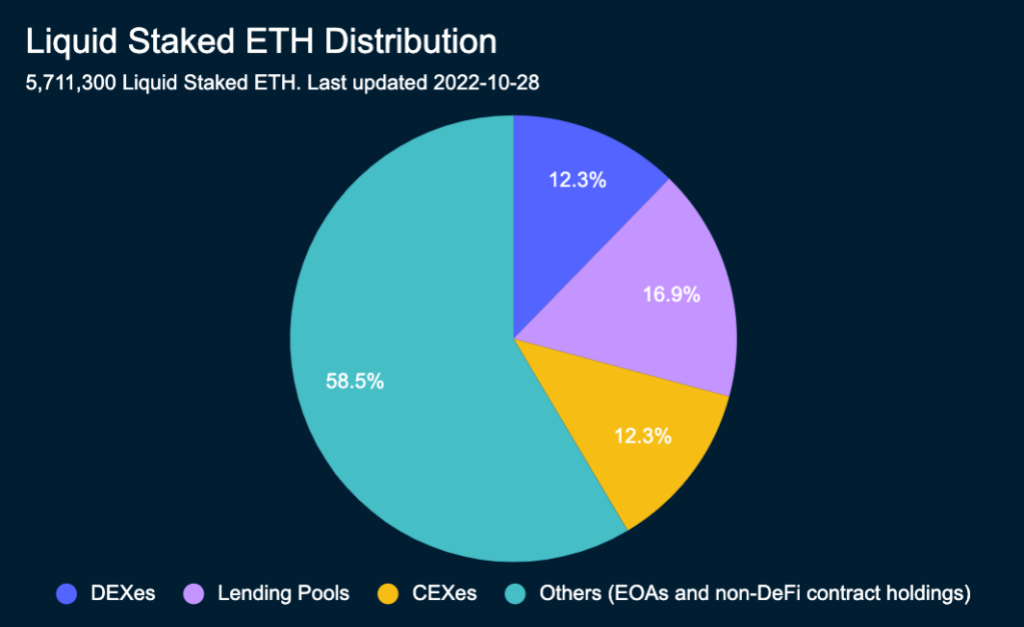
Ethereum staking has reached a historical peak, with approximately 30% of total ETH supply now locked in staking contracts. This trend reflects a structural shift in how ETH is held and utilized.
Several forces drive this growth:
- Institutional investors seeking yield in a low-growth global economy
- ETF-related demand structures incorporating staking strategies
- Treasury management by crypto-native firms aiming to generate predictable returns
Unlike speculative DeFi yield farming of past cycles, staking income is protocol-native and comparatively lower risk. This transforms ETH into a yield-bearing asset analogous to a digital bond with embedded growth optionality.
Ethereum Price Outlook for 2026
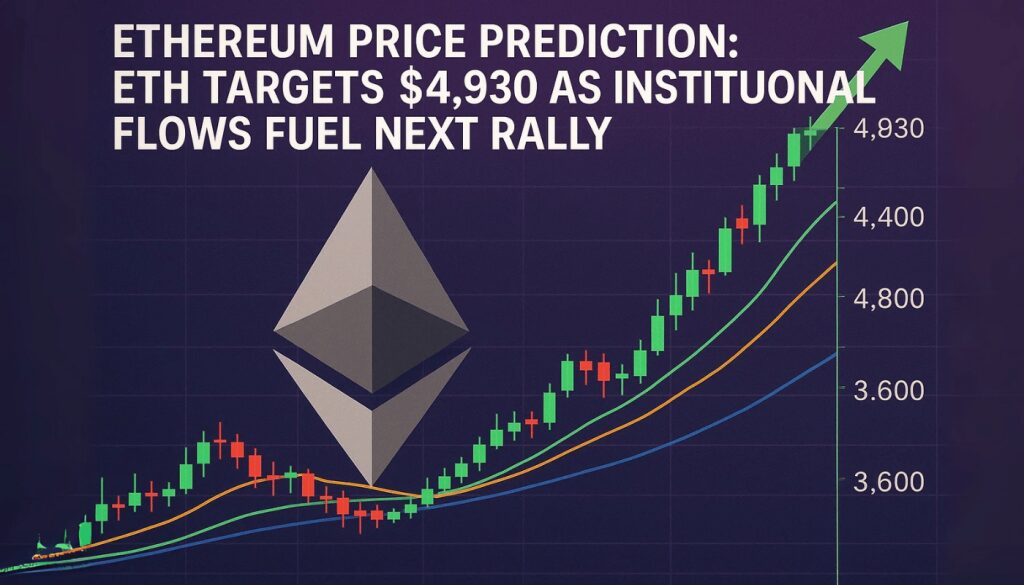
Geoffrey Kendrick, Head of Digital Asset Research at Standard Chartered, stated that 2026 could be “the year of Ethereum.” His outlook is based not on speculative narratives, but on Ethereum’s expanding role in settlement, tokenization, and institutional finance.
As real-world assets (RWAs), stablecoins, and on-chain financial products proliferate, Ethereum stands to benefit disproportionately due to its developer ecosystem, security track record, and regulatory familiarity.
XRP: Regulatory Progress and Payments Expansion
XRP declined 2.3% to $2.08, underperforming the broader market. However, recent regulatory developments may have longer-term implications.
Ripple announced preliminary approval for an Electronic Money Institution (EMI) license from Luxembourg’s regulator. This approval confirms compliance with initial regulatory requirements and strengthens Ripple’s position in European payments infrastructure.
For institutional users, regulatory clarity often outweighs short-term price action. XRP’s trajectory increasingly aligns with cross-border settlement and liquidity provisioning rather than speculative trading.
Solana and the Push for Regulatory Clarity
Solana rose 3.0% to $142.45, supported by ecosystem advocacy efforts. The Solana Policy Institute recently submitted a formal request to the U.S. Securities and Exchange Commission seeking explicit exemptions for decentralized finance developers.
This engagement reflects a broader industry shift: rather than resisting regulation, major blockchain ecosystems are now actively shaping it. Such dialogue reduces systemic uncertainty and encourages enterprise participation.
What This Means for Investors and Builders
The common thread across Bitcoin, Ethereum, XRP, and Solana is normalization. Crypto markets are increasingly driven by:
- Balance-sheet allocation instead of retail speculation
- Yield generation rather than pure price appreciation
- Regulatory engagement instead of adversarial posturing
For investors, this suggests a transition from momentum-based strategies to capital-efficient positioning. For builders, it highlights the importance of compliance-aware design, sustainable token economics, and real-world integration.
Conclusion: From Speculation to Financial Infrastructure
The data emerging in early 2026 points toward a crypto market that is quietly, but decisively, maturing. Bitcoin’s supply-demand dynamics indicate potential structural support. Ethereum’s staking and ZK roadmap suggest a future as programmable financial infrastructure. Regulatory progress around XRP and Solana reflects growing institutional acceptance.
Rather than asking whether crypto will survive, the more relevant question now is which assets will define the next generation of global finance. The answer increasingly lies in networks that combine decentralization with yield, compliance, and long-term utility.
