
Key Takeaways :
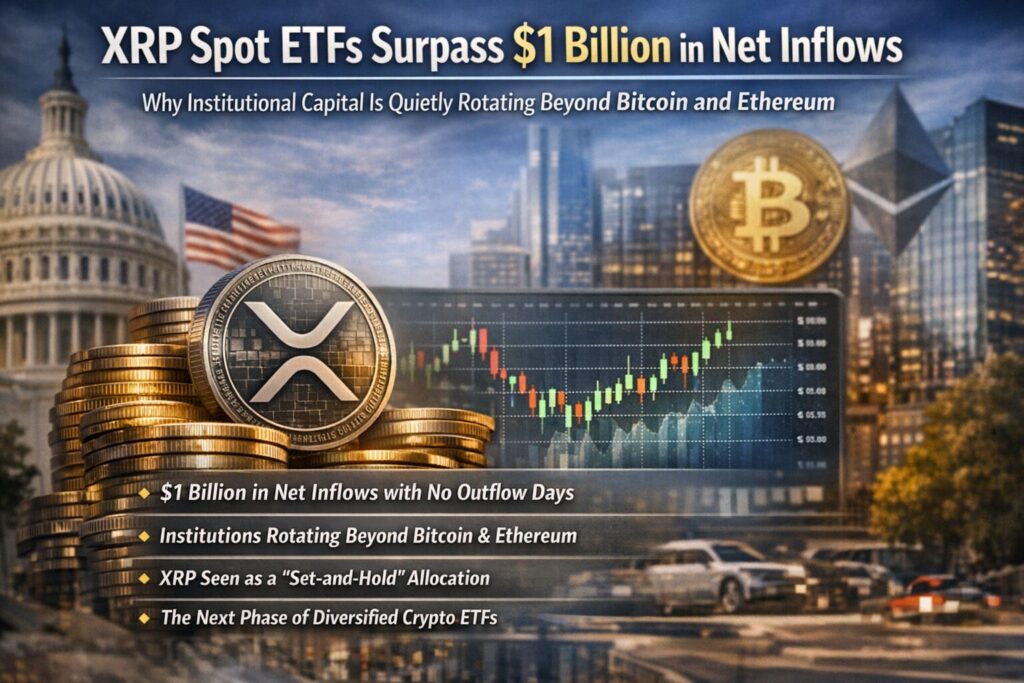
- U.S.-listed XRP spot ETFs have surpassed $1 billion in cumulative net inflows, with no single day of net outflows since launch.
- This performance sharply contrasts with Bitcoin and Ethereum spot ETFs, which have seen intermittent outflows during the same period.
- The inflows appear driven less by short-term price action and more by accessibility, regulatory structure, and portfolio allocation logic.
- XRP is emerging as a “set-and-hold” institutional allocation, rather than a speculative trading vehicle.
- The trend signals a second phase of crypto ETFs, where capital diversifies into regulated alternative digital assets beyond BTC and ETH.
1. A Historic Milestone for XRP Spot ETFs
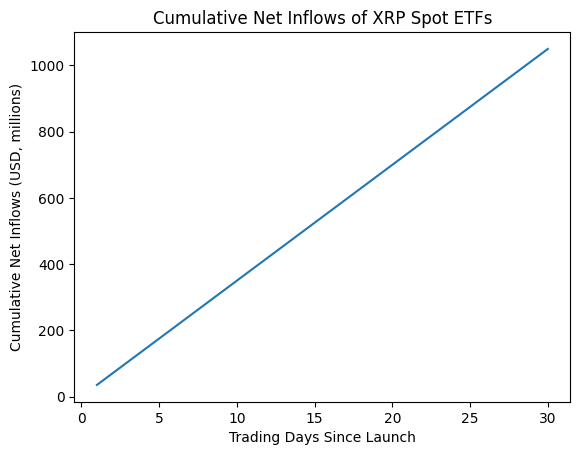
Since their mid-November launch, U.S.-listed XRP spot exchange-traded funds (ETFs) have delivered one of the most consistent performances ever observed in the digital asset ETF market. As of mid-December 2025, cumulative net inflows have exceeded $1 billion, marking a significant milestone not only for XRP but for the broader evolution of crypto investment products.
According to data from SoSoValue, XRP spot ETFs reached approximately $1.18 billion in net assets by December 12, while cumulative net inflows stood near $975 million, later surpassing the $1 billion threshold shortly thereafter. Remarkably, these products recorded net inflows on every single trading day since their debut, totaling around 30 consecutive trading sessions without outflows.
This streak is unprecedented among major crypto ETFs. Even Bitcoin and Ethereum spot ETFs—often considered the most institutionally mature crypto instruments—experienced multiple days of net outflows during the same timeframe.
2. Market Downturn, ETF Inflows: A Structural Signal
What makes this achievement particularly notable is the macro backdrop. The milestone occurred during a period of heightened risk aversion across global markets. Investors have been reassessing:
- Interest rate trajectories
- Corporate earnings momentum
- The sustainability of technology-led equity rallies
Against this backdrop, cryptocurrency prices broadly declined. Bitcoin weakened in recent sessions, Ethereum followed suit, and most major altcoins tracked the downturn.
Yet XRP spot ETFs continued to attract capital.
This divergence suggests that ETF inflows are no longer tightly coupled with short-term spot price performance. Instead, they increasingly reflect structural demand—investors seeking regulated, compliant exposure vehicles rather than direct token holdings.
3. Accessibility Over Price: Why ETFs Matter More Than Tokens
Mati Greenspan, founder of Quantum Economics and former senior market analyst at eToro, summarized the phenomenon succinctly:
“ETF growth doesn’t mean the asset suddenly got better. It means access got easier. For allocators who care more about compliance, custody, and liquidity than short-term price action, the wrapper matters more than the token.”
This insight highlights a crucial shift. For many institutional allocators—pension funds, family offices, RIAs, and regulated asset managers—the investment wrapper is often more important than the underlying asset itself.
ETFs eliminate key frictions:
- Self-custody risks
- Regulatory uncertainty
- Operational and compliance overhead
As a result, capital flows into ETFs often represent asset allocation decisions, not trading signals. These flows are typically measured in quarters or years, not days.
4. XRP Versus Bitcoin and Ethereum ETFs
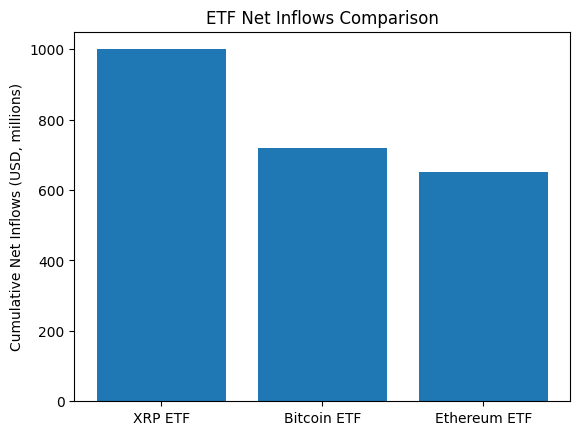
Bitcoin and Ethereum spot ETFs still dominate total crypto ETF assets under management. However, their flow patterns have become increasingly sensitive to:
- Macro volatility
- Equity market correlations
- Short-term risk sentiment
In contrast, XRP ETFs—despite being smaller in absolute size—have attracted steadier and more resilient allocations.
This suggests a different investor profile:
- Fewer momentum-driven traders
- More long-term, policy-constrained allocators
- Investors seeking diversification within regulated crypto exposure
XRP appears to be filling a distinct niche: a differentiated allocation within compliant crypto portfolios, rather than a beta proxy for the broader crypto market.
5. Institutional Logic: Why XRP Fits the ETF Framework
Asheesh Birla, CEO of Evernorth Holdings, which provides institutional XRP exposure, noted:
“Institutions prioritize assets that fit within existing ETF frameworks and deliver clear functional advantages.”
From an institutional perspective, XRP offers several characteristics that align well with ETF structures:
- Long-standing market presence
- Deep liquidity across global venues
- Clear use cases in payments and settlement
- Increasing regulatory clarity relative to earlier years
While debates around XRP’s fundamentals continue, ETF investors are not necessarily making a philosophical bet on decentralization. Instead, they are allocating to regulated exposure that satisfies internal investment mandates.
6. The Second Phase of Crypto ETFs Has Begun
The success of XRP spot ETFs may signal the beginning of a second phase in the crypto ETF market.
Phase One was defined by:
- Bitcoin and Ethereum legitimization
- Proof of institutional demand for regulated crypto exposure
Phase Two appears to be about:
- Diversification beyond BTC and ETH
- Packaging alternative digital assets into compliant wrappers
- Expanding crypto’s role within multi-asset portfolios
In this phase, volatility in underlying spot markets does not necessarily deter inflows. Instead, it may even encourage allocations as long-term investors rebalance during price weakness.
7. What This Means for Crypto Investors and Builders
For readers seeking new crypto assets, revenue opportunities, or practical blockchain applications, the XRP ETF story offers several lessons:
- Regulated access drives adoption faster than narratives.
- Institutional capital values structure, compliance, and liquidity above ideology.
- Assets that can be “ETF-compatible” gain a structural advantage.
- Future ETF candidates may include other Layer-1s, payment-focused tokens, or infrastructure assets—provided they can be packaged cleanly.
This also has implications for builders: protocols that design with institutional compatibility in mind may unlock capital far beyond retail markets.
8. Conclusion: Quiet Capital Rotation, Lasting Impact
The $1 billion net inflow milestone for XRP spot ETFs is not merely a headline statistic. It reflects a deeper transformation in how capital engages with digital assets.
Rather than chasing short-term price momentum, investors are increasingly allocating through regulated structures that align with long-term portfolio strategies. XRP’s success suggests that the crypto ETF market is maturing—broadening beyond Bitcoin and Ethereum into a more diversified, institutionally driven ecosystem.
If this trend continues, the next wave of crypto adoption may arrive not through speculative rallies, but through quiet, persistent allocation flows inside traditional financial frameworks.[Insert Graph 1 Here]
Title: Cumulative Net Inflows of XRP Spot ETFs (USD)
Description: Line chart showing steady growth from launch to $1B+ without drawdowns.[Insert Graph 2 Here]
Title: ETF Flow Comparison: XRP vs Bitcoin vs Ethereum
Description: Bar or line comparison highlighting XRP’s uninterrupted inflow streak.
