
Main Points :
- Despite Bitcoin’s sharp decline toward the $70,000 level, XRP trader sentiment remains significantly more optimistic than BTC or ETH.
- Santiment’s social sentiment data shows XRP outperforming major cryptocurrencies in positive-to-negative mention ratios.
- Extreme fear across the broader market historically creates conditions for short-term relief rallies.
- Structural differences in XRP’s investor base explain why sentiment diverges from price performance.
- Indicators suggest the crypto “winter” may be closer to its end than its beginning, reshaping opportunity assessment for investors and builders.
1. Market Context: A Weak Crypto Market, but Not Uniform Fear
The cryptocurrency market has entered another period of turbulence. Bitcoin, the bellwether asset of the entire digital asset ecosystem, has retreated sharply toward the $70,000 level. Ethereum has followed closely, reflecting a broader risk-off mood among investors.
In traditional terms, such synchronized declines usually lead to uniform pessimism across the market. However, recent data suggests that this cycle is behaving differently. While prices are falling across the board, investor psychology is fragmenting, with certain assets showing surprising resilience in sentiment.
This divergence is particularly visible in Santiment’s social sentiment indicators, which track millions of online discussions across X, Telegram, Reddit, and specialized crypto forums. Their latest findings highlight an unusual pattern: XRP traders remain markedly more optimistic than those focused on Bitcoin or Ethereum.
2. Understanding Santiment’s Sentiment Metrics
Santiment’s Positive/Negative Sentiment Ratio measures how often an asset is discussed positively versus negatively across social channels. While not a price predictor on its own, this metric offers valuable insight into collective expectations, especially during periods of stress.
As of the latest data:
- XRP’s sentiment score stands at 2.19
- Ethereum’s sentiment score is 1.08
- Bitcoin’s sentiment score is 0.80
This means XRP’s sentiment is:
- 103% higher than Ethereum
- 173% higher than Bitcoin
[Comparative Sentiment Index of XRP, Bitcoin, and Ethereum]
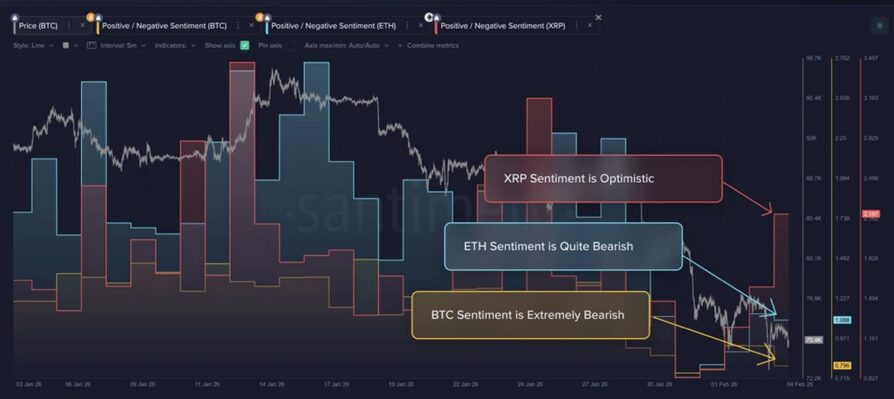
These numbers are striking because they diverge from recent price action. Over the past seven days:
- Bitcoin fell 4.97%
- Ethereum fell 4.92%
- XRP fell 6.82%
XRP has actually declined more sharply than BTC or ETH, yet its holders remain significantly more optimistic. This disconnect raises an important question: why?
3. The XRP Investor Profile: Different Expectations, Different Psychology
According to Pav Hundal, Chief Analyst at Swyftx, XRP holders tend to interpret volatility differently from typical crypto traders. XRP is not generally perceived as a high-beta speculative asset that will suddenly outperform the market by multiples during short-lived hype cycles.
Instead, many XRP holders are anchored to long-term fundamentals, including:
- Cross-border payment utility
- Enterprise and institutional integration narratives
- Regulatory clarity expectations
This results in a psychological profile that is less reactive to short-term price movements. XRP investors are often willing to tolerate drawdowns because their thesis is not built on momentum trading, but on structural adoption.
This stands in contrast to Bitcoin and Ethereum traders, where a larger portion of market participants are sensitive to macro liquidity, ETF flows, and short-term technical levels.
4. Fear as Fuel: Why Extreme Bearishness Can Be Bullish
While XRP sentiment remains resilient, the broader crypto market is deeply fearful. The Alternative.me Fear & Greed Index recently fell to 12, a level classified as “Extreme Fear” and the lowest reading since mid-December.
[Crypto Fear & Greed Index Showing Extreme Fear Conditions]
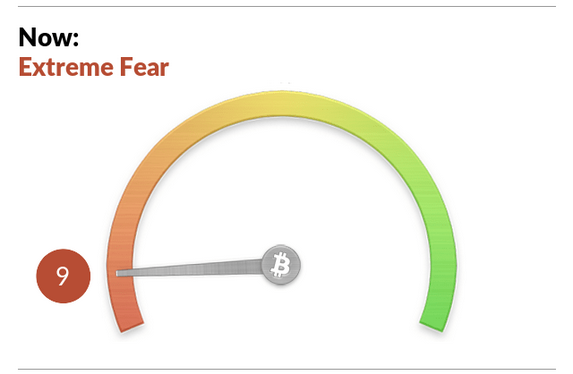
Historically, such extreme fear conditions often coincide with local bottoms or short-term relief rallies. Santiment notes that as long as retail investors remain distrustful of crypto broadly, the probability of sudden upside volatility increases.
This dynamic occurs because:
- Selling pressure becomes exhausted
- Short positions become crowded
- Even modest positive news can trigger sharp rebounds
However, it is critical to distinguish between relief rallies and trend reversals. Relief rallies are tactical opportunities, not confirmations of a new bull market.
5. Bitcoin Season, Not Altcoin Season
Additional indicators reinforce the cautious tone. The Altcoin Season Index from CoinMarketCap currently sits at 32 out of 100, signaling that the market remains firmly in “Bitcoin Season.”
[Altcoin Season Index Indicating Bitcoin Dominance]
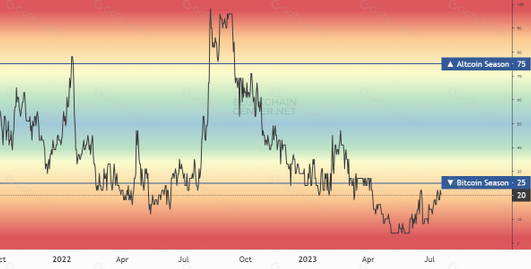
This implies that capital is still flowing preferentially toward Bitcoin rather than higher-risk altcoins. Even XRP’s positive sentiment has not translated into relative price strength, reinforcing the idea that sentiment alone is insufficient to drive capital rotation during risk-off phases.
For investors, this means:
- Selectivity matters more than ever
- Sentiment can highlight resilience, but liquidity dictates outcomes
- Utility-driven narratives must align with macro timing
6. Is the Crypto Winter Nearing Its End?
A notable macro perspective comes from Matt Hougan, CIO of Bitwise, who recently suggested that the market may already be well into the latter stages of a crypto winter.
According to Hougan:
- The current crypto winter likely began in January 2025
- The market is psychologically closer to the end than the beginning
- Capitulation phases often feel the worst just before conditions improve
This aligns with historical crypto cycles, where prolonged pessimism sets the stage for accumulation by patient capital. Importantly, this does not imply an imminent bull run, but rather a transition from despair to rebuilding.
7. Practical Implications for Investors and Builders
For readers seeking new digital assets, revenue streams, or practical blockchain use cases, this environment offers several lessons:
For investors
- Monitor sentiment divergence as a risk signal, not a buy signal
- Use extreme fear conditions to reassess long-term theses
- Focus on assets with clear utility and survivability
For builders and operators
- Bear markets are optimal for infrastructure development
- User acquisition costs typically decline
- Regulatory and enterprise conversations become more substantive
XRP’s resilient sentiment reflects a community that is already operating with a post-hype mindset, which may be increasingly relevant as the industry matures.
8. Conclusion: Sentiment Is a Signal, Not a Guarantee
The current market phase underscores a critical truth: price, sentiment, and fundamentals do not always move in unison. XRP’s relatively optimistic trader sentiment, despite underperforming prices, reveals how deeply investor psychology is shaped by expectations rather than charts alone.
Bitcoin’s decline toward $70,000 has shaken confidence across the market, but history suggests that periods of extreme fear often precede structural turning points. Whether this results in a short-term relief rally or the early stages of a broader recovery remains uncertain.
For those looking beyond speculation — toward sustainable revenue, real-world blockchain applications, and durable digital assets — this phase may ultimately prove to be one of the most important in shaping the next era of crypto.
