
Main Points :
- The U.S. Treasury has stated clearly that meaningful crypto regulation is impossible without a comprehensive market structure law.
- Political deadlock has intensified due to disagreements between crypto firms, banks, and lawmakers—especially over yield-bearing stablecoins.
- The conflict highlights a deeper structural tension between decentralized finance innovation and the traditional banking system.
- For investors, builders, and institutions, regulatory clarity in the U.S. will shape the next generation of crypto assets, revenue models, and real-world blockchain adoption.
The Treasury’s Blunt Message: No Law, No Regulation
In early February 2026, U.S. Treasury Secretary Scott Bessent delivered an unusually direct message during testimony before the Senate Banking Committee: without the passage of a crypto market structure bill, regulating digital assets in the United States is effectively impossible.
According to Bessent, the absence of legislation leaves regulators trapped in a gray zone—forced to rely on enforcement actions, fragmented interpretations of existing securities and commodities laws, and court rulings that were never designed for decentralized networks. He dismissed the idea that crypto markets could continue operating indefinitely without a statutory framework as “pure fantasy.”
Bessent went further, criticizing what he described as a “nihilist faction” within the crypto industry that prefers regulatory ambiguity. In his words, if market participants truly oppose clear rules, “they should consider moving to El Salvador.” His comment underscored a growing frustration in Washington: crypto is no longer a niche experiment, but a financial system touching payments, savings, lending, and capital markets.
This framing matters. For the U.S. government, crypto is no longer just about innovation—it is about systemic risk, financial stability, and geopolitical competitiveness.
Coinbase and the Sudden Collapse of Legislative Momentum
The Treasury Secretary’s remarks came against the backdrop of a dramatic political reversal. Just weeks earlier, Coinbase—America’s largest crypto company—unexpectedly withdrew its support for the market structure bill, derailing a crucial Senate Banking Committee vote.
At the center of the controversy was stablecoin policy. Coinbase CEO Brian Armstrong argued that “no bill is better than a bad bill,” particularly one that restricts stablecoins from offering yield to holders. From Coinbase’s perspective, yield-bearing stablecoins represent a logical evolution of on-chain finance: programmable dollars that can generate returns through transparent, blockchain-based mechanisms rather than opaque bank balance sheets.
The White House reacted sharply. Officials warned that the idea of crypto operating indefinitely without a comprehensive regulatory framework was unrealistic and dangerous. Behind closed doors, policymakers reportedly viewed Coinbase’s move as a high-stakes gamble—one that risked alienating lawmakers who had already invested months in bipartisan negotiations.
Although Coinbase later returned to the negotiating table, the damage was done. The episode exposed deep fractures not only between regulators and the crypto industry, but also within the industry itself.
Yield-Bearing Stablecoins and the Banking System’s Red Line
To understand why the debate became so heated, it is necessary to examine why banks reacted so strongly to the idea of yield-bearing stablecoins.
From a crypto-native perspective, stablecoins that pay interest are simply more efficient money. They allow users to hold dollar-denominated assets while earning yield derived from tokenized Treasury bills, on-chain lending, or other low-risk mechanisms. For users, especially in emerging markets or underbanked regions, this model offers an alternative to traditional savings accounts.
For banks, however, this represents an existential threat.
U.S. banks—particularly regional and community banks—depend on stable, low-cost deposits to fund lending to small businesses, agriculture, real estate, and local communities. If depositors can move funds instantly into stablecoins that offer higher yields and 24/7 liquidity, banks fear accelerated deposit outflows and increased volatility.
Bessent explicitly aligned himself with these concerns. He emphasized that deposit stability is not an abstract concept, but the foundation of local economic activity across the United States. In his view, introducing yield competition at the stablecoin level without safeguards could destabilize the banking system.
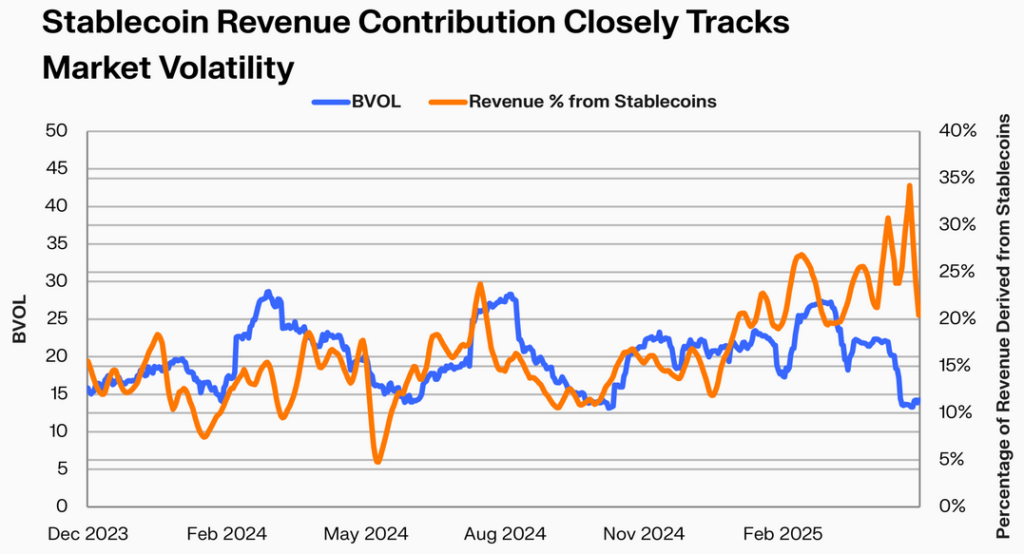
[“Conceptual Comparison of Deposit Volatility Risk”]
Lawmakers’ Frustration: “Crypto Hell” and Legislative Paralysis
The stalemate has also triggered visible frustration among lawmakers themselves.
Senator Mark Warner, a Democrat, described the situation during a separate hearing as feeling like being “in crypto hell.” After months of negotiations, draft revisions, and closed-door discussions, the legislative process ground to a halt. Warner acknowledged that crypto is here to stay and requires clear rules, but warned against creating frameworks that leave large loopholes or weaken existing enforcement authority.
His concerns extended beyond finance. Warner pointed to unresolved national security risks related to decentralized finance, including sanctions evasion, illicit finance, and the opacity of certain cross-border flows.
At the same hearing, Senator Angela Alsobrooks struck a more optimistic tone. She expressed confidence that a bipartisan compromise could still emerge—one that protects innovation while preserving the stability of regional banks. Her remarks reflected a broader hope in Congress: that crypto legislation can follow the path of earlier financial reforms, balancing growth and risk through careful design.
Fragmented Progress: CFTC, Committees, and Political Gridlock
Despite the impasse, legislative activity has not stopped entirely.
The Senate Agriculture Committee—responsible for overseeing the Commodity Futures Trading Commission (CFTC)—passed a version of the crypto market structure bill without Democratic support. This move signaled strong Republican backing for expanding the CFTC’s authority over digital asset markets.
However, the Senate Banking Committee, which plays a central role in shaping financial regulation, postponed its planned January hearing after Coinbase withdrew its support. As of early February 2026, there is still no clear timeline for resuming deliberations.
This fragmentation illustrates a deeper structural problem: crypto straddles multiple regulatory domains, including securities, commodities, banking, payments, and national security. Without a unifying statute, agencies and committees continue to pull in different directions.
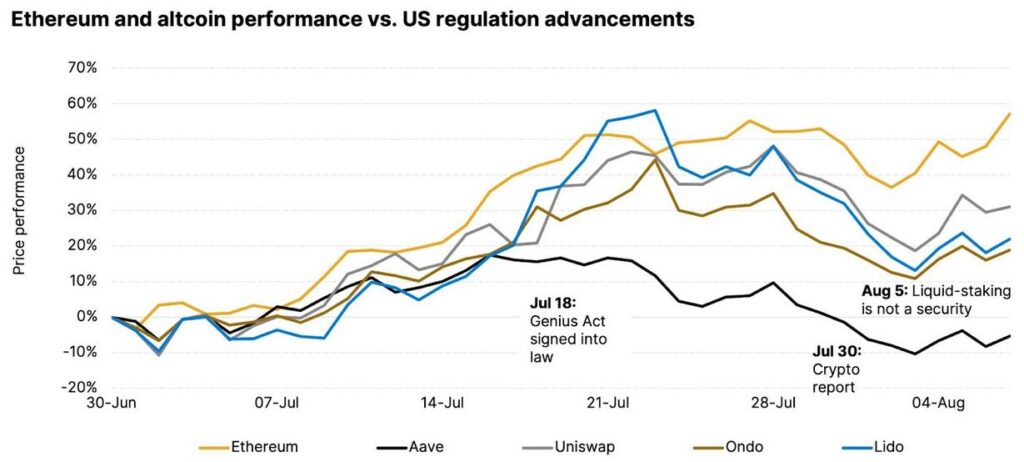
[“Simplified Timeline of U.S. Crypto Regulatory Pressure”]
What This Means for Investors and Builders
For readers searching for new crypto assets, revenue opportunities, or practical blockchain applications, the implications are profound.
First, regulatory clarity—or the lack of it—directly affects which business models are viable. Yield-bearing stablecoins, tokenized real-world assets, on-chain lending, and payment-focused crypto products all depend on how the U.S. ultimately defines custody, interest, and consumer protection.
Second, the U.S. regulatory stance influences global standards. Jurisdictions in Asia, Europe, and the Middle East are watching closely. A coherent U.S. framework could accelerate institutional adoption worldwide; continued paralysis could push innovation offshore.
Third, this debate highlights a structural transition in finance. Crypto is no longer just “digital gold” or speculative tokens. It is competing directly with core banking functions: deposits, payments, settlement, and credit creation.
For builders, the message is clear: design systems that can adapt to regulation, not evade it. For investors, understanding regulatory trajectories is now as important as understanding tokenomics.
Conclusion: Regulation as the Gateway, Not the Enemy
The central lesson from the Treasury Secretary’s remarks and the surrounding political drama is not that regulation kills innovation—but that the absence of regulation kills legitimacy.
Without a market structure law, U.S. crypto regulation remains reactive, inconsistent, and fragile. With one, the industry gains clarity, credibility, and access to deeper pools of capital. The fight over stablecoins and bank deposits is not a side issue; it is the front line of a broader struggle over what money will look like in the digital age.
For those seeking the next wave of crypto opportunities, the real signal is not in price charts, but in policy. The future winners will be those who build at the intersection of blockchain efficiency and regulatory reality.
