
Main Points :
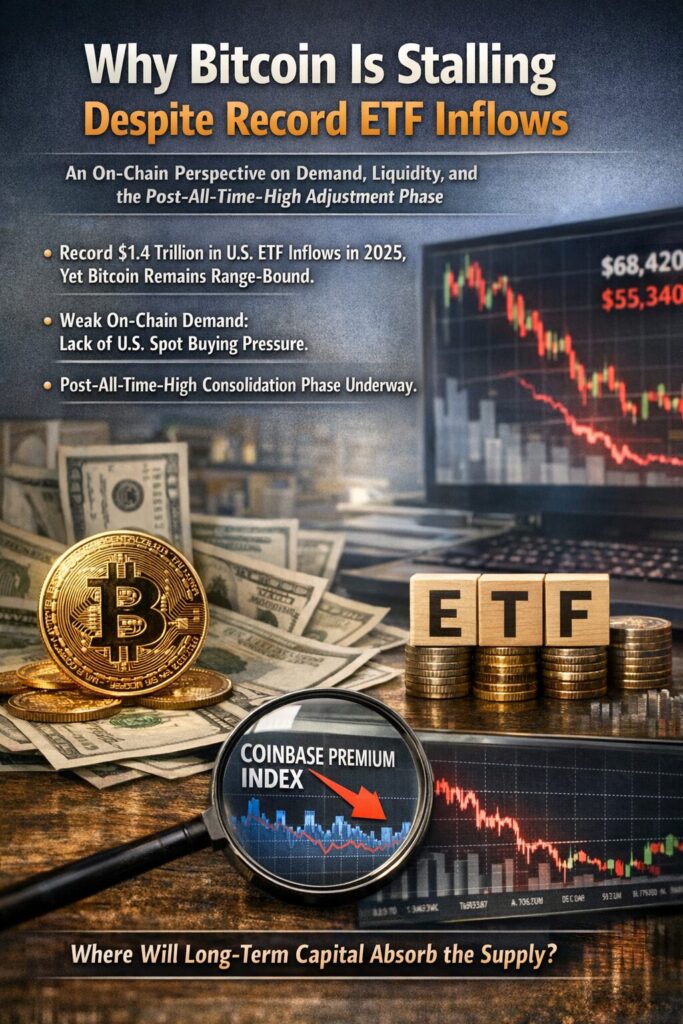
- Despite record-breaking inflows into U.S. ETFs in 2025 (approximately $1.4 trillion year-to-date), Bitcoin prices remain range-bound after reaching a historic high.
- Spot Bitcoin ETFs continue to attract capital even while Bitcoin’s price performance is negative year-to-date, suggesting a shift toward long-term exposure rather than short-term speculation.
- On-chain indicators—especially the Coinbase Premium Index—show persistent weakness in U.S. spot demand, pointing to a lack of buyers rather than aggressive selling.
- The current market phase is best described as a post-all-time-high consolidation and adjustment, not a panic-driven collapse.
- The key question for investors is where and at what price level long-term capital (including ETFs) will begin absorbing supply, rather than whether another sharp crash is imminent.
1. A Market in Transition: From Breakout to Consolidation
Bitcoin’s current price stagnation must be understood within its broader market cycle. After achieving a new all-time high earlier in the year, the market has entered what can be defined as a post-peak adjustment phase. This phase is characterized not by panic selling, but by fading momentum and a slowdown in incremental demand.
Historically, Bitcoin bull cycles tend to consist of three major stages:
- Accumulation, driven by informed and long-term participants
- Expansion, fueled by narrative adoption and speculative demand
- Adjustment, where price consolidates and excess leverage is flushed out
The market is now firmly in the third stage. The sharp drawdowns observed earlier have largely run their course, but demand has not returned with sufficient strength to push prices decisively higher. This dynamic explains why volatility has decreased while prices remain capped.
Importantly, this phase does not necessarily imply a long-term bearish outlook. Instead, it reflects a rebalancing between expectations, liquidity conditions, and real demand.
2. Record ETF Inflows, But Bitcoin Is Not the Centerpiece
In 2025, the U.S. ETF market recorded approximately $1.4 trillion in net inflows, one of the strongest years on record. The majority of this capital flowed into equity and bond ETFs, reaffirming their role as the core instruments of global asset allocation.
Crypto ETFs, including spot Bitcoin ETFs, remain structurally peripheral within the broader ETF ecosystem. However, they carry symbolic and strategic importance far beyond their size.
Spot Bitcoin ETFs have continued to see net inflows even as Bitcoin prices declined year-to-date. This divergence suggests that a subset of investors—particularly institutional and portfolio-based allocators—are prioritizing long-term exposure over short-term price performance.
This behavior marks a structural shift. Bitcoin is increasingly being treated not as a high-beta speculative instrument, but as a strategic allocation with asymmetric long-term potential. Nevertheless, the scale of these inflows is still insufficient to overpower macroeconomic headwinds and declining spot demand.
3. Why Bitcoin Is Underperforming Despite ETF Support
Bitcoin’s muted price action can be explained by several overlapping structural factors.
First, the ETF narrative was largely priced in by mid-year. The initial approval and launch phase drove substantial excitement and capital inflows, but markets quickly adjusted to the new equilibrium. Without a new catalyst of comparable magnitude, incremental demand has been limited.
Second, the high-interest-rate environment continues to suppress risk appetite. With U.S. yields offering attractive returns, opportunity costs for holding non-yielding assets like Bitcoin remain elevated. This environment favors defensive positioning rather than aggressive risk-taking.
Third, positions accumulated near the all-time high are being gradually unwound. This is not a capitulation event, but rather a slow normalization of positioning as the market transitions from expansion to consolidation.
Together, these factors create a market where selling pressure is modest, but buying pressure is even weaker—a classic recipe for sideways price action.
4. On-Chain Evidence: The Coinbase Premium Index Tells the Story
On-chain data provides crucial insight into this demand-side weakness. One of the most informative indicators is the Coinbase Premium Index, which measures the price difference between Bitcoin traded on Coinbase (a U.S.-centric exchange) and global offshore exchanges.
During Bitcoin’s upward move earlier in the year, the Coinbase Premium Index remained positive, signaling consistent U.S. spot demand. Recently, however, the index has stayed persistently negative.
This negative premium indicates that U.S. buyers are not aggressively stepping in at current price levels. Importantly, this does not imply heavy selling. Instead, it suggests an absence of marginal buyers, which has a similarly suppressive effect on price.
Coinbase Premium Index vs. Bitcoin Price
(a line chart showing Bitcoin price overlaid with the Coinbase Premium Index, highlighting the shift into negative territory)
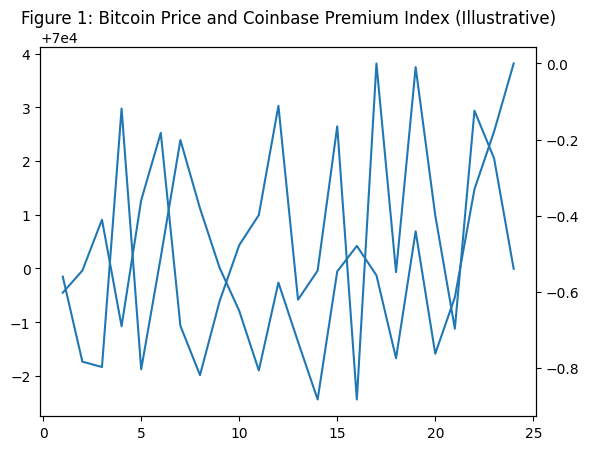
This pattern supports the thesis that Bitcoin’s stagnation is driven more by demand fatigue than by fear.
5. The Role of Long-Term Capital: Where Will Absorption Begin?
The most critical question for the market is not whether prices will fall further, but where long-term capital will begin to absorb supply.
ETF inflows represent a relatively stable and price-insensitive form of demand. Unlike leveraged traders or momentum-driven retail participants, ETF investors typically operate with longer time horizons and portfolio-level objectives.
As prices consolidate, these investors may gradually increase allocations, especially if Bitcoin is perceived as undervalued relative to its long-term adoption trajectory.
Spot Bitcoin ETF Net Inflows vs. BTC Price
(bar chart of ETF inflows alongside Bitcoin price movements)
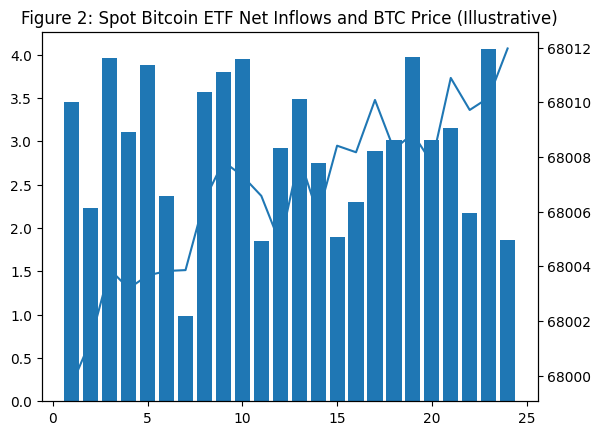
However, this absorption process is unlikely to be abrupt. Instead, it will probably manifest as a prolonged base-building phase, characterized by narrowing volatility and incremental accumulation.
6. Alternative Scenario: What Would Change the Outlook?
While the base case remains one of continued adjustment, there is a clear alternative scenario that would warrant a reassessment.
If the Coinbase Premium Index were to recover sustainably into positive territory, it would indicate renewed U.S. spot demand capable of absorbing available supply. Such a shift could coincide with:
- Easing financial conditions
- Improved macro sentiment
- A new narrative catalyst (e.g., regulatory clarity or institutional adoption)
Under this scenario, Bitcoin could transition from consolidation back into a renewed expansion phase. Until such evidence emerges, however, caution and patience remain warranted.
7. Practical Implications for Investors and Builders
For investors seeking new crypto assets or revenue opportunities, the current environment favors selectivity and strategic positioning rather than aggressive speculation.
- Long-term investors may view consolidation as an opportunity to accumulate exposure at lower volatility.
- Traders should recognize that momentum-driven strategies are less effective in range-bound markets.
- Builders and businesses should focus on real-world utility, payments, custody, and compliance-ready infrastructure, which continue to develop regardless of short-term price movements.
Bitcoin’s maturation into an ETF-backed asset underscores its transition from fringe speculation to institutional-grade infrastructure—even if price action temporarily lags behind that reality.
Conclusion: A Market Waiting for Its Next Signal
Bitcoin’s inability to rally despite record ETF inflows is not a contradiction, but a reflection of its current market phase. The post-all-time-high adjustment is defined less by fear and more by the absence of incremental demand.
ETF inflows demonstrate that long-term conviction remains intact, but on-chain data makes clear that U.S. spot demand has yet to re-engage meaningfully. Until that changes, prices are likely to remain range-bound.
For those looking beyond short-term noise, this phase offers valuable insight: Bitcoin is no longer driven solely by speculation, but by a complex interplay of macro liquidity, structural adoption, and long-term capital formation.
