

Main Points :
- Automated bot activity related to crypto keywords on X has surged by over 1,200%, overwhelming genuine discourse.
- Ki Young Ju, founder of CryptoQuant, argues that X is suppressing legitimate crypto content instead of fixing bot detection.
- Paid verification has failed as a filtering mechanism, allowing bots to “pay to spam” while real users lose reach.
- X’s product leadership claims Crypto Twitter’s (CT) decline is due to excessive low-value posting by users themselves.
- Despite tensions, X remains the central global hub for crypto markets, analysis, and real-time information.
- The conflict highlights a deeper structural challenge: how AI-driven platforms should govern financial and blockchain-related discourse.
Introduction: Crypto, Bots, and the Battle for Attention
Over the past decade, X (formerly Twitter) has become the de facto nervous system of the global crypto market. From Bitcoin price discovery to real-time on-chain analysis, regulatory rumors, protocol upgrades, and meme-driven sentiment shifts, the platform has served as the fastest information relay in the industry.
Yet in early 2026, cracks in this relationship became increasingly visible. A public critique by CryptoQuant founder Ki Young Ju crystallized a frustration shared by many market participants: instead of effectively combating bots, X appears to be suppressing crypto-related content itself. This approach, critics argue, risks punishing signal rather than noise—undermining one of the platform’s most active and economically relevant communities.
This article expands on that critique, contextualizes it within broader platform dynamics, and explores what it means for investors, builders, and users seeking the next revenue opportunity or practical blockchain application.
1. The Bot Explosion: When “Crypto” Became a Spam Magnet
Ki Young Ju’s criticism was rooted in data, not sentiment. According to figures he highlighted, posts containing the keyword “crypto” exploded to over 7.7 million posts per day, representing a 1,200%+ increase from historical baselines.
[Estimated daily volume of crypto-related posts and bot-generated activity]
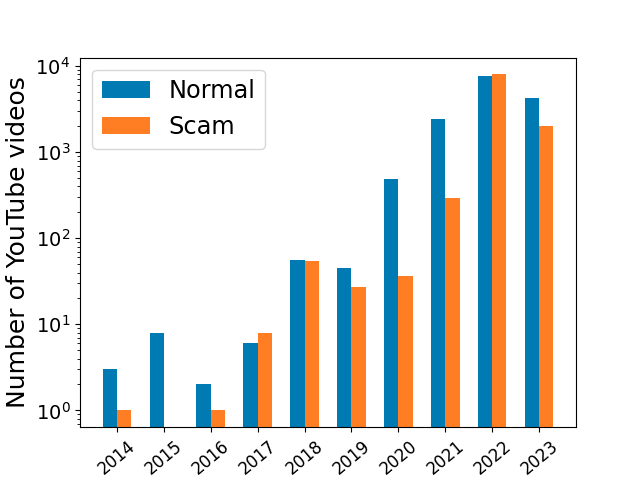
This surge was not driven by organic growth in market participation. Instead, it reflected the rapid industrialization of AI-driven posting systems—cheap, automated, and capable of flooding timelines with low-quality engagement bait: recycled headlines, shallow price predictions, affiliate links, and meaningless replies.
The unintended consequence was algorithmic. Faced with an overwhelming volume of low-quality content, X’s systems responded with broad suppression mechanisms tied to keywords and posting behavior. Legitimate analysts, project teams, and educators found their reach throttled—not because their content lacked value, but because it existed in the same semantic neighborhood as spam.
2. “AI Makes Bots Inevitable”: A Structural, Not Moral, Problem
One of Ki Young Ju’s most important points was philosophical rather than technical. Bots, he argued, are no longer an anomaly—they are a structural byproduct of AI progress.
As large language models and automation frameworks improve, the marginal cost of producing “human-like” posts approaches zero. In such an environment, the key challenge for platforms is not eliminating bots entirely, but distinguishing intent, authenticity, and value.
From this perspective, suppressing crypto content is not a solution—it is an evasion. It avoids the harder task of building robust human–machine differentiation and instead externalizes the cost to a specific user group.
3. The Failure of Paid Verification as a Filter
X’s paid verification system was originally positioned as a way to restore trust and reduce spam. In practice, however, it introduced a new distortion.
Today, bots can simply pay the verification fee and gain the same algorithmic privileges as real users. This has led to what critics describe as a “pay-to-spam” equilibrium:
- Bots treat verification fees as a business expense.
- Low-quality automated content continues at scale.
- Genuine users, constrained by reach limits and posting caps, lose visibility.
For crypto creators—many of whom rely on timely distribution for trading signals, research, or product updates—this creates a tangible economic cost. Reduced reach translates directly into reduced monetization opportunities, weaker community engagement, and slower feedback loops.
4. X’s Counterargument: Crypto Twitter Is Eating Itself
The controversy intensified when X’s Head of Product publicly responded with a blunt assessment: Crypto Twitter’s declining visibility is largely self-inflicted.
According to this view, many CT accounts exhaust their daily reach limits by posting or replying excessively with low-value content—short greetings, memes, or engagement farming replies like “gm.” By the time they share substantive updates, the algorithm has already deprioritized them.
The argument rests on scarcity. User attention is finite, and each account is allocated a limited exposure budget per day. Overposting dilutes impact.
While not without merit, critics argue that this explanation overlooks a key asymmetry: bots thrive on volume, while humans cannot realistically compete on frequency without sacrificing quality. In an environment dominated by automation, penalizing high-frequency posting disproportionately harms real users.
5. Why Crypto Still Depends on X
Despite the friction, crypto has not meaningfully migrated away from X—and for good reason.
X remains uniquely suited to crypto’s needs:
- Real-time dissemination of market-moving information
- Direct interaction between developers, investors, analysts, and regulators
- Global reach without platform-specific silos
- Cultural norms aligned with open debate and pseudonymity
For traders searching for new assets or yield opportunities, X functions as an early-warning radar. For builders, it is both a marketing channel and a peer-review mechanism. For institutions, it is a sentiment gauge that often moves faster than formal reports.
6. Product Evolution: XChats and the Long-Term Vision
Adding complexity to the debate is X’s broader product roadmap. The platform has begun rolling out new messaging infrastructure, including XChats, described as incorporating:
- End-to-end encryption inspired by Bitcoin-style cryptography
- Audio and video calling
- Disappearing messages
- File sharing
- A new architecture written in Rust
[Conceptual overview of XChats and secure communication features]
If executed well, these features could further entrench X as the default communication layer for crypto and fintech professionals. However, the success of such tools depends on trust—specifically, trust that legitimate users will not be collateral damage in platform-wide moderation strategies.
7. Broader Implications for Investors and Builders
For readers interested in new crypto assets, revenue models, or practical blockchain applications, this debate is more than platform drama—it is a signal.
Key implications include:
- Distribution risk: Projects overly dependent on a single platform face asymmetric moderation exposure.
- Opportunity for alternatives: Decentralized social protocols and niche analytics platforms may gain traction if they can solve discovery without spam.
- Data premium: As public discourse becomes noisier, curated, data-driven insights (on-chain analytics, proprietary dashboards) increase in value.
- AI arms race: The same AI tools powering bots can be used defensively—scoring content quality, reputation, and behavioral authenticity.
Conclusion: Fixing the Filter, Not Banning the Topic
Ki Young Ju’s critique resonated because it articulated a fear shared quietly across the crypto industry: that platforms might choose the path of least resistance—penalizing entire domains of discussion—rather than confronting the technical challenge of bot proliferation head-on.
Crypto is not just another content category. It is a live financial system, an innovation frontier, and for many, a source of livelihood. Treating it as disposable noise risks eroding one of X’s strongest network effects.
The path forward is not censorship by keyword, but better filters, smarter reputation systems, and incentives aligned with value creation. As AI continues to blur the line between human and machine, platforms that solve this problem will not only retain crypto—they will define the next generation of digital public squares.
