
Main Points :
- Military spending and geopolitical conflicts historically influence global liquidity conditions.
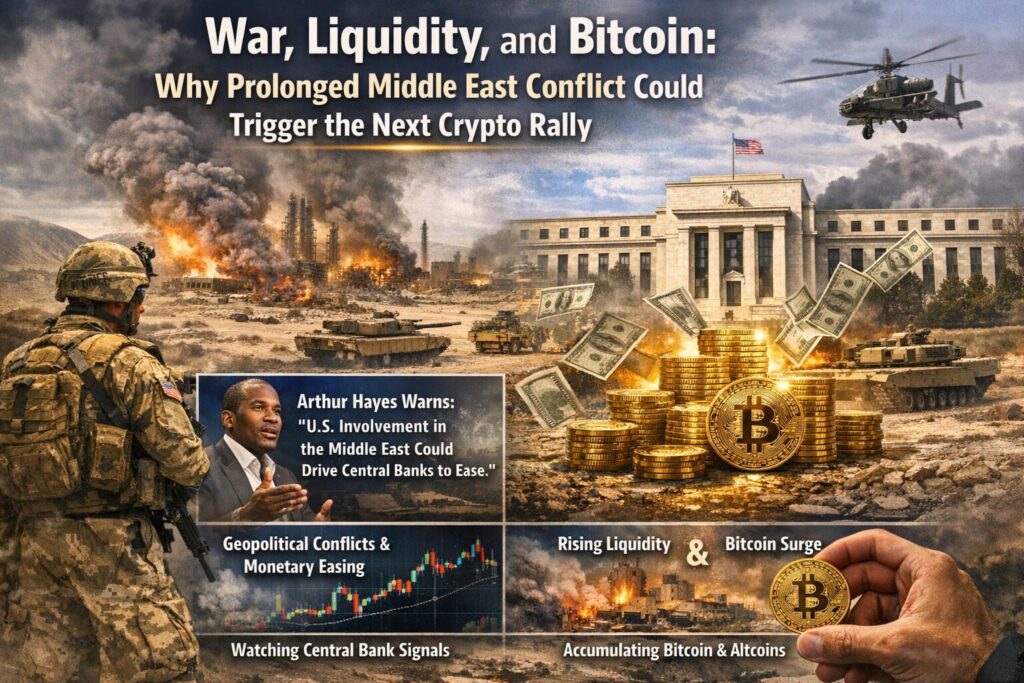
- Former Arthur Hayes argues that prolonged U.S. involvement in the Middle East could pressure central banks toward monetary easing.
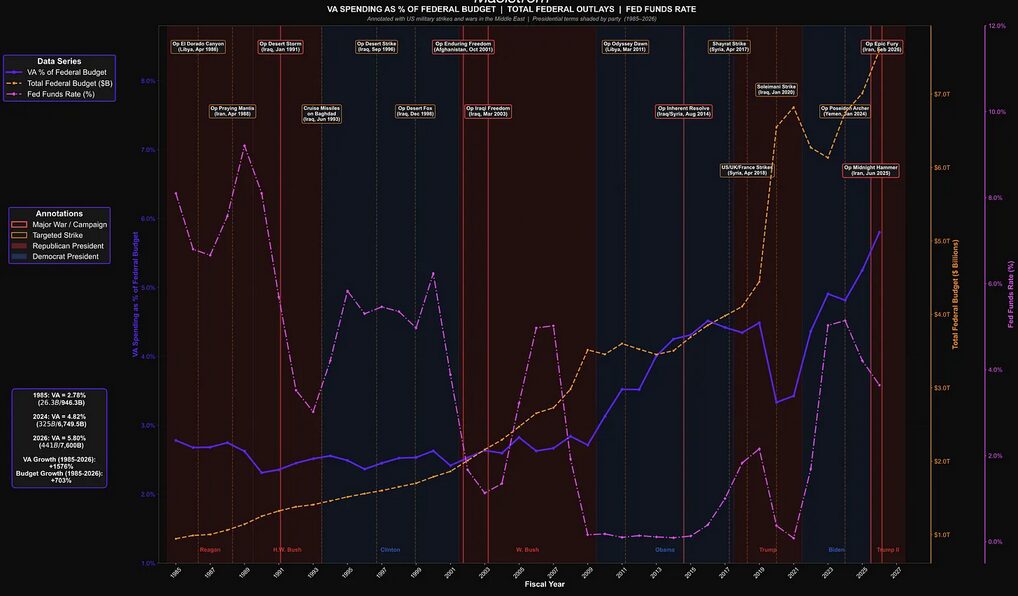
- Historically, conflicts such as the Gulf War and the War on Terror were followed by accommodative monetary policy from the Federal Reserve.
- Increased dollar liquidity and falling interest rates historically benefit scarce assets such as Bitcoin.
- Investors may watch central bank policy signals before accumulating BTC and selected altcoins.
(“War Spending → Fiscal Stress → Monetary Easing → Crypto Market Rally”)
Introduction: Geopolitics as a Catalyst for Crypto Markets
In early March 2026, prominent cryptocurrency investor and former BitMEX CEO Arthur Hayes published a provocative essay titled “iOS Warfare” in his Substack newsletter. The article explores an unconventional but increasingly relevant macroeconomic theme: the relationship between geopolitical conflict, government spending, central bank policy, and the price trajectory of digital assets such as Bitcoin.
Hayes’ core argument is rooted in a historical pattern. When the United States becomes heavily involved in military conflict—particularly long and expensive engagements—the resulting fiscal pressure and economic uncertainty often lead central banks to adopt more accommodative monetary policies. These policies typically involve lowering interest rates or increasing liquidity through asset purchases and credit expansion.
In Hayes’ view, a prolonged U.S. involvement in Middle Eastern conflicts could recreate this dynamic. If geopolitical tensions escalate and military spending rises, the resulting economic strain could ultimately lead to monetary easing by the Federal Reserve. Such conditions historically benefit risk assets and scarce stores of value—including cryptocurrencies.
For investors searching for the next growth wave in digital assets, this macroeconomic lens offers a compelling framework to analyze potential market catalysts.
War Spending as a Driver of Monetary Policy
Military conflict has always carried enormous financial costs. When governments engage in prolonged warfare, defense expenditures surge, fiscal deficits expand, and economic uncertainty increases. Historically, these pressures have often led policymakers to rely on accommodative monetary policy to stabilize financial markets.
Hayes revisits several examples from the past four decades of U.S. military engagement. One notable case is the Gulf War. During that period, rising oil prices and geopolitical uncertainty threatened global economic stability. In response, the Federal Reserve began lowering interest rates in an effort to sustain economic growth and reduce recession risks.
Another example emerged after the terrorist attacks of September 11, 2001, which triggered the global campaign known as the War on Terror. Under then-chairman Alan Greenspan, the Federal Reserve implemented emergency rate cuts to support financial markets and economic activity.
These events illustrate a recurring pattern: when geopolitical shocks threaten economic stability, central banks often intervene with liquidity measures designed to cushion the impact.
Hayes suggests that similar dynamics could unfold again if geopolitical tensions in the Middle East escalate and become prolonged.
(“Historical Timeline – Major U.S. Conflicts vs Federal Reserve Interest Rate Changes”)
The Current Geopolitical Context: U.S.–Iran Tensions
Hayes’ thesis is partly built around the possibility of escalating tensions between the United States and Iran. While the exact trajectory of these tensions remains uncertain, the potential for military escalation has been widely discussed in geopolitical circles.
If U.S. involvement in regional conflicts expands and becomes prolonged, the financial implications could be significant. Military operations require sustained spending on logistics, equipment, and personnel. Such expenditures can widen fiscal deficits and add pressure to government borrowing.
At the same time, geopolitical instability tends to increase market volatility. Energy prices may spike, global supply chains can become disrupted, and investor confidence may weaken.
In such circumstances, central banks may face pressure to support financial stability. Historically, that support has often taken the form of lower interest rates and expanded liquidity.
For cryptocurrency markets, these conditions could prove highly favorable.
Monetary Easing and the Bitcoin Liquidity Cycle
Cryptocurrency markets are deeply influenced by global liquidity conditions. Periods of monetary easing—when central banks inject liquidity into the financial system—have often coincided with strong performance in digital assets.
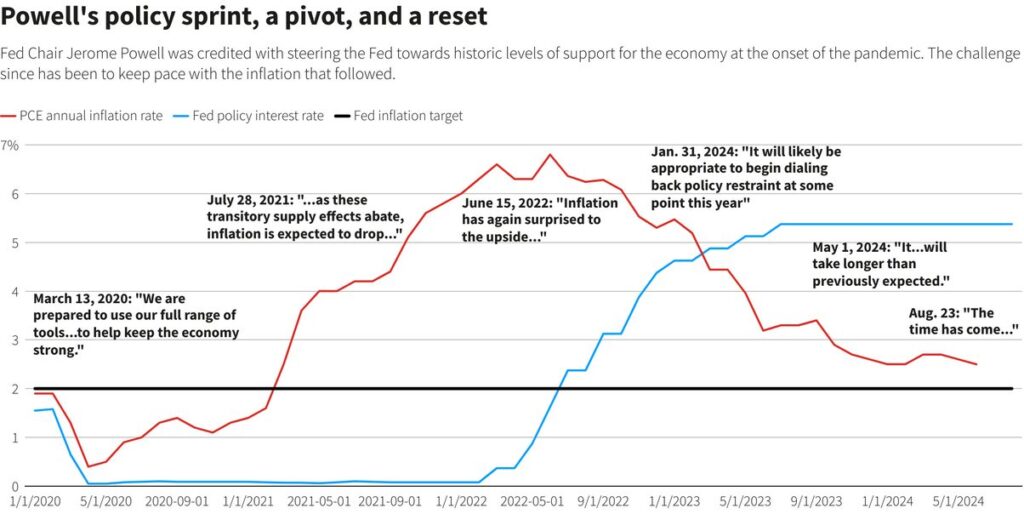
For example, during the massive monetary stimulus programs following the 2020 pandemic crisis, global liquidity surged. Interest rates approached zero, and central banks expanded their balance sheets dramatically. During this period, Bitcoin rose from approximately $4,000 in early 2020 to over $60,000 in 2021.
This phenomenon is sometimes referred to as the “liquidity cycle.” When capital becomes abundant and borrowing costs decline, investors tend to allocate funds toward higher-risk assets that offer the potential for outsized returns.
Bitcoin, with its fixed supply of 21 million coins, is often perceived as a hedge against currency debasement. When monetary policy becomes accommodative and the supply of fiat currency expands, scarce digital assets can become more attractive as alternative stores of value.
Hayes argues that if a geopolitical shock ultimately triggers monetary easing, Bitcoin could once again benefit from this liquidity cycle.
Implications for Altcoins and Emerging Blockchain Projects
While Bitcoin often leads crypto market rallies, Hayes also suggests that selected altcoins could benefit from improved liquidity conditions.
Historically, capital flows into the crypto market tend to follow a predictable pattern. Bitcoin typically rises first as institutional investors accumulate the most established digital asset. Once momentum builds, capital gradually flows into alternative cryptocurrencies with higher growth potential.
For investors seeking new revenue opportunities within the blockchain ecosystem, identifying promising altcoin sectors may be critical. These sectors could include decentralized finance (DeFi), tokenized real-world assets, decentralized infrastructure networks, and AI-integrated blockchain platforms.
Recent years have also seen increased institutional involvement in digital assets, with traditional financial firms exploring tokenization, digital custody, and blockchain-based payment networks. As institutional capital enters the ecosystem, liquidity conditions could amplify market cycles.
Strategic Considerations for Crypto Investors
Despite his bullish macro thesis, Hayes emphasizes caution. Monetary easing is not guaranteed, and geopolitical developments remain unpredictable.
Rather than speculating on hypothetical scenarios, Hayes recommends waiting for concrete policy signals from the Federal Reserve. If the central bank officially begins lowering interest rates or expanding liquidity programs, that would provide stronger confirmation of the liquidity cycle thesis.
At that point, accumulating Bitcoin and carefully selected altcoins may become a rational investment strategy.
Investors should also monitor several macro indicators:
- Central bank interest rate decisions
- Fiscal deficit trends
- Global energy prices
- Dollar liquidity indicators
- Institutional flows into digital assets
By integrating macroeconomic analysis with blockchain sector research, investors may be able to position themselves ahead of the next major crypto cycle.
Conclusion: War, Money, and the Future of Crypto Markets
Arthur Hayes’ analysis highlights an often overlooked connection between geopolitics and cryptocurrency markets. Military conflict, fiscal expansion, and central bank policy form a complex feedback loop that can ultimately reshape global liquidity conditions.
If geopolitical tensions escalate and trigger monetary easing, scarce assets such as Bitcoin could benefit from renewed capital inflows. However, this outcome is far from certain. Financial markets remain sensitive to numerous variables, including political decisions, inflation dynamics, and investor sentiment.
For cryptocurrency investors searching for the next growth opportunity, the key takeaway is not merely speculation on war-driven scenarios. Rather, it is the importance of understanding how macroeconomic forces—particularly liquidity cycles—shape the broader digital asset ecosystem.
By closely monitoring central bank policy and global geopolitical developments, market participants may gain valuable insight into the timing and magnitude of the next cryptocurrency bull cycle.
