

Main Points :
- U.S. spot Bitcoin ETFs recorded $257.7 million in net inflows, ending a five-week outflow streak totaling $3.8 billion.
- The rebound marks the largest inflow since early February, signaling a sharp shift in sentiment.
- Institutional investors appear to be buying near the $65,000 support zone.
- Major inflows were led by Fidelity’s FBTC ($83M) and BlackRock’s IBIT ($79M).
- Despite a ~30% year-to-date decline in ETF AUM, the recent inflow may represent either a short-term rebound or the beginning of a sustained capital return cycle.
- ETF flows remain one of the most important bullish structural indicators for Bitcoin’s medium-term trajectory.
1. A Decisive Break from Five Weeks of Persistent Outflows
On February 25, U.S. spot Bitcoin exchange-traded funds (ETFs) recorded a combined $257.7 million in net inflows, according to aggregated market data sources including SoSoValue. This marked a decisive reversal after five consecutive weeks of cumulative net outflows totaling approximately $3.8 billion.
The magnitude of the inflow is significant not only because it exceeded the previous day’s more than $200 million in net outflows, but because it represents the largest daily inflow since early February. Markets had been trapped in a persistent risk-off mood, and ETF redemptions reflected institutional caution amid macro uncertainty, rate volatility, and equity market fragility.
The five-week outflow streak had been the longest since March 2025. That extended selling pressure weighed on Bitcoin’s price structure, undermining confidence and reinforcing bearish narratives. Therefore, the abrupt inflow reversal carries both symbolic and structural importance.
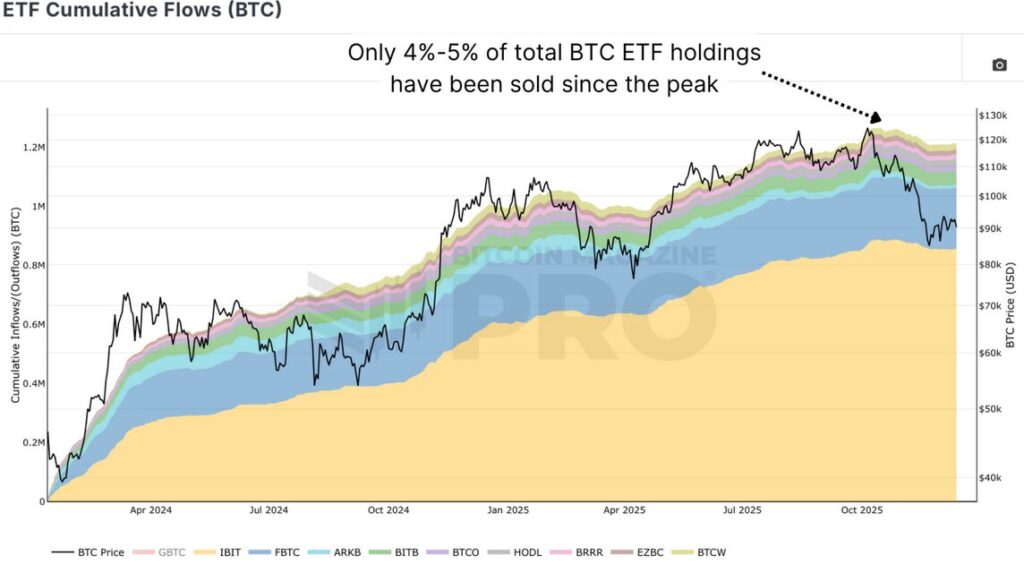
Chart showing daily net flows and the reversal after five weeks of outflows.
2. Institutional Dip-Buying Around the $65,000 Level
One of the most notable aspects of the recent inflow is its timing. Bitcoin had stabilized near the psychologically significant $65,000 level, a region widely viewed as a key support zone by both technical analysts and institutional portfolio managers.
As ETF flows turned positive, Bitcoin rebounded sharply, climbing toward $69,000. The synchronization between ETF inflows and price recovery suggests that institutions were not merely passively reallocating but were actively deploying capital during a period of price weakness.
This behavior aligns with classic institutional portfolio strategy:
- Reduce exposure during volatility spikes
- Re-enter positions near structural support
- Scale allocation when risk-reward improves
For professional allocators, Bitcoin increasingly behaves like a macro-correlated, volatility-managed asset rather than a purely speculative instrument. Therefore, dip-buying near $65,000 may reflect a recalibration of risk rather than speculative enthusiasm.
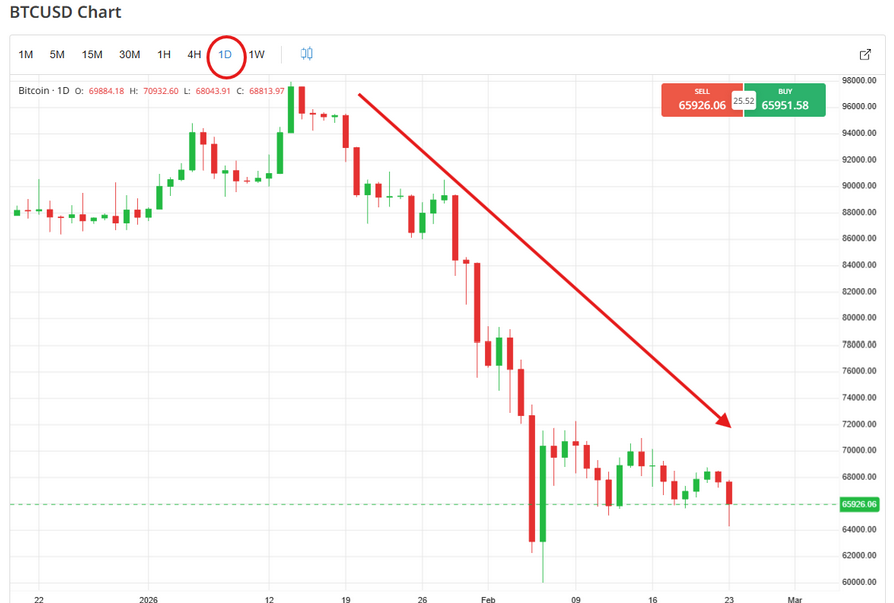
Bitcoin price chart highlighting the $65,000 support and rebound toward $69,000.
3. Leaders of the Inflow: Fidelity and BlackRock
Two major funds led the reversal:
- Fidelity Investments – FBTC: $83 million inflow
- BlackRock – IBIT: $79 million inflow
These inflows are meaningful not just in size but in signaling power. When institutional heavyweights like Fidelity and BlackRock experience strong subscription activity, it typically reflects:
- Pension fund rebalancing
- Wealth management allocation shifts
- Family office positioning
- Institutional treasury diversification
BlackRock’s IBIT has been one of the largest and most liquid Bitcoin ETF vehicles since launch, often seen as a proxy for institutional conviction. Meanwhile, Fidelity Investments has historically catered to long-term retirement and advisory capital, suggesting the inflows may not be purely tactical.
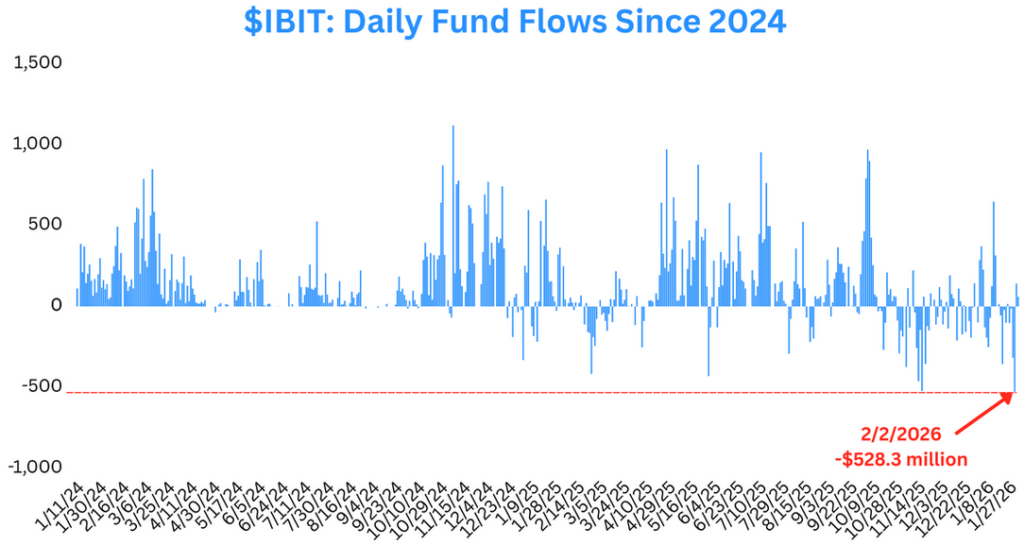
Visual comparison of IBIT and FBTC inflow dominance.
4. Year-to-Date Context: AUM Down 30% – But Structural Demand Remains
Despite the recent positive flow, Bitcoin ETF assets under management (AUM) remain approximately 30% lower year-to-date. This contraction reflects:
- Price depreciation
- Sustained redemptions during macro uncertainty
- Reduced retail participation
- Portfolio deleveraging across risk assets
However, ETF flow dynamics are often forward-looking. Historically, large inflow reversals after prolonged outflows have preceded multi-week price recoveries. The key question now is whether this marks:
- A temporary relief rally
- Or the beginning of sustained capital rotation back into Bitcoin
If inflows persist over multiple sessions, the supply-demand balance shifts materially. ETFs act as structural spot buyers, removing circulating liquidity from exchanges and tightening available float.
5. Broader Macro and Crypto Market Implications
Bitcoin’s institutionalization via ETFs has transformed market structure in several ways:
- Spot demand is increasingly channeled through regulated vehicles.
- ETF flows serve as real-time institutional sentiment gauges.
- Capital allocation decisions now reflect macro portfolio strategy rather than retail momentum alone.
Additionally, broader trends support structural demand:
- Sovereign and corporate interest in digital asset reserves
- Growing stablecoin settlement volume
- Integration of Bitcoin into diversified multi-asset portfolios
For investors seeking new revenue streams or practical blockchain applications, ETF flow analysis provides insight into institutional behavior—a critical edge in anticipating medium-term price trajectories.
6. Forward-Looking Scenarios
Three potential scenarios emerge:
Scenario A: Sustained Inflow Cycle
If daily inflows continue above $100 million for several sessions, Bitcoin could retest the $72,000–$75,000 region.
Scenario B: Volatile Range Consolidation
If inflows fade quickly, Bitcoin may consolidate between $62,000 and $70,000.
Scenario C: False Breakout
If macro conditions deteriorate sharply, ETF inflows may reverse again, triggering renewed pressure.
Monitoring ETF flows daily is now essential for market participants.
Conclusion: A Critical Structural Inflection Point
The $257.7 million inflow into U.S. spot Bitcoin ETFs marks more than a single positive data point. It signals a possible structural inflection after the longest outflow streak since March 2025.
Institutional dip-buying near $65,000 suggests portfolio recalibration rather than speculative frenzy. While AUM remains down year-to-date, ETF flows remain one of the clearest bullish leading indicators.
Whether this reversal becomes a sustained capital return cycle will define Bitcoin’s next macro phase. For investors exploring new crypto assets, yield opportunities, and practical blockchain strategies, ETF flow dynamics should remain at the forefront of analytical frameworks.
