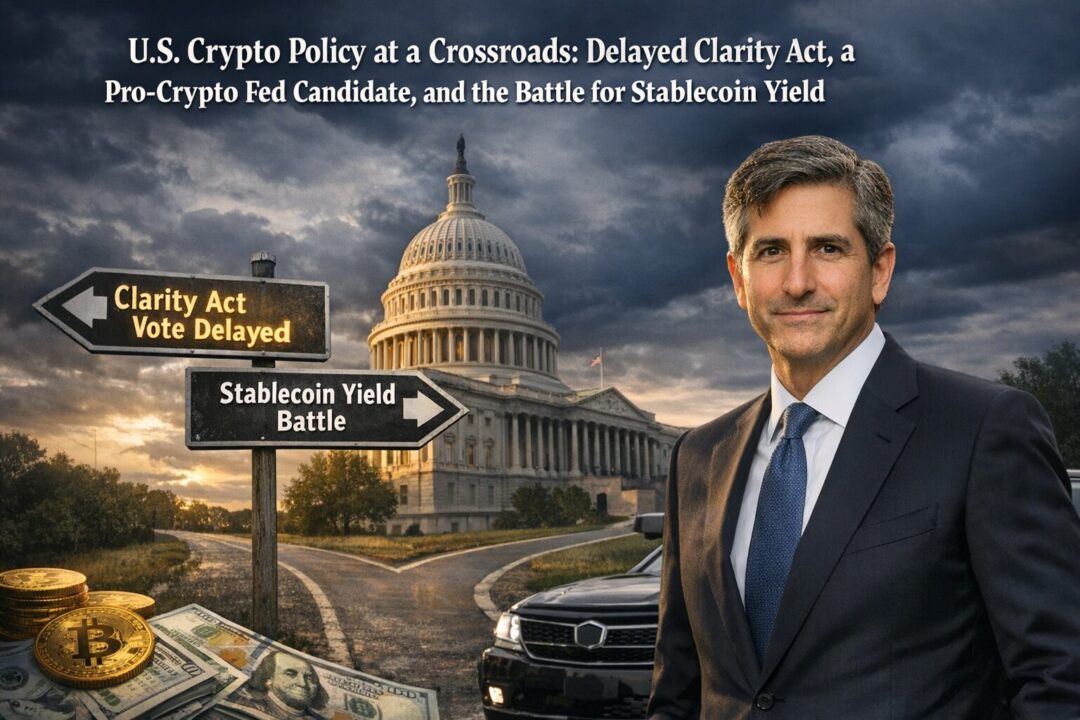
The U.S. “Clarity Act” vote has been delayed to late April or May due to the prioritization of the Federal Reserve chair nomination hearing
Kevin Warsh holds over $100M in crypto-related assets, signaling unprecedented institutional alignment
Stablecoin yield regulation remains the most contentious issue between banks and crypto firms
A compromise proposal is expected, potentially unlocking mainstream adoption of yield-bearing stablecoins
The broader market trend shows increasing institutionalization, regulatory convergence, and integration with traditional finance
Emerging investment themes: Real World Assets (RWA), AI-driven finance, and compliant DeFi infrastructure
1. The Delay That Matters: Why the Clarity Act Is Being Postponed
The anticipated vote on the U.S. crypto market structure bill—commonly referred to as the “Clarity Act”—has once again been postponed. While delays in Washington are not unusual, this particular shift is strategically significant. The Senate Banking Committee has chosen to prioritize the nomination hearing of Kevin Warsh, scheduled for April 21, pushing the crypto legislation timeline to late April or potentially the second week of May.
At first glance, this may appear to be procedural. However, for market participants, this delay underscores a deeper reality: crypto regulation in the United States is no longer an isolated policy issue—it is now intertwined with macroeconomic leadership and monetary policy direction.
The Clarity Act itself is designed to define regulatory boundaries across digital assets, addressing long-standing ambiguities between securities and commodities classifications. It also seeks to formalize frameworks for tokenization, DeFi participation, and stablecoin operations. A delay in its passage introduces uncertainty, but it also reflects the increasing complexity of aligning multiple powerful stakeholders.
Importantly, insiders suggest that the effective deadline is not immediate. Industry analysts believe there remains a 6–7 week window for meaningful progress, with expectations that bipartisan alignment is still achievable.
2. The Rise of a Pro-Crypto Fed Chair Candidate
The nomination of Kevin Warsh represents a pivotal moment in the convergence of traditional finance and digital assets. Recent financial disclosures reveal that Warsh holds over $100 million in investments, including exposure to:
Crypto-native platforms such as prediction markets (e.g., Polymarket)
Blockchain ecosystems like Solana
Layer 2 scaling solutions on Ethereum
High-growth technology ventures such as SpaceX
This portfolio composition is unprecedented for a Federal Reserve chair candidate. Historically, central bankers have maintained conservative, diversified holdings with minimal exposure to emerging or volatile sectors.
Warsh’s investment profile signals something far more profound: the normalization of crypto as a legitimate asset class within elite financial circles.
However, this also introduces potential conflicts of interest. During the upcoming hearing, lawmakers are expected to scrutinize whether his holdings could bias policy decisions and whether divestment or ethical safeguards will be required.
Despite these concerns, market sentiment has turned cautiously optimistic. A pro-crypto Fed chair could reshape regulatory tone, potentially moving from enforcement-driven approaches toward innovation-friendly frameworks.
3. The Stablecoin Yield Debate: A Structural Turning Point
Among the many provisions in the Clarity Act, none is more controversial than the issue of stablecoin yield.
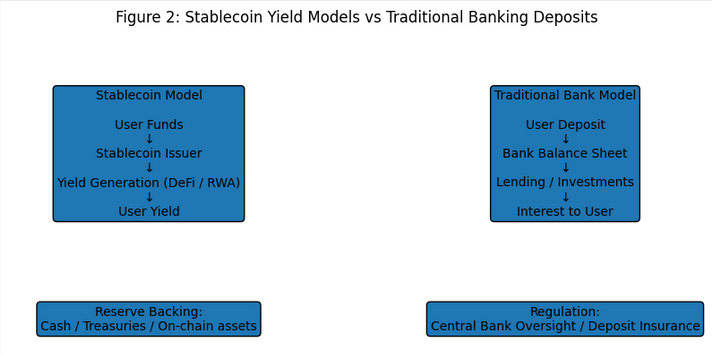
Traditional banks argue that allowing stablecoins to offer interest or yield could trigger mass deposit outflows, undermining the banking system’s liquidity base. From their perspective, stablecoins with yield resemble unregulated savings accounts.
On the other hand, crypto firms contend that yield is essential for adoption. Without it, stablecoins lose competitiveness against traditional financial products.
A compromise proposal—expected to be introduced by Senator Thom Tillis—may represent a breakthrough. Early indications suggest a framework that could:
Allow limited yield distribution under regulated conditions
Impose reserve transparency and risk controls
Restrict certain high-risk yield-generation mechanisms
If implemented, this compromise could unlock a new category of financial products: regulated, yield-bearing digital dollars.
This is not a minor development. It would effectively bridge the gap between DeFi and traditional banking, enabling institutions to participate in crypto-native yield strategies without regulatory ambiguity.
4. Ethics, Tokenization, and the Shadow of Legal Conflicts
While progress has been made on technical aspects such as DeFi participation and tokenization standards, ethical considerations remain unresolved.
Recent legal disputes—particularly involving high-profile figures like Justin Sun—have heightened scrutiny around political and financial entanglements in the crypto sector. Lawmakers are increasingly concerned about:
Conflicts of interest in policymaking
Influence of wealthy crypto investors on legislation
Transparency in tokenized asset issuance
As a result, stricter ethical provisions may be introduced into the Clarity Act. These could include:
Mandatory disclosure of crypto holdings for policymakers
Restrictions on direct participation in certain token markets
Enhanced oversight of politically connected projects
This reflects a broader trend: as crypto matures, governance standards are rising to match those of traditional finance.
5. Market Implications: Institutional Capital and Structural Maturity
The convergence of regulatory progress and institutional participation is reshaping the crypto market landscape.
Several key trends are emerging:
1. Institutional Alignment
The involvement of figures like Kevin Warsh indicates that crypto is no longer fringe. It is becoming embedded within the highest levels of financial decision-making.
2. Regulatory Convergence
Rather than outright bans or fragmentation, jurisdictions are moving toward harmonized frameworks that integrate crypto into existing financial systems.
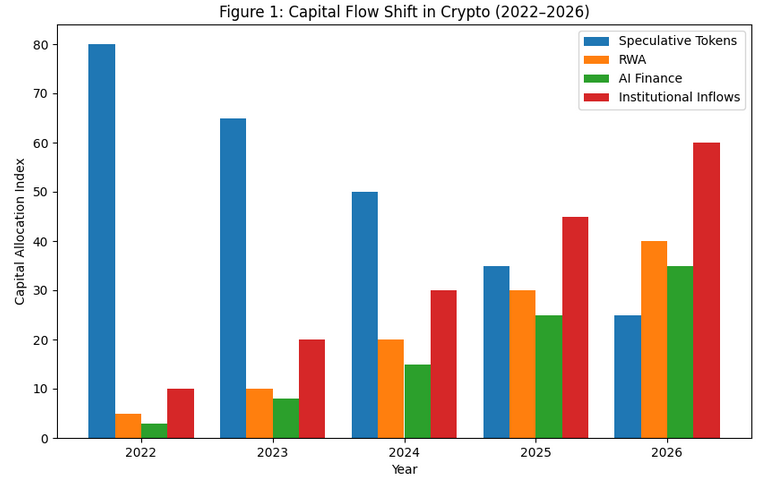
3. Shift in Capital Flows
Capital is increasingly flowing into:
Real World Asset (RWA) tokenization (e.g., bonds, real estate)
AI-driven financial infrastructure
Compliant DeFi protocols
4. Decline of Pure Speculation
The era of rapid, speculative token launches is giving way to utility-driven, revenue-generating models. Investors are prioritizing sustainable yield and real-world integration.
6. Investment Outlook: Where the Next Opportunities Lie
For investors seeking the next wave of growth, several themes stand out:
RWA Tokenization
Tokenizing real-world assets—such as government bonds or private credit—offers stable, predictable yields. This sector is attracting institutional capital due to its familiarity and regulatory compatibility.
Stablecoin Infrastructure
If yield-bearing stablecoins are approved, infrastructure providers (custody, compliance, on/off-ramps) will become critical investment targets.
AI + Crypto Convergence
The integration of AI with blockchain—particularly in areas like autonomous trading, risk management, and predictive markets—represents a high-growth frontier.
Layer 2 Ecosystems
Scaling solutions on Ethereum and alternative chains like Solana continue to expand, offering opportunities in both infrastructure and applications.Insert Figure 1 Here
Capital Flow Shift in Crypto (2022–2026)
(Bar chart showing declining speculative token funding vs rising RWA, AI, and institutional inflows)Insert Figure 2 Here
Stablecoin Yield Models vs Traditional Banking Deposits
(Comparison diagram showing interest flows, reserve backing, and regulatory layers)
Conclusion: A Defining Moment for Crypto’s Integration into Global Finance
The delay of the Clarity Act is not a setback—it is a reflection of crypto’s growing importance within the global financial system.
The prioritization of Kevin Warsh’s nomination underscores a critical shift: crypto policy is now inseparable from macroeconomic leadership.
At the same time, the resolution of the stablecoin yield debate could unlock a new era of regulated digital finance, bridging the divide between traditional institutions and decentralized innovation.
For investors and builders alike, the message is clear:
The market is maturing
Regulation is converging
Institutional capital is entering
And the next cycle will be defined not by speculation, but by integration and utility
About Us and Media
Blockchain and cryptocurrency media covering and exposing the practical application development on the blockchain industry and undiscovered coins.
Click edit button to change this text. Lorem ipsum dolor sit amet, consectetur adipiscing elit
Manage Consent
To provide the best experiences, we use technologies like cookies to store and/or access device information. Consenting to these technologies will allow us to process data such as browsing behavior or unique IDs on this site. Not consenting or withdrawing consent, may adversely affect certain features and functions.
Functional
Always active
The technical storage or access is strictly necessary for the legitimate purpose of enabling the use of a specific service explicitly requested by the subscriber or user, or for the sole purpose of carrying out the transmission of a communication over an electronic communications network.
Preferences
The technical storage or access is necessary for the legitimate purpose of storing preferences that are not requested by the subscriber or user.
Statistics
The technical storage or access that is used exclusively for statistical purposes.The technical storage or access that is used exclusively for anonymous statistical purposes. Without a subpoena, voluntary compliance on the part of your Internet Service Provider, or additional records from a third party, information stored or retrieved for this purpose alone cannot usually be used to identify you.
Marketing
The technical storage or access is required to create user profiles to send advertising, or to track the user on a website or across several websites for similar marketing purposes.