
Key Points :
- Kraken, a cryptocurrency exchange, has received approval for a “limited purpose account” from the Kansas City Federal Reserve.
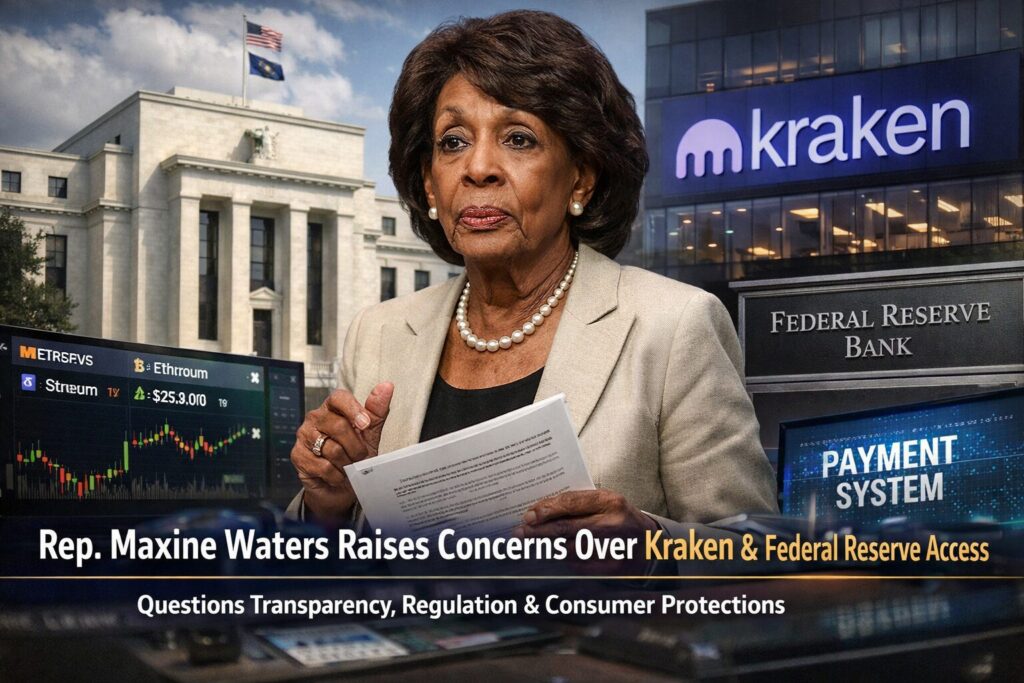
- U.S. Congressman Maxine Waters has expressed concerns over the approval and sent a letter to the Federal Reserve demanding answers.
- The “limited purpose account” grants Kraken access to the Federal Reserve’s payment systems but with restrictions.
- Waters is questioning the transparency, regulatory oversight, and consumer protection in allowing a crypto firm access to the nation’s primary payment infrastructure.
- The Federal Reserve is in the process of establishing policies for such accounts, with a proposal expected later this year.
Introduction
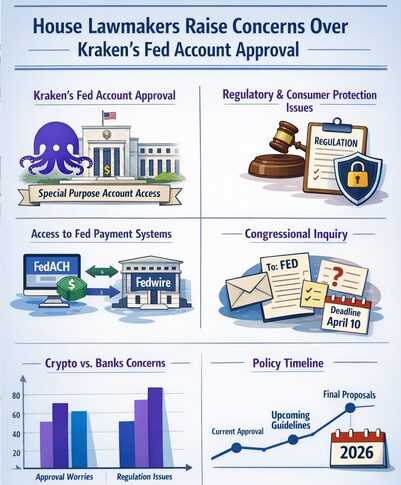
On March 26, 2026, U.S. Representative Maxine Waters (Democrat) expressed her concerns over the recent decision by the Kansas City Federal Reserve to grant Kraken, a cryptocurrency exchange, access to the Federal Reserve’s payment systems. This approval was for a “limited purpose account,” which is essentially a simplified version of the Fed’s master accounts used for high-value dollar transactions. This decision is raising several questions regarding regulatory oversight, transparency, and potential risks.
What is a “Limited Purpose Account”?
The approval of a “limited purpose account” allows Kraken to access essential payment infrastructure used for high-value dollar transactions. The setup of this account enables Kraken’s institutional clients to potentially enjoy faster deposits and withdrawals. However, the account comes with certain limitations, such as the inability to earn interest on deposited funds. Despite these restrictions, Kraken’s access to the Federal Reserve’s system is seen as a significant development for the crypto industry.
Congressman Waters’ Concerns
Congresswoman Waters has raised a series of concerns about the decision, emphasizing that the pace of financial innovation is outpacing the establishment of adequate regulatory frameworks. She points out that the permission granted to a cryptocurrency company to access the Federal Reserve’s payment systems could result in significant risks, especially if there is insufficient regulation and consumer protection in place.
Waters argues that the nation’s core payment infrastructure is a matter of public responsibility, and any expansion to new industries should be done only with full transparency and clarity regarding the legal framework and risk management processes.
In her letter to the Federal Reserve, Waters has requested detailed answers by April 10, 2026. She is seeking clarification on several aspects of the approval process, including how the Federal Reserve assessed Kraken’s financial stability, anti-money laundering procedures, and consumer protection measures. Additionally, she wants to understand whether Kraken’s access to the Fed’s systems, such as FedACH and Fedwire, includes full access to all services and what additional restrictions might apply to the account.
The Importance of Transparent Regulation
As Waters has pointed out, granting a crypto company access to the U.S. payment system is not a decision that should be taken lightly. Without clear oversight, there is a risk of destabilizing the financial system, especially as cryptocurrency markets remain highly volatile and prone to manipulation.
The debate is part of a broader conversation about the need for a comprehensive regulatory framework for digital assets. While the technology behind cryptocurrency offers significant innovation, it also introduces new risks that regulators must carefully address.
The Federal Reserve, currently in the process of developing its policy on limited purpose accounts, is expected to release a proposal on the matter later this year. However, the concern remains that, in the absence of robust regulations, crypto firms may be granted access to the financial system without the necessary safeguards in place.
Industry Backlash
The decision to grant Kraken access to the Federal Reserve’s payment systems has already sparked backlash within the traditional banking sector. The Institute for Policy Studies, which represents many large U.S. banks, has expressed concerns that the approval came before a proper framework for such accounts was established. They fear this decision could open the floodgates for other crypto companies to gain similar access, potentially undermining the stability of the financial system.
The banking industry’s concerns also extend to other areas of cryptocurrency, such as the issue of offering yields on stablecoins, which could result in a shift of deposits away from traditional banks. These concerns highlight the tension between traditional finance and the rapidly growing cryptocurrency sector.
Moving Forward: The Need for Clearer Guidelines
The ongoing debate underscores the need for clearer guidelines and regulatory frameworks for digital asset companies. The Federal Reserve’s plans to introduce policy proposals on limited purpose accounts later this year will be closely watched by both the crypto industry and traditional financial institutions.
While financial innovation is essential for economic growth, it must be accompanied by robust oversight to ensure consumer protection and financial stability. As cryptocurrencies continue to evolve, it is crucial that regulators take a balanced approach that supports innovation while safeguarding the financial system.
Conclusion
The recent approval of Kraken’s limited purpose account by the Kansas City Federal Reserve has brought to the forefront concerns about the intersection of cryptocurrency and traditional financial systems. As the U.S. government and financial regulators work to develop appropriate policies for digital asset companies, it is essential that these developments are made with full transparency, regulatory oversight, and a commitment to protecting consumers and the broader financial system.
The decision is likely to have long-term implications for the future of cryptocurrency regulation in the U.S. As Congresswoman Waters has pointed out, the question is not whether innovation should happen, but whether the right protections are in place to ensure that it does so safely.
