
Main Points :
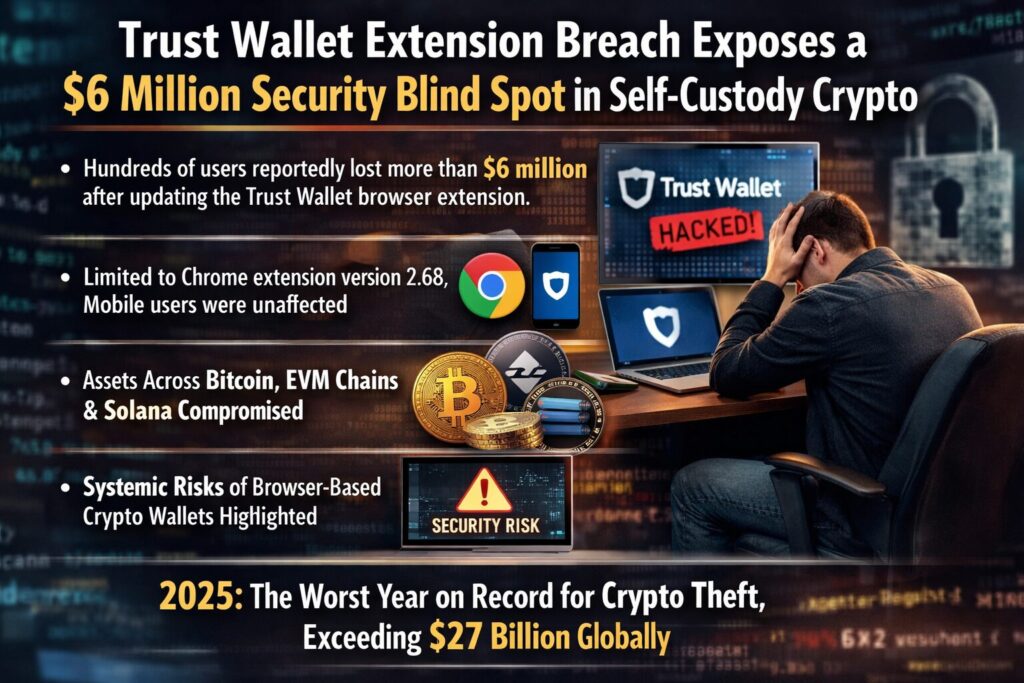
- Hundreds of users reportedly lost more than $6 million after updating the Trust Wallet browser extension
- The incident was limited to Chrome extension version 2.68, while mobile users were unaffected
- Assets across Bitcoin, EVM-compatible chains, and Solana were impacted
- The case highlights systemic risks of browser-based crypto wallets
- 2025 has become the worst year on record for crypto theft, exceeding $27 billion globally
1. A Large-Scale Unauthorized Outflow Hits Trust Wallet Users
On December 26, 2025, prominent blockchain investigator ZachXBT reported a major security incident involving the self-custodial wallet Trust Wallet.
According to his findings, hundreds of users experienced unauthorized fund transfers, with total losses estimated at over $6 million.
What made the incident particularly alarming was its timing:
most affected users had just updated the Google Chrome extension of Trust Wallet before noticing suspicious transactions.
Unlike many past incidents limited to a single blockchain, this breach appeared to span multiple networks, including:
- Bitcoin (BTC)
- EVM-compatible chains such as Ethereum and BNB Smart Chain
- Solana (SOL)
This multi-chain exposure significantly amplified the impact, suggesting that the issue was not related to a single protocol exploit but rather to the wallet’s execution environment itself.
2. Official Response: Extension Version 2.68 Identified as the Source
Trust Wallet acknowledged the incident via its official X (formerly Twitter) account, confirming that:
- Only the browser extension version 2.68 was affected
- Mobile app users were not impacted
- Users were urged to immediately disable v2.68 and update to version 2.69
The company also provided a direct link to the official Chrome Web Store to prevent users from downloading malicious or spoofed versions from fake websites.
At the time of writing, Trust Wallet stated that the technical root cause had not yet been fully disclosed, but that internal investigations were ongoing.
3. Why Browser Extensions Are a Structural Security Risk
(“Attack Surface Comparison – Mobile Wallet vs Browser Extension”)
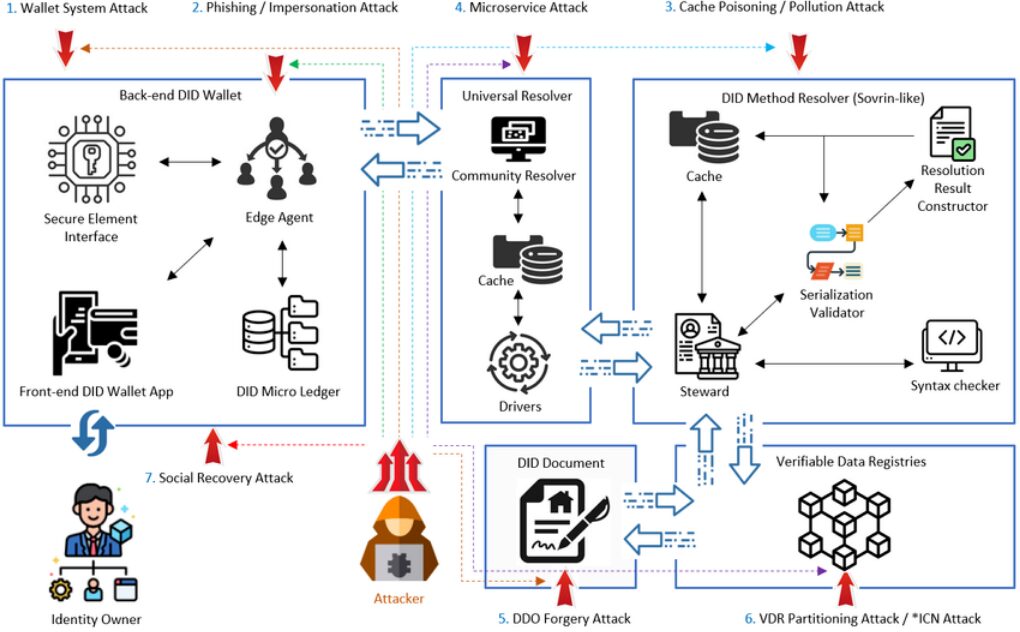
Cybersecurity experts have long warned that browser-based wallets inherently carry higher systemic risk than mobile-only applications.
Key reasons include:
- Expanded permissions
Browser extensions interact deeply with webpages, scripts, and third-party content. - Supply chain vulnerabilities
Even legitimate updates can be compromised before distribution. - Shared execution environment
Extensions run alongside other plugins, ads, and injected scripts.
In the Trust Wallet case, many experts believe the incident may represent a supply-chain style compromise, where malicious logic was introduced during or after the update process.
This aligns with a broader industry trend:
wallet-layer attacks are increasingly replacing protocol-level exploits.
4. Multi-Chain Exposure: A New Class of Wallet Risk
One of the most concerning aspects of this incident was its cross-chain nature.
Affected addresses reportedly included:
- Bitcoin addresses (UTXO-based)
- EVM addresses (account-based)
- Solana addresses (program-based)
This strongly suggests that the vulnerability existed above the blockchain layer, likely within:
- Key handling
- Transaction signing logic
- Or extension-level message interception
Such attacks are especially dangerous because they bypass smart contract audits entirely, rendering even well-audited blockchains vulnerable if the wallet interface itself is compromised.
5. Will Users Be Compensated?
While Trust Wallet has not yet announced a formal compensation policy, ZachXBT publicly expressed hope that:
“If the extension is confirmed as the root cause, all affected users should be made whole.”
Whether compensation occurs will likely depend on:
- Final forensic conclusions
- Legal jurisdiction
- Internal insurance or reserve policies
Historically, wallet providers have handled such cases inconsistently, making this an important precedent for the industry.
6. A Broader Pattern: 2025 Becomes the Worst Year for Crypto Theft
(“Global Crypto Theft Volume by Year”)
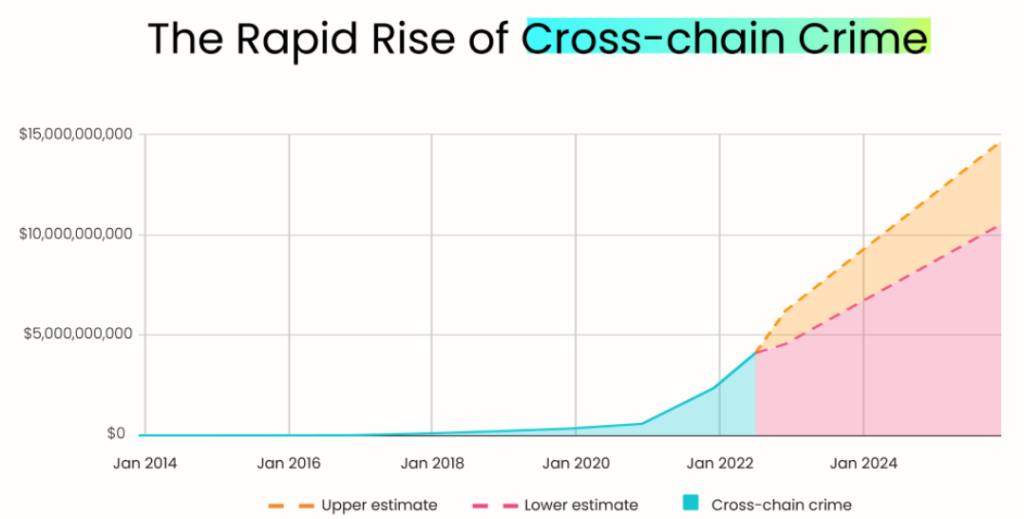
The Trust Wallet incident is not isolated. According to blockchain analytics firms such as Chainalysis, 2025 has become the worst year on record for crypto-related theft.
Key figures include:
- Over $27 billion stolen globally in 2025
- The largest single incident: $14 billion stolen from Bybit
- More than $20 billion linked to state-sponsored North Korean hacking groups
Additional major incidents this year include:
- $223 million drained from DEX Cetus
- $128 million exploited from Balancer, despite multiple audits
7. What This Means for Investors and Builders
For readers seeking new crypto assets, revenue opportunities, or practical blockchain use cases, this incident offers several hard lessons:
For Users
- Avoid browser extensions for long-term storage
- Separate hot wallets from cold storage
- Monitor wallet activity immediately after updates
For Builders and Projects
- Treat wallet UX as critical infrastructure
- Harden update pipelines and signing processes
- Assume the wallet layer is now a primary attack vector
Security is no longer just a technical feature—it is a core product differentiator.
Conclusion: Self-Custody Demands Institutional-Grade Discipline
The Trust Wallet extension breach underscores a paradox at the heart of crypto:
Self-custody grants freedom—but demands responsibility comparable to a financial institution.
As the ecosystem matures, users and developers alike must recognize that:
- Wallet software is now a systemically critical component
- Browser convenience often comes at hidden cost
- The next wave of innovation must prioritize secure-by-design architecture
For those building or investing in the future of blockchain finance, security literacy is no longer optional—it is foundational.
