
Main Points :
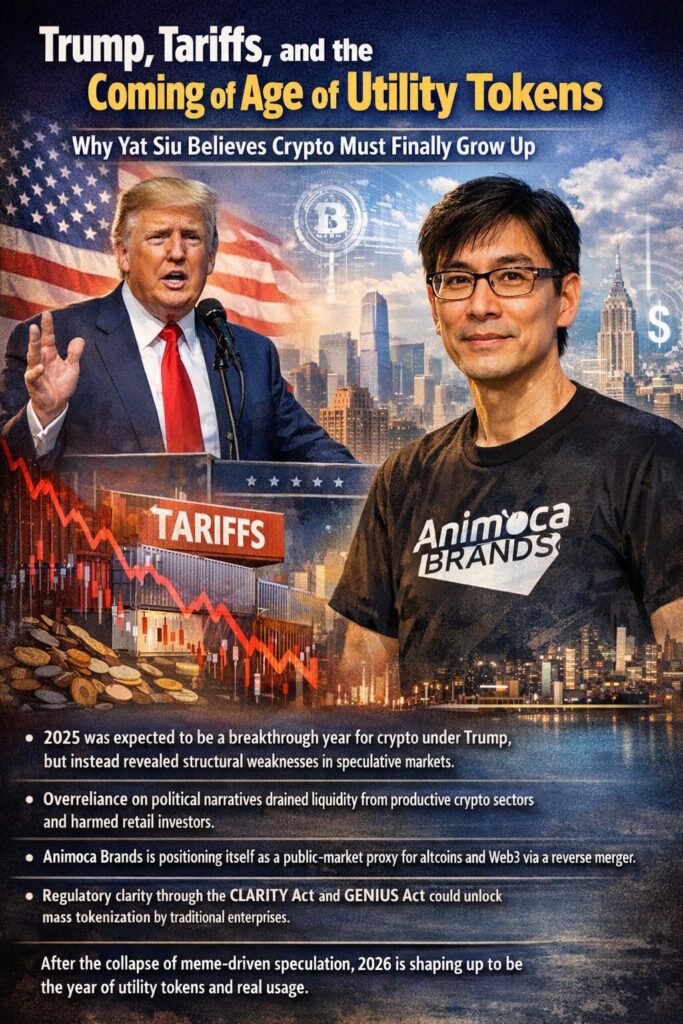
- 2025 was expected to be a breakthrough year for crypto under Trump, but instead revealed structural weaknesses in speculative markets.
- Overreliance on political narratives drained liquidity from productive crypto sectors and harmed retail investors.
- Animoca Brands is positioning itself as a public-market proxy for altcoins and Web3 via a reverse merger.
- Regulatory clarity through the CLARITY Act and GENIUS Act could unlock mass tokenization by traditional enterprises.
- After the collapse of meme-driven speculation, 2026 is shaping up to be the year of utility tokens and real usage.
Introduction: Why 2025 Became “The Year of Mispriced Hope”
For Yat Siu, co-founder of Animoca Brands, 2025 will not be remembered as the year crypto was “saved” by politics. Instead, it will be remembered as the year the industry collectively mispriced reality.
Market participants entered 2025 believing that Donald Trump would act as a bullish catalyst for digital assets. Tariff rollbacks, interest rate cuts, and pro-crypto rhetoric were aggressively priced in. Yet by year-end, Bitcoin was facing its fourth annual decline in history, while altcoin liquidity evaporated.
Siu argues that the mistake was not Trump himself—but the industry’s tendency to anchor its future to external political saviors rather than internal fundamentals.
Bitcoin’s Reality Check in 2025
[Bitcoin price performance in 2025]
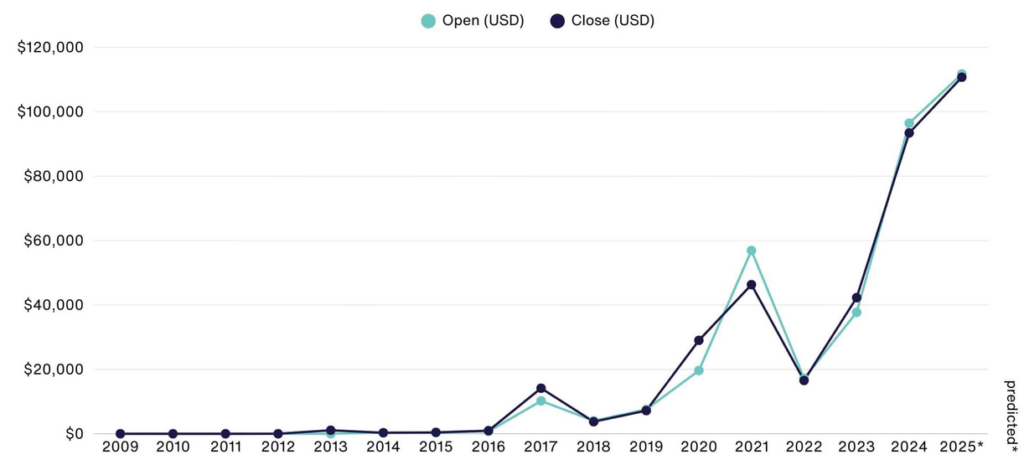
“If I had to grade crypto’s performance,” Siu says, “it would be a B-minus or C-plus.”
While traders assumed crypto would become a top policy priority, Trump’s actual agenda focused on tariffs, trade conflicts, and confrontations with the Federal Reserve. These macro shocks hit risk assets broadly, and crypto was no exception.
As Siu puts it bluntly: when a president launches a tariff war, Bitcoin’s price is not even on the radar.
This misalignment exposed a deeper issue: crypto markets still behave as if narrative momentum alone can override macroeconomic gravity.
The Failure of the “Trump Trade” in Crypto
The so-called “Trump Trade” that energized parts of crypto in late 2024 failed to materialize in 2025. Meme coins absorbed enormous speculative liquidity, diverting capital away from builders and infrastructure.
This dynamic disproportionately harmed retail participants. Short-term narratives replaced sustainable value creation, leaving many investors exposed when sentiment reversed.
According to Siu, the industry must accept that political tailwinds are unreliable—and that long-term credibility comes from compliance, revenue, and real users.
Animoca’s IPO Strategy: A Public Proxy for Altcoins
If 2025 was the year of disappointment, 2026 could be the year of repositioning.
Animoca Brands plans to go public through a reverse merger with a Nasdaq-listed fintech firm. While formally structured as an acquisition, Animoca will retain approximately 95% ownership of the combined entity.
The strategic goal is clear: to become what MicroStrategy is to Bitcoin—but for the broader Web3 and altcoin ecosystem.
Unlike buying base-layer tokens such as Ethereum or Solana, equity exposure to Animoca would offer diversified access to hundreds of Web3 projects.
[Animoca Brands investment ecosystem]
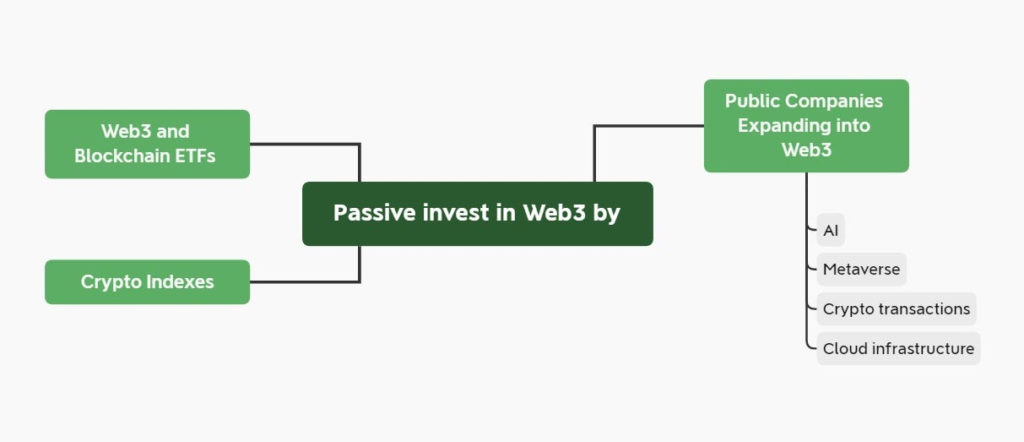
Animoca holds stakes in over 620 portfolio companies and invested in approximately 100 new projects in the past year alone. In fiscal 2024, it recorded approximately $314 million in unaudited bookings and achieved EBITDA profitability for the fourth consecutive year.
“Tokenize or Die”: Regulation as a Catalyst, Not a Constraint
Siu views upcoming U.S. legislation—the CLARITY Act and the GENIUS Act—not as existential threats, but as accelerants.
Once token issuance, classification, and market structure rules are defined, traditional enterprises will finally enter crypto at scale. Unlike native crypto startups accustomed to regulatory ambiguity, established firms require legal certainty.
The stablecoin market offers a preview. The moment regulatory frameworks stabilized, banks, fintechs, and payment firms rushed in.
The same pattern is expected once token classification becomes clear.
Tokenization, RWAs, and the Next Trillion-Dollar Market
Tokenized real-world assets (RWAs) and tokenized securities are projected to reach trillions of dollars in value by 2030.
Animoca has already begun collaborating with large traditional asset managers, including partnerships in Asia, to bridge conventional capital with on-chain ownership.
Here, tokenization becomes infrastructure—not speculation.
The Collapse of Meme Coin Liquidity
[Meme coin price collapses in 2025]
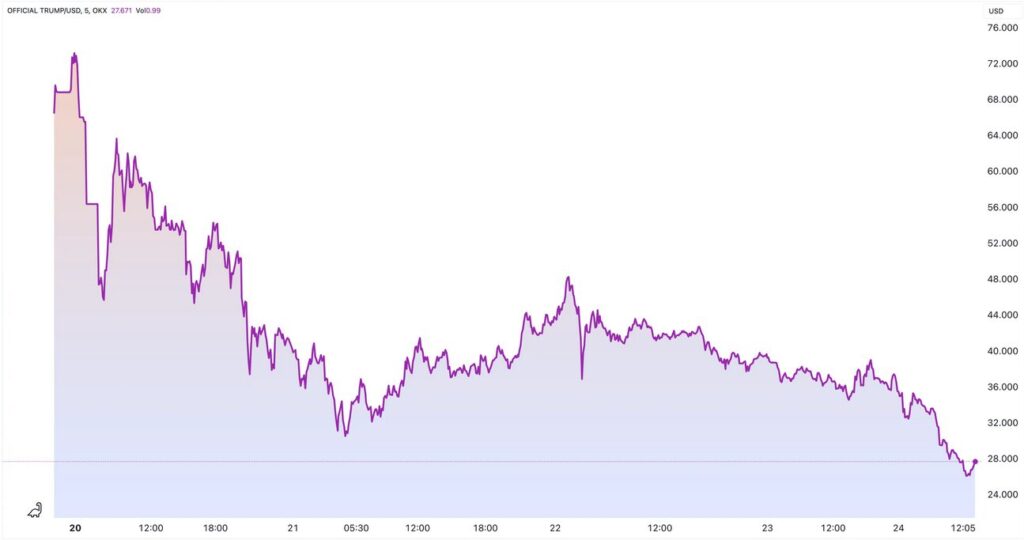
The meme coin frenzy peaked with tokens branded after Trump and Melania. Official Trump (TRUMP) fell over 75% from its highs, while MELANIA dropped nearly 90%.
Siu describes this as a “vampiric attack” on retail liquidity—draining capital, burning hundreds of thousands of wallets, and crowding out more productive innovation.
2026: The Year of Utility Tokens
As speculative capital recedes, attention is shifting toward products that solve real problems for gamers, creators, brands, and everyday users.
The next wave of adoption will not come from people who know they are using crypto—but from those who do not care.
Utility tokens, issued under clear regulatory frameworks, will finally have credible narratives, sustainable demand, and defensible use cases.
Siu’s conclusion is blunt but necessary:
Crypto companies must stop behaving like rebellious teenagers and start operating like real businesses.
Conclusion: Growing Up Is No Longer Optional
Crypto’s future will not be decided by elections or memes. It will be shaped by governance, compliance, and products that matter.
The industry now faces a defining choice: mature—or be left behind.
