
Key Points :
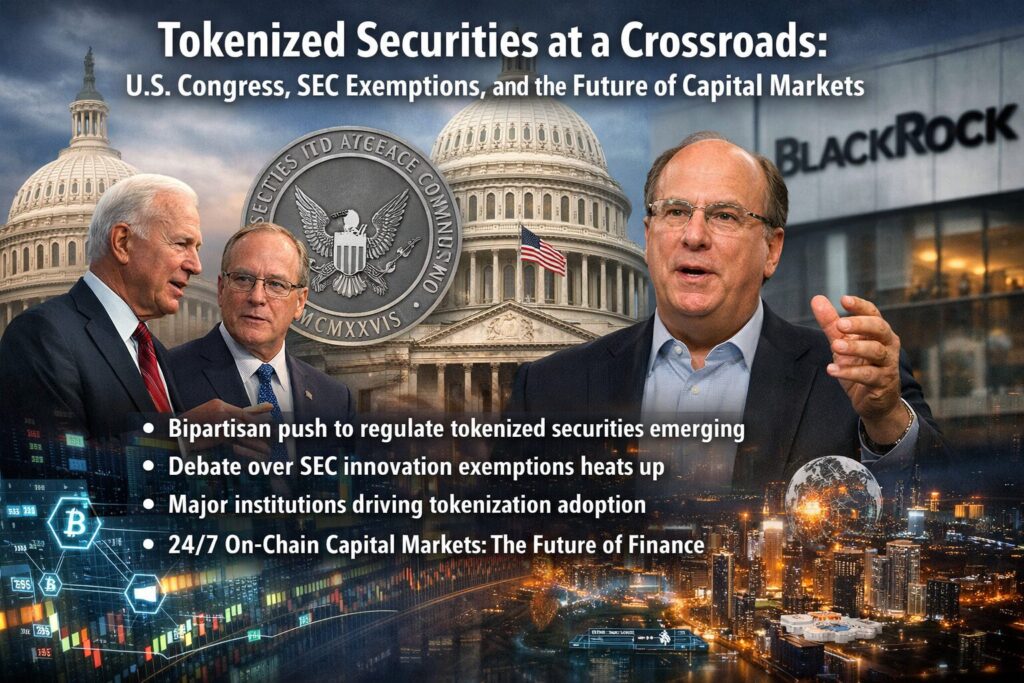
- Bipartisan agreement is emerging to regulate tokenized securities under frameworks similar to traditional finance
- The proposed SEC innovation exemption is the central point of contention
- Major institutions like Larry Fink and BlackRock are accelerating tokenization adoption
- Regulatory clarity is becoming a decisive factor in whether innovation stays in the U.S. or moves offshore
- The debate reflects a deeper transformation: moving capital markets toward 24/7, on-chain infrastructure
1. The Beginning of a Structural Shift in Capital Markets
The United States has entered a critical phase in the evolution of financial markets. A recent hearing held by the U.S. House Financial Services Committee—titled “Tokenization and the Future of Securities: Modernizing Capital Markets”—marks a turning point where theoretical discussions are becoming policy-level action.
At the heart of this transition lies security tokenization, the process of representing traditional financial assets—such as equities, bonds, and funds—on blockchain networks. This is not merely a technological upgrade; it is a fundamental redesign of financial infrastructure.
Chairman French Hill described the moment as standing “at the gateway of a major transformation of the financial system.” His statement reflects a growing consensus: tokenization is no longer experimental—it is inevitable.
Simultaneously, U.S. Securities and Exchange Commission Chairman Paul Atkins signaled that the agency is preparing to evaluate an innovation exemption framework—a regulatory mechanism that could temporarily relax compliance requirements for tokenized securities projects.
2. Institutional Momentum: From Theory to Deployment
The policy debate is not happening in isolation. It is being driven by rapid institutional adoption.
Larry Fink, CEO of BlackRock, recently stated that tokenization could “revolutionize the plumbing of finance.” This statement is not rhetorical—BlackRock and its peers are actively building tokenized financial products.
Key developments include:
- Franklin Templeton partnering with Ondo Finance to expand tokenized funds
- Invesco managing a tokenized U.S. Treasury fund (USTB) valued at approximately $900 million
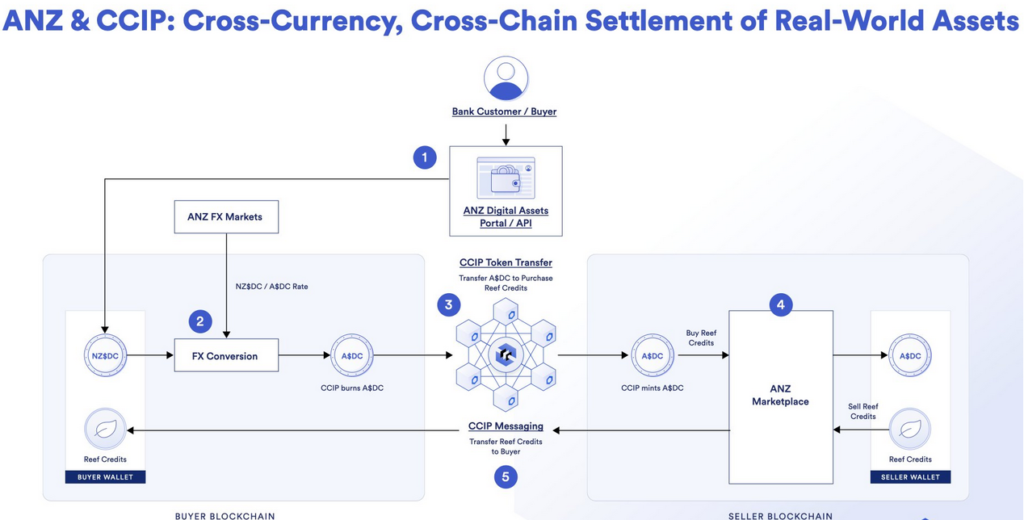
- Expansion of blockchain-based settlement mechanisms across asset classes
These initiatives reflect a broader trend: tokenization is transitioning from pilot projects to scalable financial infrastructure.
Even market infrastructure providers are adapting. The Depository Trust & Clearing Corporation has already received regulatory approval to test tokenization of certain high-liquidity assets on pre-approved blockchain systems.
Meanwhile, Nasdaq is exploring rule changes to enable tokenized equity trading—suggesting that public markets themselves may soon operate on hybrid or fully blockchain-based systems.
3. The Core Debate: SEC Innovation Exemptions
Despite growing momentum, the central issue remains unresolved: how far should regulators go in granting exemptions?
The proposed SEC innovation exemption aims to allow tokenization projects to operate under modified regulatory requirements. However, this proposal has triggered sharp divisions.
Arguments for Exemptions
Industry advocates, including the Blockchain Association, argue that:
- Without regulatory clarity, innovation will migrate overseas
- Startups cannot comply with legacy frameworks designed for analog systems
- Temporary exemptions are necessary to test new market structures
Arguments Against Broad Exemptions
On the other side, traditional finance representatives such as the Securities Industry and Financial Markets Association insist that:
- New entrants must follow the same rules as existing institutions
- Investor protections—such as order execution standards and disclosure requirements—must not be weakened
The SEC Investor Advisory Committee has also warned that blanket exemptions could undermine core safeguards, including:
- Ownership transparency
- Broker-dealer oversight
- Market integrity protections
4. Political Friction and Governance Concerns
The debate is not purely technical—it is deeply political.
Maxine Waters raised concerns about conflicts of interest, pointing to allegations that political figures—including those associated with Donald Trump—have generated significant profits (estimated around $1 billion) from crypto-related ventures.
Her argument highlights a fundamental governance question:
If policymakers stand to benefit financially from the markets they regulate, can regulatory neutrality be maintained?
This issue adds a layer of complexity to the tokenization debate, potentially influencing both the speed and direction of legislation.
5. The Vision: 24/7 Markets and On-Chain Settlement
Beyond regulation, the ultimate promise of tokenization lies in redefining how markets operate.
The New York Stock Exchange is reportedly developing:
- Tokenized securities trading platforms
- On-chain settlement systems
- Potential 24/7 trading environments
This represents a radical departure from current market structures, which rely on:
- Limited trading hours
- Multi-day settlement cycles (T+2)
- Fragmented global liquidity
Tokenization could enable:
- Instant settlement (T+0)
- Continuous global trading
- Fractional ownership at scale
For investors, this means increased accessibility. For institutions, it means reduced operational costs and counterparty risk.
6. Strategic Implications for Crypto and Blockchain Investors
For readers seeking new crypto assets, revenue streams, and practical blockchain applications, the tokenization wave presents multiple opportunities:
1. Infrastructure Plays
Projects building:
- Tokenization platforms
- Compliance layers
- On-chain settlement systems
2. Real-World Asset (RWA) Protocols
Protocols enabling:
- Tokenized treasuries
- Real estate tokenization
- Private credit markets
These are increasingly attracting institutional capital.
3. Hybrid Finance Models
The convergence of DeFi and traditional finance is creating:
- Permissioned DeFi environments
- Regulated liquidity pools
- Institutional-grade blockchain networks
This aligns closely with the emerging concept of “Asset-Backed Representation” vs. “Autonomous Trust Tender”, where tokenization bridges traditional financial assets and decentralized value systems.
7. The Global Race: Why Regulation Speed Matters
The U.S. is not alone in pursuing tokenization.
- Europe is advancing under MiCA-like frameworks
- Singapore and Hong Kong are aggressively piloting tokenized markets
- Middle Eastern financial hubs are experimenting with blockchain-native exchanges
The key risk for the U.S. is regulatory delay.
As highlighted during the hearing:
Innovation is mobile. If regulatory clarity is not provided, capital and talent will relocate.
This is not hypothetical—it has already happened in sectors such as crypto exchanges and derivatives trading.
Conclusion: Tokenization as the Next Financial Primitive
The U.S. congressional debate on tokenized securities is not simply about regulation—it is about defining the architecture of future finance.
Three conclusions stand out:
- Tokenization is inevitable
Institutional adoption has already reached a point of no return. - Regulation will determine geography
The location of innovation—whether in the U.S. or abroad—depends on regulatory clarity and flexibility. - Hybrid finance is emerging as the dominant model
The convergence of traditional finance and blockchain systems will define the next decade.
For forward-looking investors and builders, the message is clear:
The opportunity is not just in cryptocurrencies—but in the infrastructure that transforms how all assets are created, traded, and settled.
