
Key Takeaways :
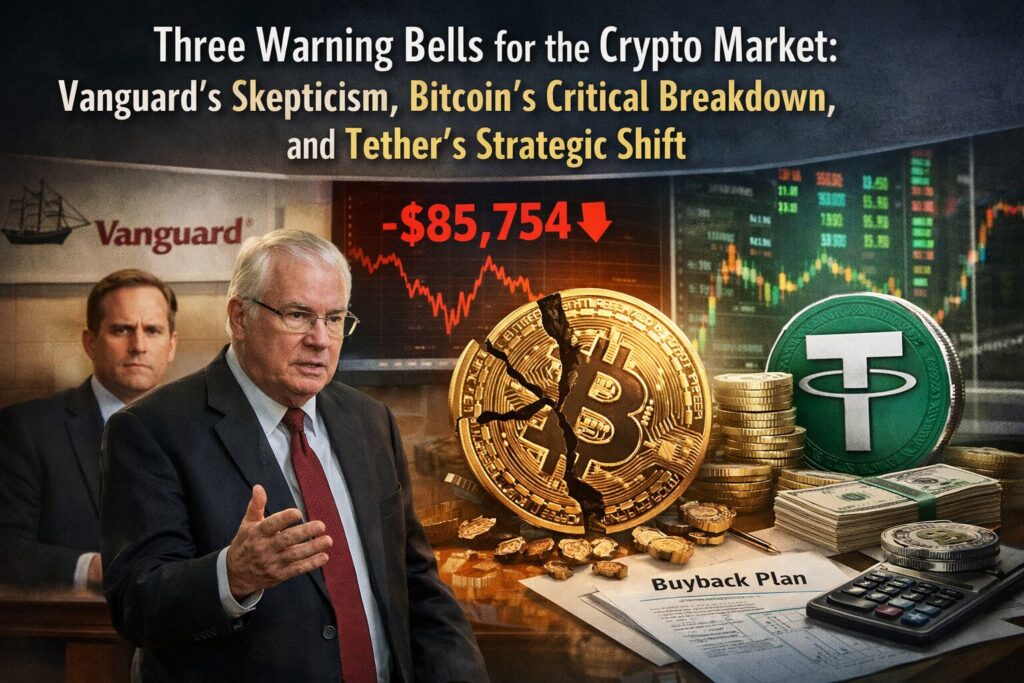
- Vanguard’s senior executives continue to reject Bitcoin as an investable asset, labeling it a “speculative collectible” and maintaining a highly cautious stance toward crypto ETFs.
- Bitcoin’s fall below the critical $86,000 level signals deepening market weakness and highlights the crypto market’s sensitivity to macroeconomic headwinds.
- Tether’s consideration of tokenizing its own equity and executing buybacks after raising up to $20 billion reflects a significant evolution in how major crypto-native firms approach corporate finance and liquidity management.
Introduction: A Market Facing Structural Questions
The cryptocurrency market in late 2025 is not merely experiencing volatility; it is confronting fundamental questions about legitimacy, valuation, and long-term structure. Three recent developments—Vanguard’s harsh assessment of Bitcoin, Bitcoin’s technical breakdown below a key price threshold, and Tether’s exploration of equity tokenization and buybacks—together form a set of warning signals that investors, builders, and policymakers cannot ignore.
These events are not isolated. Instead, they reflect deeper tensions between traditional finance and digital assets, between speculative momentum and sustainable value creation, and between decentralized ideals and corporate-scale financial engineering. For readers seeking new crypto assets, alternative revenue sources, or practical blockchain applications, understanding these signals is essential for navigating the next phase of the market.
1. Vanguard’s Verdict: Bitcoin as a “Speculative Collectible”
A Conservative Giant Draws a Line
Vanguard, one of the world’s largest asset managers with trillions of dollars under management, has once again made its position clear: Bitcoin is not viewed as a legitimate investment asset within its framework. Senior executives have described Bitcoin as a “speculative collectible,” placing it conceptually closer to rare art or memorabilia than to equities, bonds, or even commodities like gold.
This stance stands in stark contrast to competitors such as BlackRock and Fidelity, which have embraced Bitcoin ETFs and actively promote digital assets as portfolio diversifiers. Vanguard’s resistance underscores a fundamental divide within traditional finance regarding how—or whether—crypto fits into long-term investment strategies.
Why Vanguard Remains Skeptical
At the core of Vanguard’s skepticism is its investment philosophy. Vanguard emphasizes intrinsic value, predictable cash flows, and long-term risk-adjusted returns. Bitcoin, which does not generate income, dividends, or yield by default, challenges these principles.
Moreover, Bitcoin’s historical volatility remains a critical concern. While proponents argue that volatility diminishes as adoption grows, Vanguard executives see insufficient evidence that Bitcoin has matured into a stable store of value. From their perspective, labeling Bitcoin as “digital gold” remains more narrative than empirically proven fact.
Implications for Crypto ETFs and Market Perception
Vanguard’s refusal to allow trading of crypto-related ETFs on its platform sends a powerful signal. It reinforces skepticism among conservative investors and institutions that look to Vanguard as a benchmark for prudence.
At the same time, this position ironically highlights how fragmented institutional acceptance of crypto still is. While regulatory barriers have fallen in several jurisdictions, philosophical resistance within legacy finance remains a major hurdle. For crypto to achieve universal acceptance, it must address not only compliance and custody, but also the deeper question of value justification.
2. Bitcoin Breaks Below $86,000: A Technical and Psychological Shock
The Significance of the $86,000 Level
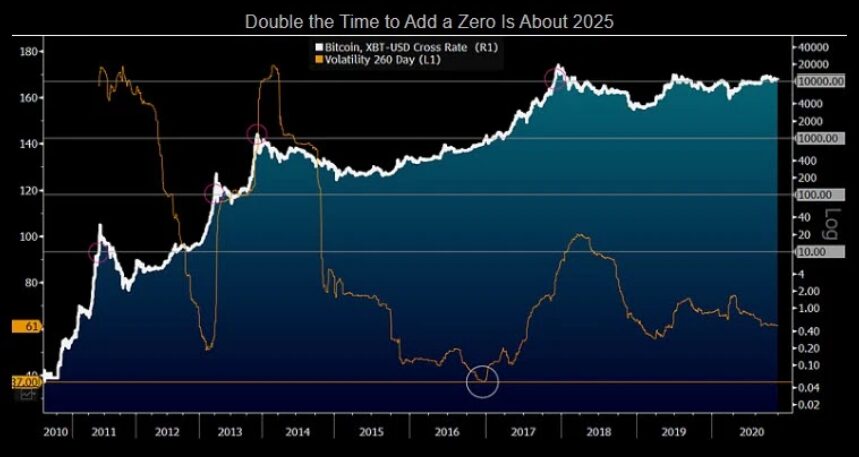
Bitcoin’s drop below $86,000 marks more than a routine correction. This level had served as both a psychological anchor and a technical support zone for months. Its breach indicates a decisive shift in market sentiment from cautious optimism to outright defensiveness.
Technical analysts widely view such breakdowns as confirmation of trend weakness. Once a major support level fails, it often becomes resistance, making recovery more difficult without a strong catalyst.
Macroeconomic Pressure and the Absence of Catalysts
The broader macroeconomic environment has played a critical role in Bitcoin’s decline. Persistent high interest rates, reduced global liquidity, and cautious central bank policies have dampened risk appetite across all speculative asset classes.
Unlike previous cycles, the crypto market currently lacks a clear, compelling narrative to drive fresh capital inflows. Spot ETF approvals have already been priced in, institutional adoption has slowed, and retail participation remains subdued. In this context, Bitcoin’s inability to hold $86,000 reflects structural weakness rather than temporary fear.
What This Means for Investors and Builders
For investors, the breakdown serves as a reminder that Bitcoin is not decoupled from global financial conditions. For builders and entrepreneurs, it emphasizes the importance of focusing on utility-driven blockchain applications rather than price-driven speculation.
Recovery will likely require a combination of macro relief, regulatory clarity, and genuine innovation that demonstrates blockchain’s value beyond trading.
3. Tether’s Strategic Pivot: Tokenization and Buybacks After $20 Billion
From Stablecoin Issuer to Financial Innovator
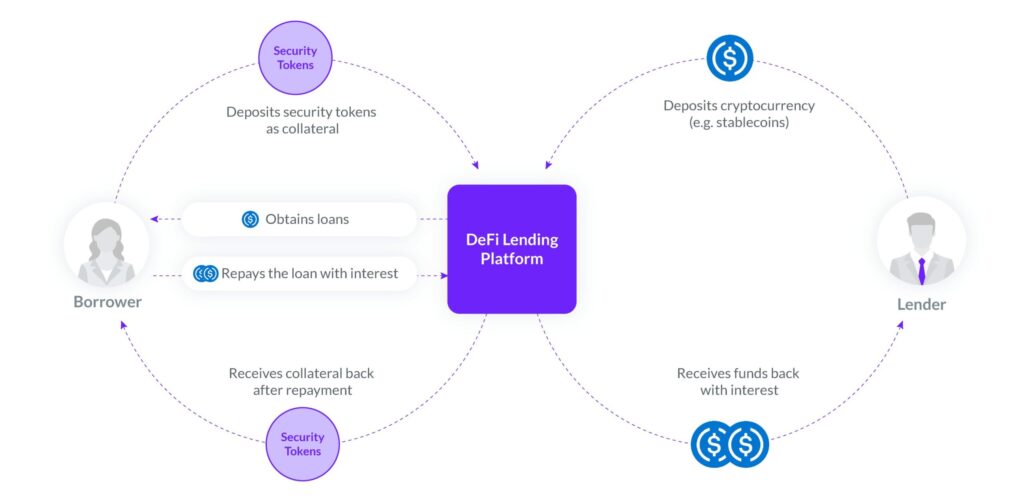
Tether, the issuer of the world’s largest stablecoin, USDT, is reportedly considering tokenizing its own equity and executing share buybacks after raising up to $20 billion. This move represents a notable shift from a pure infrastructure provider to a sophisticated financial actor blending traditional corporate finance with blockchain-native mechanisms.
Why Tokenize Equity?
Equity tokenization offers several advantages: improved liquidity, fractional ownership, faster settlement, and global accessibility. By placing equity on-chain, Tether could create a new model for corporate ownership that aligns with the transparency and programmability of blockchain technology.
If executed successfully, this would mark one of the most prominent examples of a major crypto-native company applying blockchain not just to products, but to its own capital structure.
Buybacks and Liquidity Management
The consideration of share buybacks also signals maturity. Buybacks are a traditional tool used to support share value, optimize capital structure, and signal confidence in long-term prospects. For a crypto company, adopting such mechanisms suggests convergence with established financial norms.
This strategy may also serve to address ongoing concerns about Tether’s reserves and governance by demonstrating disciplined financial management.
Conclusion: A Market at a Crossroads
Together, these three developments form a coherent narrative: the crypto market is transitioning from explosive growth to structural consolidation. Vanguard’s skepticism highlights unresolved questions about value and legitimacy. Bitcoin’s price breakdown underscores vulnerability to macro forces. Tether’s strategic shift illustrates how leading crypto firms are adapting by borrowing tools from traditional finance.
For investors and practitioners, the message is clear. The next phase of crypto will not be defined solely by price appreciation, but by integration, discipline, and real-world utility. Those who understand and adapt to these signals will be best positioned to identify sustainable opportunities in an increasingly complex digital asset landscape.
