
Main Points :
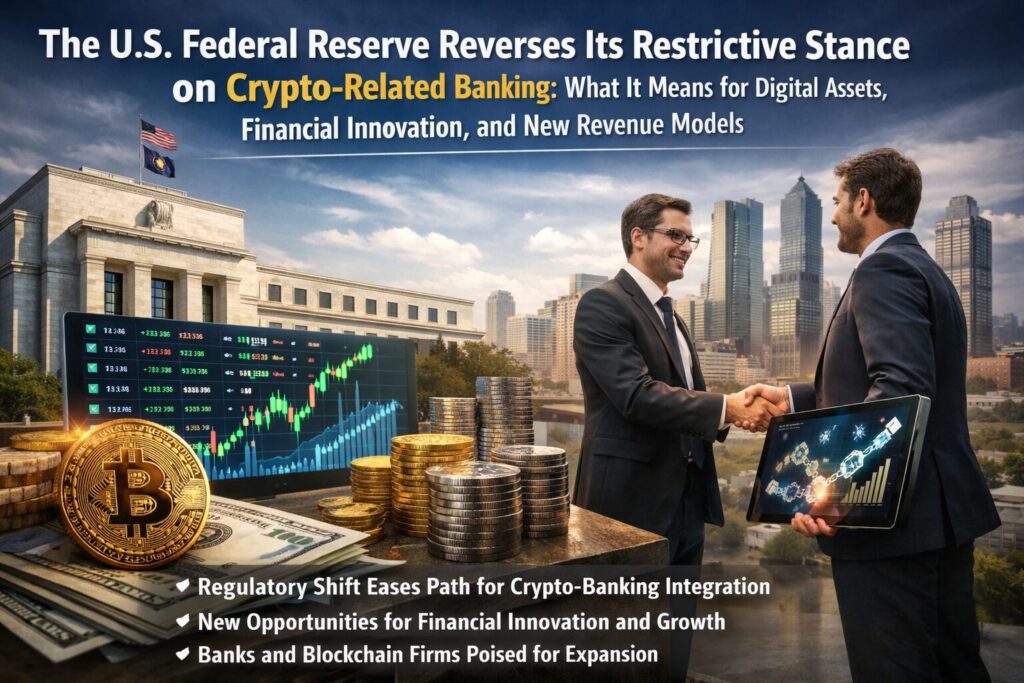
- The U.S. Federal Reserve has formally withdrawn its 2023 restrictive supervisory guidance on crypto-related banking activities.
- Crypto and token-related activities are no longer subject to a special, exceptional supervisory framework but instead fall under standard bank supervision.
- This shift lowers regulatory friction for banks seeking to engage in responsibly managed digital asset activities.
- While barriers are reduced, approval remains discretionary, and institutions must still demonstrate strong risk management, AML compliance, and operational resilience.
- The decision signals a broader recalibration of U.S. regulatory attitudes toward crypto-bank integration and may open new revenue opportunities for both banks and blockchain-native firms.
1. Introduction: A Quiet but Pivotal Policy Reversal
On December 17, the U.S. Federal Reserve Board announced the withdrawal of its 2023 policy statement that had imposed restrictive supervisory expectations on banks engaging in crypto-related activities. In its place, the Fed released a new policy statement emphasizing responsible innovation within the banking sector.
Although this announcement did not arrive with market-moving headlines or emergency press conferences, its implications are far-reaching. For banks, fintech firms, blockchain developers, and investors seeking new digital-asset-based revenue streams, this reversal represents a meaningful shift in the regulatory environment of the world’s most influential central bank.
The 2023 guidance effectively placed crypto banking into a “special risk” category, subjecting banks to additional approval procedures, heightened scrutiny, and de facto barriers to entry. The withdrawal of that guidance signals a return to regulatory normalization—crypto activities are no longer treated as inherently exceptional, but as another category of financial innovation to be evaluated under standard supervisory principles.
2. What the 2023 Guidance Did—and Why It Mattered
The 2023 policy statement applied to state member banks under Federal Reserve supervision. While not an outright ban, it imposed three major constraints:
- Special Supervisory Programs
Banks engaging in crypto-asset activities were subject to newly created supervisory programs, distinct from ordinary banking oversight. - “Non-Objection” Procedures
Certain activities—such as dollar-token issuance or crypto custody—required banks to obtain explicit supervisory non-objection before proceeding. - Elevated Risk Framing
Crypto activities were officially framed as high-risk due to volatility, money laundering concerns, operational vulnerabilities, and reputational exposure.
In practice, this framework had a chilling effect. Banks faced higher compliance costs, longer approval timelines, and greater uncertainty, discouraging participation even in relatively conservative crypto use cases such as custody, settlement, or tokenized deposits.
These rules also played a critical role in the Federal Reserve’s refusal to grant master accounts to certain crypto-focused institutions, including so-called “custodia banks” designed to hold digital assets without engaging in traditional lending.
3. Why the Fed Changed Course
According to the Federal Reserve, its understanding of both the financial system and innovative financial products has evolved since 2023. The Board concluded that the earlier policy statement was no longer appropriate.
Vice Chair for Supervision Michelle Bowman summarized the new approach:
“New technologies can bring efficiencies to banks and provide customers with improved products and services. By creating pathways for responsible innovation, the Board ensures that the banking sector remains safe and sound while also modern, efficient, and effective.”
In other words, the Fed now recognizes that blanket exceptionalism toward crypto activities may be counterproductive. Innovation, when responsibly managed, can coexist with safety and soundness.
This evolution reflects broader trends:
- Improved institutional understanding of blockchain technology
- More mature compliance tooling (on-chain analytics, transaction monitoring)
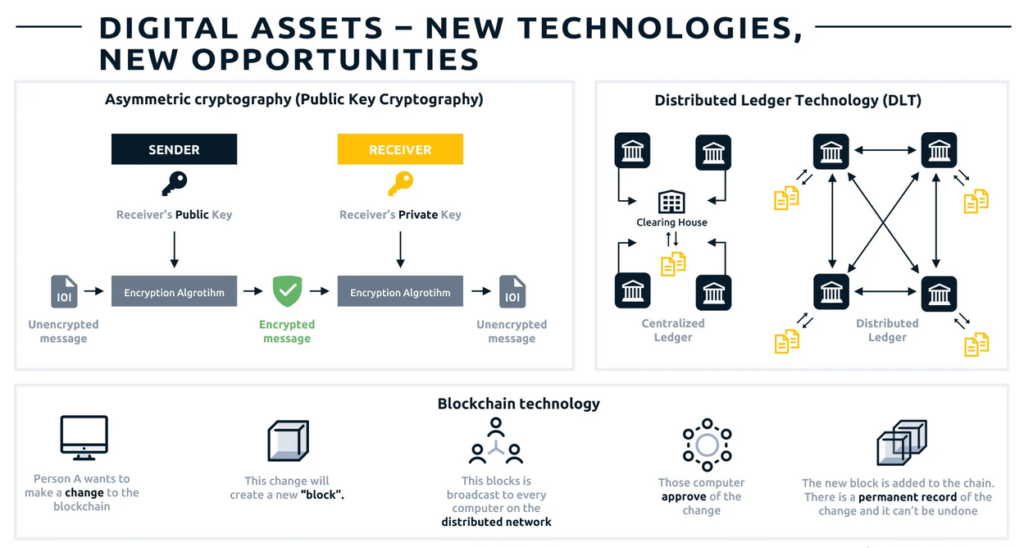
- The growing role of tokenized dollars and blockchain settlement in global finance
4. What the New Policy Statement Changes in Practice
The most important practical change is normalization.
Crypto-asset activities are no longer governed by:
- Special advance-notice regimes
- Mandatory non-objection procedures
- Dedicated crypto-specific supervisory programs
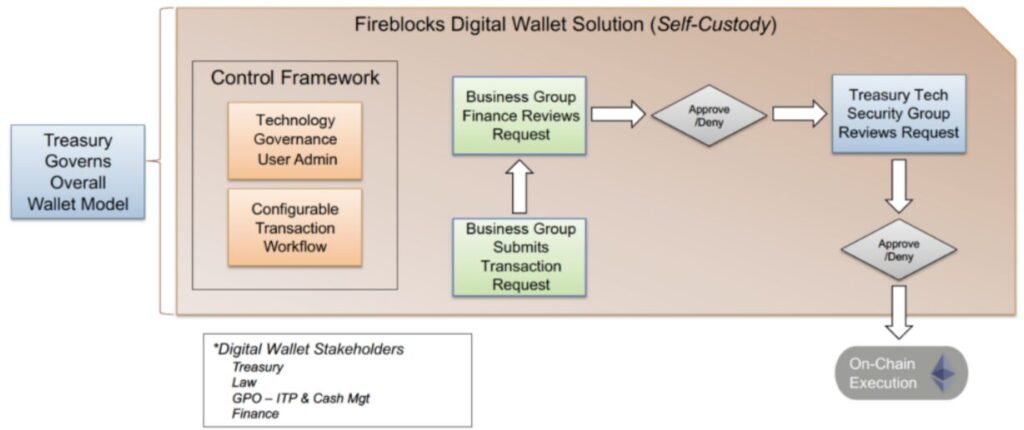
Instead, banks—whether insured or uninsured state member banks—can pursue certain digital-asset activities under standard supervisory processes, just like any other innovative banking product.
This does not mean “anything goes.” It means:
- Crypto is evaluated like other complex financial activities
- Risk is assessed institution-by-institution
- Approval likelihood improves for well-managed, conservative models
For responsibly structured institutions, the regulatory bar is lower, clearer, and more predictable.
5. Master Accounts, Custodia, and the Limits of the Reversal
One critical nuance: the Fed retains broad discretion.
Even after the withdrawal, the Federal Reserve and regional Reserve Banks can still deny applications based on risk assessments. In fact, a 2025 court decision reaffirmed the Fed’s authority to deny master account access, including in the Custodia case.
The reversal does not:
- Guarantee master accounts for crypto-focused banks
- Eliminate reputational or systemic risk considerations entirely
- Protect high-risk or poorly governed business models
Applicants must still demonstrate:
- Robust AML/CFT compliance
- Operational resilience and cybersecurity
- Liquidity stability
- Clear governance and internal controls
The key difference is that crypto activities are no longer automatically treated as exceptional or suspect.
6. Market and Industry Implications
For Banks
- Lower compliance friction for crypto custody, settlement, and tokenized deposits
- Renewed incentives to explore blockchain-based efficiencies
- Potential new fee-based revenue streams in custody and payments
For Crypto and Fintech Firms
- Easier access to regulated banking partners
- Reduced reliance on offshore or lightly regulated intermediaries
- Stronger pathways to institutional adoption
For Investors and Builders
- Increased legitimacy of U.S.-based crypto-bank integrations
- More predictable regulatory environment for long-term planning
- New opportunities in infrastructure, compliance tooling, and tokenized finance
7. Strategic Perspective: From Suppression to Integration
This policy reversal reflects a broader philosophical shift. Rather than attempting to isolate crypto from the banking system, regulators are gradually moving toward controlled integration.
From a strategic standpoint, this aligns with a global trend:
- Tokenized deposits in Europe
- Stablecoin settlement pilots in Asia
- Blockchain-based treasury operations by major corporates
The U.S. Federal Reserve’s updated posture suggests that digital assets are no longer viewed solely as a threat, but as a technology layer that—if properly governed—can enhance financial infrastructure.
8. Conclusion: A Door Reopened, Not a Free Pass
The Federal Reserve’s withdrawal of its 2023 restrictive guidance marks a meaningful recalibration in U.S. crypto-banking policy. By returning digital-asset activities to standard supervisory frameworks, the Fed has lowered regulatory barriers and improved approval prospects for responsibly managed institutions.
However, this is not deregulation. It is selective normalization. Risk management, compliance discipline, and operational robustness remain non-negotiable.
For readers seeking new crypto assets, revenue opportunities, and practical blockchain applications, this development signals a more fertile—but still demanding—environment. The future belongs not to speculative excess, but to institutions that can bridge traditional finance and blockchain technology with discipline, transparency, and trust.
