
Main Points :
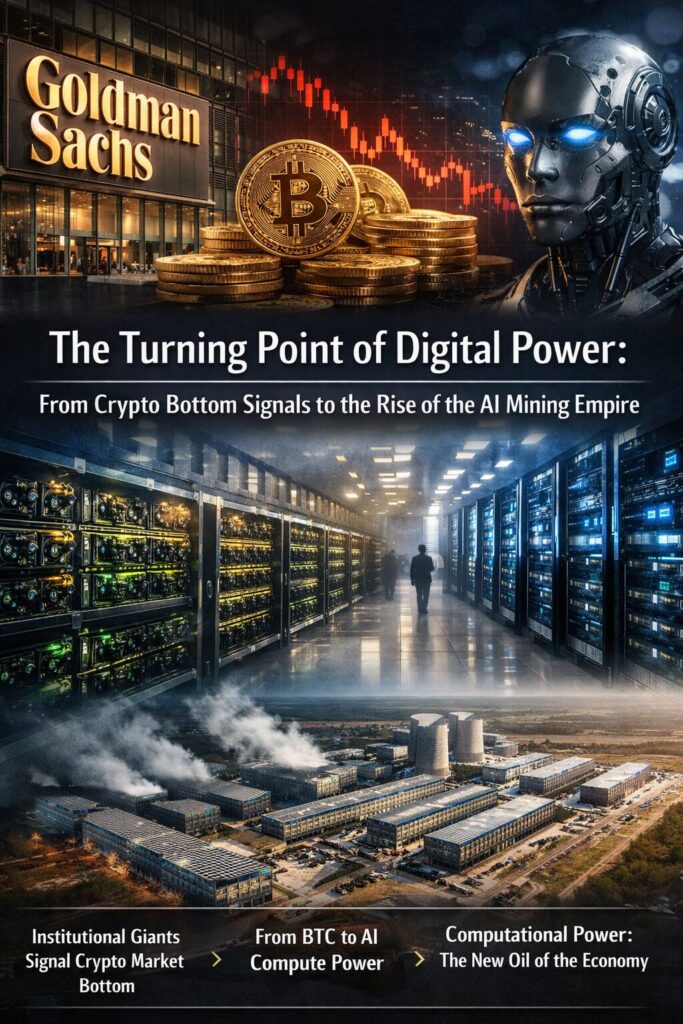
- Institutional giants like Goldman Sachs are signaling a potential crypto market bottom.
- Mining companies are transforming into AI infrastructure providers, reallocating capital from BTC to GPU-driven compute.
- Computational power is emerging as the “new oil,” reshaping global economic dominance.
- The convergence of decentralized crypto infrastructure and AI computing is creating a new economic paradigm.
- Investors must shift from price speculation to strategic positioning in compute-driven ecosystems.
1. Wall Street’s Capitulation: The Moment Crypto Became a Legitimate Asset Class
The declaration from Goldman Sachs that cryptocurrency markets may have already bottomed marks a decisive psychological and structural shift in global finance. For years, digital assets were viewed as speculative instruments, dismissed by institutional gatekeepers. Today, that skepticism is rapidly dissolving.
This shift is not based on sentiment alone. Institutional players are now relying on a combination of macroeconomic indicators, liquidity cycles, and on-chain analytics to assess market positioning. Their conclusion—that the downside risk is diminishing while upside asymmetry grows—represents a calculated re-entry into the asset class.
What makes this moment historic is not simply the bullish outlook, but the implication: crypto has crossed the threshold from fringe speculation into a recognized component of institutional portfolios. In a world increasingly destabilized by inflation, geopolitical fragmentation, and monetary uncertainty, assets with algorithmic scarcity and transparent supply mechanisms are gaining prominence.
The opening of institutional floodgates typically precedes massive liquidity inflows. Unlike retail capital, institutional capital operates at a scale that fundamentally reshapes markets. When entities of this magnitude reposition, they do not chase trends—they define them.
(Chart: Crypto Market Cycles vs Institutional Inflows)
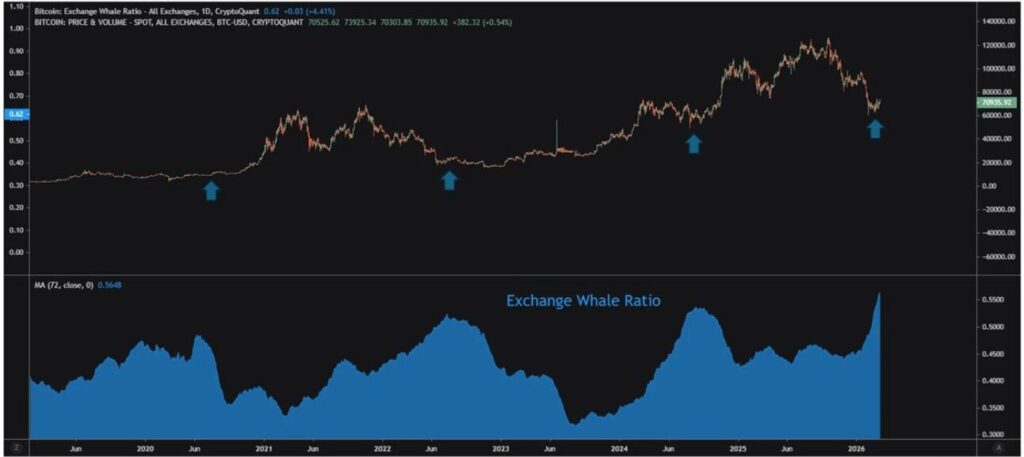
The lesson for sophisticated investors is clear: the debate over “where is the bottom?” is becoming obsolete. The real strategic question is how to build exposure before institutional flows fully materialize.
2. From Mining to Intelligence: The Reinvention of the Crypto Industry
While institutions quietly accumulate, another transformation is unfolding beneath the surface. Crypto mining companies—once solely focused on securing networks like Bitcoin—are undergoing a radical metamorphosis.
Historically, mining was about converting energy into digital scarcity. Today, it is increasingly about converting energy into intelligence.
Mining firms possess three critical assets:
- Large-scale energy infrastructure
- Advanced cooling and data center capabilities
- Expertise in managing high-performance computing workloads
These capabilities are directly transferable to artificial intelligence workloads. As demand for AI computation explodes, miners are reallocating capital away from pure crypto accumulation toward GPU infrastructure and AI data centers.
In practical terms, this means:
- Selling portions of BTC reserves to finance AI hardware
- Partnering with AI companies for compute leasing
- Repositioning themselves as hybrid “compute providers”
At first glance, miner selling pressure may appear bearish for crypto markets. However, this interpretation misses the broader context. What we are witnessing is not capital flight, but capital rotation—from a lower-margin activity (block rewards) to a higher-value industry (AI computation).
(Diagram: Mining Infrastructure Transition to AI Compute)
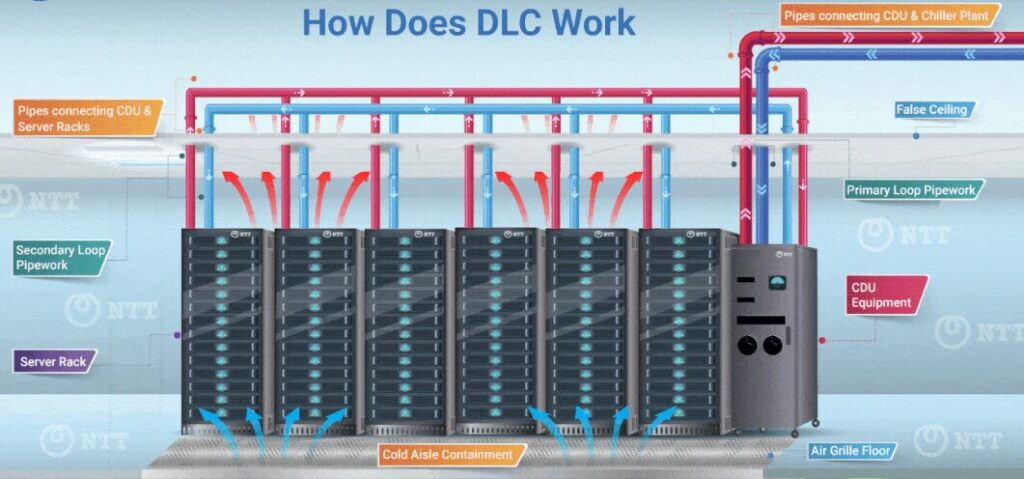
This transformation represents a profound industrial shift. The same machines that once secured decentralized ledgers are now training machine learning models, powering generative AI, and enabling the next generation of digital services.
3. Compute Power as the New Oil: A Redefinition of Global Power
In the 20th century, oil defined geopolitical dominance. In the 21st century, computational power is emerging as the new strategic resource.
The convergence of crypto mining and AI computing is accelerating this shift. Both industries rely on:
- Massive energy consumption
- Scalable hardware infrastructure
- Continuous optimization of efficiency
But AI introduces a new dimension: intelligence generation. Unlike mining, which produces predictable rewards, AI computation generates adaptive, compounding value.
This leads to a fundamental insight:
The entity that controls compute does not just generate wealth—it generates intelligence that creates future wealth.
This recursive loop creates a self-reinforcing system:
- Compute power → AI models
- AI models → economic advantage
- Economic advantage → more compute investment
This is the foundation of a new economic order.
4. The Rise of Decentralized Intelligence Infrastructure
One of the most significant implications of this transformation is the potential democratization of AI.
Traditional AI development has been dominated by centralized tech giants. However, crypto-native infrastructure introduces the possibility of decentralized compute networks—where global participants contribute and monetize computational resources.
Projects inspired by decentralized principles are beginning to explore:
- Distributed GPU marketplaces
- Tokenized compute resources
- Incentive-driven AI training networks
In such a system, computational power becomes a shared global asset rather than a monopolized resource. This aligns with the foundational ethos of blockchain: decentralization, transparency, and permissionless participation.
The fusion of crypto and AI is therefore not just technological—it is ideological. It represents a shift toward open intelligence systems, where innovation is not constrained by centralized control.
5. Strategic Implications for Investors and Builders
For investors and builders, the implications are profound.
1. Shift from Asset Accumulation to Infrastructure Ownership
Owning tokens is no longer sufficient. The next phase of value creation lies in owning or accessing computational infrastructure.
2. Focus on Hybrid Business Models
Companies that bridge crypto and AI—such as mining firms transitioning to compute providers—represent asymmetric opportunities.
3. Understand Capital Rotation Dynamics
Miner selling should not be interpreted as weakness, but as strategic reinvestment into higher-growth sectors.
4. Position for Long-Term Structural Change
Short-term volatility is noise. The real signal lies in the reconfiguration of global resource allocation.
Conclusion: The Birth of a New Economic Civilization
We are witnessing more than a market cycle—we are witnessing a civilizational shift.
The recognition of crypto by institutional giants signals the legitimization of decentralized value. Simultaneously, the transformation of mining into AI infrastructure signals the emergence of a new industrial backbone.
These two forces are converging:
- Crypto as a store of value
- AI as a generator of value
Together, they form a self-evolving ecosystem where computation becomes the ultimate currency.
The investors and builders who understand this transition will not merely participate in the next cycle—they will help define it.
The age of speculation is ending.
The age of computational sovereignty has begun.
