
Main Points :
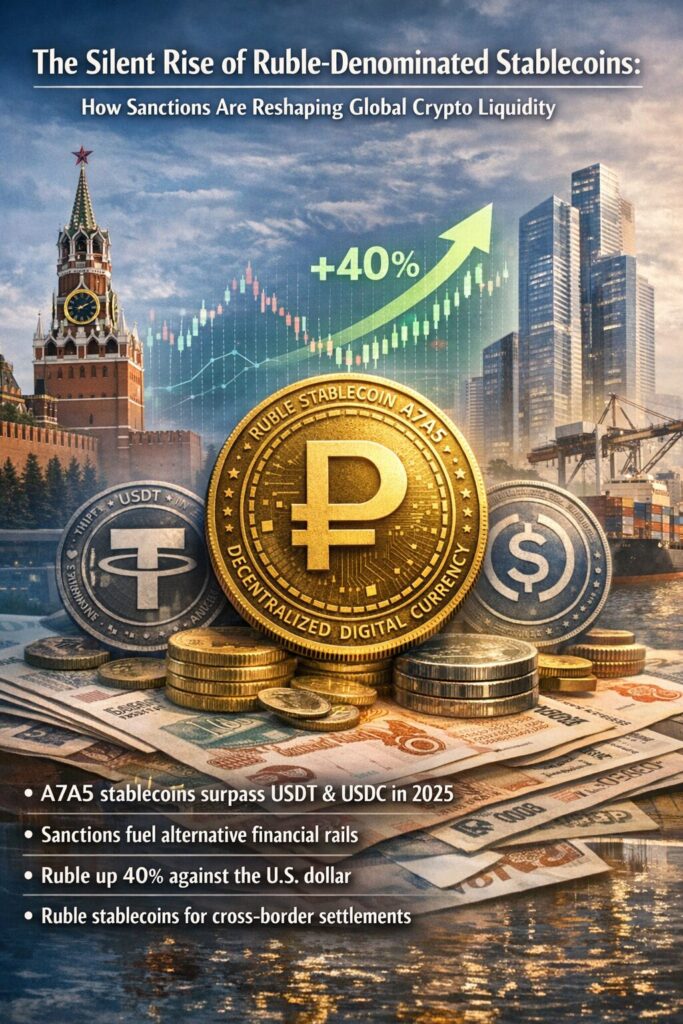
- Ruble-denominated stablecoins, particularly A7A5, recorded the largest on-chain supply growth globally in 2025, surpassing USDT and USDC.
- Sanctions on Russia have unintentionally accelerated alternative financial rails, with stablecoins filling gaps left by restricted banking channels.
- Contrary to expectations, the Russian ruble appreciated more than 40% against the U.S. dollar, reinforcing confidence in ruble-linked digital assets.
- Ruble stablecoins are emerging as cross-border settlement tools, not merely domestic payment instruments.
- This trend highlights a broader shift: stablecoins are no longer only dollar-centric instruments, but tools of geopolitical and monetary strategy.
1. Introduction: Stablecoins Beyond the Dollar Narrative
For years, the stablecoin market has been dominated by a simple narrative: the U.S. dollar is king. Tokens like USDT and USDC became the backbone of crypto liquidity, serving as the de facto settlement layer for exchanges, DeFi protocols, and cross-border transfers.
However, 2025 quietly disrupted this assumption.
While much of the crypto market focused on Bitcoin ETFs, Ethereum rollups, and meme-coin cycles, an unexpected development unfolded largely outside Western headlines: ruble-denominated stablecoins experienced explosive growth, even under one of the most restrictive sanctions regimes in modern financial history.
At the center of this shift stands A7A5, a ruble-pegged stablecoin issued by A7 LLC. Over a single year, its on-chain supply expanded by approximately $89.5 billion, exceeding the net growth of both USDT and USDC during the same period.
This article explores why this happened, what it means for global crypto liquidity, and how investors and builders should interpret this emerging signal.
2. A7A5: Anatomy of a Ruble-Backed Stablecoin
What Is A7A5?
A7A5 is a ruble-denominated stablecoin designed to track the value of the Russian ruble on a 1:1 basis. Unlike algorithmic stablecoins, A7A5 is reportedly backed by ruble-linked reserves and settlement mechanisms, though full transparency remains limited.
Its issuer, A7 LLC, has been linked by multiple investigative reports to entities and individuals affected by international sanctions. This connection has raised regulatory concerns—but paradoxically, it has also driven adoption.
Why Issuance Exploded
The growth of A7A5 is not organic in the retail sense. Instead, it reflects structural demand created by financial isolation:
- Russian corporates facing blocked SWIFT access
- Individuals restricted from international wire transfers
- Trade settlement for energy, commodities, and services
- Capital mobility for expatriates and offshore entities
In short, A7A5 functions less like a consumer stablecoin and more like a shadow settlement rail.
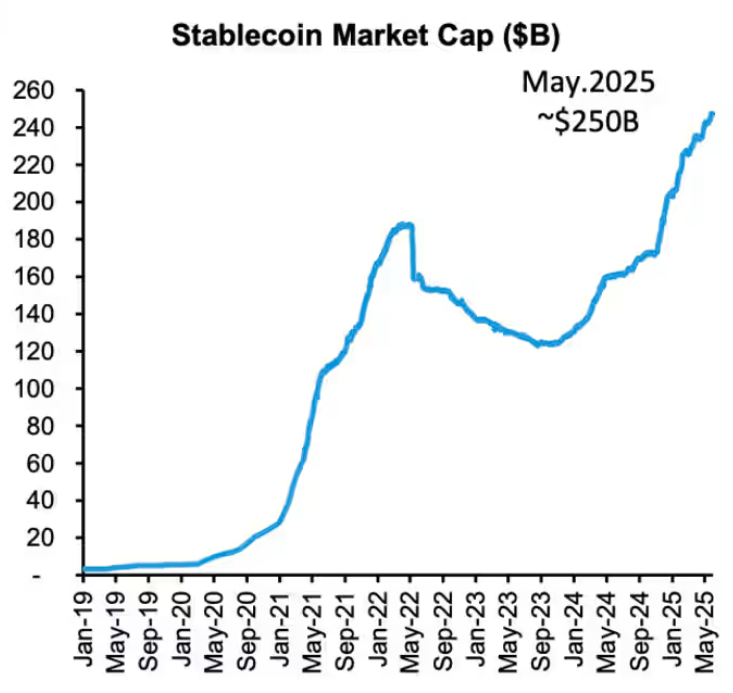
[Comparative On-Chain Supply Growth of A7A5 vs USDT vs USDC (USD)]
3. Sanctions as an Accelerator, Not a Barrier
The Sanctions Paradox
Conventional wisdom suggests sanctions suppress financial activity. In practice, they redirect it.
When traditional rails close, alternative rails gain urgency. Blockchain networks, by design, are neutral, permissionless, and globally accessible. Stablecoins—especially non-USD ones—become functional substitutes for correspondent banking.
For Russia, sanctions achieved three things simultaneously:
- Reduced access to Western banking
- Increased domestic reliance on non-Western infrastructure
- Incentivized experimentation with crypto-based settlement
A7A5’s growth is a direct outcome of this pressure.
Not Just Russia
This pattern is not unique. Similar dynamics have appeared in:
- Iran (crypto-based trade settlement)
- Venezuela (USDT usage during hyperinflation)
- Turkey and Argentina (local currency stablecoins)
What makes Russia unique is scale.
4. The Ruble’s Unexpected Strength
Perhaps the most misunderstood aspect of this story is the ruble itself.
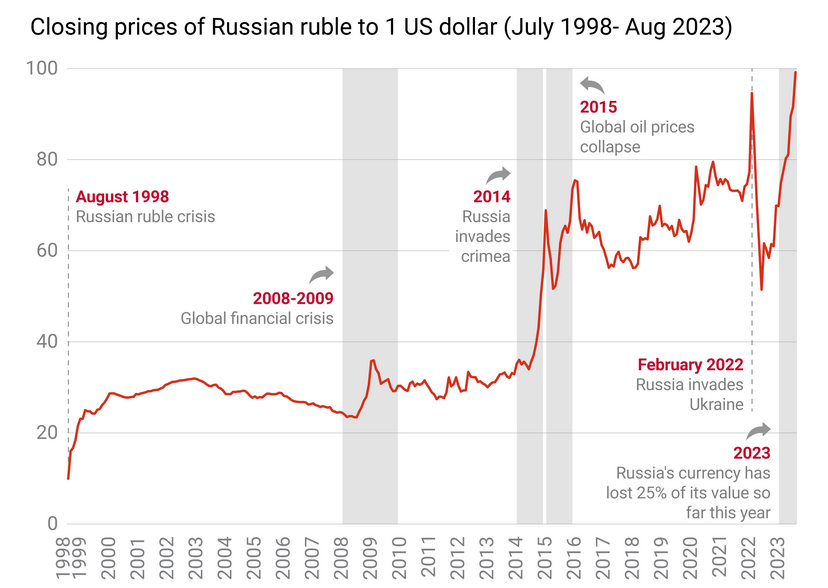
Despite sanctions, capital controls, and geopolitical isolation, the Russian ruble appreciated more than 40% against the U.S. dollar over the past year.
This strength was driven by:
- Strict capital controls limiting outflows
- Mandatory FX conversion for exporters
- Energy exports priced in rubles or non-USD currencies
- Central bank interventions and rate policy
For stablecoin users, this matters.
A stablecoin is only as trusted as its reference asset. A strengthening ruble reduced de-pegging fears and made ruble-linked tokens attractive for holding value, not just transferring it.
[USD/RUB Exchange Rate Performance (Converted to USD Terms)]
5. How A7A5 Is Actually Used
Practical Use Cases
Unlike USDC or USDT, which are deeply embedded in DeFi and centralized exchanges, A7A5 usage is more utilitarian:
- Cross-border B2B payments
- Offshore asset transfers
- Informal trade settlement
- Treasury management for sanctioned entities
This creates high velocity but low visibility.
Transactions occur on-chain, but counterparties often operate outside Western compliance frameworks, making A7A5 less visible in mainstream analytics.
Liquidity Behavior
A notable difference is concentration.
While USDT liquidity is widely distributed across exchanges and protocols, A7A5 liquidity is highly clustered, suggesting institutional or quasi-institutional use rather than retail speculation.
6. Implications for the Stablecoin Market
The End of Dollar Monoculture?
The rise of A7A5 does not threaten USDT’s dominance—yet. But it signals a structural shift:
- Stablecoins are becoming currency-specific financial instruments
- Demand is driven by geopolitical constraints, not just DeFi yield
- Issuance growth no longer correlates with Western regulatory approval
This opens the door for:
- Yuan-linked stablecoins
- Gold-backed settlement tokens
- Energy-linked digital units
- Regional trade stablecoins
In effect, stablecoins are fragmenting along geopolitical lines.
7. Risks and Limitations
Despite its growth, A7A5 carries substantial risks:
- Regulatory exposure
- Sanction enforcement escalation
- Transparency concerns
- Counterparty and redemption risk
- Liquidity fragmentation
For investors, A7A5 is not a yield play. It is a signal asset—a window into how capital behaves under constraint.
8. Strategic Takeaways for Crypto Builders and Investors
For readers seeking new crypto assets, revenue opportunities, or practical blockchain applications, the lesson is not “buy A7A5.”
The lesson is this:
- Stablecoin demand is structural, not ideological
- Monetary neutrality is a myth under sanctions
- Blockchain adoption accelerates where friction is highest
- Future growth may come from non-Western financial pain points
Understanding these dynamics allows builders to design systems that solve real liquidity problems—not just speculative ones.
9. Conclusion: A Quiet Transformation of Global Liquidity
The explosive growth of ruble-denominated stablecoins is not an anomaly—it is a preview.
As global finance fragments, blockchain becomes the connective tissue between incompatible systems. Stablecoins like A7A5 are not about ideology or decentralization. They are about functionality under pressure.
For the crypto industry, this marks a turning point:
The next wave of adoption may not come from Silicon Valley or Wall Street—but from the margins of the global financial system.
And that is where the most durable use cases are often born.
