
Key Points :
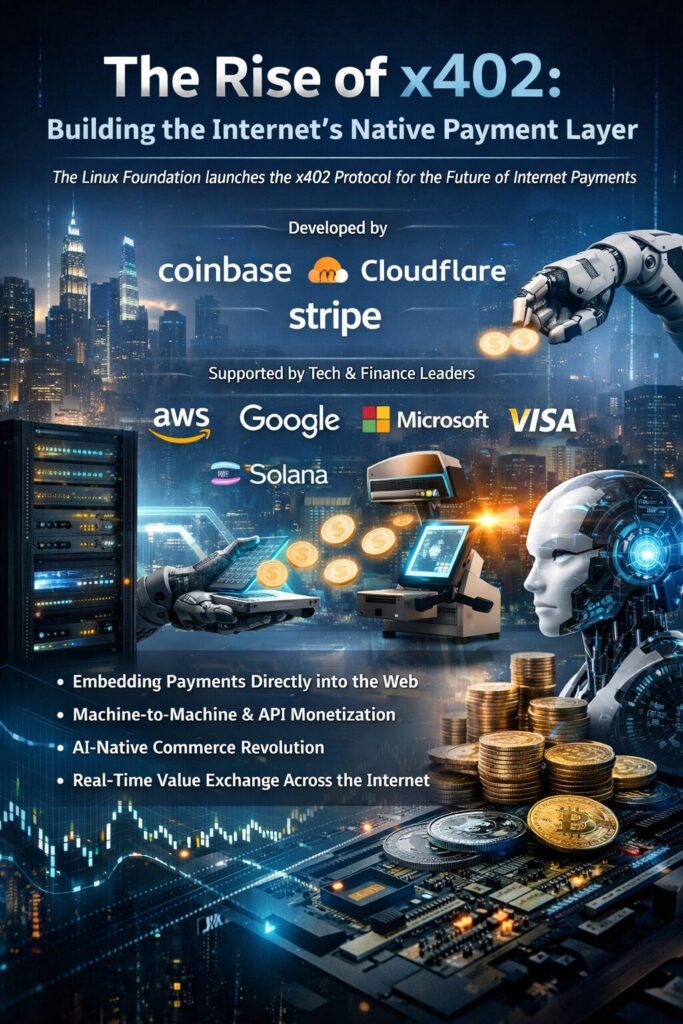
- The Linux Foundation has launched the x402 Foundation to standardize a new internet-native payment protocol
- The x402 protocol—originally developed by Coinbase, Cloudflare, and Stripe—aims to embed payments directly into web interactions
- Major global players including Amazon Web Services, Google, Microsoft, Visa, and Solana Foundation have expressed interest
- The protocol could enable machine-to-machine payments, API monetization, and AI-native commerce
- This marks a structural shift toward programmable, real-time value exchange across the internet
Introduction: From Information Internet to Value Internet
The internet was originally designed as a network for information exchange. Protocols like HTTP, TCP/IP, and SMTP allowed data to move freely and efficiently across borders and systems. However, one crucial layer has always been missing: a native, standardized way to transfer value.
Today, that gap is being addressed.
On April 2, 2026, the Linux Foundation announced the creation of the x402 Foundation, an initiative aimed at establishing a universal payment protocol for the internet. The foundation is built around the x402 protocol, a system designed to make digital payments as seamless as sending an email.
This is not merely a technical upgrade—it represents a paradigm shift toward what many are calling the “Value Internet.”
What Is x402? A Native Payment Layer for the Web
The x402 protocol is designed to integrate payments directly into web interactions. Instead of relying on external payment gateways, redirects, or manual authorization processes, x402 embeds value transfer into the same flow as data exchange.
In practical terms, this means:
- APIs can charge per request automatically
- AI agents can pay for data access in real time
- Applications can monetize services without friction
- Microtransactions become viable at scale
According to Shan Aggarwal of Coinbase, the goal is simple yet transformative: make sending money online as easy as sending an email.
This aligns closely with the evolution of blockchain-based systems, where programmable money enables conditional, automated transactions.
The Role of the x402 Foundation: Governance and Neutrality
The newly established x402 Foundation operates under the governance of the Linux Foundation, a trusted steward of open-source innovation.
The foundation’s core objectives include:
- Ensuring vendor neutrality
- Promoting interoperability across platforms
- Supporting open-source development
- Encouraging community-driven innovation
As stated by Jim Zemlin, the internet’s success has always depended on open protocols. x402 aims to follow the same model, avoiding fragmentation and proprietary lock-in.
This governance model is critical. Without it, competing payment standards could create silos, undermining the very interoperability the protocol seeks to achieve.
Big Tech and Financial Giants: A Rare Alignment
One of the most striking aspects of the x402 initiative is the breadth of industry support.
Companies and organizations expressing interest include:
- Amazon Web Services
- Microsoft
- American Express
- Mastercard
- Visa
- Shopify
- Solana Foundation
This convergence of Big Tech, fintech, and blockchain organizations is rare. It suggests a shared recognition that the current payment infrastructure is insufficient for the next generation of digital applications.
Architecture of x402 Payment Flow
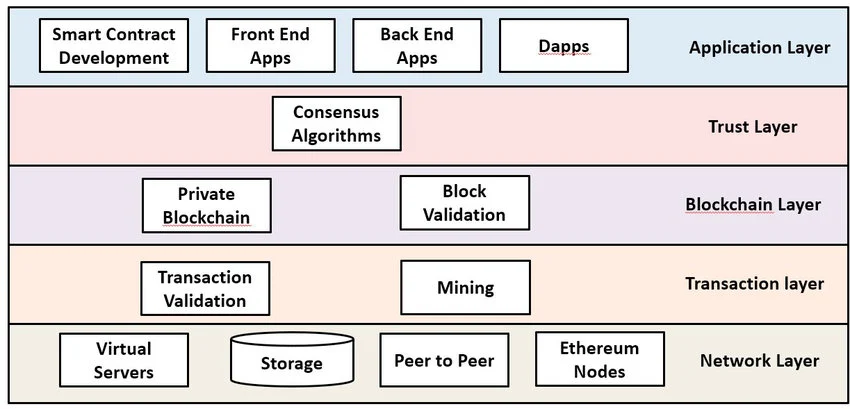
Figure Explanation:
This diagram illustrates how x402 integrates payment directly into API and application interactions, enabling real-time value exchange without intermediaries.
AI, APIs, and Machine Economies: The Real Use Case
The timing of x402 is not accidental. The rise of AI agents and autonomous systems has created a new demand: machine-to-machine payments.
Consider the following scenarios:
- An AI agent pays $0.001 for each API call
- A data provider charges $0.01 per dataset access
- A compute service bills per second of usage
Traditional payment systems are not designed for this level of granularity or automation. Fees, latency, and friction make microtransactions impractical.
x402 changes this.
By embedding payments into the protocol layer, it enables:
- Real-time settlement
- Near-zero marginal cost transactions
- Programmable payment logic
This is the foundation of what is often called the “machine economy.”
Economic Implications: New Revenue Models
For developers, startups, and platforms, x402 opens up entirely new business models.
1. API Monetization Without Subscriptions
Instead of monthly plans, services can charge per use—down to fractions of a cent.
2. Micropayments at Scale
Content creators can monetize individual interactions, such as article views or data queries.
3. Automated Revenue Streams
Smart contracts and programmable payments enable continuous, autonomous income generation.
4. Global Accessibility
With blockchain integration, payments can be borderless and instantaneous, priced in USD equivalents ($).
Micropayment Economy Model
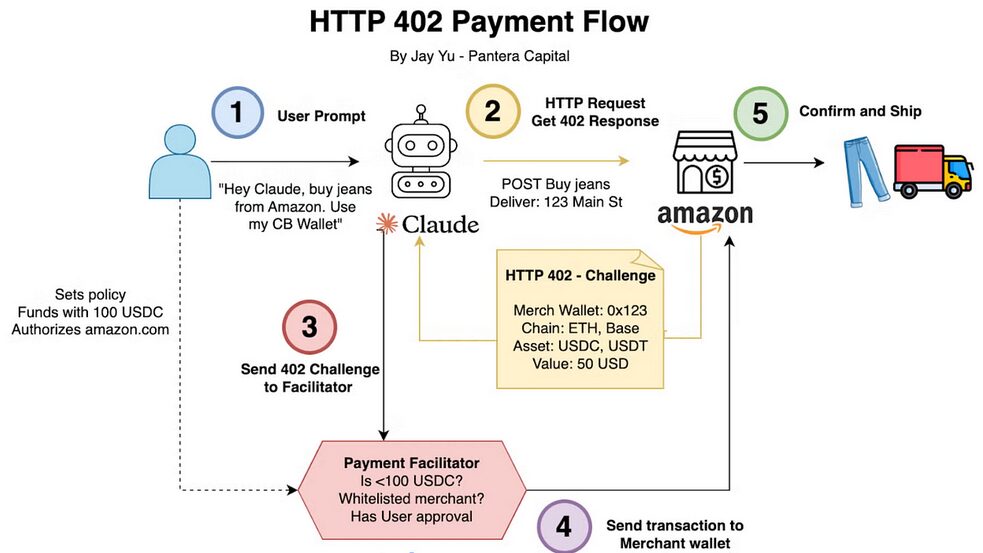
Figure Explanation:
This diagram shows how value flows between users, AI agents, and services in a micropayment-driven ecosystem.
Comparison with Existing Systems
| Feature | Traditional Payments | Crypto Payments | x402 Protocol |
|---|---|---|---|
| Integration | External | Semi-integrated | Native |
| Speed | Seconds to days | Seconds | Real-time |
| Fees | High | Variable | Low |
| Automation | Limited | Moderate | High |
| Machine Payments | Not supported | Limited | Fully supported |
x402 effectively combines the programmability of blockchain with the usability of web-native protocols.
Challenges and Risks
Despite its promise, x402 faces several challenges:
1. Standardization Complexity
Achieving consensus across such a wide range of stakeholders is difficult.
2. Regulatory Uncertainty
Global payment regulations vary widely, especially for crypto-based systems.
3. Security Risks
Embedding payments into web protocols increases the attack surface.
4. Adoption Barriers
Developers must integrate and trust the new system.
Strategic Implications for Builders
For entrepreneurs and developers—especially those building wallets, exchanges, or financial infrastructure—the emergence of x402 is highly relevant.
It aligns closely with:
- Non-custodial wallet design
- On-chain settlement systems
- API-driven financial services
- Cross-border payment platforms
Projects that integrate early could gain a significant advantage.
Conclusion: The Beginning of the Value Internet
The launch of the x402 Foundation marks a critical milestone in the evolution of the internet.
Just as HTTP standardized information exchange, x402 has the potential to standardize value exchange.
If successful, it will:
- Transform how applications monetize
- Enable autonomous economic systems
- Reduce friction in global commerce
- Unlock new revenue opportunities
For those seeking the next frontier in blockchain and digital finance, x402 is not just a protocol—it is a foundational shift.
