
Main Points :
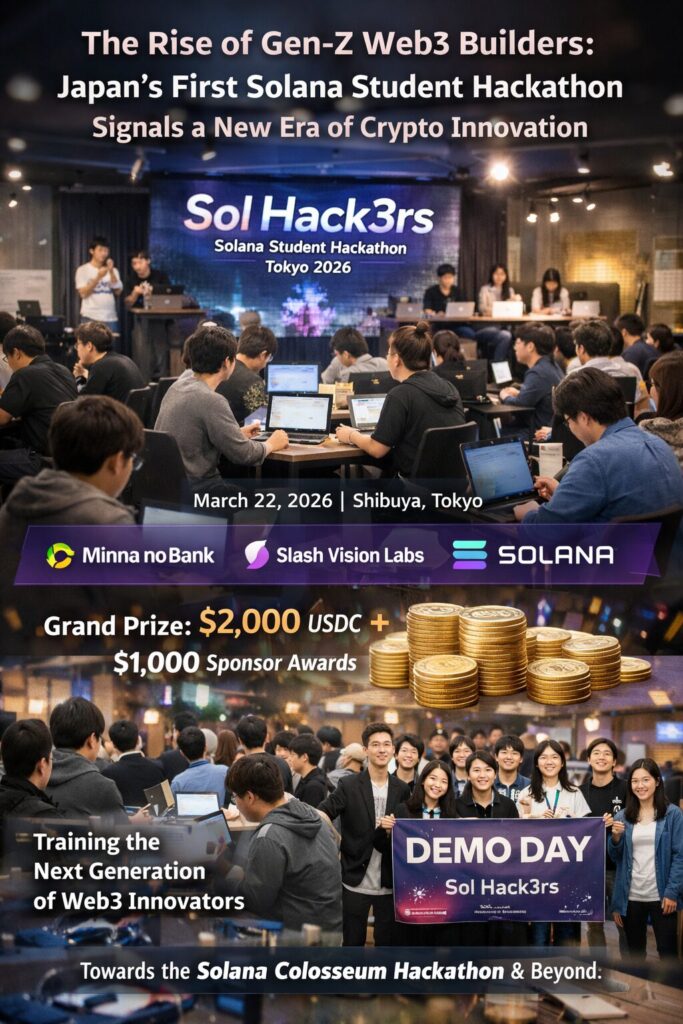
- Japan hosted its first-ever Solana student hackathon, “Sol Hack3rs,” aimed at nurturing Gen-Z blockchain entrepreneurs.
- The hackathon ran from March 1–21, 2026, with a Demo Day on March 22 in Shibuya, Tokyo.
- Major sponsors include Minna no Bank and Slash Vision Labs, highlighting growing institutional support for Web3 talent.
- The Grand Prize is $2,000 (USDC), with additional $1,000 sponsor awards.
- The event is positioned as a training ground for global competitions such as the Solana Colosseum Hackathon.
- The initiative reflects a broader trend: universities and student communities becoming a primary source of Web3 innovation.
1. Japan’s First Solana Student Hackathon: A New Generation of Builders
Japan has long played a unique role in the history of cryptocurrency. From being home to early exchanges to establishing some of the world’s strictest crypto regulations, the country has been both a pioneer and a regulator in the digital asset industry. However, in recent years Japan’s Web3 ecosystem has been trying to re-ignite innovation and entrepreneurship—especially among younger generations.
One of the clearest signs of this shift is the first Solana-focused student hackathon in Japan, called “Sol Hack3rs Global Hackathon.”
The event was organized to cultivate the next generation of blockchain entrepreneurs, specifically targeting Gen-Z developers and founders. According to the organizers, the hackathon is designed not merely as a competition but as a launching platform for young innovators who want to build real Web3 products.
The hackathon’s development period runs from March 1 to March 21, 2026, during which participating teams collaborate intensively to build blockchain-based applications and services using the Solana ecosystem.
The event culminates in a Demo Day on March 22 in Shibuya, Tokyo, where teams present their prototypes to judges, investors, and mentors.
This event represents more than a student competition—it signals a strategic push to cultivate Web3 talent in Japan, a country that has historically produced influential blockchain engineers but has recently faced strong competition from regions like Singapore, the United States, and Europe.
Hackathon Timeline
2. What Is a Hackathon and Why It Matters for Web3
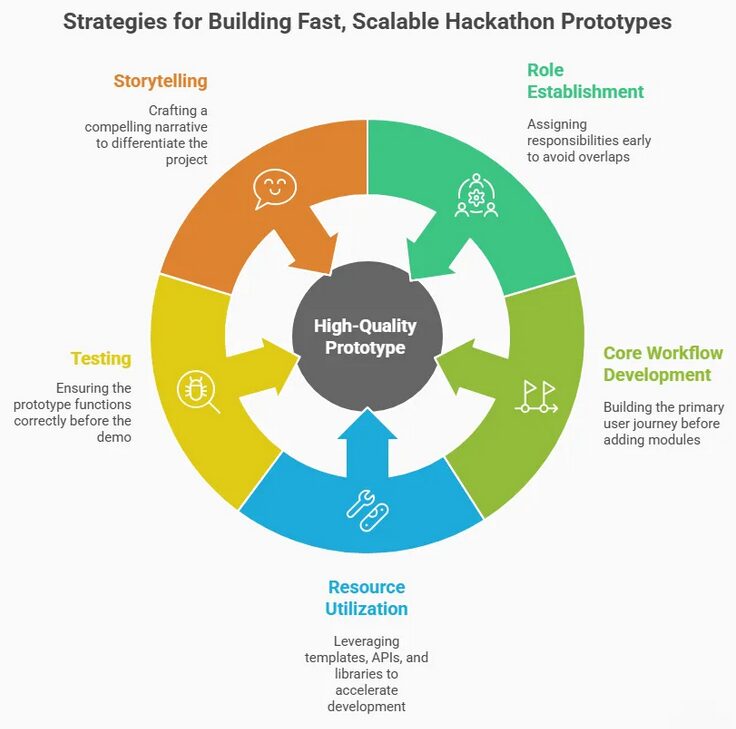
The word hackathon is a combination of hack and marathon, referring to an event where developers gather for a short, intense period of time to build software solutions.
In the Web3 ecosystem, hackathons play a particularly critical role. Unlike traditional startups that require large capital investments or corporate backing, many blockchain projects begin as small experimental prototypes developed during hackathons.
Some of the most influential crypto projects started this way.
For example:
- Several DeFi protocols originated from Ethereum hackathons.
- NFT infrastructure projects and gaming platforms often begin as hackathon experiments.
- Many venture capital firms actively scout hackathons for promising teams.
Hackathons therefore serve multiple purposes:
- Talent discovery
- Rapid innovation
- Community building
- Startup incubation
For the Solana ecosystem, hackathons have become a central growth engine. The Solana Foundation has organized global hackathons attracting tens of thousands of developers, generating hundreds of startup projects.
Japan’s Sol Hack3rs event is clearly inspired by this global strategy.
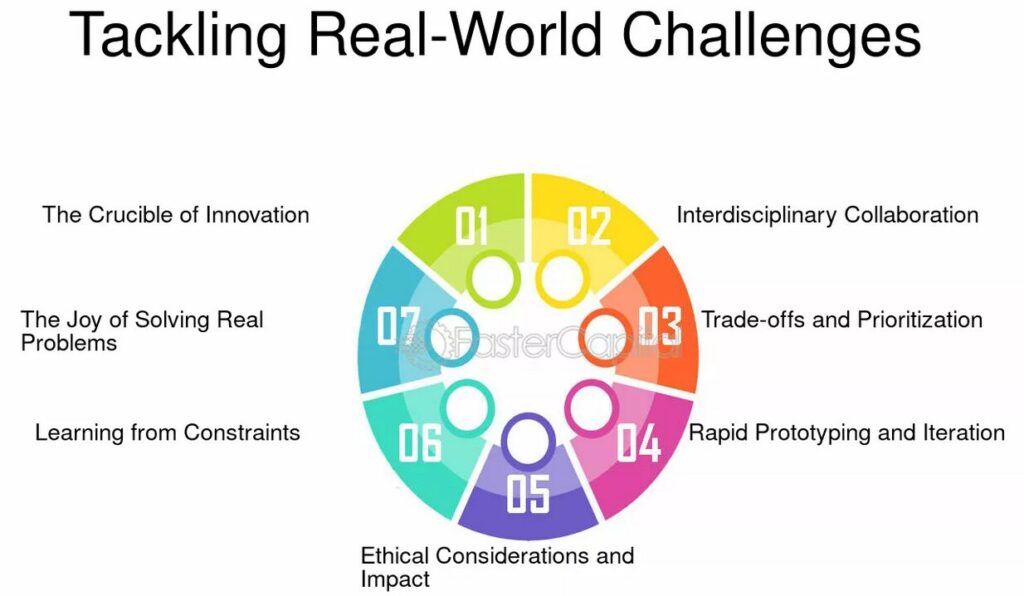
How Web3 Hackathons Create Startups
3. Sponsors Signal Growing Institutional Support
One of the most interesting aspects of the event is the participation of corporate sponsors.
The hackathon announced that Minna no Bank, a Japanese digital bank, joined as a Platinum Sponsor.
This is significant because it shows that traditional financial institutions are actively engaging with Web3 innovation rather than simply observing from the sidelines.
Minna no Bank has been positioning itself as a technology-driven financial platform, and its sponsorship of the hackathon suggests that the bank sees potential in blockchain-based financial services and decentralized infrastructure.
Another major sponsor is Slash Vision Labs, which is also offering a $1,000 award for a selected team.
In addition, the hackathon will present a Minna no Bank Award, also worth $1,000, to a standout project.
The Grand Prize for the best team is $2,000 (USDC).
While the monetary prizes may appear relatively modest compared to venture funding rounds, they are typical for early-stage hackathons where the real value lies in:
- mentorship
- networking
- exposure to investors
More importantly, hackathons often act as gateways to accelerators and venture funding.
4. Mentorship From Experienced Web3 Builders
Another core component of the event is its mentorship program.
Participants receive guidance from experienced entrepreneurs and developers in the Solana ecosystem.
Mentors include:
- Yuki Sato, co-founder of Daiko
- Yuki, co-founder of LootGo
- hax, CTO and leader of Solana Superteam Japan
- CopyCat, partner at Marinade
These mentors help participants refine both technical architecture and business models.
This dual focus is important because many blockchain projects fail not due to technology, but because they lack clear product-market fit or sustainable economic models.
Mentors therefore play a critical role in helping teams transform ideas into viable startups.
5. Solana’s Growing Developer Ecosystem
The hackathon also reflects the rapid expansion of the Solana developer ecosystem.
Solana has emerged as one of the most important smart contract platforms in the crypto industry.
Key characteristics include:
- High transaction throughput
- Low transaction fees
- Strong developer tools
- Growing ecosystem of DeFi, NFTs, and gaming
These features have attracted a wave of developers building decentralized applications.
In recent years, Solana has also heavily invested in developer education and community-building programs, including global hackathons with prize pools exceeding $1 million.
Student hackathons such as Sol Hack3rs serve as entry points for new developers entering the ecosystem.
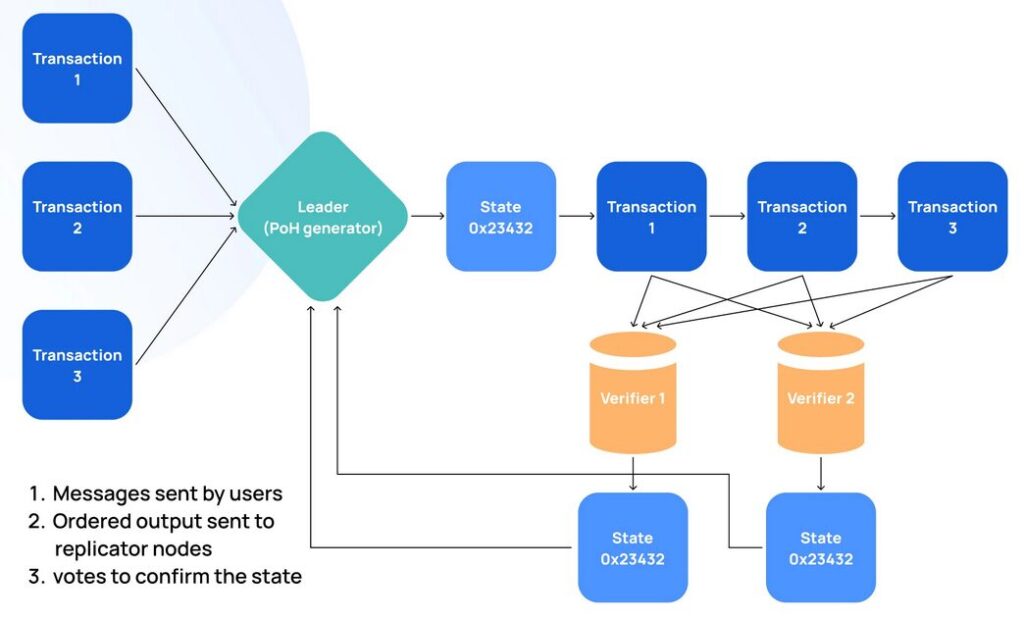
Solana Ecosystem Growth
6. Gen-Z and the Future of Web3 Entrepreneurship
Perhaps the most important aspect of this hackathon is its focus on Gen-Z innovators.
Gen-Z developers grew up in a digital-first environment. Unlike previous generations of entrepreneurs who transitioned from Web2 to Web3, many Gen-Z builders are native to decentralized technologies.
They are comfortable with:
- crypto wallets
- token economies
- decentralized governance
- open-source collaboration
This cultural familiarity makes them uniquely positioned to develop next-generation decentralized applications.
Hackathons aimed at students therefore represent a long-term investment in the Web3 ecosystem.
Some of tomorrow’s most successful blockchain companies may originate from these student communities.
7. Hackathons as a Gateway to Global Competition
The organizers describe the event as a place to take the first step, rather than waiting until one is fully prepared.
More specifically, the hackathon is designed as a preparatory stage for the global Solana “Colosseum Hackathon.”
Colosseum is widely considered one of the most competitive Web3 hackathons in the world, attracting thousands of developers and startups.
By hosting a domestic student hackathon, organizers hope to increase the number of Japanese teams capable of competing internationally.
This strategy mirrors similar initiatives seen in countries like:
- South Korea
- Singapore
- the United States
where universities and developer communities actively prepare teams for global competitions.
Conclusion: Why Student Hackathons May Shape the Next Crypto Wave
The Sol Hack3rs Global Hackathon represents more than a single event in Tokyo.
It reflects several broader trends shaping the future of the cryptocurrency industry:
- The rise of Gen-Z blockchain entrepreneurs
- Increasing collaboration between traditional finance and Web3
- Hackathons as startup incubators
- Global competition for developer talent
- The expansion of ecosystems like Solana
For investors, developers, and entrepreneurs seeking the next wave of crypto innovation, student hackathons are becoming an increasingly important place to watch.
Many of the decentralized applications that will define the next decade of Web3 may begin not in corporate boardrooms—but in small teams of young developers coding intensively during events like Sol Hack3rs.
If this trend continues, Japan’s first Solana student hackathon may one day be remembered as the starting point for a new generation of Web3 founders.
