

Main Points :
- MicroStrategy holds 761,068 BTC, valued at tens of billions of dollars
- The company recently acquired 22,337 BTC (~$1.57 billion)—the largest purchase of 2026
- Michael Saylor signaled further accumulation with “The Orange March Continues”
- Institutional Bitcoin accumulation is accelerating globally
- Market structure suggests long-term bullish positioning despite short-term volatility
1. The Signal Behind “The Orange March Continues”
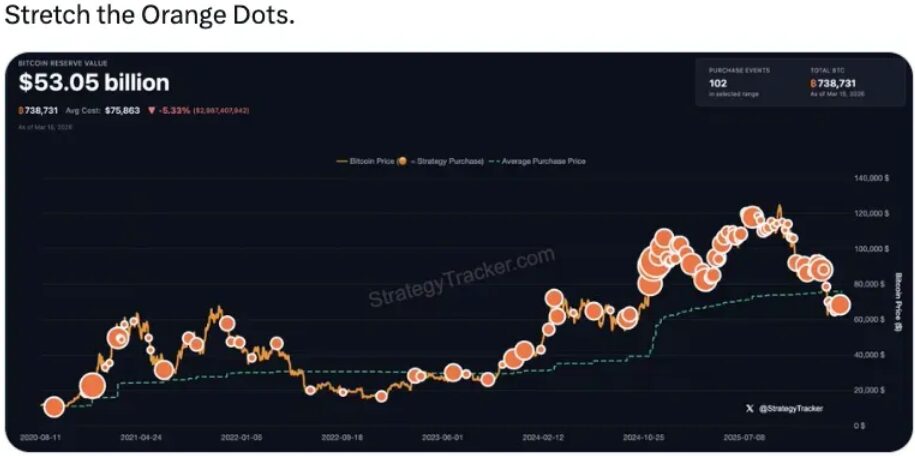
On March 22, 2026, Michael Saylor, Executive Chairman of MicroStrategy, once again captured the attention of the cryptocurrency world with a short but powerful message posted on X: “The Orange March Continues.” While seemingly simple, this phrase carries substantial weight within the Bitcoin ecosystem.
Historically, Saylor’s cryptic posts have often preceded significant Bitcoin purchases by MicroStrategy. Market participants, analysts, and institutional investors closely monitor his communications, as they frequently act as early indicators of large-scale capital movements into Bitcoin.
The phrase itself—“Orange March”—is symbolic. Orange has become synonymous with Bitcoin, representing not just the asset but an ideological movement centered on decentralized, non-sovereign money. By stating that the march continues, Saylor is reaffirming a long-term commitment to Bitcoin accumulation regardless of short-term market fluctuations.
2. MicroStrategy’s Expanding Bitcoin Treasury
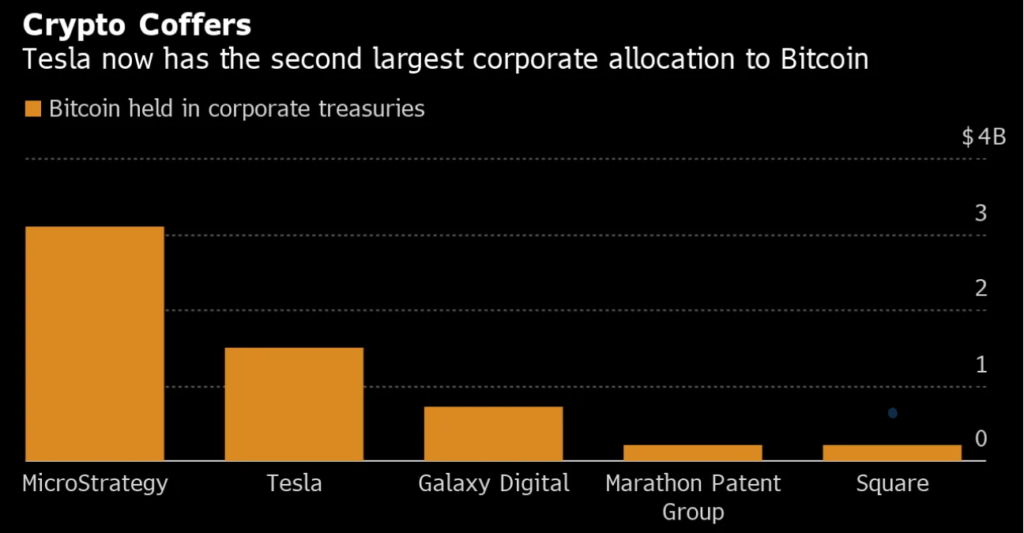
As of March 2026, MicroStrategy holds 761,068 BTC, making it the largest corporate holder of Bitcoin globally. At current market valuations, this represents tens of billions of dollars in digital assets.
- Average acquisition price: ~$75,696 per BTC
- Total acquisition cost: ~$57.61 billion
The company’s strategy is not opportunistic—it is systematic. Since 2020, MicroStrategy has consistently accumulated Bitcoin across various market cycles, including both bull runs and downturns. This disciplined approach reflects a conviction that Bitcoin is a superior store of value compared to fiat currencies.
The most recent acquisition between March 9 and 15, 2026, saw the purchase of 22,337 BTC at an average price of approximately $70,194, totaling around $1.57 billion. This marks the largest Bitcoin purchase of the year so far.
Importantly, this acquisition was financed through a combination of perpetual preferred stock (STRC) and common stock issuance. This highlights an innovative capital strategy: leveraging equity markets to accumulate a scarce digital asset.
3. Financial Engineering: How MicroStrategy Funds Bitcoin Purchases
MicroStrategy’s Bitcoin accumulation is not merely a treasury decision—it is a sophisticated financial engineering model.
The company has pioneered a hybrid strategy involving:
- Equity issuance (common stock)
- Convertible notes
- Preferred shares (e.g., STRC instruments)
This approach allows MicroStrategy to continuously raise capital without liquidating its Bitcoin holdings. Instead of selling BTC during price increases, the company doubles down—raising funds externally to acquire more.
This model effectively transforms MicroStrategy into a Bitcoin acquisition vehicle, blurring the line between a traditional operating company and a quasi-Bitcoin ETF.
For investors, this creates a leveraged exposure to Bitcoin. Owning MicroStrategy stock becomes an indirect way to gain amplified Bitcoin exposure, especially appealing in jurisdictions where direct BTC investment is constrained.
4. Institutional Accumulation: A Broader Macro Trend

MicroStrategy’s actions are not isolated. They are part of a broader trend of institutional accumulation that has intensified since the approval of spot Bitcoin ETFs in major markets.
Key developments include:
- Increased inflows into Bitcoin ETFs managed by major financial institutions
- Expansion of crypto services by global banks and asset managers
- Growth in whale wallets (holding 100+ BTC), approaching historic highs
Institutional investors are increasingly viewing Bitcoin as:
- A hedge against inflation
- A reserve asset akin to digital gold
- A long-term asymmetric investment
This shift is particularly significant because institutional capital tends to be “stickier” than retail capital. Once allocated, it is less likely to exit during short-term volatility, contributing to long-term price stability and upward pressure.
5. Market Structure: Bullish Signals Beneath Volatility
Despite ongoing accumulation, Bitcoin’s price action has occasionally appeared weak in the short term. This apparent contradiction is a key feature of the current market structure.
Several dynamics are at play:
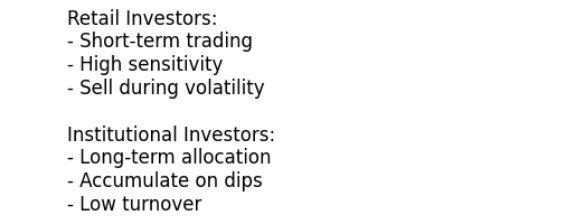
- Distribution vs. accumulation: Retail investors may be selling into rallies while institutions accumulate quietly
- Liquidity cycles: Macro factors such as interest rates and dollar strength influence short-term movements
- Derivatives markets: Futures and options can suppress spot price volatility
However, historically, similar conditions have preceded major bull cycles. When accumulation outpaces distribution over extended periods, supply becomes constrained—eventually leading to upward price repricing.
MicroStrategy’s continued purchases reinforce this narrative. By removing large quantities of BTC from circulation, the company contributes to a tightening supply environment.
6. Strategic Implications for Crypto Investors and Builders
For readers seeking new crypto assets, revenue opportunities, and practical blockchain applications, MicroStrategy’s strategy offers several key insights:
6.1 Bitcoin as a Treasury Asset
Companies can adopt Bitcoin as part of their balance sheet strategy, especially in inflationary environments or regions with currency instability.
6.2 Financial Innovation Opportunities
MicroStrategy’s model demonstrates how traditional financial instruments can be repurposed to accumulate digital assets. This opens opportunities for:
- Tokenized securities
- Crypto-backed financing
- Hybrid financial products
6.3 Market Timing vs. Long-Term Strategy
Rather than attempting to time the market, MicroStrategy employs a dollar-cost averaging approach at scale. This reduces timing risk while maximizing long-term exposure.
6.4 Ecosystem Effects
Large-scale accumulation by institutions increases legitimacy, attracts regulatory clarity, and drives infrastructure development across the crypto ecosystem.
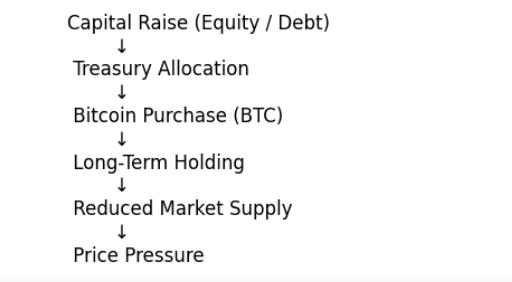
7. Visual Diagram – Bitcoin Accumulation Strategy
[Institutional Bitcoin Accumulation Flow]
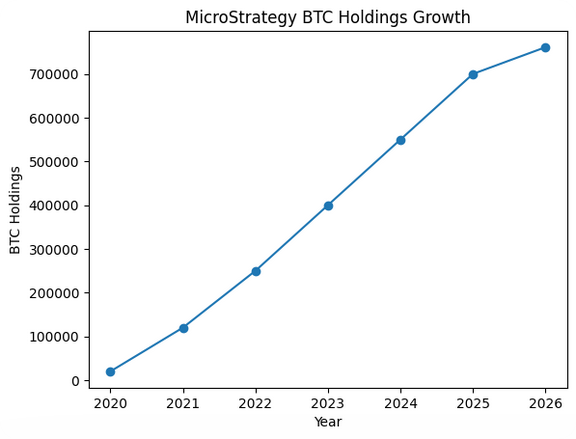
8. Visual Graph – MicroStrategy BTC Holdings Growth
[BTC Holdings Over Time]
9. Visual Diagram – Institutional vs Retail Behavior
[Market Behavior Comparison]
Conclusion: The March Is Structural, Not Symbolic
Michael Saylor’s statement—“The Orange March Continues”—is more than a slogan. It reflects a structural transformation in how capital is allocated in the digital age.
MicroStrategy’s relentless accumulation strategy signals a paradigm shift:
- Bitcoin is evolving into a core institutional asset
- Traditional financial tools are being repurposed for digital asset acquisition
- Long-term conviction is beginning to outweigh short-term speculation
For investors and builders alike, the implications are profound. The next phase of the crypto market may not be driven by hype cycles alone, but by sustained, strategic accumulation from institutions with deep capital reserves.
In this context, the “Orange March” is not just continuing—it is accelerating.
